Kids interview Arthur Rimbaud
by Charactorium · Arthur Rimbaud (1854 — 1891) · Literature · 5 min read
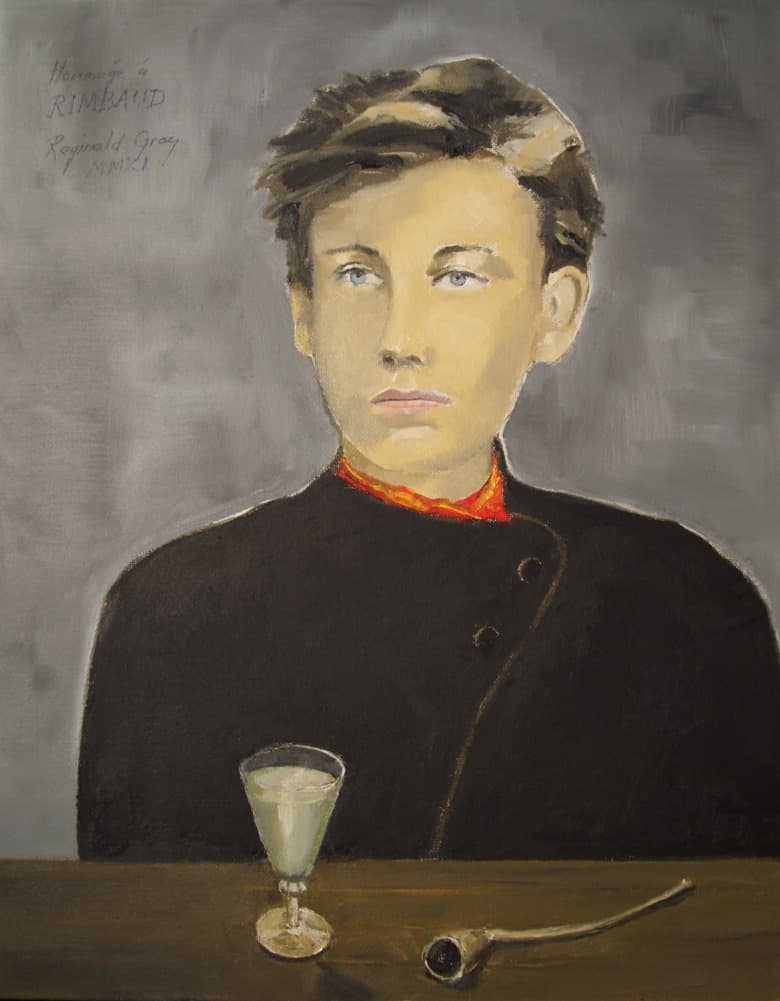
Two middle school students, on a field trip in the Ardennes, have a meeting with a poet with a clear gaze and worn soles. He seats them near a school notebook filled with tight handwriting. "Ask your questions," he says, "I've never liked long speeches."
—Is it true that you ran away from home alone at age 15?
Yes, it's true. I was 15 years old and suffocating in Charleville, my hometown in the Ardennes. One day, I jumped on a train to Paris. Small problem: I hadn't paid for my ticket! I was arrested at the Gare du Nord, then locked up for a few days in Mazas prison. Imagine a skinny kid, alone, behind bars, waiting for someone to come get him. It was my teacher, Mr. Izambard, who came to get me out. You know, that didn't calm me down. That runaway was just the first in a long series. My feet were itching.
I was 15 and my feet were itching.
—Why did you love walking on the roads so much, weren't you tired?
Tired? Of course! But walking was my freedom. My friend Verlaine called me "the man with soles of wind." Nice nickname, right? It means I couldn't stay still, that I flew like a gust of wind. I walked dozens of kilometers on foot, my shoes full of holes. I turned it into a poem, Ma Bohème. Imagine: a boy sleeping under the stars, eating bread when he finds it, and looking at the stars like friends. No money, no home, but the sky for a ceiling. At your age, you dream of adventures. I lived them on the roads.
—How could you write a poem about the sea if you had never seen it?
Ah, you've put your finger on the funniest part! I was 16 when I wrote Le Bateau ivre, a hundred lines about a journey on the open ocean. And yet, I had never seen the sea! I was in Charleville, in the Ardennes, far from any wave. How? With my imagination, my child. I had devoured books at the library, and in my head, I saw the waves, the storms, the colors. The poem begins like this: "As I was descending impassive Rivers..." You don't need to see everything to dream everything. That's the secret of a poet: close your eyes and go further than your feet.
You don't need to see everything to dream everything.
—And after, what did you do with that poem about the boat?
I put it in my pocket and went up to Paris! You know, when you're young and unknown, you have to get noticed. Le Bateau ivre was my calling card. Imagine arriving in a big city where no one knows you, and you put on the table a poem so powerful that the adults are left speechless. That's exactly what happened. Verlaine and the Parisian poets were impressed by this kid from the provinces. A poem can open doors better than a letter of recommendation. My verses spoke for me, and they spoke loudly.
—Who is Verlaine, and what was it like when you met him?
Verlaine was a well-known poet when I met him, in 1871. I was an unknown 17-year-old from the Ardennes. He invited me to a dinner with very serious poets, the Parnassians. And there, I admit, I misbehaved! At every verse a gentleman read aloud, I let out a loud "Merde!" Imagine the faces of those gentlemen in suits! I was a provocateur, a bit wild. But Verlaine thought I was brilliant. We became inseparable. You know, friendship between two artists is intense, sometimes too intense. Ours was going to become stormy.
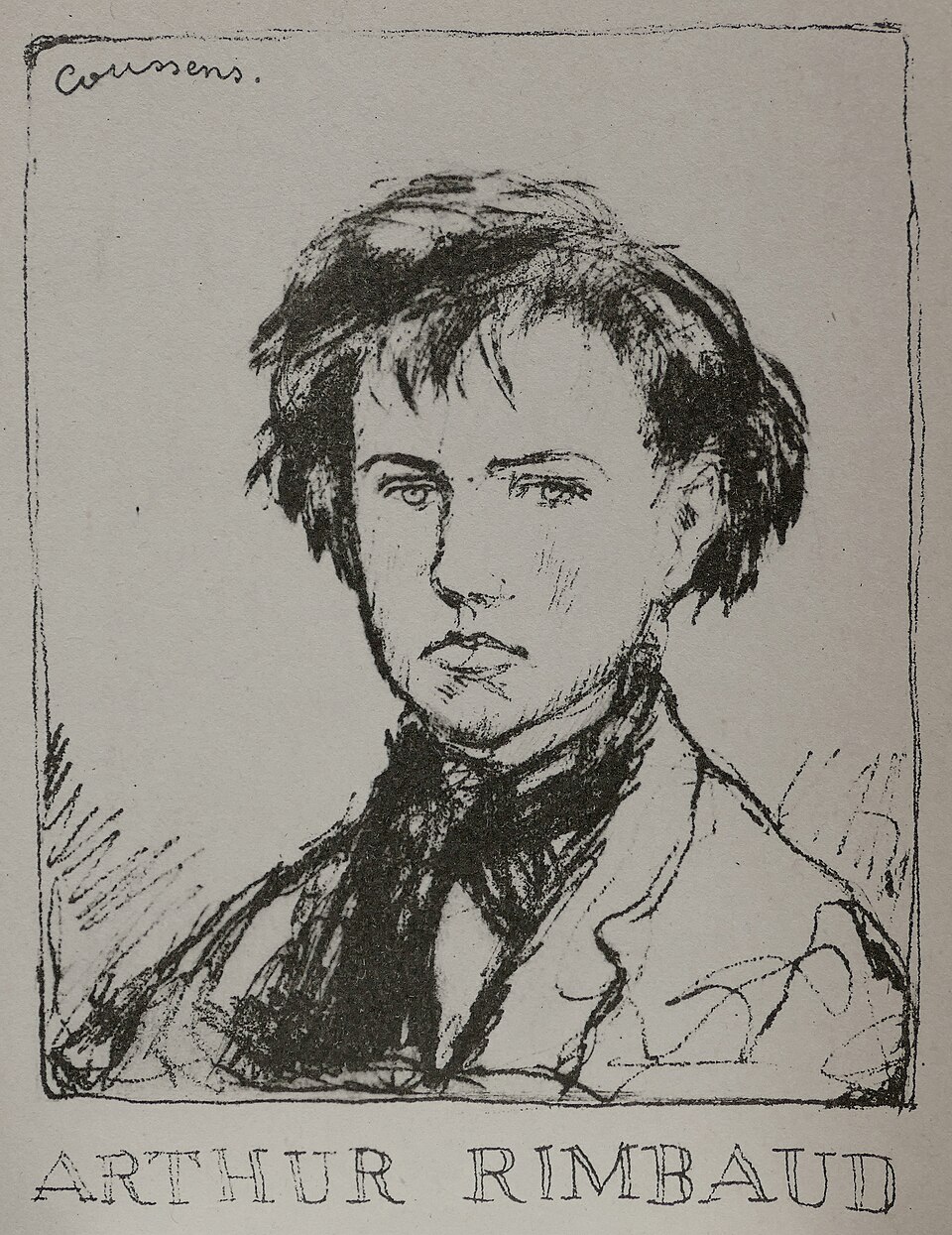
—Is it true that your friend shot you with a revolver?
Alas, yes. Our friendship had become a storm. In July 1873, we were in a hotel in Brussels, arguing constantly. Verlaine had drunk too much, he was desperate that I wanted to leave. So he took a revolver and fired. A bullet hit me in the wrist. Imagine that moment: two friends who loved each other, and suddenly a gunshot between them. It broke everything. Verlaine went to prison, and our story ended there. You see, my child, feelings that are too strong can hurt very much. That day I understood that you can wound someone by trying to hold them back.
You can wound someone by trying to hold them back.
—What does it mean to be a "seer"? Did you see the future?
Ah no, not like a fortune teller! For me, the seer is the poet who sees further than the ordinary world. I was 16 when I wrote that in a letter, in 1871. I said: "The Poet makes himself a seer by a long, immense, and reasoned derangement of all the senses." Complicated? Let me explain. It means shaking up your way of feeling, seeing, hearing, to perceive hidden things. Imagine staring at a flame so long that you see worlds in it. The poet does that with words. He deranges everything to better see the invisible.
—I was told you gave colors to letters, like A in black?
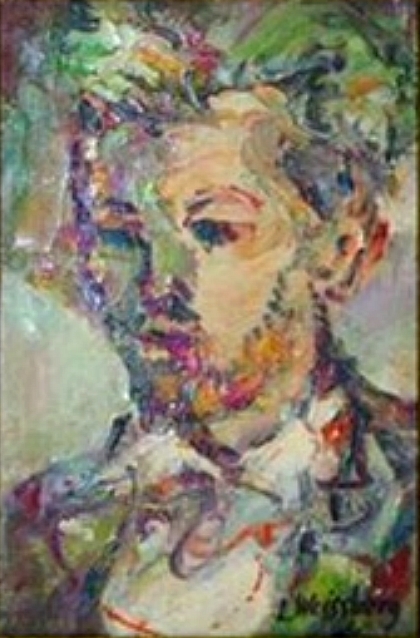
Yes! That's my sonnet Voyelles. A sonnet is a small poem of fourteen lines, a very old form. But I had a strange and amusing idea: associate each vowel with a color. A becomes black, E white, and so on. That's called synesthesia: when one sense awakens another, when a letter makes you see a color. Imagine hearing a sound and it gives you the taste of lemon! It's a bit crazy, I know. But poetry is precisely about mixing things we thought were separate. Letters, for me, had colors.
—Why did you go to Africa instead of continuing to write?
Good question, and I don't have a simple answer. Around 20, I stopped everything. Poetry, finished. I went far away, to Harar, in Ethiopia, to become a merchant. A merchant is a trader: I bought and sold coffee and skins. Picture me with my scale, weighing grains in the sun, keeping my accounts in a notebook. No more verses, just numbers. Why? Maybe I needed to act, to touch the real world instead of dreams. But I'll tell you a secret: there, I was terribly bored. I wrote to my family: "I am very bored, always."
—And did you know that you had become famous in France during that time?
Not at all! And that's the most incredible part. While I was weighing my coffee in Harar, my old poems were becoming famous in Paris. Verlaine had published my Illuminations in 1886, without even asking me. He thought I was dead! Imagine the scene: in Paris, people admire a poet they think is dead, and that poet is alive, in Africa, counting money, knowing nothing of his glory. Life is strange, my child. I died at 37, in Marseille, after they amputated my leg. My poems, they still walk — with soles of wind.
My poems still walk, with soles of wind.
This imaginary interview was generated by artificial intelligence from sources documented in Arthur Rimbaud's profile. It dramatises what the figure might have said based on what we know about them, but does not constitute attested historical testimony. For primary sources and factual documentation, refer to the full profile.