Kids interview Asima Chatterjee
by Charactorium · Asima Chatterjee (1917 — 2006) · Sciences · 5 min read
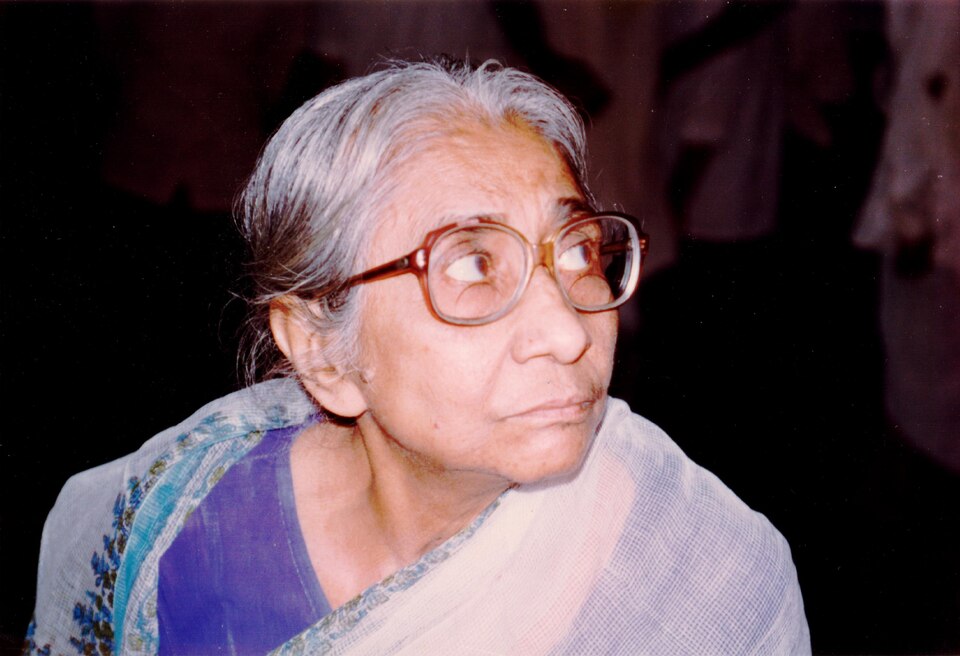
That morning, two students from a discovery class push open the door of an old Calcutta laboratory. A lady in a sari waits for them, surrounded by flasks and dried plants. She is Asima Chatterjee, and she has plenty of stories to tell.
—How old were you when you decided to go into science?
You know, my child, I was still a little girl in Calcutta when plants already fascinated me. In my time, very few Indian girls went to university. Imagine a classroom almost empty of girls, where people were surprised to see you. I completed my master's in chemistry in 1938. Then I continued, again and again. In 1944, I became the very first woman to receive a Doctor of Science degree from an Indian university. A very rare degree, higher than the ordinary doctorate. That day, I understood that a door that had always been closed had just opened. And behind me, other girls could pass through.
A door that had always been closed had just opened.
—What did your home smell like in the morning when you were little?
Ah, what a lovely question! In the morning, in a Bengali home, it smelled of hot rice, lentils called dal, and spices frying. There was also the smell of tea. Imagine a house in Kolkata, dense, lively, where you could hear the neighbors and not a single engine like today. I wore a light cotton sari, because it's hot and humid in Calcutta. Even as a child, I looked at the garden plants and wondered what they hid inside. That curiosity never left me. It was what led me, later, to the laboratory.
A child's curiosity never left me.
—Is it true you made medicines from plants?
Yes, my child, and that is the heart of my whole life! Look at this little fern that grows in water: it is called Marsilea minuta. With my team, we extracted a medicine against epilepsy, those seizures where the body trembles uncontrollably. We called it Ayush-56. Imagine: a tiny herb, hidden in a pond, helping the sick! We also looked for remedies against malaria, that disease transmitted by mosquitoes, so common in our country. All of India is full of plants. My work was to listen to what nature already knew, then prove it in my test tubes.
A tiny herb in a pond can heal a patient.
—Why did you search in plants and not elsewhere?
Because plants are chemists much older than we are! In my home, people had always healed with leaves and roots: that is what we call Ayurveda, traditional Indian medicine. I wanted to understand why it works. So I collected plants, like the periwinkle called Vinca, and stored them in an herbarium. Then I looked for the hidden molecule inside, the one that acts. Imagine opening a box sealed for a thousand years to see the treasure inside. My research built a bridge: on one side, ancient knowledge; on the other, modern science. The two joined hands.
Plants are chemists much older than we are.
—How did you see a molecule that is very tiny?
Ah, you don't see it with your eyes, it's much too small! So you use tricks. I used a polarimeter: a device that sends a special light through the substance and sees how it twists the light. Each molecule deflects light in its own way, like a signature. I also had a glass column filled with powder, chromatography, to separate mixed compounds, a bit like sorting marbles by color. And I noted everything, absolutely everything, in my laboratory notebook. These bitter molecules from plants are called alkaloids. Tracking them one by one filled more than 400 scientific papers in my life.
Each molecule deflects light in its own way, like a signature.
—Did it take a long time to find a single molecule?
Very long, my child, you have to be patient like a fisherman! Sometimes it took months to isolate a pure molecule and guess its exact shape. In the morning, I would join my laboratory at the University of Calcutta and check extractions started the day before. Imagine a giant kitchen where you heat, filter, and start over endlessly. This is called natural products chemistry: it studies substances from plants and animals. Every failure taught me something. A molecule is not a gift handed to you: it is a riddle you unravel thread by thread. And when it finally reveals itself, what joy!
A molecule is a riddle you unravel thread by thread.
—Who taught you all this when you were young?
I was lucky, you know. My teacher was Prafulla Chandra Ray, called the 'father of Indian chemistry.' He passed on to me the love of rigorous work. I also mingled with great scholars, like physicist Satyendra Nath Bose. Imagine a young girl surrounded by these immense minds, who truly listened to her! Later, I went to complete my training in the United States, at the University of Wisconsin and Caltech in California. It was a long journey by ship, far from home. But I always returned to India. Because knowledge is only truly useful if you bring it back home to share.
Knowledge is only truly useful if you bring it back home.
—Did you teach other girls chemistry?
Oh yes, and it is one of my greatest prides! At Lady Brabourne College in Calcutta, I founded and directed the entire chemistry department. Imagine rooms full of young girls bent over their glassware, learning to extract, measure, and search. Many would never have dared enter a laboratory without someone showing them the way. In the afternoon, I guided my students and doctoral candidates, discussing structures and new leads. Passing on knowledge was as important as discovering. What good is opening a door if no one walks through behind you? Each of those students was a seed I planted for the future of Indian science.
What good is opening a door if no one walks through behind you?
—What was India like when you were a great scientist?
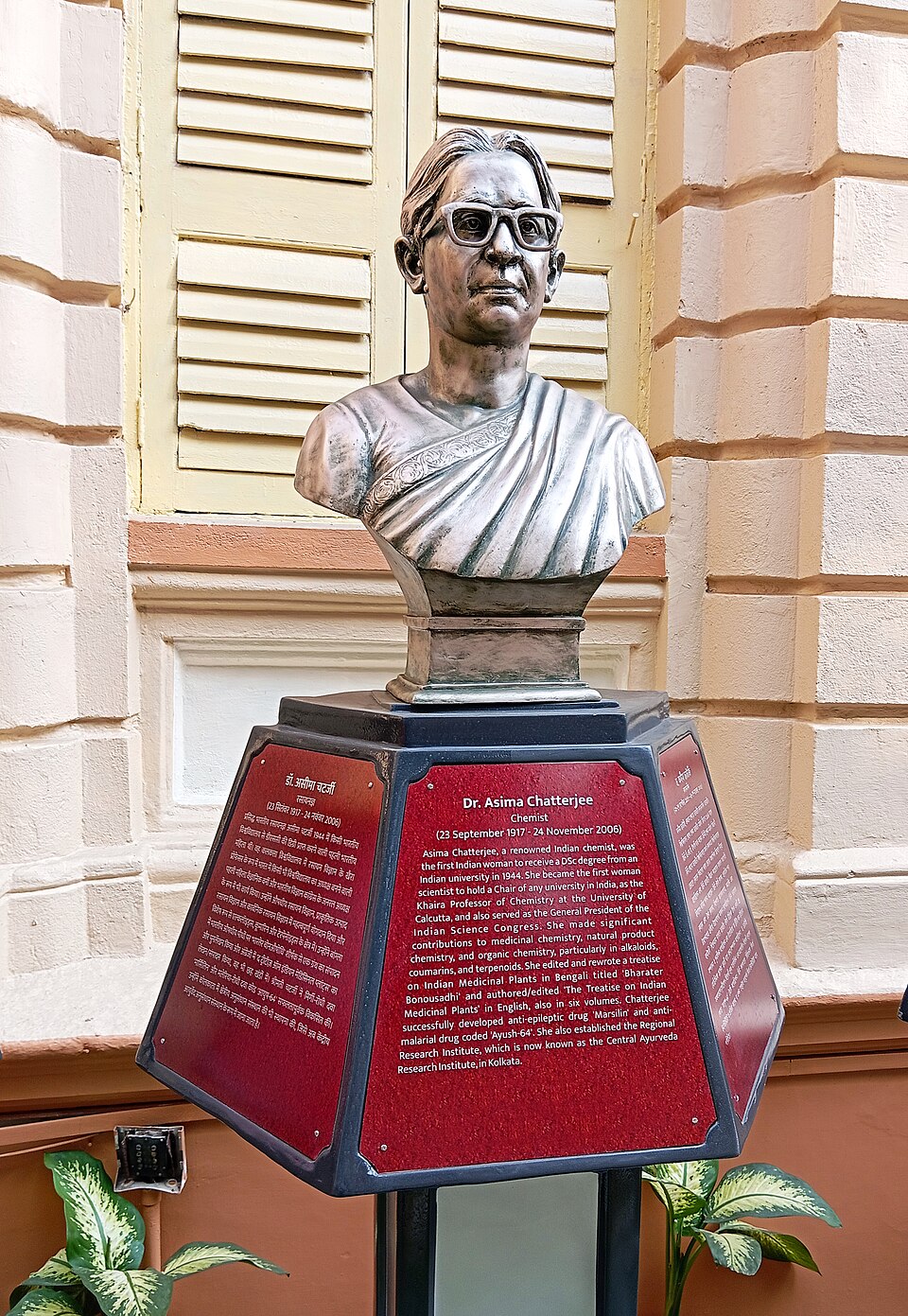
It was a brand-new country full of hope! India became independent in 1947, after centuries under British rule. Imagine an entire nation learning to walk on its own. The government wanted to build its own science, so great research institutes were created. I thought something very simple: our science had to sink its roots into our own plants, our own needs. Not copy others. In 1975, I was asked to preside over the Indian Science Congress, the huge gathering of the country's scientists. I was the first woman in that position. In front of all those scientists, I defended research useful to our people.
Our science had to sink its roots into our own plants.
—Did you receive medals for your work?
Yes, several, and each touched me deeply. In 1961, I received the Shanti Swarup Bhatnagar Prize, India's great scientific award: again, I was the first woman to get it. Then in 1975, the government awarded me the Padma Bhushan, one of the country's highest civilian honors. Imagine a little girl from Calcutta, honored by an entire nation! Later, I was even nominated to Parliament, the upper house called the Rajya Sabha. But you know, medals never made me work. What got me up every morning was the desire to understand one more molecule. The honors came later, on their own.
Medals never made me work; the desire to understand did.
—If we could see you today, what would we notice?
You would probably see me in a cotton sari, bent over my glassware, surrounded by dried plants and notebooks covered in molecule drawings. In the evening, I wrote my papers, read journals from around the world, by lamplight. Do you know that long after my death, in 2017, a huge homepage consulted worldwide depicted me surrounded by molecules and plants, for my hundredth birthday? A recognition I would never have imagined, me who was barely known outside India. But the essential thing, my children, is not that my name is remembered. It is that you dare to look at a plant and ask yourselves: 'What is it hiding?'
Dare to look at a plant and ask yourselves: what is it hiding?
This imaginary interview was generated by artificial intelligence from sources documented in Asima Chatterjee's profile. It dramatises what the figure might have said based on what we know about them, but does not constitute attested historical testimony. For primary sources and factual documentation, refer to the full profile.