Imaginary interview with Asima Chatterjee
by Charactorium · Asima Chatterjee (1917 — 2006) · Sciences · 5 min read
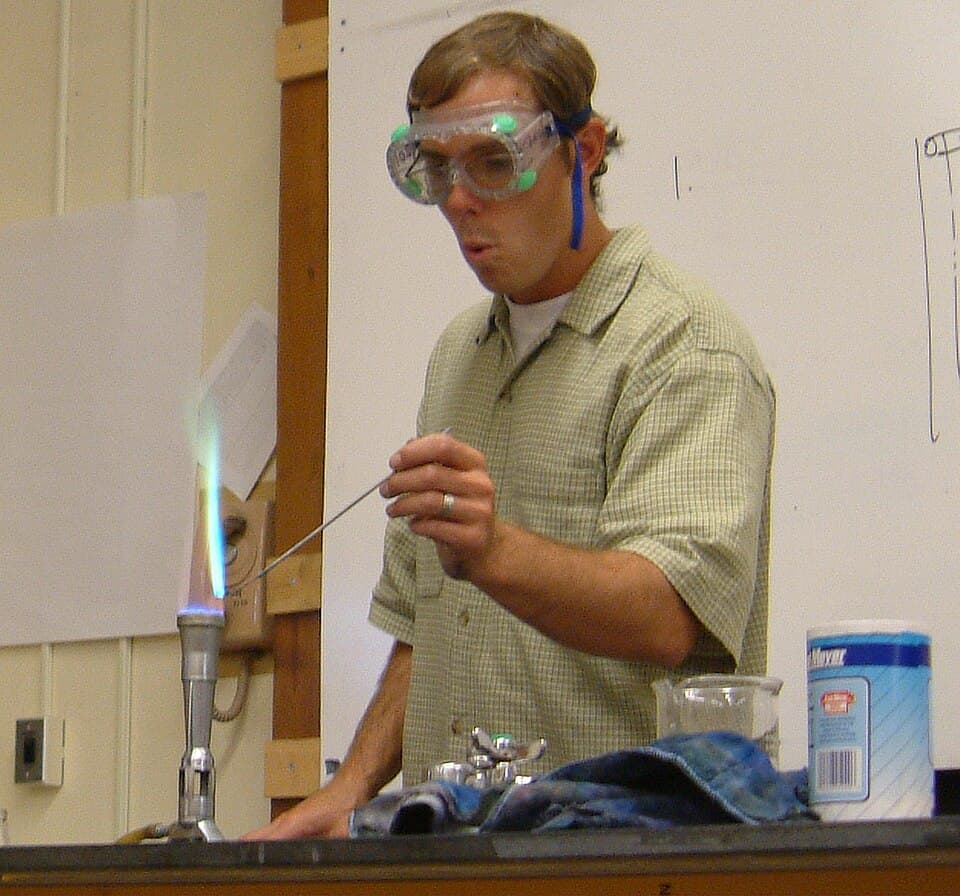
Calcutta, a monsoon afternoon. In a university laboratory where the smells of plant extracts linger, a woman in a cotton sari tidies her test tubes before receiving us. Asima Chatterjee agrees to trace the thread of a life spent questioning the plants of India.
—How did you become a chemist in an India where so few girls pushed open the doors of the university?
I earned my master's in chemistry at the University of Calcutta in 1938, in rooms where I was often the only one wearing a sari among lab coats. My mentor, Prafulla Chandra Ray, whom they called the father of Indian chemistry, made no distinction between his boys and me: he wanted careful hands and a stubborn mind, nothing else. He often repeated that our country's science must be built with our country's means. In 1944, the university awarded me a doctorate of science; I was told I was the first woman to receive one from an Indian university. I saw it not as a trophy, but as a door that could no longer be closed.
I saw it not as a trophy, but as a door that could no longer be closed.
—What do you keep from your years of training under your elders?
I grew up scientifically in a dense environment, where one might cross paths in a hallway with scholars like the physicist Satyendra Nath Bose. We discussed everything, matter and nation, with the feeling of preparing something greater than our careers. Later, I completed my training abroad, at the University of Wisconsin and then Caltech, where I learned to track the structure of natural pigments with methods we did not yet have at home. But I always returned to Calcutta. What my masters had passed on to me was not only a technique: it was the idea that an Indian chemist must do her science in India, on the plants of India.
An Indian chemist must do her science in India, on the plants of India.
—Why did you devote your life to medicinal plants rather than a more abstract chemistry?
Because those plants were right before our eyes, taken for mere village remedies, and no one had unlocked their secret with the tools of modern chemistry. I spent years on alkaloids, those bitter molecules that plants produce, especially those of the periwinkle, Vinca, whose compounds my team isolated one by one. Each extract went through the chromatography column, that long glass tube where one patiently separates the pure from the mixture. It took weeks to obtain a few grains of a substance whose shape was still unknown. But behind each powder perhaps hid a medicine, and that was enough to keep me awake before my glassware.
Behind each powder perhaps hid a medicine.
—Do you remember developing your treatment for epilepsy?
It came from a very humble plant: Marsilea minuta, a small aquatic fern that grows in our marshes and that peasants had known forever. From it, after many extractions, we derived an anti-epileptic called Ayush-56. That summed up all my work: taking ancient knowledge, almost that of Ayurveda, and passing it through the sieve of the polarimeter and the lab notebook to make it a safe medicine. We similarly sought compounds against malaria, the scourge that emptied entire villages around us. Healing with what grows at home: that was, for me, the most beautiful promise of chemistry.
Taking ancient knowledge and passing it through the sieve of the lab.
—What did the building of science in newly independent India mean to you?
The independence of 1947 did not just change a flag; it gave us the right to dream of our own research. Nehru's government was building the CSIR and the great institutes, and we felt that chemistry was no longer a colonial ornament but a pillar of the nation. I wanted my work to be rooted in the country's natural resources and real needs, its diseases, its plants, its farmers. A science that ignores the fevers of its own people is nothing but an imported luxury. I was fortunate to live through that moment when India stopped receiving knowledge and began to produce it.
A science that ignores the fevers of its own people is nothing but an imported luxury.
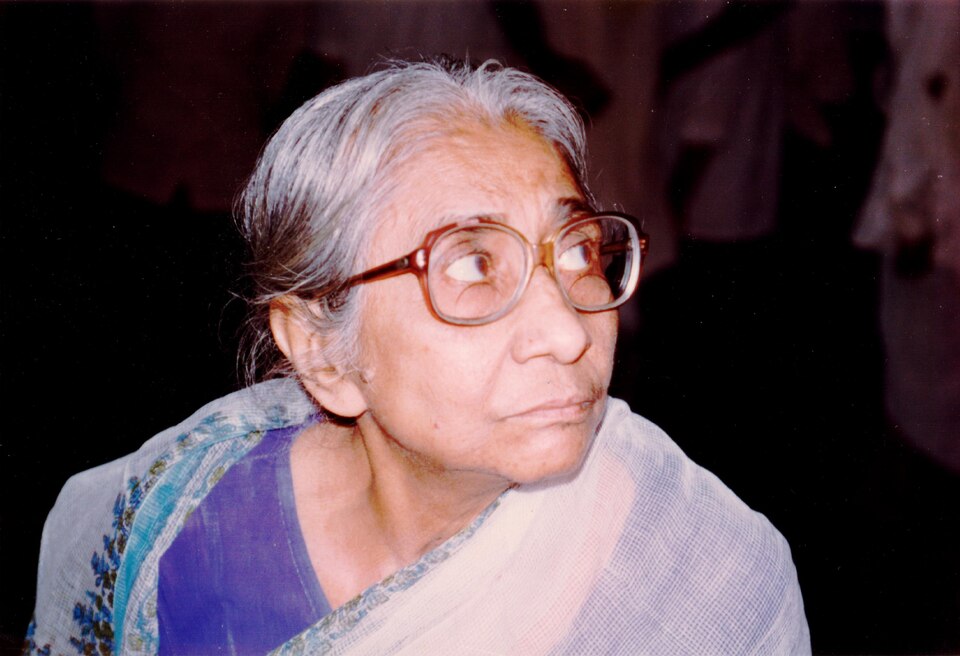
—How did you experience your presidency of the Indian Science Congress?
In 1975, I was asked to preside over the Indian Science Congress, that immense annual gathering of our scientists. I gave an address in which I defended, again and again, research anchored in our soil and our needs. I was told it was the first time a woman had occupied that chair; I especially hoped it would not be the last. That same year, the state awarded me the Padma Bhushan, one of its highest honors. I received these honors with gratitude, but my true satisfaction lay elsewhere: in a structure finally elucidated, a molecule tamed after months of stubbornness in the lab.
The first woman in that chair; I especially hoped it would not be the last.
—Why did you invest so much in teaching, even founding a chemistry department?
Because a discovery dies if no one comes to continue it. At Lady Brabourne College in Calcutta, I founded and directed a chemistry department, with the stubborn idea of opening the discipline wide to young women. I wanted them not to have to conquer alone the ground I had won step by step. My afternoons were divided between classes and supervising my doctoral students, bent with me over a molecular structure drawn on the blackboard. Training a researcher seemed as important as publishing: you do not build a national science with a single pair of hands, but with generations that take turns at the same bench.
A discovery dies if no one comes to continue it.
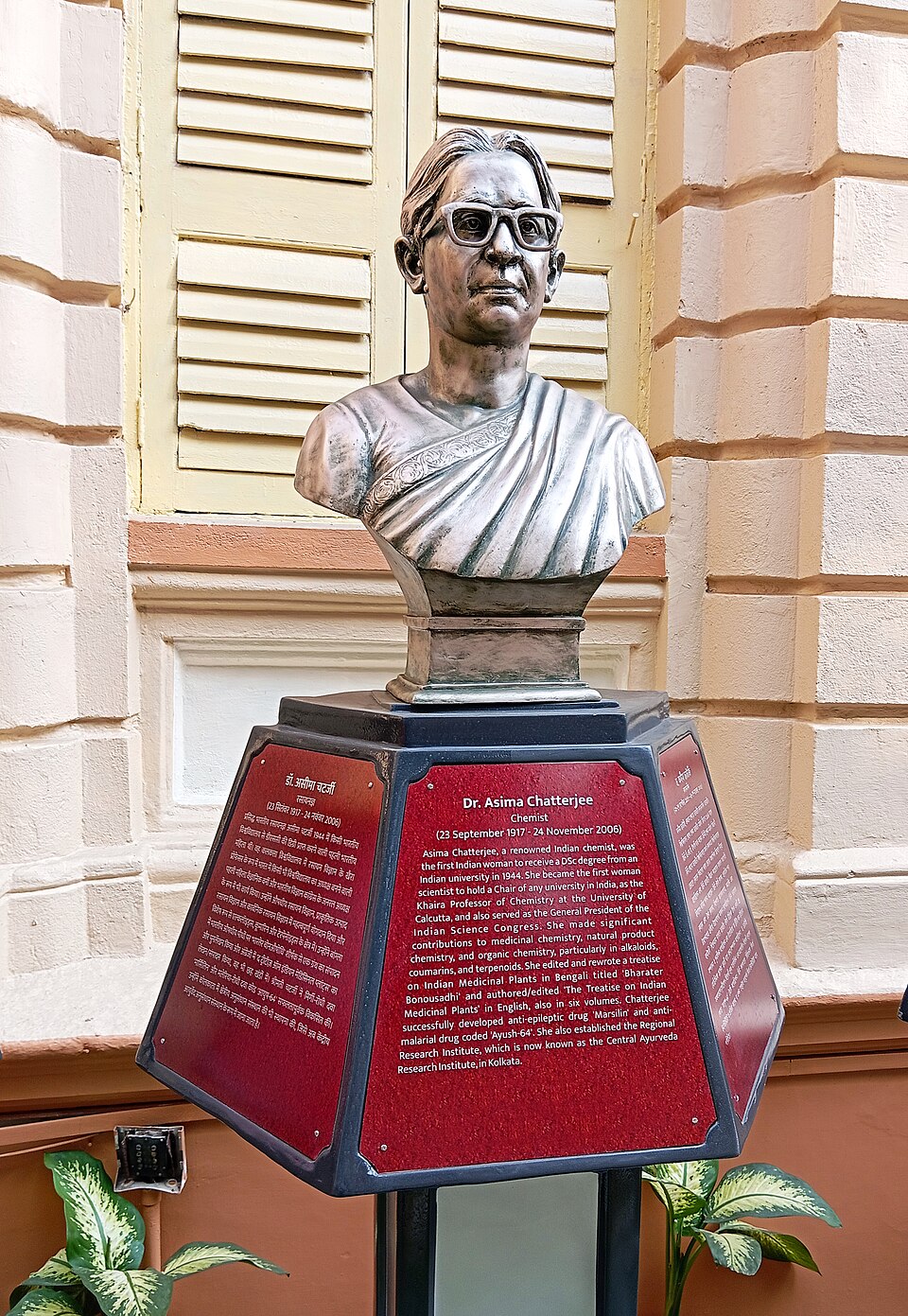
—What would you say about your writing work, those hundreds of articles and reference works?
I published over four hundred articles over the decades, but a number says nothing of the patience it covers. Each evening, after the lab, I would go through the international literature and write, correct, start over. Later, I directed for the CSIR the edition of a vast work on Indian medicinal plants, the Treatise on Indian Medicinal Plants, which catalogued their properties and active principles. It was a way to put in writing, once and for all, that scattered knowledge of our flora, so it would not slip into oblivion. A lab notebook keeps an experiment; a treatise, however, keeps the memory of an entire country.
A treatise keeps the memory of an entire country.
—What did one of your ordinary days in the lab look like?
In the morning, I would go to my lab at the University of Calcutta, where the glassware and extractions started the day before awaited me. My first gesture was often to check a flask left to distil, to see if an active principle had begun to concentrate. Then came the polarimeter, that instrument that measures how a molecule rotates light: for my alkaloids, that small deviation was a signature. The afternoon belonged to the students and doctoral candidates. I worked in a cotton sari, the most comfortable under the city's humid climate, never thinking that attire and the bench were incompatible. Chemistry, for me, never demanded that one renounce who one was.
Chemistry never demanded that one renounce who one was.
—What remained of Bengali life behind the renowned scientist?
Everything, truly. In the evening, once the articles were written and the correspondence closed, I would rejoin my family in Kolkata, in that dense city where the lab was never far from home. We ate what a Bengali household eats: rice, dal, river fish, all seasoned with spices, a cup of tea to finish. I never felt a break between these two worlds. The same care I put into isolating a compound, I found in the ancient gestures of the kitchen, in the way of folding a sari. A life of research did not tear me from my Bengal; it nestled into it, patiently, like a molecule in its plant.
A life of research nestled into my Bengal, like a molecule in its plant.
This imaginary interview was generated by artificial intelligence from sources documented in Asima Chatterjee's profile. It dramatises what the figure might have said based on what we know about them, but does not constitute attested historical testimony. For primary sources and factual documentation, refer to the full profile.