Imaginary dialogue between Antonio de Montesinos and Bartolomé de las Casas
by Charactorium · Bartolomé de las Casas (1484 — 1566) · Spirituality · 5 min read
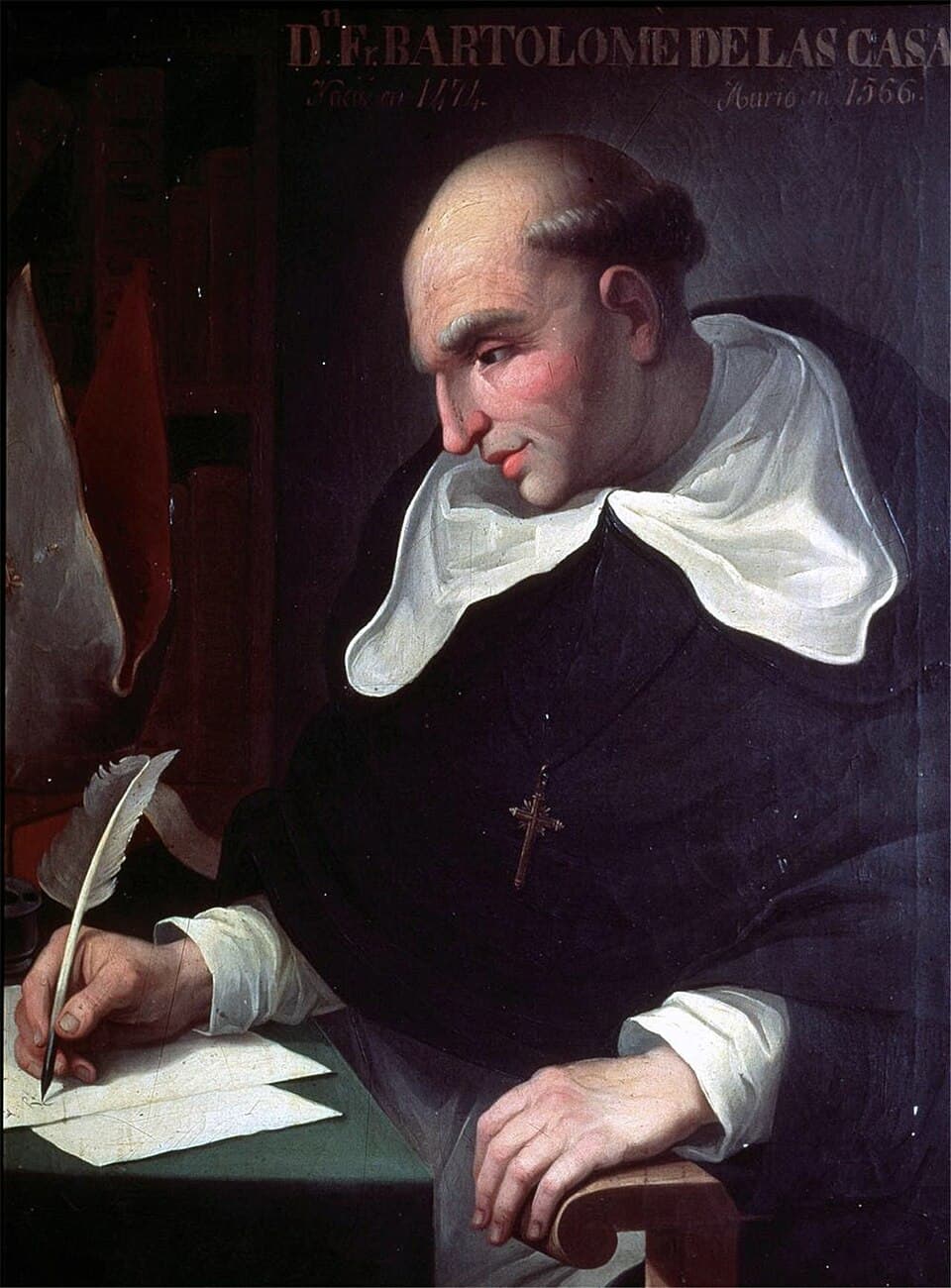
It is at the Dominican convent of Santo Domingo, on this Hispaniola where it all began, that friar Antonio de Montesinos meets Bartolomé de las Casas, now an old man in a worn white habit. Outside, the heat makes the patio shimmer and the fountain water slaps against the stone. Fifty years earlier, it was here that Montesinos first cried out against the fate of the Indians, before a Las Casas who was still a colonist and deaf. Today the precursor comes to listen to the one his words had once touched, and to ask him to account for the long road traveled.
—Bartolomé, my brother, do you remember my Advent sermon in 1510, right here? You were a colonist then. What did you feel?
I will not lie to you, Antonio: that day, your voice passed through me without stopping. You asked by what right we held these peoples in servitude, and the whole colony trembled with anger. I had my encomienda, my Indians, my lands — and I sided with those whom your cry offended. I told myself I was a good master, gentler than the others, as if gentleness excused theft. Your seed fell on hard ground, and it took four years to sprout. But I know today that without your boldness of 1510, I would never have known how to name what I saw every day without looking at it.
Your seed fell on hard ground, and it took four years to sprout.
—And what happened in 1514? It is whispered that a single passage of Scripture was enough to break the colonist you were.
I was preparing my sermon for Pentecost, and I was rereading Ecclesiasticus. I came across these words: to deprive the poor of their bread is to shed blood; to refuse the worker his wages is to commit murder. Suddenly, everything I had fled since your sermon came back to me at once. I understood that my Indians were not a gift that God granted me, but men I was robbing. I gave up my encomienda on the spot, I stopped profiting from it, and I preached against what I had still practiced the day before. You who had cried out alone, you know what it costs to stand up against your own. That day, I finally heard what you had told me four years earlier.
My Indians were not a gift that God granted me, but men I was robbing.
—You have worn our habit since 1522. What did becoming a preaching brother among us change for your struggle?
As long as I was a secular cleric and an isolated pleader, I was dismissed as a dreamer. By entering our order, Antonio, I found a wall of brothers behind me, the same that supported you when you preached here. The rule gave me silence and study; this black scapular, an authority that could no longer be brushed aside. I rose before dawn for matins, then spent my mornings with pen in hand, in my cell, putting on paper what the colonists wanted to bury. The poverty of our habit was my best argument: no one could accuse me of defending the Indians for gold, since I kept none.
—Tell me about Cumaná, in 1521. You wanted to prove that you could win the Indians without a sword. It failed, didn't it?
Yes, and the failure still burns me. I held that the Gospel is preached only by persuasion, never by arms — that is the whole meaning of my De unico vocationis modo. I wanted to demonstrate it in flesh: send simple Spanish peasants to live among the Indians of Venezuela, without soldiers, without chains, as brothers among brothers. But the slave traders were already prowling those coasts, they had poisoned trust with their raids, and conflicts swept everything away. I saw my dream reduced to ashes. Yet I did not renounce the idea: it was not the peaceful method that failed, it was the violence of others that strangled it before it could breathe. You cannot sow peace in a field that others are bloodying.
It was not the peaceful method that failed, it was the violence of others that strangled it.
—Your Brevísima relación of 1552 caused a stir all the way to Europe. Why paint horror in such raw colors?
Because the court of Castile saw nothing, Antonio. Between it and the Indies lay the Ocean, and the Ocean swallows cries. The words had to make the blood cross. I wrote that the Spaniards entered those gentle lands like hungry wolves among tender lambs, and that for forty years they had done nothing but massacre, torment, and destroy those innocent peoples. I was reproached for excess. But I invented nothing: I counted the extinguished villages, gathered the testimonies, saw the bodies. If my pen trembled, it was with holy fury. Better a book that wounds the powerful than a silence that buries entire nations.
Better a book that wounds the powerful than a silence that buries entire nations.
—The conquistadors say they wage a just Conquista, ordained by heaven. How do you respond to that word they have on their lips?
That word Conquista, they shaped it to dress pillage as a divine mission. The Requerimiento is read to the Indians, that absurd text that orders them, in a language they do not understand, to submit to the king and the faith on pain of war — then they are massacred for not having obeyed. What mockery! Faith enters through the ear and the heart, not through the sword and the notary. A war of conquest against peoples who have done us no wrong is neither just nor Christian: it is brigandage. I drew up thirty legal propositions to demonstrate it point by point. What they call conquest, I call by its true name: tyranny.
—At Valladolid, around 1550, you faced Sepúlveda for days. He said you were well placed, you, the former colonist. What did you defend there?
Sepúlveda argued, Antonio, that the Indians are inferior beings, slaves by nature whom it is lawful to subdue by war before evangelizing them. I spoke for days to demolish that lie. I argued that all the nations of the world are composed of men, and that the definition of man is to be rational; that all peoples possess understanding, will, and free will. The Indians have cities, laws, arts, a polity — I piled up the evidence in my Apologética historia. It was not a school debate: it was about whether one could, without sin, treat men like cattle. Before that assembly of theologians, I defended not my ideas, but their humanity.
All the nations of the world are composed of men, and the definition of man is to be rational.
—Did this Controversia really decide anything? Or do you fear that fine reasoning remains a dead letter on the sands of the Indies?
You know my frankness: no judge declared a winner, and that is my wound. I felt the assembly shaken, I saw Sepúlveda forced to retreat on many points. But a controversia won in a hall in Valladolid does not restore a single Indian to freedom if the encomienda remains standing in the Indies. I have seen this before: the Leyes Nuevas of 1542 were wrested with great difficulty, then emptied of their force by the colonists' anger. That is why I never stopped writing to the Council of the Indies, memorandum after memorandum. Words must become law, and law must bite — otherwise we will have only soothed our conscience while our brothers are bled.
—When you were bishop of Chiapas, in San Cristóbal, how were your days among those peoples you had defended from afar for so long?
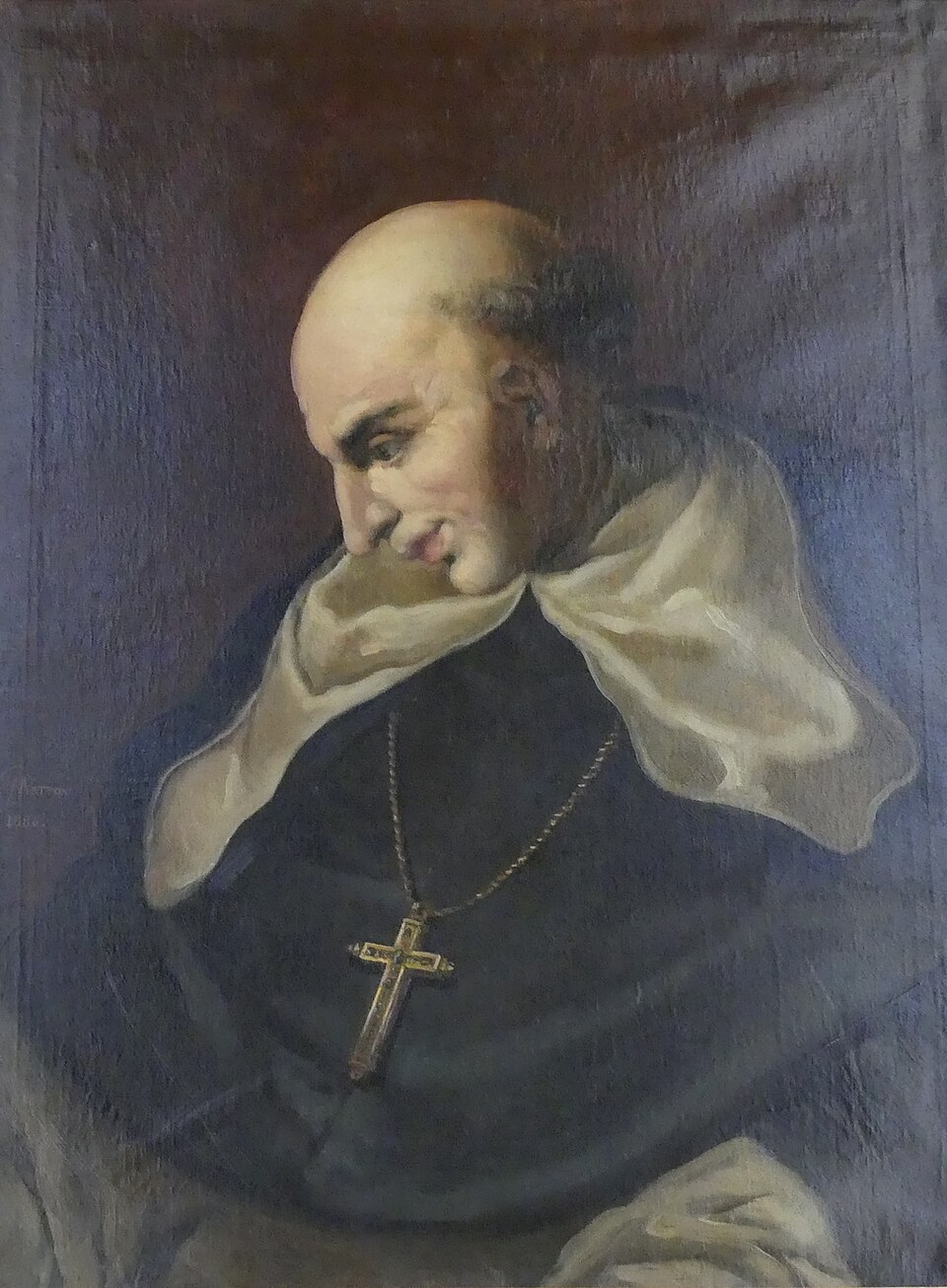
There at last, Antonio, I no longer only wrote about the Indians: I lived among them. In the morning, the office and mass; in the afternoon, I received the caciques who came to tell me their grievances, and I visited the communities to see their conditions with my own eyes. I refused absolution to colonists who did not free their Indians — that earned me fierce hatred, threats, almost a riot. My crozier and pectoral cross were not ornaments: they were weapons for those poor people. In the evening, after vespers, I took up my manuscripts by candlelight. As bishop, I understood one thing: you truly protect a people only by sharing their soil, their table, and their fear.
—You are very old now, my brother, and you still plead. What keeps your pen from finally resting?
This quill and this inkwell are the last companions I have left, and they will serve me until the grave. As long as an Indian groans under the encomienda, my silence would be complicity. I have spent my life carrying bundles of memoranda before the court, starting the same petitions a hundred times to the Council of the Indies; some call me the stubborn one, others the Protector of the Indians. You, you know where I come from: from the same fire that made you cry out here in 1510. I will soon join my final compline, but I want to be found with pen in hand. God gave me long years for a single task: never to let the world forget that these peoples are men.
As long as an Indian groans under the encomienda, my silence would be complicity.
This imaginary interview was generated by artificial intelligence from sources documented in Bartolomé de las Casas's profile. It dramatises what the figure might have said based on what we know about them, but does not constitute attested historical testimony. For primary sources and factual documentation, refer to the full profile.