Imaginary interview with Bartolomé de las Casas
by Charactorium · Bartolomé de las Casas (1484 — 1566) · Spirituality · 6 min read
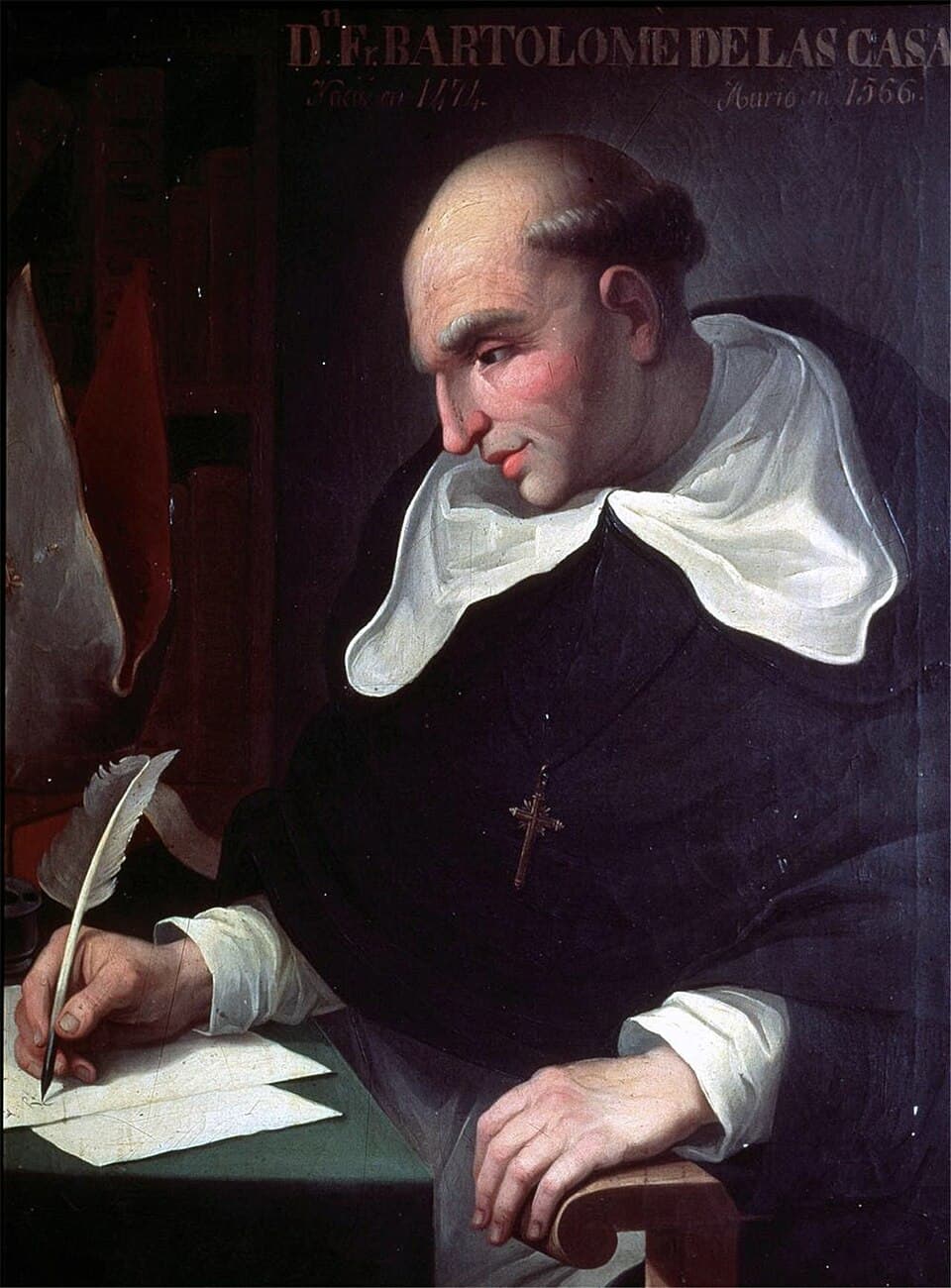
Madrid, winter 1566. At the Dominican convent of Atocha, a ninety-two-year-old man still receives, despite his fatigue, those who wish to hear him. His cell smells of ink and wax; on the lectern, bundles of memorials await being taken to court. He sets down his pen and agrees to look back, one last time, over sixty years of struggle.
—Do you remember the day your life changed?
It was in 1514, in Cuba, and I was preparing a sermon for Pentecost. My eyes fell upon a passage from Ecclesiasticus: he who deprives the poor of his bread, he who withholds the wages of the laborer, sheds blood. I read it again, and the ground gave way beneath me. For that blood, it was I who was shedding it. I was then an encomendero: Indians had been assigned to me like beasts of burden, and I was perfectly fine with it, believing I served God by serving my fortune. That morning I understood that no gold, no Mass could wash away that stain. I returned my Indians to the governor, who thought me mad. Perhaps I was. But it is the only madness I have never regretted.
That blood, it was I who was shedding it.
—How does a colonist become the advocate of those he exploited?
One does not become so in one morning, believe me. When I landed at Hispaniola in 1502, I was twenty-eight and had the tranquil soul of the people of Seville, that great port from which our ships set out, swollen with hope and greed. I had heard, in 1510, Friar Antonio de Montesinos thunder from his pulpit: by what right did you hold these men in servitude? His voice had disturbed me without converting me. It took another four years, and that Pentecost reading, for the dam to break. Later, in 1522, I took the white habit of the Friars Preachers. With the black scapular on my shoulders, I had finally found the uniform of my revolt.
With the black scapular on my shoulders, I had finally found the uniform of my revolt.
—Your Brevísima relación struck all of Europe. What did you hope to achieve?
I wanted that no one could ever again say: we did not know. In 1552, I put on paper what my eyes had seen for forty years, without embellishment, without mitigation. I wrote that 'the Spaniards entered like hungry wolves among tender lambs. For forty years, they have done nothing but massacre, torment, afflict, and destroy these innocent peoples.' I have been reproached for the excess of my images. But how can one be measured before burned villages, children thrown to the dogs? The Brevísima relación de la destrucción de las Indias is not a serene history book: it is a cry hurled in the king's face, so that the crown may tremble and the laws may change.
I wanted that no one could ever again say: we did not know.
—Were you not afraid that this indictment would one day serve your enemies?
I have been told so, and the reproach will likely pursue me even after my death. The enemies of Spain will rejoice in my Brevísima relación and use it as a weapon. So be it. But I do not write for rival nations; I write for the souls being exterminated this very day in the mines and encomiendas. If I could imagine that someone would read me in a century, I would say this: let them judge me harshly, provided they do not say that I was complicit through silence. I have spent my life carrying bound memorials from one end of Castile to the other, testimonies gathered village by village. Lies would have been more comfortable. Truth, however, does not ask permission to be inconvenient.
Let them judge me harshly, provided they do not say that I was complicit through silence.
—At Valladolid, facing Sepúlveda, what was the heart of your dispute?
One question, and only one: are these men of the New World men? Juan Ginés de Sepúlveda argued that they were slaves by nature, inferior beings whom it was lawful to subdue by war, as Aristotle would have allowed. Before the assembly of theologians and jurists, in 1550, I argued the contrary for days. For 'all the nations of the world are composed of men, and the definition of every man is that he is a rational being.' All possess understanding, will, and the free will that follows from them. Sepúlveda spoke of barbarians; I had seen their cities, their laws, their poems. This controversia settled nothing on paper. But for the first time, a crown agreed to suspend its conquests to ask whether they were just.
One question, and only one: are these men of the New World men?
—How did you answer those who invoked Aristotle to justify servitude?
I turned their own master against them. In my Apologética historia sumaria, I described in detail the peoples of the Indies: their orderly cities, their governments, their arts, their knowledge of the heavens. And I showed that they rivaled the Greeks and Romans that Sepúlveda so revered. How can one call barbaric a people more temperate, sometimes, than their conquerors? The slave by nature that the Philosopher speaks of, if he exists, is a rarity, an accident — not an entire race, not a continent that can be delivered to the sword. The Council of the Indies listened to me, skeptical. But I held my pen as one holds a sword: each page tore an inch of ground from the monstrous idea that a man could be born the property of another.
I held my pen as one holds a sword.
—What would you say about your attempt at peaceful colonization in Cumaná?
My most beautiful dream and my cruelest lesson. In 1521, on the coast of Cumaná, in Venezuela, I wanted to prove by deeds what I argued in words: that one could approach these peoples without the sword, by gentleness alone. I brought peasants from Castile, simple men, so that they might live side by side with the Indians, plowing the same land together. The idea was beautiful; the reality was bloody. The violence of other Spaniards nearby had already poisoned trust; conflicts broke out, and everything collapsed. I wept over it. But a failure does not refute a truth: it only proves that one attempted it too late, in a field already sown with hatred.
A failure does not refute a truth.
—On what did you base your conviction that one does not convert by force?
On the Gospel itself, which knows no other weapon than the word. I devoted an entire treatise to this, the De unico vocationis modo: there is only one legitimate way to call men to faith, and that is the persuasion of the understanding, the gentleness that attracts the will. Faith imposed by fear is not faith; it is a grimace of submission. What a mockery was that Requerimiento read to the Indians in a language they did not understand, commanding entire peoples to surrender under threat of war! They were ordered to believe before being taught what to believe. Christ knocked at the door; he never broke it down.
Christ knocked at the door; he never broke it down.
—Why did you make the encomienda the great enemy of your entire life?
Because it was the lie on which everything rested. The encomienda was handing over a group of Indians to a colonist, under the pretext that he would protect them and instruct them in the faith — when he only exhausted them to death in his fields and mines. A servitude disguised as Christian charity. As early as 1516, the crown had granted me the title of Protector of the Indians; I made it the lever of fifty years of pleadings. My Thirty Legal Propositions demonstrated the very illegitimacy of this system and of the war of conquest. One does not reform a crime; one abolishes it. As long as the encomienda stood, every word of peace would be but a poultice on a wound reopened every day.
A servitude disguised as Christian charity.
—Were the Leyes Nuevas of 1542 the victory you hoped for?
A victory, yes, but wrested and already fragile. In 1542, Charles V promulgated the Leyes Nuevas, those New Laws that limited the encomienda and prohibited passing new ones by inheritance. I had worn out my voice and my quill pen before the Council of the Indies to bring them into being. What joy! And then what bitterness, for the colonists of Peru revolted, and the crown had to retreat on the essentials. I learned that day that laws are like seeds: you can plant them, but you cannot command the earth to make them sprout. So I took up my memorials again, again and again, until this great age in which you find me, pleading without ever disarming.
Laws are like seeds: you can plant them, but you cannot command the earth to make them sprout.
—At ninety-two, what still makes you hold the pen?
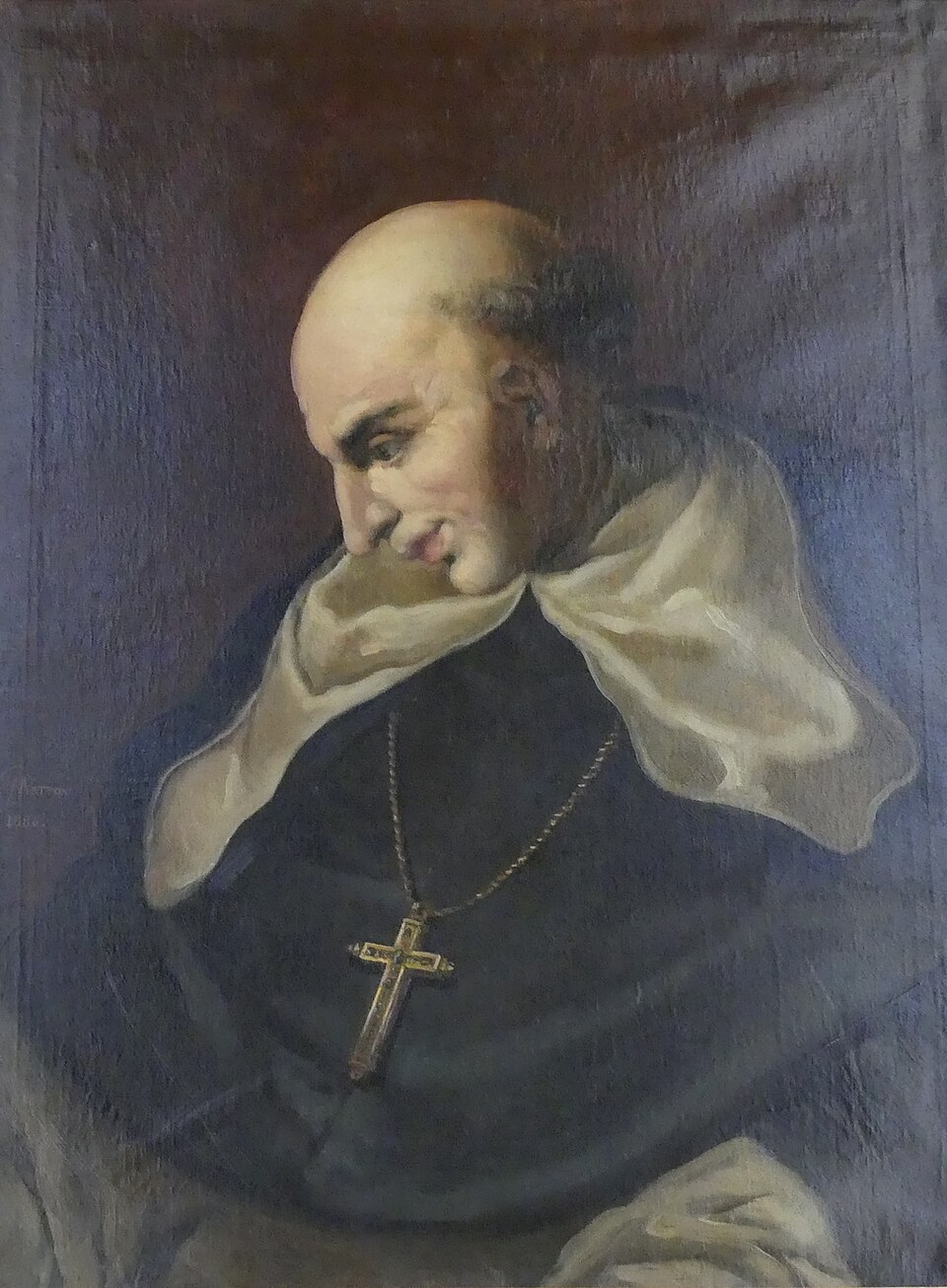
The unbearable thought of stopping before them. As long as a single Indian groans in a mine in Peru, my work is not finished. I live here, in this convent of Atocha, amid my manuscripts, my breviary within reach for the hours of the office. I was once named bishop of Chiapas; I wore the pectoral cross as a burden more than an honor. My Historia de las Indias, which I have been writing for over thirty years, I have ordered that it not be published for a long time — the truth it contains would burn too many hands today. I will die soon. But a well-dipped pen outlives the one who holds it, and it is to that pen that I entrust the rest of the fight.
A well-dipped pen outlives the one who holds it.
This imaginary interview was generated by artificial intelligence from sources documented in Bartolomé de las Casas's profile. It dramatises what the figure might have said based on what we know about them, but does not constitute attested historical testimony. For primary sources and factual documentation, refer to the full profile.