Kids interview Bette Nesmith Graham
by Charactorium · Bette Nesmith Graham (1924 — 1980) · Technology · Economics · 5 min read
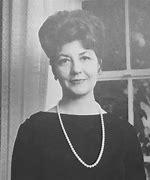
Two middle school students, on a field trip about inventions, push open the door of a small office that smells of paint. A neatly coiffed lady greets them with a white bottle in her hand. She motions for them to sit down: she has plenty of stories to tell.
—What was your job at the bank like when you made mistakes?
You know, my dear, I was an executive secretary at the Texas Bank and Trust in Dallas. That means I typed the boss's letters all day on a typewriter. The problem? One single typo, and you had to start all over, the whole page! Imagine writing a beautiful page in ink, with no eraser: the slightest mistake, and you tear it all up. It was exhausting, and a little humiliating. So every morning I sat down at my machine with a knot in my stomach. I was always afraid of the mistake that would ruin all my work.
One single mistake, and you had to start all over, the whole page.
—How did you get the idea for the white paint?
It came by chance, looking out the window! It was December 1951, and painters were decorating store windows for the holidays. I watched them work. And then something struck me: when they made a mistake, they never scratched it out. No! They simply put another coat of paint over it. I thought, "Why do I struggle to erase my mistakes?" A painter doesn't erase; he covers up. So I brought some white paint to the office, with a small brush. And presto, I hid my mistakes instead of retyping. Nobody noticed a thing.
A painter never erases his mistake: he covers it up.
—What was a day like for a secretary in your time?
In the morning, I got my son ready, then I rushed to the office in a strict suit, skirt below the knee and heels — that was the rule for us secretaries. All morning, I typed correspondence. In my day, we didn't have photocopiers! To make a copy, you slipped a sheet of carbon paper between two pages: the ink transferred to the bottom page as you typed. It was called a typing pool, a whole department of women typing on an assembly line. Imagine a large room where you hear nothing but the clatter of keys all day. That was my world, and it was mostly full of women.
A large room where you hear nothing but the clatter of keys.
—Did you really make your invention in your kitchen?
Yes, my dear, in my own kitchen! At night, once my son was in bed, I mixed tempera paint — a water-based paint — in my blender, the same one I used for meals. I was looking for the right recipe, like you would for a cake. To help me, I asked questions to my son's high school chemistry teacher and to employees at a paint factory. In 1956, my little correction fluid had a name: Mistake Out. I filled each bottle by hand, in my garage. It was tiny, but it was mine.
I looked for my formula like you look for a cake recipe.
—And then, how do you go from a kitchen to a real factory?
Little by little, you know! At first, I sold my bottles to secretaries in Dallas, one bottle at a time. Then orders grew and grew, so much that my garage wasn't enough. I had to rent real premises, hire people. And in 1975, I opened a true automated factory. Listen to this number: it produced about 25 million bottles per year! Imagine rows of bottles rolling endlessly. When I thought back to my little kitchen blender, I could hardly believe it. A very simple idea had ended up filling an entire factory.
An idea born in a kitchen ended up filling an entire factory.
—Is it true your son helped you? Who did he become?
Ah, my Michael! Yes, when he was young, he helped me in the evenings fill the little bottles and stick on labels. We worked together at the table, like a team. It was our time together. And then, a few years later, he surprised me: he became a singer in a very famous pop group, The Monkees! Imagine: the boy who labeled my correction fluid bottles was now on the radio, with thousands of people screaming his name. I was a proud mother, believe me. Each of us ended up inventing our own success.
The boy who labeled my bottles became a pop star.
—What did you eat in the evening after a long day of work?
Oh, nothing fancy, my dear! I was a very busy mom, so we ate simple things. Sandwiches, canned meals we heated up quickly, some milk, coffee to keep me going in the evening. In my day, the refrigerator and ready-made foods were a little revolution: they saved precious time for a working woman. Imagine a modest kitchen in a suburban house in Dallas, with a garage right next door. That's where I had a quick dinner with my son. And that same table, once cleared, became my workshop for making correction fluid.
The same dinner table became my workshop in the evening.
—Is it true you were fired from the bank? Were you sad?
That story is told, yes! One day, because I was thinking so much about my business, I supposedly absentmindedly typed my own company's name instead of my boss's. And I was fired. At the time, it's scary, you know: losing your salary when you're raising a child alone is no small thing. But instead of discouraging me, it gave me a big push. I told myself, "Since I no longer have an office, I might as well give my all to my correction fluid." Sometimes, a door that closes forces you to open a much bigger one.
Sometimes, a door that closes forces you to open a bigger one.
—Did you become rich in the end? How did that feel?
In 1979, a big company called Gillette bought my business. The price? About 47.5 million dollars! Can you imagine, for an idea born in my kitchen with a blender? They called me a self-made woman, an American expression for a woman who built everything by herself, starting from nothing. But you know what made me proudest? I created foundations to help other women become independent, to earn their own money. Money comes and goes. But helping a woman fly on her own wings — that lasts.
Helping a woman fly on her own wings — that lasts.
—What would you like people to remember about you later?
I'd like you to remember one simple thing, my dear. I wasn't a great scholar or a rich heiress. I was a secretary who was tired of starting her pages over. I just looked my problem in the face, and I dared to search for my solution, at night, in my kitchen. Look at the little bottle of correction fluid right there: it came from a daily annoyance, turned into an idea. If something bothers you in your life, don't look down. Observe, like me in front of those Christmas windows. The greatest invention often begins with a small frustration you refuse to accept.
The greatest invention often begins with a small frustration you refuse to accept.

This imaginary interview was generated by artificial intelligence from sources documented in Bette Nesmith Graham's profile. It dramatises what the figure might have said based on what we know about them, but does not constitute attested historical testimony. For primary sources and factual documentation, refer to the full profile.