Imaginary interview with Bette Nesmith Graham
by Charactorium · Bette Nesmith Graham (1924 — 1980) · Technology · Economics · 5 min read
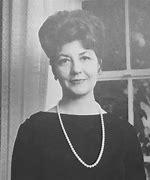
Dallas, late afternoon in 1979. In an office that still smells of fresh paint, a woman in a neat suit places a small white bottle on the table, the same one she once filled by hand. She has just sold her company for a fortune; yet she agrees to return, for the time of a conversation, to the kitchen table where it all began.
—What were your days like before the invention, when you were still a secretary?
I was an executive secretary at the Texas Bank and Trust in Dallas, and believe me, appearances were strict: tailored suit, skirt below the knee, impeccable hair, as if a single stray strand could shake the bank. In the morning, I arrived early, tackled the mail, then it was the endless clatter of the typewriter until evening. The worst was carbon paper: one wrong letter and you had to start all over, the original and the copies. We formed a real typing pool, all bent over our ink ribbons, hunting for the mistake that forced you back to square one. I liked typing, but I hated starting over.
I liked typing, but I hated starting over.
—Why did a simple typo weigh so heavily in the offices of that time?
Because there was nothing to erase cleanly. An eraser on typed paper left a hole, a smudge, a gray shadow that betrayed the error better than a red cross. And an executive letter had to be flawless, or you were judged careless. In 1961, when IBM released its electric Selectric, we typed faster, stronger, cleaner — but a mistake was still a mistake, and a clean mistake is still a mistake. I spent entire evenings retyping perfect pages ruined by a single word. I told myself there must be a way to cover the blunder instead of scratching it out.
—How did the idea for the corrector come to you?
By watching others work, not myself. It was winter, around 1951, and painters were decorating shop windows in Dallas for the holidays. I watched them from the street, and I noticed something very simple: when they messed up a line, they never scratched it out. They let it dry, then painted over it. The mistake disappeared under the paint. I stood there on the sidewalk, thinking that a secretary wasn't so different from a window painter: I too could cover my errors instead of erasing them. The next day, I brought some white tempera paint and a small brush to the bank.
A secretary wasn't so different from a window painter: I could cover my errors instead of erasing them.
—Do you remember your very first attempts to make this liquid?
My kitchen turned into a makeshift lab. I mixed white tempera in the blender, the same one used for cakes, until I got the right consistency: thick enough to cover, fluid enough to dry quickly. I knew nothing about chemistry, so I asked advice from my son's high school chemistry teacher, then from employees at a paint factory. I called it “Mistake Out”, and from 1956 I filled small bottles by hand, one by one, in the garage. It was tinkering, yes, but each bottle went to a secretary in Dallas who, like me, was tired of starting over.
—What allowed you to turn this tinkering into a real product?
Patience, and a lot of failures felt at my fingertips. The applicator brush was a small watercolor brush that I eventually put directly into the bottle cap — so you didn't have to search for anything, just unscrew and correct. I spent years adjusting the formula so it would dry fast enough without solidifying in the bottle. In 1958, I trademarked the name “Liquid Paper”: a white, quick-drying liquid to mask errors on typed documents. That day, my kitchen stopped being a kitchen. It had become a brand.
—How did you manage all this while raising your son alone?
By sleeping little, like all mothers who have no choice. In the morning, I got my boy ready before rushing to the bank; in the evening, once he was in bed, I labeled bottles and answered early orders on the kitchen table. But Michael wasn't just a spectator: he helped me fill and stick labels, his teenage hands lining up bottles with mine. Years later, that same boy went on stage with The Monkees, a band all America listened to. I find it amusing that we both made careers: him in songs, me in white paint.
Him in songs, me in white paint.
—They say your firing from the bank was a turning point. What really happened?
They say — and I won't deny it too much — that one day, absentmindedly, I typed my own small company's name instead of my employer's at the bottom of a letter. The bank didn't appreciate a secretary with her head elsewhere. I was let go. At the time, it was humiliating: I lived in a modest suburban house in Dallas, with a son to feed and no safety net. But frankly, that firing did me a favor. Without it, I would have kept correcting others' mistakes instead of building my own. I put away my office typewriter and devoted myself entirely to the corrector.
—How did you go from the garage to a real factory?
Slowly, then all at once. As long as we filled by hand, we hit a ceiling; we had to hire, move, mechanize. In 1968, the company left my garage for its own premises, and production exploded. The peak was 1975: a modern, automated factory capable of turning out about 25 million bottles per year. Twenty-five million! Me, who counted my first bottles one by one under the kitchen lamp. Seeing those assembly lines run was dizzying and a bit unreal: the same drop of white paint born from a secretary's whim, now manufactured by machines for offices worldwide.
Twenty-five million bottles — me, who counted my first bottles one by one under the kitchen lamp.
—What does the sale of your company to Gillette represent for you?
A crowning and a farewell, both together. In 1979, the giant Gillette bought the Liquid Paper Corporation for nearly 47.5 million dollars. The newspapers made a big deal of it: the consumer goods firm swallowed the company of a former Texas typist. I'd be dishonest to say the money left me cold — it crowned twenty years of persistence. But what mattered to me was the proof that a woman who started from nothing, from a Dallas kitchen, could build this with her own hands. They call me a self-made woman; the word suits me, as long as we don't forget the garage years.
—Now that you have the means, what do you want to devote this fortune to?
To give other women what no one gave me: a chance. I haven't forgotten what it's like to be alone, without a chemistry degree, with a child and an idea. So I created the Gihon Foundation in 1976, to support women and the arts, then the Bette Clair McMurray Foundation in 1978, focused on one thing: helping women find new ways to become financially independent. Independence is not a luxury, it's a lock you open. If my corrector erased millions of mistakes, I want my money to erase a bit of that fear women have of not making it on their own.
Independence is not a luxury, it's a lock you open.
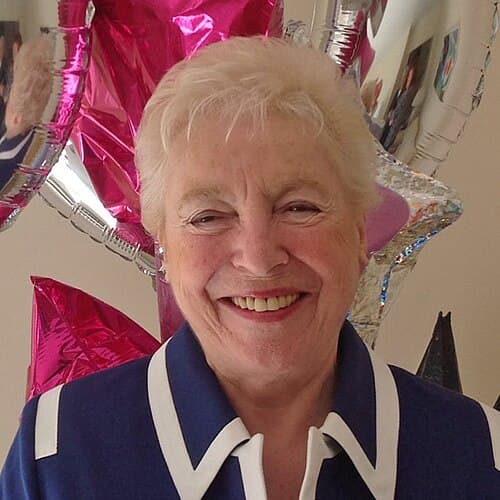
This imaginary interview was generated by artificial intelligence from sources documented in Bette Nesmith Graham's profile. It dramatises what the figure might have said based on what we know about them, but does not constitute attested historical testimony. For primary sources and factual documentation, refer to the full profile.