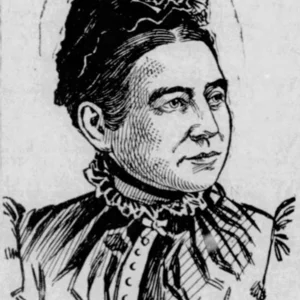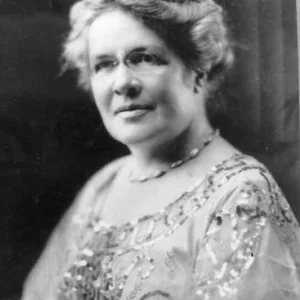

Kate Gleason (1865-1933) was an American engineer and businesswoman, a pioneer of the machine-tool industry. The first woman admitted to Cornell University's engineering program, she also made her mark in the construction of prefabricated concrete housing.
Kate Gleason(1865 — 1933)
Kate Gleason
États-Unis
6 min read
Frequently asked questions
Key Facts
- Born in 1865 in Rochester (New York State), she joined the family business, Gleason Works, while still a teenager.
- In 1884, she became one of the first women admitted to the Sibley College of Engineering at Cornell University.
- In 1914, she became the first woman admitted as a full member of the American Society of Mechanical Engineers (ASME).
- Around 1917, she became president of a national bank (First National Bank of East Rochester), a first for a woman in the United States.
- She developed subdivisions of prefabricated concrete houses (Concrest) and died in 1933.
Works & Achievements
As secretary-treasurer, she managed the accounts and sold the family machine tool as far afield as Europe, propelling the company onto the world market.
Her technical mastery and commercial talent made this precision machine known throughout the international mechanical industry.
Her admission to the American Society of Mechanical Engineers paved the way for women in learned societies of engineers.
Regarded as the first woman to head an American national bank, she turned around its financial situation.
She designed fireproof dwellings produced almost in series, pioneering prefabricated construction and affordable housing.
After the war, she invested in the rebuilding of this village in the Aisne using her concrete construction techniques.
Her fortune, managed by the family foundation, led to an engineering school being named after her, a lasting tribute to her career.
Anecdotes
In 1884, at age 19, Kate Gleason enrolled at Cornell University's Sibley College of Engineering: she was the first woman to enter the program. But when the family business hit a rough patch, she left her university studies to help her father in the workshop. She would never earn her degree, yet she would become one of the most famous engineers of her time.
On her sales tours across Europe, Kate Gleason knew the family company's bevel-gear planer so thoroughly that many industrialists believed she was the machine's inventor. She always set the record straight, crediting the invention to her father William and her brother, all while remaining the firm's most formidable salesperson.
In 1914, Kate Gleason became the first woman admitted as a member of the American Society of Mechanical Engineers (ASME), one of the most prestigious engineering learned societies in the United States, in a machine-tool world that was almost exclusively male.
In 1917, when the president of the First National Bank of East Rochester went off to war, Kate Gleason took over the running of the institution: she is regarded as the first woman to head a national bank in the United States. She restored the institution's finances before handing it back upon his return.
Fascinated by Henry Ford's assembly lines, Kate Gleason applied the idea of mass production to housing: she had fireproof, affordable six-room concrete houses poured in her “Concrest” development in East Rochester. She also became the first woman member of the American Concrete Institute.
Primary Sources
Kate Gleason is the ideal businesswoman I dreamed of fifty years ago.
Kate Gleason, of Rochester (New York), is admitted as the first woman member of the society of mechanical engineers.
Miss Gleason is building at East Rochester mass-produced poured-concrete houses, fireproof and sold at low prices, using methods inspired by automobile manufacturing.
Kate Gleason, engineer, businesswoman and builder, has died in Rochester; a pioneer in the machine-tool industry, she leaves a fortune intended for educational causes.
Key Places
Kate Gleason's hometown and home of Gleason Works, the family factory making gear-cutting machines. She lived and died there.
At this university's Sibley College, Kate Gleason became in 1884 the first woman enrolled in the engineering program.
Where she ran a national bank and built the “Concrest” development of concrete houses.
A village near Soissons devastated by World War I, which Kate Gleason helped rebuild with concrete houses.
A town in the San Francisco Bay area where she led real estate projects, extending her passion for building.
A small coastal town she helped revitalize through her investments and construction projects.
Typical Objects
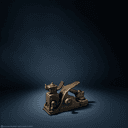
A precision machine tool designed by the family company to cut bevel gears. Kate Gleason turned it into a commercial success around the world.

A mechanical part with angled teeth that transmits motion between two shafts meeting at an angle. It was the heart of Gleason Works's business.
A T-square, compass, set square and slide rule were used to draw up the plans for machines and parts. Everyday tools for any engineer of the era.

A fireproof, inexpensive home produced almost on an assembly line thanks to reusable formwork. Kate Gleason applied the methods of the automobile industry to housing.
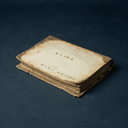
A register in which a company's income, expenses and orders were recorded by hand. Kate Gleason kept the books for Gleason Works as its secretary-treasurer.

A motorized vehicle still rare at the turn of the century. Kate Gleason was an enthusiastic driver and traveler at a time when few women took the wheel.
School Curriculum
Vocabulary & Tags
Key Vocabulary
Tags
Daily Life
Morning
Very early, Kate Gleason would head to the family factory in Rochester. Amid the smell of oil and the noise of lathes and milling machines, she moved between the workshops and the offices to track orders and talk with the machinists.
Afternoon
The afternoon was often devoted to business: receiving clients, keeping the accounts in the ledger, or preparing her sales trips. On her travels, she crossed the United States and Europe to showcase the machines.
Evening
In the evening, she read technical journals, kept up a rich correspondence, and mingled with Rochester's circles of engineers and committed women, such as the circle around Susan B. Anthony.
Food
Her diet was that of a well-off American woman of the early 20th century: bread, meats, vegetables, dairy products, and coffee. While traveling, she discovered European cuisines as her business tours took her along.
Clothing
She wore the understated, elegant outfits of a businesswoman of the era: long dresses or suits, high collars, and hats — practical clothing for moving between the workshop and the trade showrooms.
Housing
She lived in comfortable houses in the Rochester area, and later had concrete homes built and lived in them, concrete being a material she had become an ardent promoter of.
Historical Timeline
Period Vocabulary
Liens externes & ressources
Références
Œuvres
Direction commerciale et financière de Gleason Works
années 1890
Succès international de la planeuse à engrenages coniques
années 1890-1900
Première femme membre de l'ASME
1914
Présidence de la First National Bank of East Rochester
1917
Lotissement Concrest en maisons de béton
1919-1924
Reconstruction du village de Septmonts (France)
années 1920
Legs à l'origine du Kate Gleason College of Engineering
1933 (héritage)