Imaginary dialogue between Caroline Aupick and Charles Baudelaire
by Charactorium · Charles Baudelaire (1821 — 1867) · Literature · 6 min read
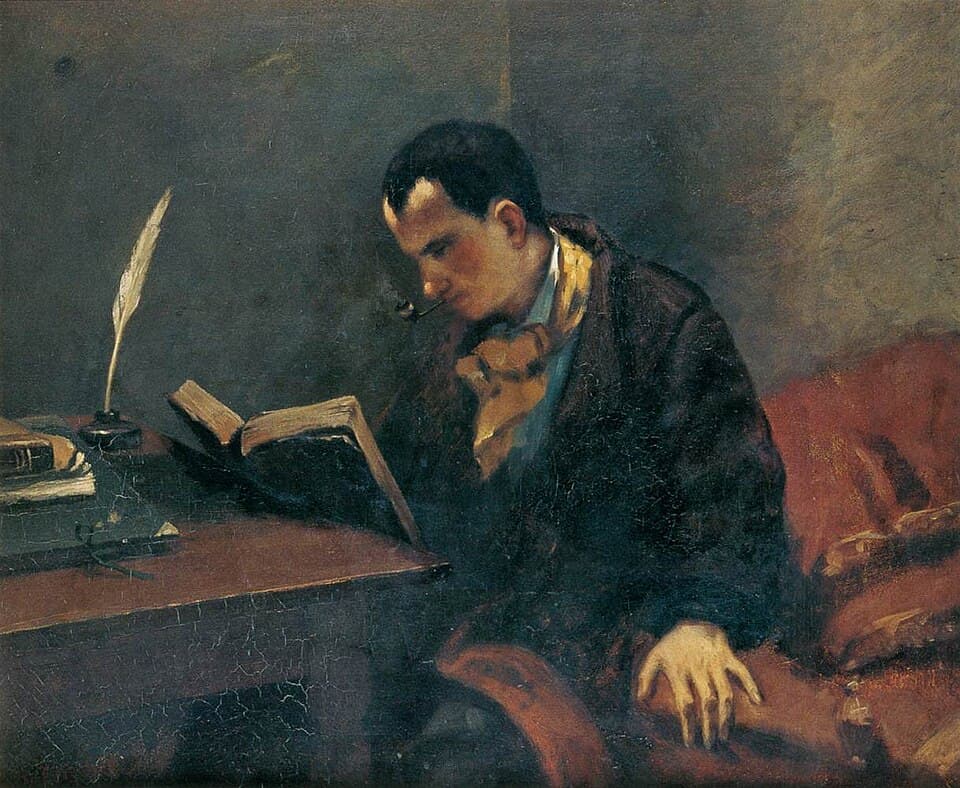
It is in the house in Honfleur, overlooking the estuary that Caroline Aupick loves so much, that she finds her son on a gray morning in autumn 1865. The black coffee steams on the table, a crumpled letter lies near the inkwell. They know each other better than anyone — she carried him, remarried after her widowhood, endured his debts and his silences — and she comes that day without reproach, only with the desire to understand the man behind the poet that Paris judged. Outside, the gulls cry over the harbor.
—Charles, you know how much I have feared for your soul. Tell me truly: these Fleurs du Mal, what did you seek to enclose in them?
You who saw me as a child, maman, you guess what no one else sees. I did not sing vice for vice's sake: I wanted to wrest beauty from evil itself, to show that mud can become gold. There are in me, as in every man, two simultaneous postulations, one rising toward God, the other sliding toward Satan — and it is this tearing apart that I put into verse. Spleen crushes me, that nameless ennui that has gnawed at me since childhood, perhaps since my father's death; and the Ideal haunts me like an inaccessible light. My Correspondences speak of this world where perfumes, colors, and sounds answer one another. I worked each verse like a goldsmith works a hard stone.
I did not sing vice: I wanted to wrest beauty from evil itself, to show that mud can become gold.
—In 1857, I trembled when I learned of the trial. They accused you of outraging morality. How did you live through that condemnation, my child?
It was a wound, maman, and I know you suffered from it even more than I did. Prosecutor Pinard reproached me for having laid everything bare, for having probed human nature into its most hideous recesses. Six poems condemned, cut from the collection as one amputates a living body! They confused the painter of evil with an accomplice of evil. I felt struck by a great discouragement — you received the letter where I confided this to you. But I did not bend on the essential: a book is not a manual of virtue, it is a mirror, and one does not accuse the mirror of what it reflects. Posterity, I am sure, will restore these mutilated pages to me.
They confused the painter of evil with an accomplice of evil.
—You speak of Spleen as an old illness. Even as a child, you were somber. Where does this ennui that never leaves you come from?
You remember, maman, the child I was before Commander Aupick entered our lives. That time when we were alone together, I have carried it like a lost paradise. Spleen is that: the awareness of a fall, the feeling of having been promised something else and of wallowing in time that flows, heavy, gray, endless. It is not the simple sadness of fashionable poets; it is a metaphysical ennui, a disgust with life that sometimes pins me to bed until noon. I have sought to flee it in wine, in laudanum, in the arduous work of verse. But it always returns, faithful as a shadow. Writing it is still the best way not to die of it.
Spleen is the awareness of a fall: having been promised something else and wallowing in time.
—I have been told so much about your attire — that severe black, those impeccable gloves. Why this extreme care for your appearance, Charles?
You have always known me attentive to my dress, maman, sometimes to the point of ruin, I admit. But understand this well: the dandy is not a fop. My black coat, my white linen, my sober cravat are a discipline, almost a religion. Where the bourgeois flaunts his fat and his fortune, I cultivate an elegance that does not shout, that distinguishes itself by the perfection of a detail. It is a silent protest against the vulgarity of the century. In the morning, my toilet is a ritual as serious as the writing of a verse. And then there is the flâneur: I love to lose myself in Paris, walk for hours at night, observe the crowd, the passersby, the wretches under the streetlamps. The modern city is my true poem, and I read it as I walk.
The dandy is not a fop: it is a silent protest against the vulgarity of the century.
—You come home at dawn, you get up when others are having lunch. Doesn't this night life exhaust you, my poor Charles?
It exhausts me, maman, and you are right to worry about it as you always have. But the Parisian night is my workshop. The day belongs to business, to creditors, to hurried people; the night, the city reveals itself differently — façades become faces, alleyways become confessions. I walk, I watch an old bent woman, a forgotten old street performer, and suddenly I have a prose poem, one of those little musical proses I write for Le Spleen de Paris. I come home, light the lamp, work until dawn. Black coffee is my only ally. Yes, my body protests, my health deteriorates — but what can you do, one does not write modern life by sleeping like a notary.
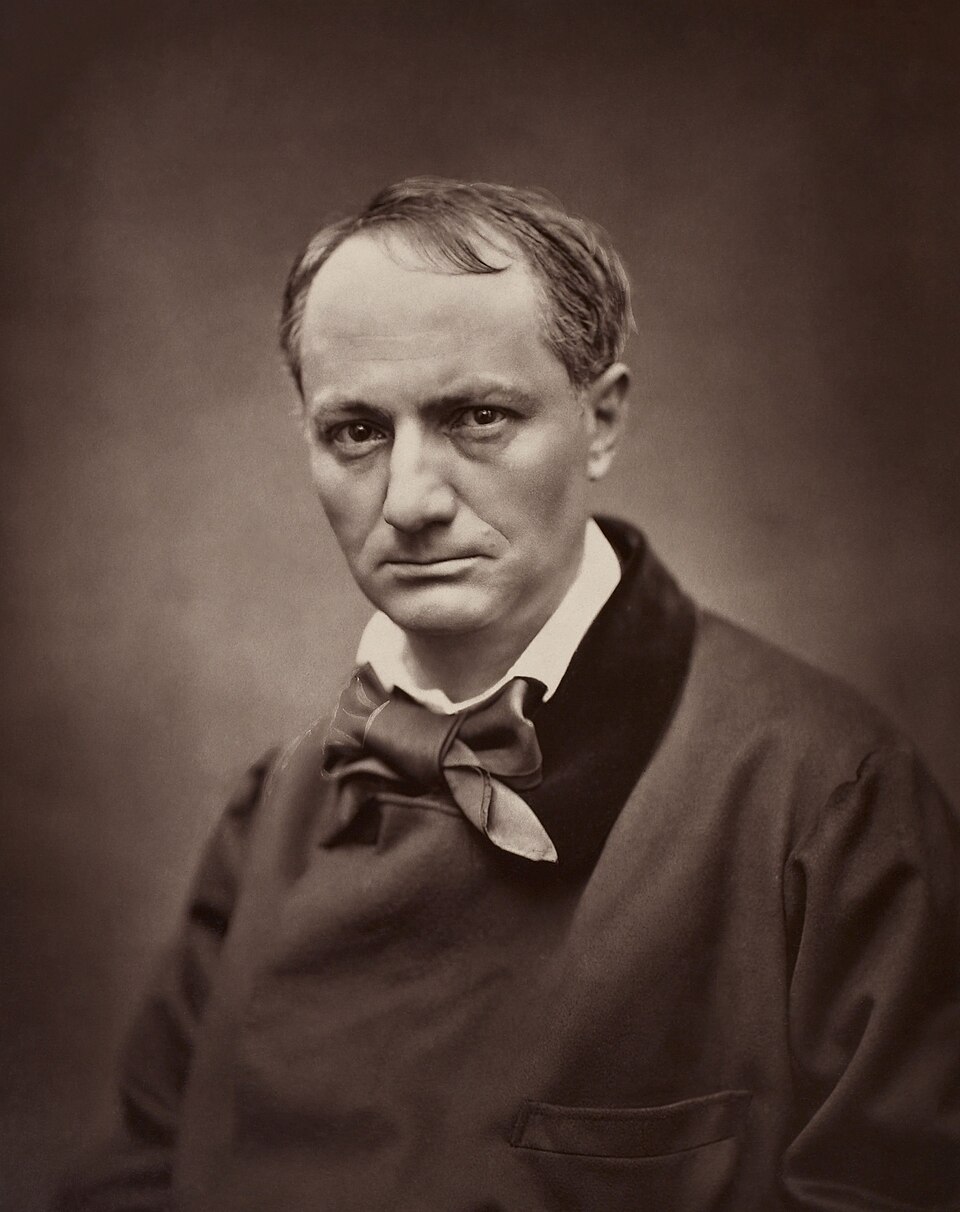
—You often spoke to me of that American, Edgar Poe. Why did you devote so many years of your life to translating him tirelessly?
Ah, maman, Poe! When I first read his tales, I felt a singular shock: I found there sentences I had dreamed without writing them, thoughts that were already mine. A brother, separated from me by the ocean and by death, but a brother. Translating him was not drudgery: it was an act of love and fidelity. Nearly seventeen years to transport his Extraordinary Stories into our language, weighing each word so as not to betray his dark music and his implacable logic. France ignored him; I imposed him. And I believe, without pride, that these translations are worth my own verses — it is my way of proving that a poet can resurrect another poet.
Poe: a brother, separated from me by the ocean and by death, but a brother.
—Let us speak of what breaks my heart, Charles: money. Remember the guardianship they imposed on you. How did you live through that tutelage?
It is the wound of my life, maman, and you know what part the family played in it. At twenty-one, I should have received my father's fortune, nearly seventy-five thousand francs. They judged me incapable, they appointed a guardian who doles out a child's allowance to me, drop by drop. Perpetual humiliation: a man of my age, a writer, treated like a minor who cannot count! I accumulated debts, I admit, I spent on books, paintings, clothes. But this guardianship condemned me to run after a few francs instead of working in peace. How many letters did I write to you, begging for help? This poverty pursues me like a second illness, even more tenacious than spleen.
A man of my age treated like a minor who cannot count — that is the wound of my life.
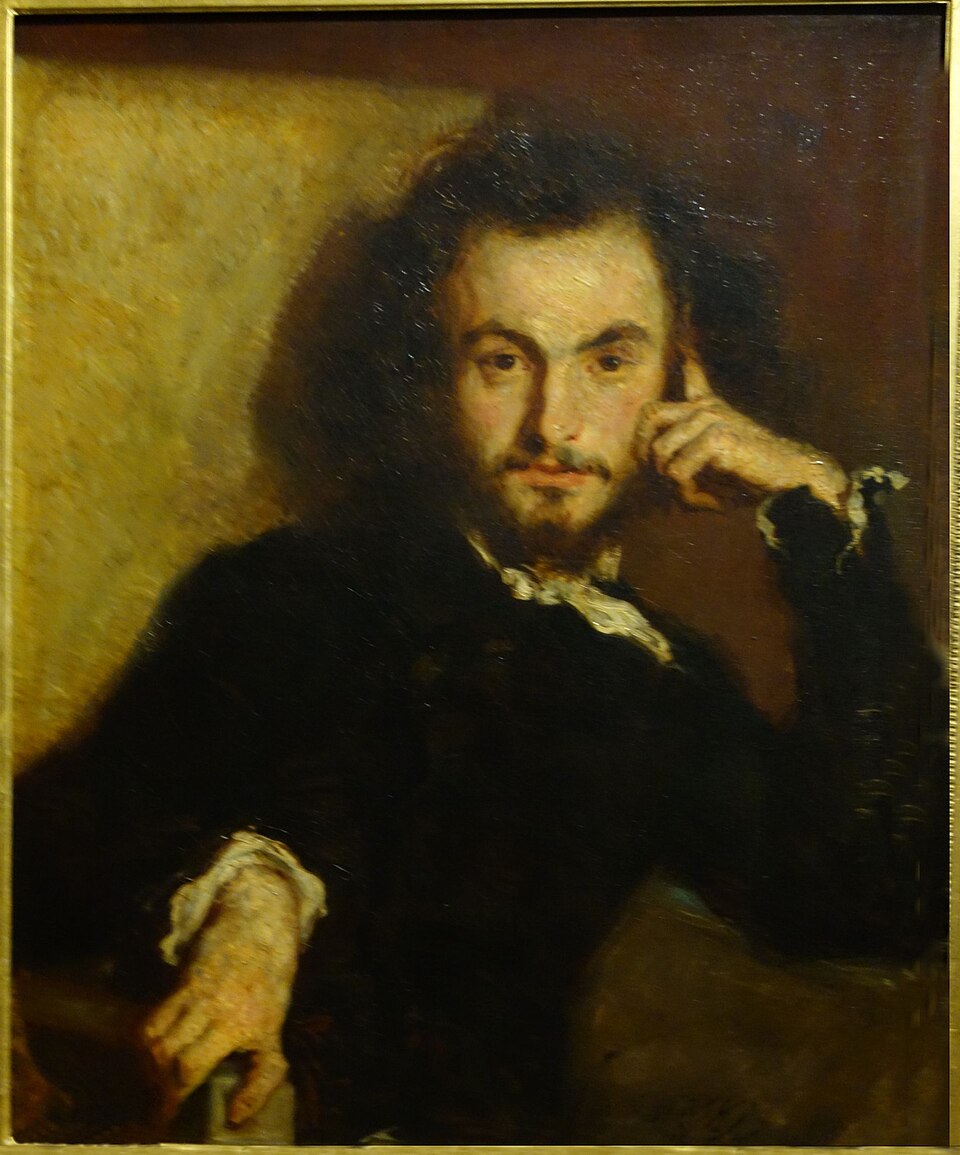
—And Brussels, Charles? You went there full of hope. Why did you persist there, far from me, in that city you dislike so much?
Hope, yes, maman — that of finally earning money through lectures, of selling my works to a publisher, of rebuilding my fortune and health far from Parisian creditors. What a bitter failure! The Belgian public snubbed me, my lectures rang hollow. This city weighs on me, its ennui, its heaviness, its mediocrity that I note angrily for a pamphlet, Pauvre Belgique!, which I may never finish. I am wasting away there, separated from you, without the port of Honfleur nor the sky of Paris. If I persist, it is out of pride and necessity, because returning empty-handed would be admitting defeat. But my body weakens, ailments seize me. I think I chose the wrong escape.
Returning empty-handed would be admitting defeat: I think I chose the wrong escape.
—They have sullied your name in the newspapers. You who are my son, tell me: do you regret having published those verses that brought you so much shame?
Never, maman — and that is perhaps the only certainty I have left. The shame was public, the scandal cost me money and the regard of respectable people. But to disown my Fleurs du Mal would be to disown my very soul. This book, I made it to exercise my passionate taste for obstacles, to erect a cold and perfect cathedral above the swamp of my era. As early as 1861, I gave a second edition, augmented by thirty-five new poems: that is my answer to the judges. What do I care if I am cursed by the bourgeois if a few rare minds hear in it what I meant to say? You taught me dignity in adversity; I apply it in my own way, by yielding nothing on art.
To disown my Fleurs du Mal would be to disown my very soul.
—Before I leave you to your work, Charles: what would you like to remain of you, when we are no longer here to speak of it?
You ask the question I dare not ask myself alone, maman. I would like a form to remain — a few poems pure enough, hard enough, to cross time like a struck medal. Not the scandalous man, not the hunted debtor, but the poet who knew how to draw from spleen a new beauty, from ugliness a strange flower. I invented a language to speak of the modern city, the crowd, the melancholy of this age without faith. If I am still read in a hundred years, it will not be for my virtues, which I scarcely have, but for that music. And you, who knew me before all others, keep of me the child of early times rather than the wounded man. The rest, I entrust to the verses.
I would like a few poems pure enough to cross time like a struck medal.
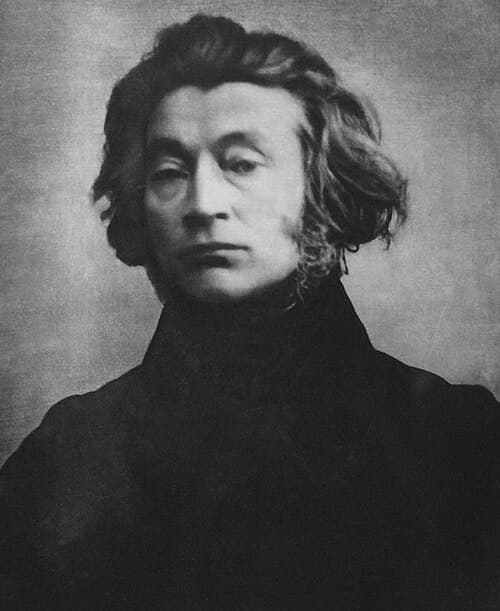
This imaginary interview was generated by artificial intelligence from sources documented in Charles Baudelaire's profile. It dramatises what the figure might have said based on what we know about them, but does not constitute attested historical testimony. For primary sources and factual documentation, refer to the full profile.