Imaginary interview with Charles Baudelaire
by Charactorium · Charles Baudelaire (1821 — 1867) · Literature · 6 min read
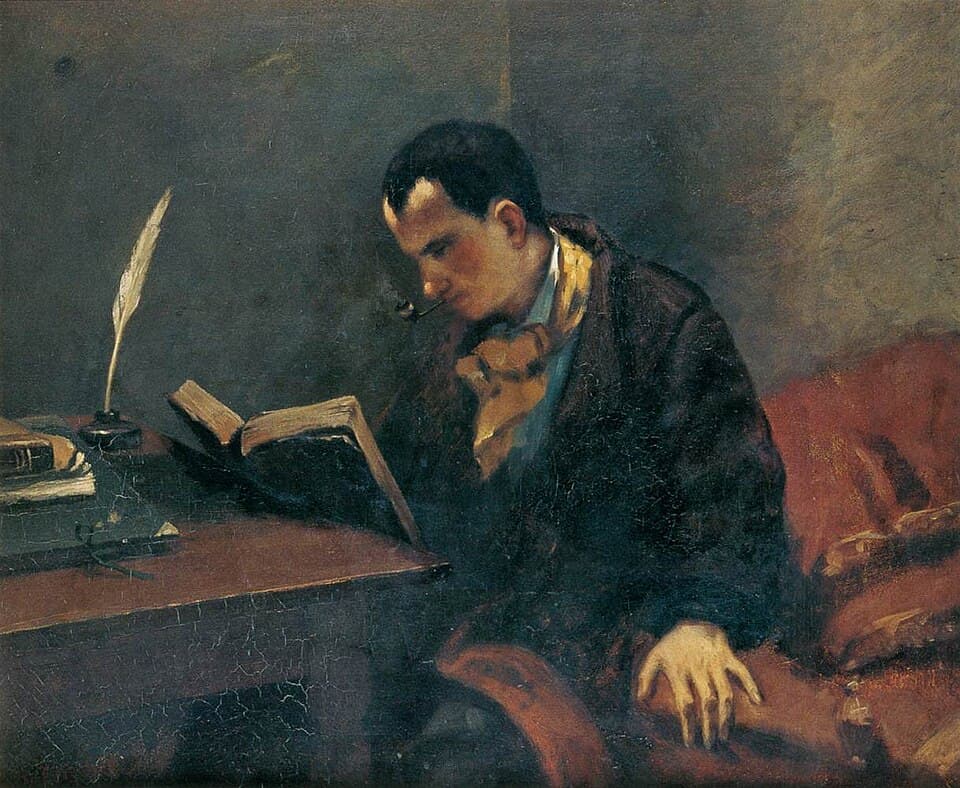
Brussels, winter 1865. In a furnished hotel room that smells of cold coffee and tobacco, Charles Baudelaire receives, sitting very upright, glove in hand, as if posing for a portrait. The conversation, in fragments, retraces the thread of Paris, the courts, and spleen.
—What do you feel when someone mentions the summer of 1857 and the publication of Les Fleurs du Mal?
A taste of ash, sir. Hardly was the book out when I was dragged before the police court for 'outrage to public morality', like a common poisoner. Prosecutor Pinard stood up and declared that I had wanted to paint everything, to lay everything bare, that I probed human nature in its most intimate folds. Six poems condemned, torn from the collection like healthy teeth. I had polished them for years with pen and ink, rewritten them a hundred times, and a magistrate judged them in one afternoon. Think of it: perhaps a century will pass before a court dares to do me justice. I never sought to corrupt anyone; This book was made for no other purpose than to amuse myself and to exercise my passionate love of obstacles.
Six poems torn from the collection like healthy teeth.
—Did this condemnation isolate you, or did you find support among your own?
Support? I mostly wrote to my mother, Caroline Aupick, who understood nothing of my art and everything of my shame. I frankly confided my state to her: I felt struck by a great discouragement. An immense accumulation of debts, the necessity of perpetual labors, and above all the horrible errors of my youth, that is what torments me. That is the truth of a thirty-six-year-old man: public scandal and private misery tied in the same knot. People think me cynical; I am only a son who would have liked to make his mother proud and who brings her a lawsuit. Black coffee, at such hours, warms nothing anymore.
Public scandal and private misery, tied in the same knot.
—You mention debts: how did an heir become a man pursued by his creditors?
By family decree, sir. Upon coming of age, I was to receive my father's fortune, some seventy-five thousand gold francs. I began, I confess, to scatter them on black suits, paintings, immaculate linen, for a man must be beautiful before being rich. My family took fright and obtained, as early as 1844, that I be placed under legal guardianship: a guardian, Maître Ancelle, doled out a monthly allowance to me as to a minor or a madman. Imagine the humiliation: a thirty-year-old poet begging for his own money by letter. Since then, I have been condemned to perpetual labors, translating, writing chronicles, chasing after my publishers. They wanted to save me from ruin; they installed me in endless misery.
A man must be beautiful before being rich.
—Tell us about the Hôtel Pimodan, where you lodged in your youth.
Ah, the Hôtel Pimodan, on the Île Saint-Louis! A beautiful building from the time of Louis XIII, where I occupied an apartment under the eaves, between 1843 and 1845. It was there that I learned to be what is called a dandy: not a fop covered in jewels, but a man of absolute black, dark tie, severe suit, who stands out by the perfection of a detail rather than by noise. My elegance was a silent protest against bourgeois fat. I rarely rose before noon, I tended to my toilette like a rite, gloves impeccable, and I descended into Paris as one enters a stage. Dandyism, you see, is the last flare of heroism in a century that loves only the counter.
Dandyism is the last flare of heroism in a century that loves only the counter.
—It was also within those walls that the Club des Hashischins met. What did you seek there?
An experience, not a debauchee's pleasure. There were a few of us, painters and writers, who gathered among the Hashischins to taste dawamesk, that green jam that opens paradises. I sought what my flask of laudanum also gave me in more discreet doses: the expansion of time, the sudden depth of a color, a sound. But I was never fooled. These artificial paradises, I eventually judged them in an essay: they lend you an infinity that you pay the next day with an impoverishment of the soul. Man steals a gleam of the ideal, and the devil presents the bill. True intoxication, the only one that does not ruin, remains that of work on the verse.
Man steals a gleam of the ideal, and the devil presents the bill.
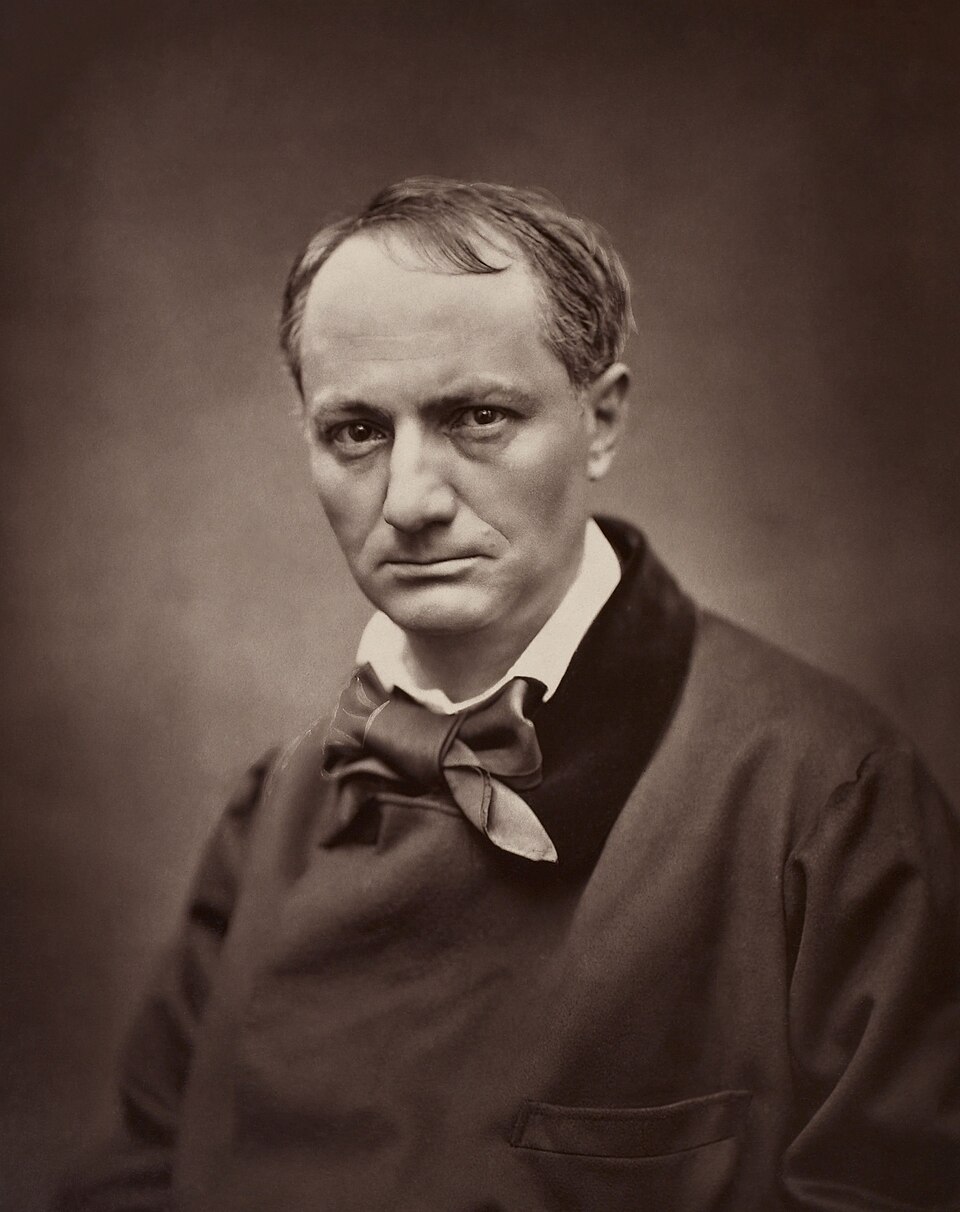
—For nearly seventeen years, you translated Edgar Poe. How did you encounter this distant author?
As one meets a brother one has never seen. The first time I read Edgar Poe, I felt a singular shock: sentences thought by me, and written by him twenty years earlier, on the other side of the ocean. From then on I had no rest. I kept on my table a collection of Poe that I annotated endlessly, and I devoted nearly seventeen years to translating his Tales of the Grotesque and Arabesque into French. It was no hackwork: I wanted each English word to find in French its exact fever. They say I made Poe known to Europe; I believe rather that I prayed, every morning, at the tomb of a fraternal spirit.
Sentences thought by me, and written by him twenty years earlier, on the other side of the ocean.
—Why devote so many years to another's work, when your own demanded your time?
Because translating Poe was still writing my own poetry by proxy. This American had thought before me the beauty of evil, lucid terror, the mechanism of dreams. By rendering him in French, I sharpened my own language. And besides, let us be frank, I had to live: under the legal guardianship, these translations earned me some fees that my verses did not. But money does not explain seventeen years of fidelity. I wanted France to understand that a tale could be as grave as a poem, that well-composed horror touches the sublime. When I reread my pages by lamplight, late, I no longer felt I was serving a foreign master, but prolonging a single voice in two languages.
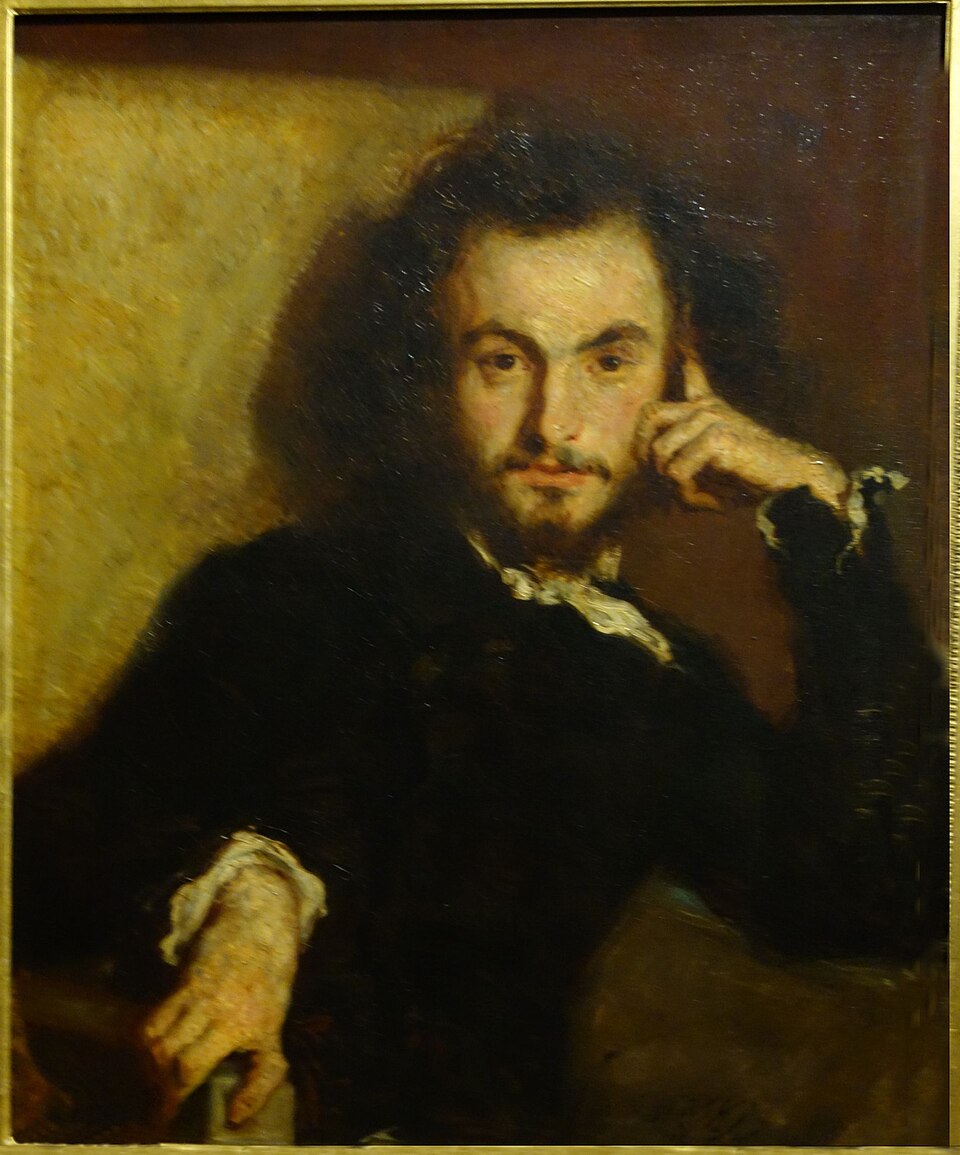
—Let us come to the heart of your art. How is a poem from Les Fleurs du Mal born?
From a tension, always, between two poles that I have named spleen and the ideal. Spleen, that English word I adopted, is thick melancholy, boredom weighing like a lid, disgust at being. The ideal is the opposite impulse, the desire for absolute beauty, for elevation. A poem, for me, is born in this being torn apart. I never set down the first draft: I work the verse with pen and ink with a meticulousness that drives my friends to despair, I rework a caesura ten nights in a row. Perfect form is not an ornament; it is the only cage strong enough to enclose evil without it devouring you. To make pure gold from the mud of Paris: that is my only ambition as a craftsman.
Perfect form is the only cage strong enough to enclose evil without it devouring you.
—You speak of evil and elevation in the same breath. Is that not a contradiction?
It is the very condition of man, not a contradiction. I wrote in my most private papers something I firmly believe: In every man, at every hour, there are two simultaneous postulations, one toward God, the other toward Satan. To rise in rank, or to enjoy descending. All my poetry resides in this tug-of-war. And there exists a secret thread linking these extremes: what I call correspondences, the idea that scents, colors, and sounds answer each other, that the visible world is but the garment of a hidden reality. The flâneur who wanders in the crowd, eye open, catches these echoes everywhere. The poet invents nothing: he deciphers a forest of symbols that looks at us with familiar eyes.
—Today in Brussels, far from Paris, how do you look back on the path traveled?
With bitter lucidity. I came to Belgium in 1864 to give lectures and finally earn enough to extinguish my debts; the audience here snubbed me, my talks fell flat. Bitter, I blacken pages of a pamphlet, Poor Belgium!, which will probably never be finished. My head grows heavy, words sometimes elude me when I try to grasp them. When I think back to the Hôtel Pimodan, to the young dandy in impeccable gloves who descended the stairs believing himself eternal, I measure the distance. I have left my verses, and the absurd hope that they will be read when my creditors and judges are dust. It is little; it is all a man can carry away.
I have left my verses, and the absurd hope that they will be read when my creditors and judges are dust.
This imaginary interview was generated by artificial intelligence from sources documented in Charles Baudelaire's profile. It dramatises what the figure might have said based on what we know about them, but does not constitute attested historical testimony. For primary sources and factual documentation, refer to the full profile.