Imaginary interview with Charles Darwin
by Charactorium · Charles Darwin (1809 — 1882) · Sciences · 7 min read
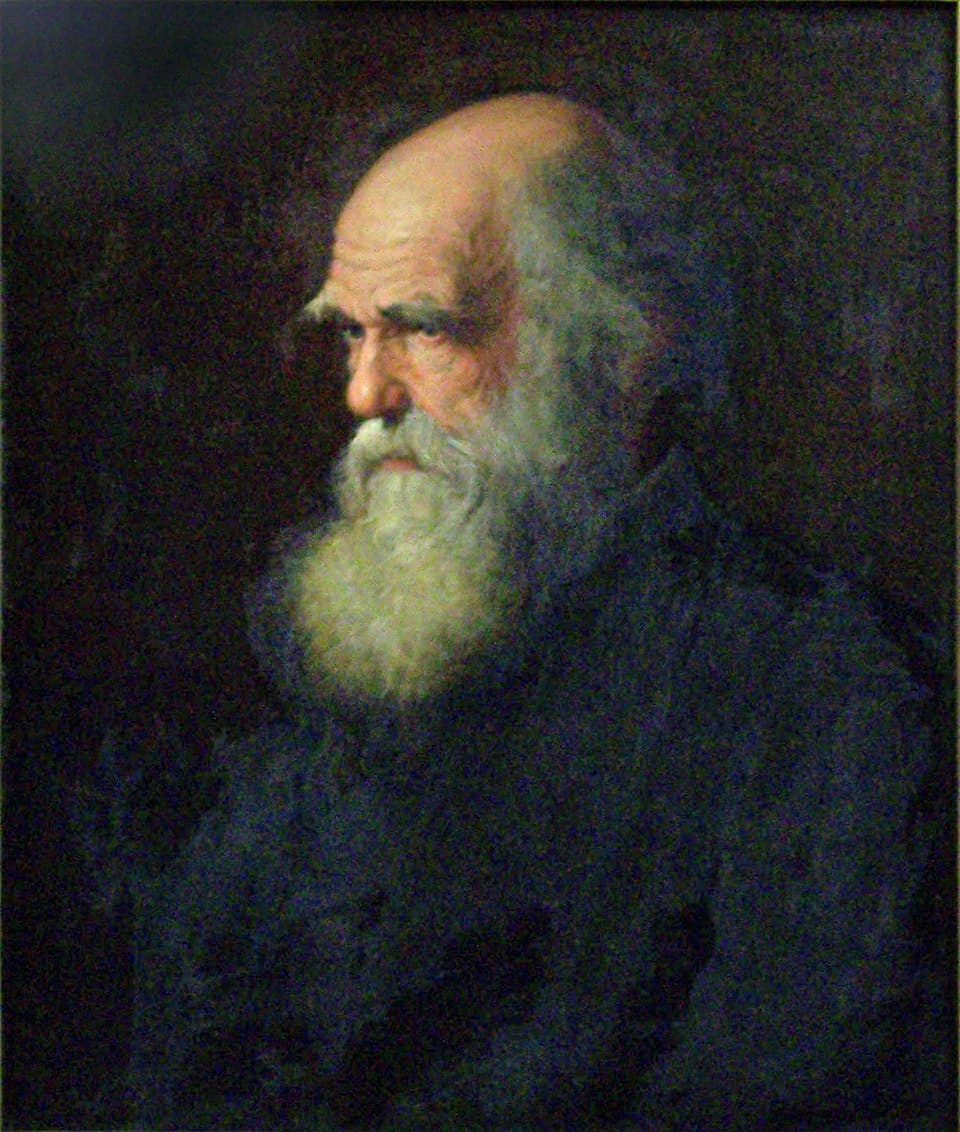
We find Charles Darwin in the book-lined study of Down House on a grey November afternoon in 1881, the year his final volume on earthworms goes to press. Specimen jars stand along the shelves; a magnifying glass rests beside an open field notebook whose pages have darkened with decades of handling. He speaks slowly, selecting each word with the same deliberate care he applies to his observations — a habit of mind, he will say, more than of language.
—Your father once told you that you would be a disgrace to yourself and the whole family. How do you look back on that judgment today?
My father was not a man given to idle pronouncements. He saw a boy who had abandoned his medical studies at Edinburgh — I confess I could not endure the operating theatre; surgery before anaesthesia was something my constitution simply refused — and who filled his rooms with beetles and mud-stained field notebooks instead. He told me plainly that I cared for nothing but chasing specimens and catching rats, and that I should shame the entire family. I felt the weight of it at the time. And yet, had he been correct, I might have settled into a respectable country practice and lived a useful, unremarkable life. Instead I kept collecting. One afternoon near Cambridge, I spotted a beetle I had never seen, and in trying to seize it with both hands already occupied, I put the previous specimen in my mouth. It discharged something acrid onto my tongue. I dropped them all. And I was happier than I had ever been.
—And it was at Cambridge that the path toward the Beagle opened?
It was not the university itself so much as the man — John Stevens Henslow, botanist and clergyman, who kept his door open on Friday evenings and invited anyone genuinely curious about natural history. I attended his lectures, walked with him on his plant-hunting excursions, and gradually became one of his regular companions — so much so that some called me the man who walks with Henslow, which I received as the highest compliment of my early life. When the opportunity arose in 1831 for a gentleman naturalist to sail aboard the HMS Beagle, Henslow recommended me despite my having published nothing and holding no official scientific post. My father refused initially. It required my uncle Josiah Wedgwood to argue the case before he relented. I spent the night before sailing unable to sleep — not from fear, I think, but from the particular restlessness of a life about to become itself.
—The Beagle voyage is now spoken of as one of the great scientific journeys in history. What do people rarely understand about what those five years actually cost you?
That I was ill for most of them. There is an irony I have never quite resolved: a man whose entire career rested on a voyage at sea, who was constitutionally unfit for the sea. I spent whole days in my hammock while the ship pitched, unable to rise, my specimens sitting undisturbed in their jars below. And yet — I wrote this in my autobiography without exaggeration — that voyage was by far the most important event of my life, the one that determined my entire career. Something happened to my mind aboard the Beagle that could not have happened anywhere else. Freed from London, from drawing rooms and family obligations, I learned to watch with real patience. I filled notebook after notebook with observations whose meaning I did not yet understand. The seasickness was the price. I would have paid it twice.
I learned to watch with real patience — notebook after notebook, observations whose meaning I did not yet understand.
—What did the Galápagos Islands reveal to you that no other place could?
The Galápagos did not reveal anything to me immediately — I should say that plainly. I collected my birds, labeled my specimens, and sailed on. It was only after returning to England, when the ornithologist John Gould examined my collection and confirmed that what I had assumed to be various unrelated birds were in fact all finches — each beak shaped differently, each variety confined to its particular island — that I understood what I had been looking at. But the islands had planted something I could not dislodge. They were geologically young, volcanic, and yet already filled with creatures found nowhere else on earth. The distribution of living things across those separate islands — each population subtly distinct from its neighbors — was a kind of argument that geography itself was making, if one could only learn to read it. I sailed away from Santa Cruz in 1835 uncertain of what I had seen. I spent the next twenty years finding out.
—You had the core of your theory in place by the early 1840s, yet you waited more than twenty years to publish. What held you back?
Caution — which is not the same thing as timidity. I was acutely aware that a naturalist who proposes the transmutation of species without overwhelming evidence is simply a speculator, no different from those who had been dismissed and mocked before me. So I worked. I spent eight years on cirripedes — barnacles — examining thousands of specimens under the microscope, building a monograph so exhaustive it could not be ignored. I kept pigeons at Down House, learning from the professional fanciers of London what selective breeding could accomplish in a handful of generations. I was constructing the foundation before placing any weight upon it. The theory of natural selection is not difficult to state — it takes perhaps a paragraph. But a paragraph without decades of evidence beneath it is merely an interesting idea, and interesting ideas are cheap.
A paragraph without decades of evidence beneath it is merely an interesting idea, and interesting ideas are cheap.
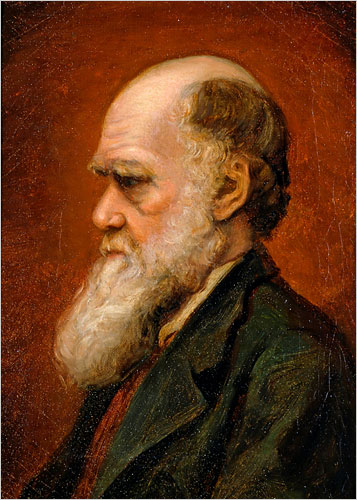
—And then Alfred Russel Wallace's letter arrived in 1858 and forced the question.
It arrived in June 1858, from the Malay Archipelago — Wallace had arrived independently at a theory of natural selection strikingly close to my own, and he wrote to ask my opinion of it. I confess the experience was not comfortable. Charles Lyell and Joseph Hooker arranged for our papers to be read jointly at the Linnean Society of London, so that neither man's claim could be said to have displaced the other's. It was a solution I was grateful for, though I was too unwell at the time to attend the reading myself. The following year, 1859, I compressed more than twenty years of notebooks into a single volume. The Origin of Species was printed in 1,250 copies. They sold out the same day they appeared. I had not anticipated quite that velocity — and I confess I did not know whether to feel vindicated or alarmed.
—How did you experience the storm that followed publication — the debates, the sermons, the accusations leveled from pulpits across England?
I experienced it largely from Down House, which was by design. I was not built for public combat, and my health would not have permitted it in any case. My friend Thomas Huxley was a far more natural adversary in those arenas; the celebrated confrontation at Oxford in 1860, where he faced Bishop Wilberforce, I followed through letters and accounts from friends. My preference has always been to answer objections in print, with evidence, patiently — that is the more durable form of argument. I did not take pleasure in the disruption the book caused; I have never enjoyed disturbing settled convictions for the sake of it. But I had been entirely certain of the direction the evidence pointed, and one does not suppress a conclusion simply because it is inconvenient. The evidence is either there or it is not.
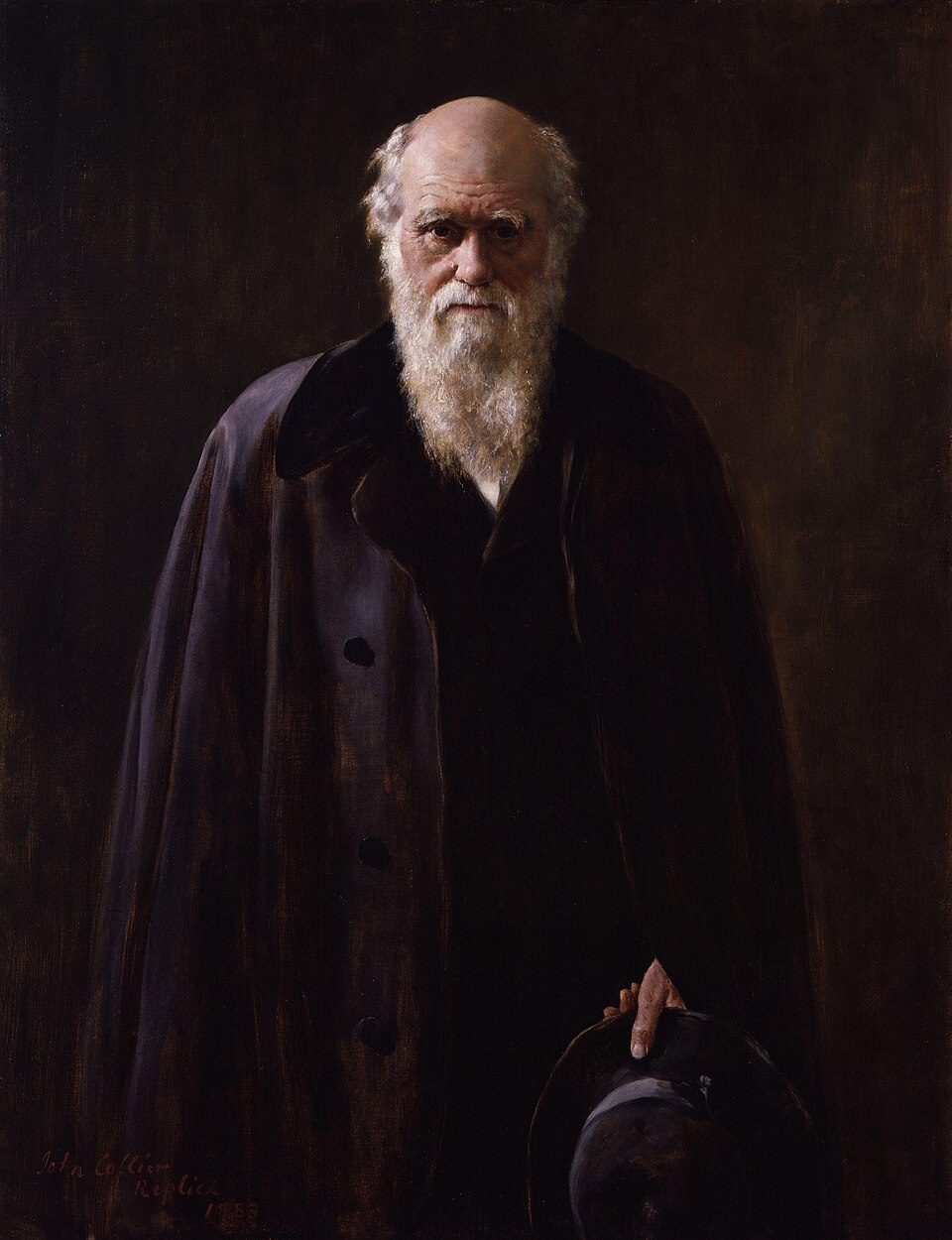
—In The Descent of Man you applied the theory to our own species — something you had deliberately avoided in the Origin. What did that decision cost you?
The conclusion had always been implicit. Any careful reader of The Origin of Species could see where the argument would eventually lead. I chose not to state it plainly until the prior work had been more thoroughly absorbed. When I finally wrote it, I acknowledged openly that this conclusion — that humanity shares descent from some less organized ancestral form — would be, I had no doubt, disagreeable to many persons. I did not write that with pleasure. But the comparative anatomy speaks with considerable force, as does the emotional continuity I traced in The Expression of the Emotions in Man and Animals — the grief of a dog, the fear of a young chimpanzee — none of this permits the claim that humanity operates outside the laws governing every other living form. To pretend otherwise would have required a dishonesty I was not prepared to practice.
To pretend otherwise would have required a dishonesty I was not prepared to practice.
—You were famously methodical in your daily life at Down House. How important was that structure to the science itself?
Entirely important, I think, though I came to understand it only gradually. My best hours of work were the earliest — from eight until half past nine, when the mind is still uncluttered. After that I answered correspondence, of which there was always rather too much. My afternoons were organized around the limitations of my health as much as around any program of research: a rest after the midday meal, then experiments in the greenhouse, then a walk on the Sandwalk — the circular path through the kitchen garden and wood at Down House that I had planted myself. I counted laps with flints, pushing them aside one by one as I passed the entrance. Five flints for a moderate session. People have found that eccentric. I found it necessary. The body in motion frees the mind from the resistance it meets when seated at a desk, and my best revisions arrived on that path, leaning on my walking stick, watching the Kent hedgerows.
—Your final book was about earthworms — many found that surprising, even anticlimactic, after a lifetime of grander arguments. What did forty years of watching earthworms teach you that the Galápagos had not?
Patience of a different order. The Galápagos gave me breadth — variation across space. The earthworms gave me depth — transformation across time. For forty years I measured their tunnels, weighed their castings, calculated at what rate they could bury a large stone. The Formation of Vegetable Mould through the Action of Worms, published in 1881, demonstrates with the simplest possible apparatus — a magnifying glass, a field notebook, time itself — that enormous transformations are accomplished by incremental, unglamorous work repeated over sufficient duration. That is, if one cares to notice, the same argument as The Origin of Species. Natural selection requires no dramatic event, no sudden rupture — only variation, inheritance, and time enough. I have always suspected that the worms made the case more clearly than I did, and with considerably less controversy.
This imaginary interview was generated by artificial intelligence from sources documented in Charles Darwin's profile. It dramatises what the figure might have said based on what we know about them, but does not constitute attested historical testimony. For primary sources and factual documentation, refer to the full profile.