Imaginary dialogue between Alfred Russel Wallace and Charles Darwin
by Charactorium · Charles Darwin (1809 — 1882) · Sciences · 7 min read
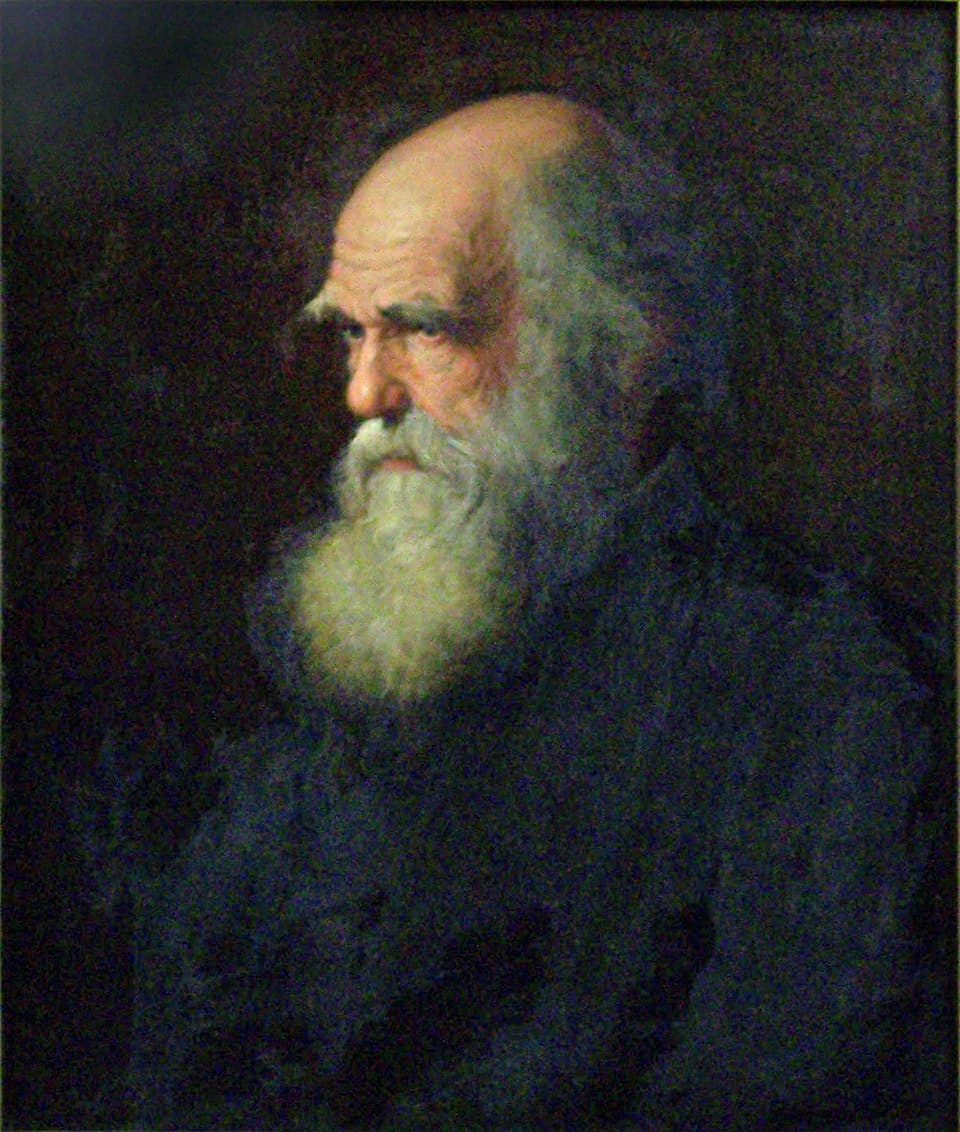
It is a grey morning in the spring of 1880 when Alfred Russel Wallace arrives at Down House, the low Kent farmhouse where Charles Darwin has worked, walked, and thought for nearly forty years. Darwin meets him at the garden gate, walking stick in hand, a thin-framed figure stooped slightly against the April chill. The two men have corresponded since 1857 and know each other's work perhaps better than any other pair of naturalists alive; between them, unspoken but ever-present, is the fact of June 1858 — the letter from Ternate that forced Darwin's hand after two decades of silence. Wallace has brought his notebook; Darwin has set three flints on the edge of the Sandwalk path.
—Your father once called you a disgrace to the family, Charles. When did natural history become a true vocation rather than a boyish distraction?
My father's words stung, and I confess he was not entirely wrong at the time. I had abandoned medicine at Edinburgh — the sight of blood during surgery was simply beyond me — and I idled considerably at Cambridge, collecting beetles when I should have been reading theology. But it was at Cambridge, through Henslow, that I began to understand that an eye trained on nature was not idleness but preparation. I remember once, as a boy, collecting beetles with such frenzy that I had two in my hands and a third appeared. In my eagerness I put one in my mouth to free a hand. The creature discharged some caustic fluid on my tongue and I had to spit the lot out. That burning sensation was, I think, my first lesson in the true costs of observation. By the time I boarded the Beagle in 1831, the boy chasing beetles had become something rather more purposeful — though I could not yet have said what.
That burning sensation was, I think, my first lesson in the true costs of observation.
—Those eight years studying barnacles — cirripedes few could name — did your peers think you had simply lost your nerve?
I suspect some of them did. I had returned from a five-year voyage with observations that seemed to point toward something vast, and then disappeared into barnacles for nearly a decade. But I needed that discipline. My theory required that I understand, with precision, what a species actually is — how variation operates at the level of structure, of morphology, of minute difference. The barnacles taught me that no two individuals are quite alike, that what naturalists called a fixed character was often merely a shade of possibility. Without those years at the microscope, The Origin of Species would have been a speculative essay. With them, it became an argument. I will also admit, Wallace, that the barnacles were necessary to earn the respect of men who might otherwise dismiss me as a wealthy amateur who had once taken a long sea voyage.
—You wrote in your Autobiography that the Beagle voyage was the most important event of your life. And yet you were profoundly miserable aboard?
I was, for much of it, genuinely wretched. The seasickness never truly left me — from the Bay of Biscay to the Pacific, I spent whole days in my hammock, unable to eat, longing for solid ground. And yet I could not stay off the ship, because the ship was taking me to places no other naturalist had examined with my particular questions already forming. The paradox was not lost on me even then. Every time we anchored and I could go ashore — into a Brazilian forest, across the Andean foothills, onto a Galápagos island — the illness was forgotten entirely. The Beagle made me, and it made me ill; I am not certain the one was possible without the other. As I have written, that voyage determined my whole career, and I owe to it whatever education my mind truly received.
Every time we anchored and I could go ashore, the illness was forgotten entirely.
—At the Galápagos in 1835 — what struck you first, before the theory began to take shape?
In truth I did not immediately grasp the significance of what I was seeing — that realisation came later, in London, when Gould examined my birds. What struck me first was the volcanic desolation of the landscape, and then the extraordinary tameness of the creatures, who had never learned to fear man. It was the variation in the mocking-birds from island to island that first unsettled my certainties. I noted it and moved on; the full weight descended only once Gould had worked through my specimens and I had begun to ask: why should separate islands, lying within sight of one another, harbour such distinct forms? The officers of the Beagle had mentioned that one could tell a tortoise's home island by the shape of its shell. I recorded that remark and did not fully pursue it until much later — it returned to me with considerable force in the years that followed.
—You had the theory sketched by 1842. Sixteen years, Charles — what exactly were you waiting for?
I was not idle in those years — the barnacles consumed eight of them. But you put the question squarely, and I will answer it squarely: I was afraid. Not of being wrong, exactly, but of the reception. I had seen what happened to earlier transmutationists — the ridicule, the accusations of irreligion. I had a wife I loved, a position, children growing up. And I was not certain I had assembled enough evidence to be unassailable. My theory was not the difficulty; proving it to the satisfaction of men like Lyell and Hooker, who would scrutinise every page — that was the difficulty. I kept adding observations, filling notebooks, accumulating the weight of the argument. In some sense I was building a fortress around an idea I had already reached. And then, of course, your letter arrived in June 1858, and the question of timing was settled for me.
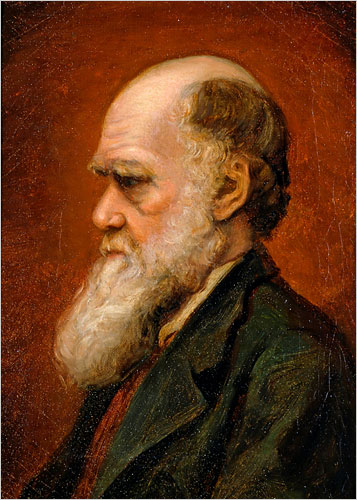
—That letter — I must ask you directly. When you read what I had sent from Ternate, what was your first thought?
You, of all men, have the right to ask that question. My first thought, I confess, was something close to despair — not at you personally, but at myself. I had written to Lyell years before that if anyone else published first, I would be forestalled. And here it was: the same principle, the same mechanism, arrived at independently on the other side of the world. I felt the justice of your discovery and the pain of my own procrastination simultaneously. I wrote to Lyell that same day that all my originality, whatever it amounted to, would be smashed. But wiser counsels prevailed — Lyell and Hooker arranged the joint presentation, and I want you to know, now as I have said before, that the arrangement honoured your priority entirely. Your letter, however painful, saved me from myself.
Your letter, however painful, saved me from myself.
—Our papers were read at the Linnean Society on 1 July 1858, to perhaps thirty listeners. Did the moment feel equal to its importance?
I was not there, as you know — I was ill, and grieving the loss of our son Charles Waring that very summer. Hooker and Lyell attended in my stead and wrote to tell me the papers had been received without great sensation. The president of the Society remarked at year's end that the year had produced no striking discoveries. The irony is almost comic in retrospect. But I believe something essential happened in that small room nonetheless: the principle was entered into the scientific record, jointly, before witnesses. Whatever the public reception would bring — and it came soon enough, with The Origin published sixteen months later — the idea was no longer merely in our notebooks. That matters, whatever the immediate silence of the audience.
—The 1860 Oxford debate — Huxley against Wilberforce. You were not there. Did you regret it?
I did not attend, and I will not pretend I was sorry to miss it. My health was poor, and more importantly, I had deliberately cultivated allies precisely because I knew I was constitutionally unsuited to public combat. Huxley relished the arena; I do not. What reached me afterward was that Wilberforce had attempted to humiliate Huxley with a remark about ape ancestry and grandmothers, and that Huxley had replied with composure — that he would sooner claim kinship with an ape than with a man who used gifts of reason to introduce ridicule into a serious scientific question. I cannot be certain those were his exact words, but the spirit of them was precisely what I had hoped my defenders would offer: calm argument, not rage. The church's resistance was genuine, and I had no wish to provoke more enemies than the evidence required.
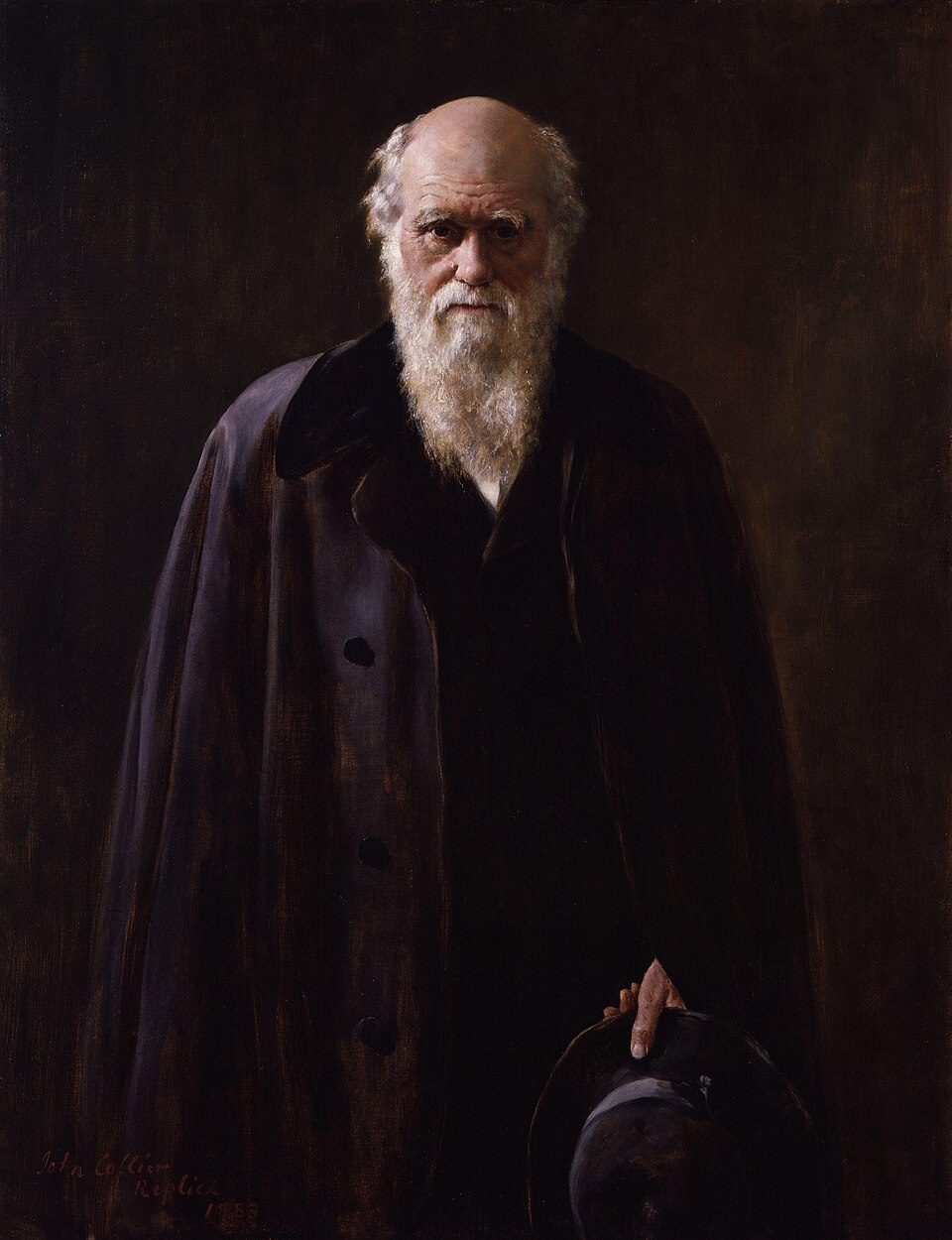
—The Descent of Man came twelve years after The Origin. Why so long before applying the theory to our own species?
Because I knew from the first that it would be the most fiercely contested part. The Origin had been careful to say almost nothing about man — one deliberately brief sentence about light being thrown on human origins. I hoped that the principle, once accepted for the rest of organic life, would be seen as necessarily extending to our own species; I was perhaps optimistic. When I finally did write it, I tried to be thorough and to anticipate every objection. The conclusion — that man descends from some lowly organised form — I acknowledged in the text would be disagreeable to many. What I found, writing it, was not that the evidence was hard to assemble, but that stating it plainly required a different order of courage than writing about barnacles and finches. There is something peculiar in asking a species to examine its own origins without flattery.
—I walked the Sandwalk with you this morning. Do you still pace it every day, and for the same purpose?
Every morning, weather permitting, and yes — for much the same purpose it always served, which is to let the mind run without the interruption of letters or conversation. I have a system: I count the circuits with flints. If a problem needs three circuits, I set three flints at the path's edge and kick one aside at each pass; when the last flint is gone, the thinking is done — or done enough to return to paper. You have your own habits of thought in the field, I imagine; you have always struck me as a man who thinks while moving. My present book, nearly finished now, concerns earthworms — forty years of patient observation of those most humble creatures, whose silent work beneath our feet builds the very soil on which we stand. The Sandwalk has witnessed all of it.
—You bred pigeons here for years, among the London fanciers. Did they know you were using them to prove a theory?
They did not, for the most part, and I found that rather useful. I became a reasonably respected figure among the breeders of London — attended their meetings, corresponded about crosses, discussed the merits of pouters and fantails with men who cared nothing for natural history. Some of the more dedicated fanciers had no idea I was primarily a naturalist; I was simply one of their number, genuinely interested in what selection could accomplish. And what it could accomplish was remarkable: the sheer diversity of domestic breeds produced from a single original stock was, to my mind, one of the clearest demonstrations available of variation under selection operating over time. If a man can produce, in a few dozen generations, a fantail as different from the tumbler as it plainly is, what might nature achieve in a hundred thousand? I used the opening chapter of The Origin to establish exactly this point, knowing a reader might resist evolution in wild creatures yet had witnessed with his own eyes what human selection could do.
This imaginary interview was generated by artificial intelligence from sources documented in Charles Darwin's profile. It dramatises what the figure might have said based on what we know about them, but does not constitute attested historical testimony. For primary sources and factual documentation, refer to the full profile.