Kids interview Charles Darwin
by Charactorium · Charles Darwin (1809 — 1882) · Sciences · 5 min read
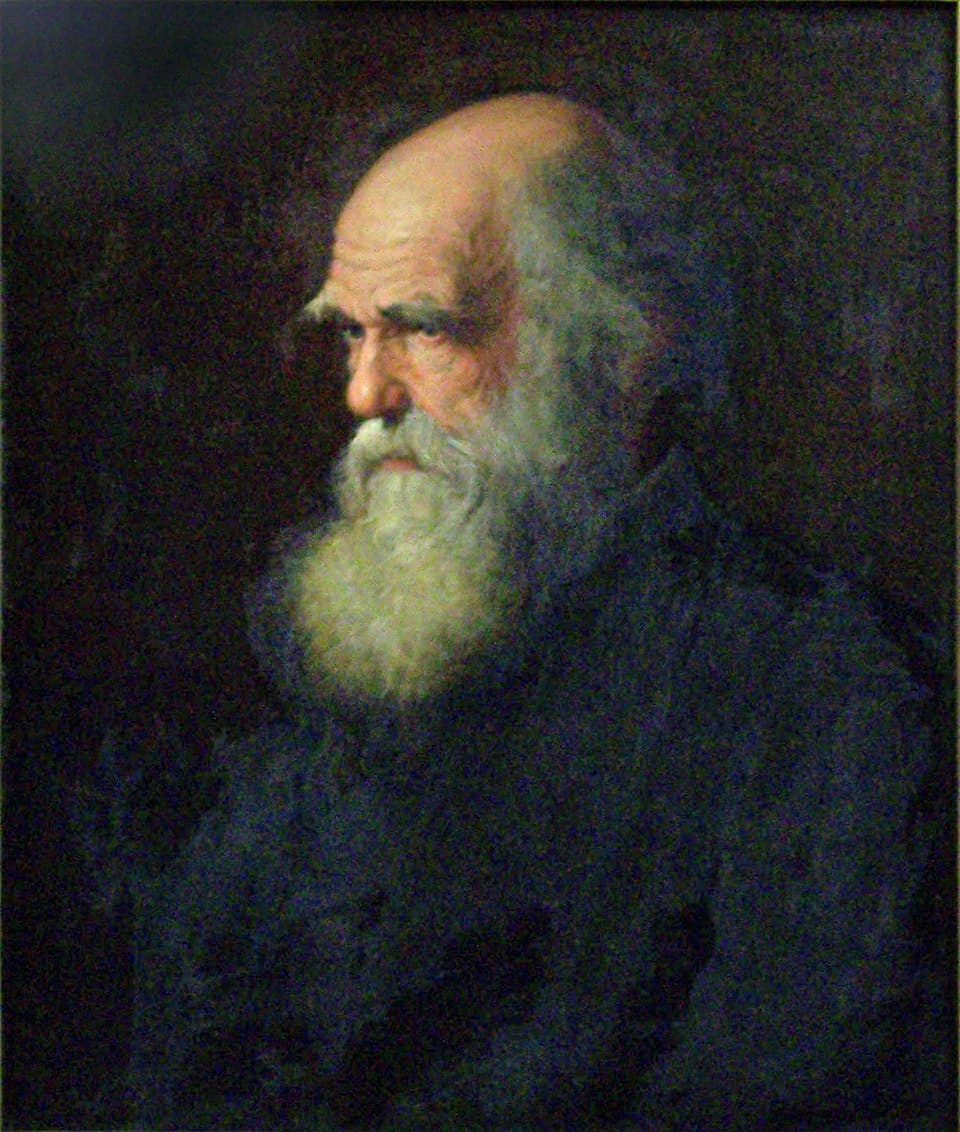
Two young students from a school trip stand at the edge of the Sandwalk path in Down House, Kent, notebooks clutched in both hands. The garden is quiet except for birdsong. Charles Darwin has agreed to sit with them on a bench near the greenhouse and answer their questions.
—How old were you when you started collecting beetles everywhere?
I was very young — eight or nine, growing up in Shrewsbury. I filled jars with insects, lined them up on the windowsills, drove my family a little mad. One afternoon I already held a beetle in each hand when I spotted a third one I simply could not lose. So I put one in my mouth to free a hand. Terrible idea — it sprayed a bitter liquid on my tongue and I had to spit everything out! But even that did not stop me. When you love something that much, you know, nothing really stops you.
When you love something that much, nothing really stops you.
—Your father said you'd be a disgrace to your whole family. Did that hurt?
Yes, it did. My father was a respected doctor in Shrewsbury, and he sent me to study medicine at Edinburgh. But I could not bear the operating rooms — patients screaming, no way to ease their pain. I left. Father was furious. He told me I cared only about hunting and catching rats and would be a disgrace to myself and to the whole family. Those words stayed with me a long time. But then I went to Cambridge and met a botanist named Henslow, who showed me that observing nature seriously was a true calling. Sometimes one person who believes in you changes everything.
—Were you really sick on the boat almost every single day for five years?
Every day, or close to it! The HMS Beagle rolled and pitched constantly, and my stomach never made peace with the sea. I spent hours lying in my hammock, pale and useless while the sailors went about their work. And yet — I later wrote in my Autobiography that the Beagle voyage had been the most important event in my life, the thing that determined my whole career. Imagine that: five years of feeling dreadful, and those five years become the foundation of everything you will ever do. The sea was cruel to me, yet it gave me the entire world.
—What did you see at the Galápagos Islands that surprised you so much?
The Galápagos are volcanic islands in the Pacific, very remote, covered in strange creatures. What astonished me was this: a small bird — a finch — looked different depending on which island it lived on. The beak changed shape according to the food available. The giant tortoises varied too, island by island. I visited in 1835 and could not yet explain it. But the question never left me. Why would the same creature change from one island to the next? Nature, I began to think, does not stay still. It transforms — slowly, over immense stretches of time, but surely.
—What did your days look like at Down House? Was it a normal life?
Quite calm, really. I woke around seven, took a short walk, then worked in my study from eight until half past nine — that was my sharpest thinking time. After lunch I often rested, because I suffered from terrible stomach troubles for most of my life. Then I visited the greenhouse to observe my plants, or I walked the Sandwalk — a small circular path among the trees in my garden. Every afternoon, the same path, the same stones I counted underfoot. Walking helped me think more clearly than sitting ever did. In the evening, Emma, my wife, played the piano, and we played backgammon together.
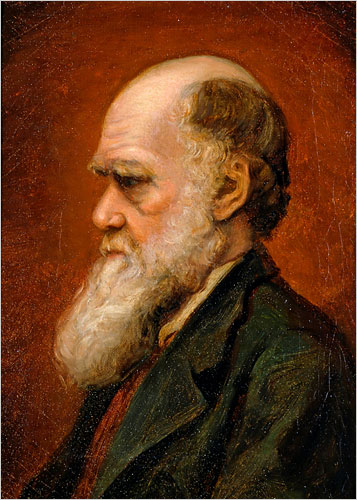
—Why did you study earthworms for forty years? Weren't they a bit boring?
Never say a creature is boring until you have truly watched it! I published my findings on earthworms in 1881 — the very last book of my life. What do worms do? They swallow soil, digest it, and deposit it elsewhere. That sounds small, I know. But multiply that by millions of worms, over thousands of years, and they have turned over every field and meadow in England. Imagine: the entire surface of the ground you walk on, shaped grain by grain by creatures no one notices. That is what I love most about science — the small things are never truly small.
The small things are never truly small.
—Why did you wait twenty whole years before telling people your theory?
That is a fair question, and I am not entirely proud of the answer. I had the core idea — that species change over time through natural selection, meaning the best-adapted individuals survive and pass on their traits — already around 1838. But I knew what it meant. It challenged ideas people held very deeply, ideas about how the world was made. I kept working, kept gathering proof. I bred pigeons at Down House for years, studying how much variation one could produce. I wanted to be utterly certain before I spoke. Fear? Perhaps. But also something like respect for the weight of the claim.
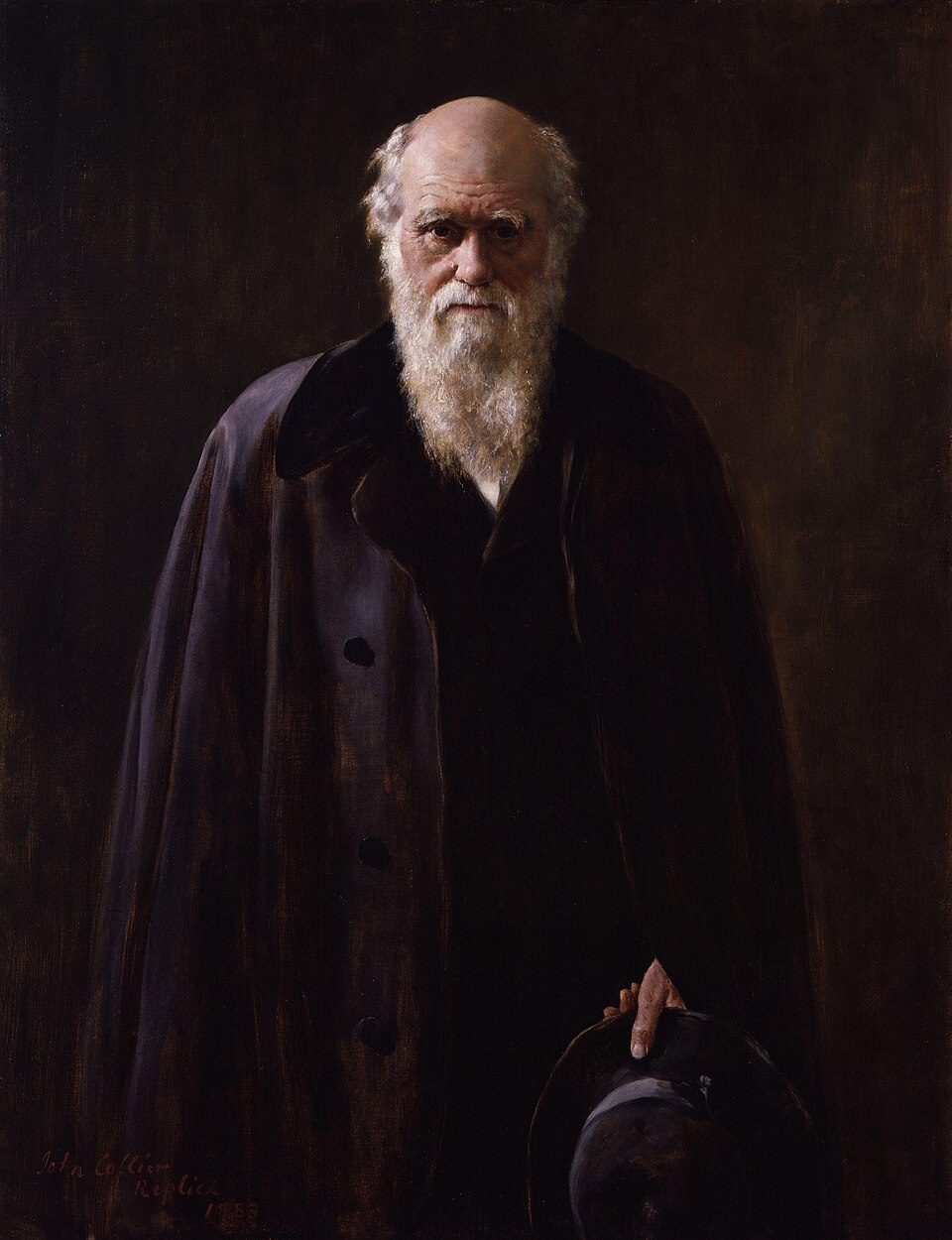
—How did you feel when a stranger sent you a letter with almost the same idea as yours?
In 1858, a letter arrived from Alfred Russel Wallace, a young naturalist working in the islands near Southeast Asia. He had independently reached the same theory I had spent twenty years developing. I was astonished — and, yes, a little shaken. Twenty years, and here was a stranger who had arrived at the same place! My friends Lyell and Hooker arranged for our two papers to be presented together at the Linnean Society in London. It was the right and honest thing. But that letter also freed me from my own hesitation. Within months, I sat down and wrote On the Origin of Species.
—Were you scared when so many people got angry after your book came out?
The first printing of On the Origin of Species was 1,250 copies. They all sold on the very first day of publication, in 1859. That alone told me something large had been set in motion. In 1860, a bishop named Wilberforce publicly mocked my ideas at Oxford, and my friend Thomas Huxley defended them with great force — I was too unwell to attend. Scared? I think the truer word is watchful. I had spent twenty years preparing my arguments. I knew they rested on solid ground. But sitting at Down House while the storm raged in London was not easy.
—Does it feel strange to be buried next to Isaac Newton at Westminster Abbey?
When I wrote The Descent of Man in 1871, I stated plainly that the conclusion — that humans descend from some earlier form of life — would be, and I knew this, deeply disagreeable to many people. I was right. And yet, when I died in 1882, the nation buried me at Westminster Abbey, beside Newton. I had hoped for a quiet grave near my garden, honestly. But perhaps it means this: if your work is honest and patient, if it keeps asking questions and following evidence wherever it leads, it eventually finds its place — not because it silences those who disagree, but because the questions themselves refuse to go away.
If your work is honest and patient, it eventually finds its place.
This imaginary interview was generated by artificial intelligence from sources documented in Charles Darwin's profile. It dramatises what the figure might have said based on what we know about them, but does not constitute attested historical testimony. For primary sources and factual documentation, refer to the full profile.