Kids interview Chika Kuroda
by Charactorium · Chika Kuroda (1884 — 1968) · Sciences · 5 min read
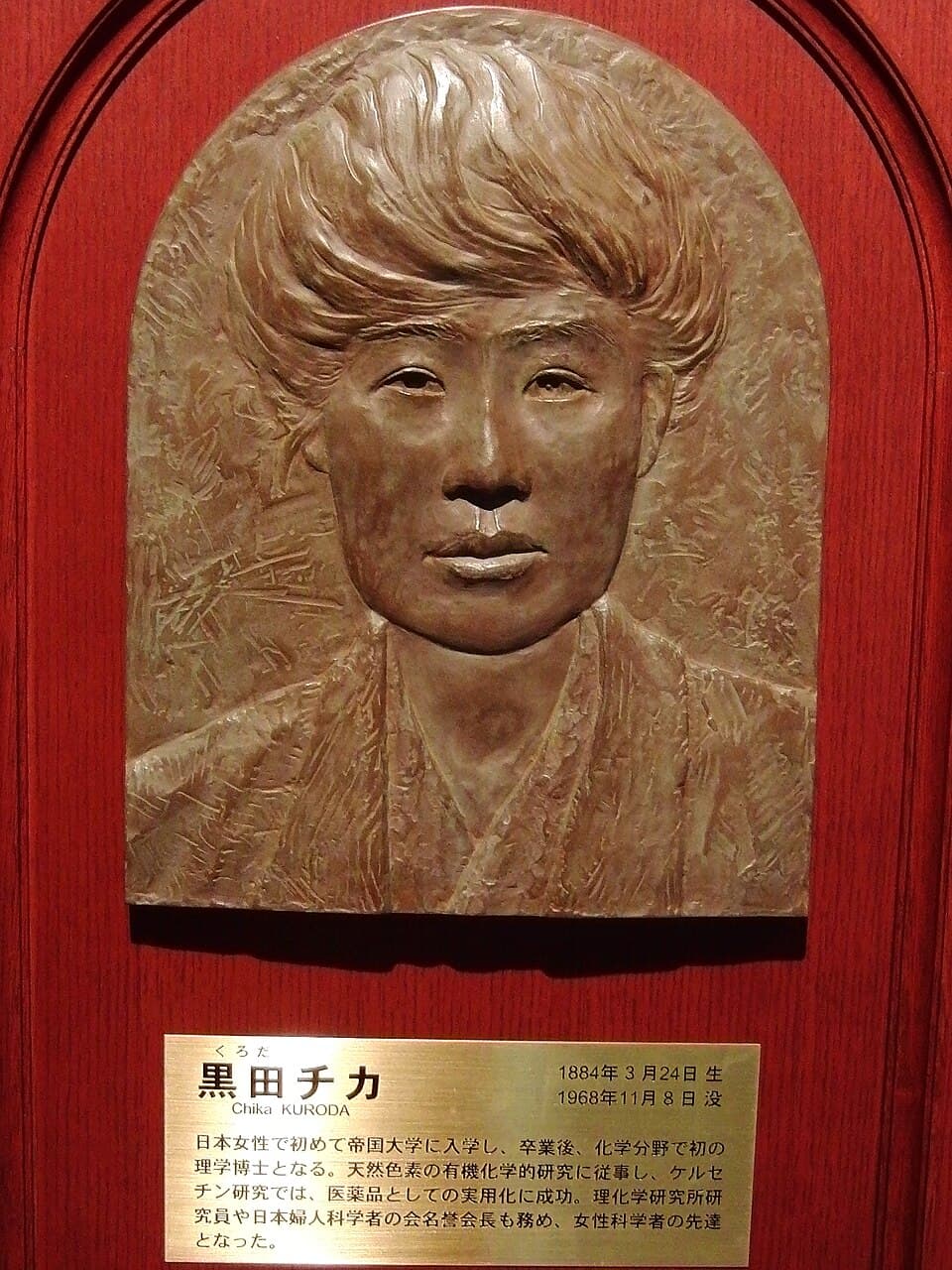
Two sixth-grade students visit an old chemistry lab during a field trip. There, sitting near her flasks, a white-haired Japanese lady welcomes them with a smile. It is Chika Kuroda, and she has agreed to tell them everything.
—What was it like, the day you entered university with the other girls?
You know, my child, it was in 1913. Imagine a big university in Sendai, where only boys had studied until then. That morning, three of us girls walked through the gate: myself, my friend Kono Yasui, and Raku Makita. Three, in the whole country! The Ministry of Education was so astonished that they sent a letter asking why we were being let in. Imagine: they demanded an explanation, as if our presence were an extraordinary event. My heart was beating very fast. But I clutched my books to my chest and walked in. That day, a door opened, and no one could ever close it again.
That day, a door opened, and no one could ever close it again.
—Were you afraid the boys would make fun of you in class?
A little, yes, I won't lie to you. Imagine a room full of boys staring at you when you walk in. You feel very small. But you know what helped me? Chemistry doesn't care if you're a boy or a girl. A reaction in a test tube behaves the same for everyone. So I focused on my flasks, my laboratory glassware, my notes. Little by little, they stopped seeing me as a curiosity. They saw me as a hardworking student. It is work, my child, that eventually shuts the mouths of mockers.
Chemistry doesn't care if you're a boy or a girl.
—What is shikonin, that purple stuff you were looking for?
Ah, shikonin! It is a violet pigment, that is, a substance that gives color. It is extracted from the root of a small plant called murasaki, the gromwell. Imagine: in old Japan, this violet was so precious that only the most important nobles had the right to wear it. A king's violet, so to speak! I wanted to understand its secret: what this pigment was made of, deep down, in its tiniest invisible particles. I spent years on it, and in 1929, I finally determined its structure. It was like reading a recipe that no one had ever managed to decipher.
A king's violet, whose hidden secret I wanted to unlock.
—Were you happy when you got your doctorate?
Oh yes, my child, very! Thanks to my work on shikonin, I obtained my doctorate in science in 1929. In our country, we call this title rigaku hakushi: it is the highest degree a scientist can earn. And I was one of the very first Japanese women to receive it, the first in chemistry. Imagine what that meant in a country where, fifteen years earlier, official letters were written expressing astonishment that a girl was studying! I was proud, but above all I thought of all those who would come after me. My name on that diploma was like a little bridge built for the other girls.
My diploma was a little bridge built for the girls who would come after me.
—You went very far away to study, didn't you? What was the journey like?
Very far, yes! Between 1921 and 1923, I crossed half the Earth to go to Oxford University, in England. Imagine a huge ship, weeks on the water, then a country where they speak another language, where it is gray and cold. There I worked with a great chemist, William Henry Perkin Jr. And listen to this funny story: his father had invented the very first man-made dye, a color called mauveine. I, on the contrary, studied the colors of nature, those of plants! The father invented colors, the son helped me understand those that nature had already created.
The father invented colors, I learned to read those of nature.
—What did it smell like, and what was your home like when you were a child?
What a lovely question, my child! I was born in 1884 in Saga Prefecture, in southwestern Japan. Imagine a house with floors covered in tatami, those woven straw mats that smell like dry grass when you walk on them. The walls were not like yours: they were sliding paper and wood partitions that opened the rooms. In the morning, it smelled of cooking rice, green tea, miso soup. We ate simply: fish, seasonal vegetables. And not a sound of engines outside, just voices, the wind, and sometimes rain on the roof. It was quiet, very quiet.
—Is it true that you studied the color of lipstick?
In a way, yes! I studied carthamine, a beautiful red pigment extracted from the flowers of a plant called benibana, the safflower. For a very long time in Japan, this red was used to dye fabrics and even to color women's lips. Imagine: a makeup made from a simple flower! People used it without knowing what it was made of, deep down. I, with my spectroscope — an instrument that breaks down light to reveal hidden colors — looked at this red up close. And I discovered that in a centuries-old gesture of beauty lay a complex and magnificent chemistry.
In a simple lipstick lay centuries-old chemistry.
—How did you manage to see such tiny things in a plant?
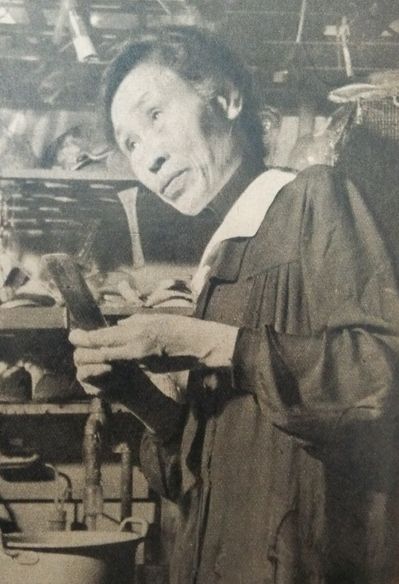
Ah, with a lot of patience and good tools, my child! Imagine my day: in the morning, I prepared my solutions, weighed tiny amounts of pigment on a precision balance, so fine it could measure almost a speck of dust. I noted every step in my laboratory notebook, so as not to forget anything. In the afternoon, I purified my plant extracts and observed them through the spectroscope. Light passed through my color, and depending on what it absorbed, I guessed what it was made of. It was slow work, like reconstructing a puzzle whose pieces you cannot see. But every small answer made me happy.
—After all that, you became a teacher? Did you enjoy teaching?
I loved it, my child! For years, I taught chemistry at the Tokyo Women's Higher Normal School — in our language, joshi kōtō shihan gakkō. It was one of the few places where girls could pursue higher education. Imagine a room full of curious young women, bent over their test tubes, eyes shining at a reaction. I showed them that science was not closed to them. In 1949, this school became Ochanomizu University. Seeing my students succeed was my greatest reward. Greater, perhaps, than my own doctorate.
Seeing my students succeed was my greatest reward.
—If there were girls today who dream of becoming scientists, what would you tell them?
I would tell them: do not be afraid of a closed door. You know, I was looked at askance; letters were written in astonishment because a girl dared to study. But imagine if I had backed down! There would have been no open door for those who followed. Curiosity is stronger than fear. When you observe a color, a plant, a star, ask yourself: “What is it made of, deep down?” That little question is the beginning of all science. And remember: just because you are not expected somewhere does not mean you do not belong there.
Just because you are not expected somewhere does not mean you do not belong there.
This imaginary interview was generated by artificial intelligence from sources documented in Chika Kuroda's profile. It dramatises what the figure might have said based on what we know about them, but does not constitute attested historical testimony. For primary sources and factual documentation, refer to the full profile.