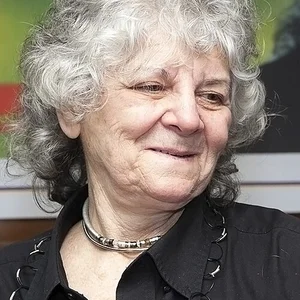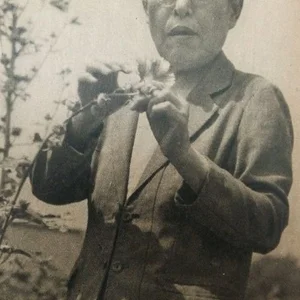

Kono Yasui (1880-1971) was a Japanese botanist and cytologist, a pioneer in the study of chromosomes and plant genetics. In 1927, she became the first Japanese woman to earn a doctorate in science.
Kono Yasui(1880 — 1971)
Kono Yasui
Japon, empire du Japon
6 min read
Frequently asked questions
Key Facts
- Born in 1880 in Kagawa (Japan), she studied at the Tokyo Women's Higher Normal School
- First Japanese woman to publish in a foreign scientific journal (1911)
- Carried out research abroad (United States and Germany) around 1914-1916
- In 1927, the first Japanese woman to earn a doctorate in science, for her cytological work on the formation of coal from plants
- Died in 1971 after a career as a pioneer and a supporter of scientific education for women
Works & Achievements
A study of the life cycle of an aquatic fern, the first publication by a Japanese woman in a foreign scientific journal. It revealed Yasui's talent to the world.
Pioneering research into the structure and behavior of plant chromosomes, helping to establish cytogenetics in Japan.
A study of how the tissues of fossil plants transformed into coal, which earned her the distinction of becoming the first Japanese woman to hold a doctorate in science.
Together with the chemist Chika Kuroda, she created a fund to support women's scientific research, paving the way for future generations.
For more than forty years, she trained many female students in the sciences, passing on her rigor and passion for research.
Anecdotes
In 1911, Kono Yasui published a study on the life cycle of the aquatic fern Salvinia natans in the British journal Annals of Botany. She thus became the first Japanese woman to publish a research work in a foreign scientific journal, at a time when very few women had access to laboratories.
When she wished to study abroad, the Ministry of Education hesitated to fund a woman. To make the project acceptable, her field of research was officially registered as “science and home economics,” and she reportedly pledged not to marry so that she could devote herself entirely to science.
In 1927, she became the first Japanese woman to earn the title of Doctor of Science (rigaku hakushi). Her thesis dealt with the cytology of coal formation: under the microscope, she observed how the tissues of ancient plants had transformed, over millions of years, into coal.
Yasui disliked being presented first and foremost as “a learned woman.” She wished to be judged on the quality of her research, like any other scientist, and refused special attention tied to her sex.
Together with the chemist Chika Kuroda, the second Japanese woman to earn a Doctor of Science degree, she pooled her savings to create a scholarship aimed at helping young women pursue scientific research, a field that remained largely closed to them.
Primary Sources
A study describing the development and reproductive cycle of the small aquatic fern Salvinia natans, from spore germination to the adult plant — the first publication by a Japanese woman in a foreign scientific journal.
Microscope research on the tissue structure of fossil plants and their gradual transformation into coal, which earned Yasui her doctorate in 1927.
A series of Japanese-language studies on the structure of plant cells and plant chromosomes, helping to establish plant cytogenetics in Japan.
A fund created jointly by Kono Yasui and Chika Kuroda from their personal savings, intended to provide financial support for scientific research by women in Japan.
Key Places
Port town on the island of Shikoku where Kono Yasui was born in 1880, into a family of shipowners. A relatively well-off background that supported her access to education.
The institution where Yasui trained and then taught for most of her career. One of the few places of higher education open to women in Japan.
It was here, under the guidance of botanist Kenjiro Fujii, that she carried out her cytological research and earned her doctorate in science in 1927.
Site of her study abroad in the 1910s, where she deepened her knowledge of plant cytology.
The capital where Yasui spent the greater part of her life as a researcher and teacher, and where she died in 1971.
Typical Objects
The central instrument of her work, which allowed her to observe plant cells and count chromosomes. It was through the microscope that Yasui explored the invisible world of plants.
📷 CC BY 2.0 · Wikimedia Commons ↗
A device used to cut extremely thin sections of plant tissue or fossil coal. These translucent slices were then examined under the microscope.
📷 CC BY 4.0 · Wikimedia Commons ↗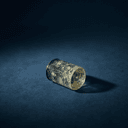
Chemical dyes applied to specimens to bring out the chromosomes and internal structures of cells. Without staining, these elements remain almost invisible.
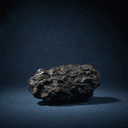
Pieces of coal containing the remains of ancient plants, at the heart of her doctoral thesis. In them, Yasui hunted for the cellular traces of plants that had disappeared millions of years earlier.
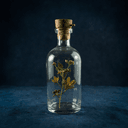
A collection of dried and preserved plants, such as the aquatic fern *Salvinia natans* that she studied. These specimens served as a reference for her botanical research.

A notebook in which she carefully reproduced by hand what she observed under the microscope. In an era without common microscopic photography, drawing was an essential research tool.
School Curriculum
Vocabulary & Tags
Key Vocabulary
Daily Life
Morning
Very early, Kono Yasui would head to her laboratory. Mornings were often devoted to preparing samples: cutting thin sections of plants or coal, staining them, then setting them up under the microscope.
Afternoon
Afternoons were divided between patient observation under the microscope, counting chromosomes, and teaching: she gave classes to the students of the **Tokyo Women's Higher Normal School**.
Evening
In the evening, she carefully drew her observations, wrote her papers, and read international scientific publications to keep up with advances in cytology and genetics.
Food
Her diet was that of Japan at the time: rice, fish, seasonal vegetables, miso soup, and green tea — simple meals suited to a studious life of moderation.
Clothing
Depending on the occasion, she wore the traditional kimono or Western-style clothing, which was becoming increasingly common among educated women of the **Taishō** and **Shōwa** eras.
Housing
Living single and devoted to her work, she resided in Tokyo in modest lodgings, close to her places of research and teaching.
Historical Timeline
Period Vocabulary
Liens externes & ressources
Références
Œuvres
« On the Life-history of Salvinia natans » (Annals of Botany)
1911
Travaux de cytologie sur les chromosomes des plantes
années 1910-1930
Thèse sur la cytologie de la formation du charbon
1927
Fondation de la bourse Yasui-Kuroda
fin des années 1950
Carrière d'enseignante à l'École normale supérieure de filles de Tokyo
1907-1949