Imaginary interview with Christine Delphy
by Charactorium · Christine Delphy (1941 — ?) · Society · Philosophy · 6 min read
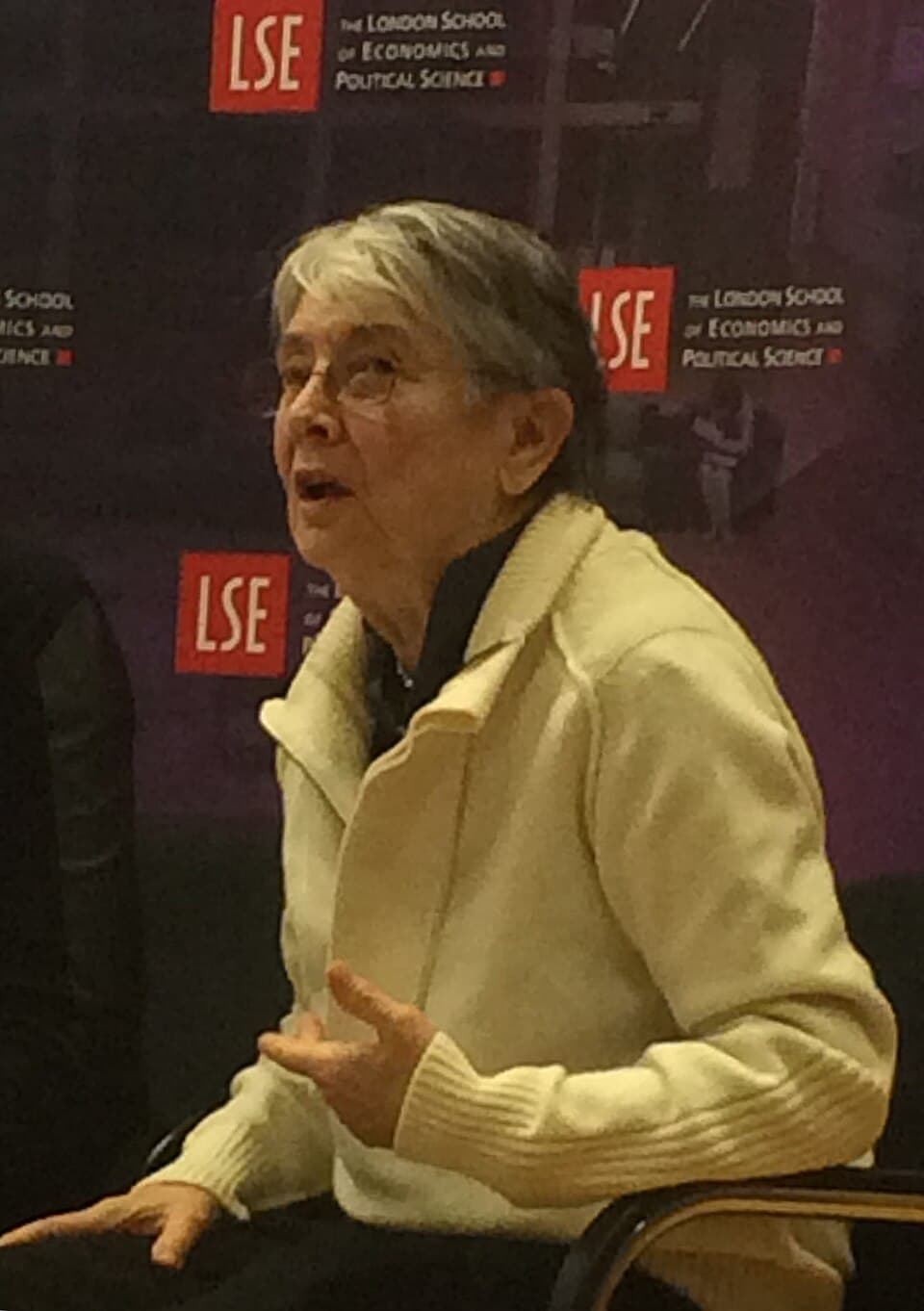
A modest apartment on the Left Bank, a table cluttered with offprints and bound issues of a journal with a clear title: Questions féministes. Christine Delphy receives us without ceremony, the measured voice of a researcher used to being contradicted. She speaks of domestic work as others speak of a resource that had been refused naming.
—How did a young Parisian sociologist end up crossing the Atlantic in the 1960s?
I wanted to see sociology being done elsewhere than in French lecture halls. Chicago, then the West Coast: there, entire books were devoted to the family, unpaid work, to what was done in kitchens and that no statistics counted. I also discovered the first circles of women who met to tell their stories, and from that narrative drew a thought. It felt like a door opening onto a room I had frequented forever without ever having the right to light it. I came back with notebooks full of notes and a stubborn conviction: what was taken for love or devotion was in fact an economic relationship. It remained to be demonstrated, and 1960s France was in no hurry to hear me.
What was taken for love or devotion was in fact an economic relationship.
—What exactly happened under the Arc de Triomphe on August 26, 1970?
We were a handful, with a hand-painted banner. The idea was simple and fierce: every year we honor the Unknown Soldier, so we came to lay a wreath for someone even more invisible, his wife, "more unknown than he." The police caught us before we could even unfold much. But the press took the bait, and that day the Women's Liberation Movement was born in the public eye. What still strikes me is that the gesture fit into a single sentence. We had neither platform nor budget, only the irony of a national tomb that celebrated a man's sacrifice while methodically erasing the women who had fed, washed, and mourned him. A paving stone of humor was worth more than a long speech.
We came to honor the wife of the unknown soldier, more unknown than he.
—In 1970, you published an article with the provocative title The Main Enemy. Why that word 'enemy'?
Because we had to stop referring our oppression to a distant abstract system and look at who, concretely, profited from it. I advanced a thesis that many found scandalous: women form a social class exploited, as workers are by the bosses, and the site of this exploitation is not the factory but marriage. I wrote that "women constitute a social class whose exploitation takes the form of unpaid domestic work provided within marriage." It was not a metaphor. The prepared meal, the ironed shirt, the watched child: so much value produced and captured without wages. I called this the domestic mode of production, an economic system in its own right, with its masters and its producers. The text first circulated as a mimeograph, then was translated everywhere. You can fascinate and shock with the same sentence.
—Yet you refuse to call this work 'free by nature.' Why this precision?
Because the word 'free' hides a circular reasoning that must be broken. We are told that housework has no market value; we conclude that it does not deserve wages. I reversed the order: domestic work "is not free because it would be without value; it is without market value because it is performed for free, within a specific production relationship: marriage." The difference is decisive. It is not the nature of the task that decides its remuneration, it is the social relationship in which it is performed. The same dishes, done by a maid, are paid; done by the wife, they disappear from the accounts. I spent years at the CNRS gathering files on family law and household economics to make this evidence finally visible.
—In 1977, you founded a journal with Simone de Beauvoir. What were you trying to build?
A place of our own, serious, where feminist thought would not be begged at the margins of established disciplines. Simone de Beauvoir agreed to direct it; her Second Sex had paved the way for my entire generation, and her presence gave the enterprise a weight that could not be ignored. Questions féministes operated on a principle I held viscerally: each text was reread, discussed, reworked collectively before appearing. No solitary signature placed above, but a common work, like the movement itself, horizontal, without a leader. It was exhausting and sometimes stormy. But I believe that a theory of exploitation could not decently be made according to the customs it claimed to fight. The journal still exists, under another name, and that consoles me for many battles lost elsewhere.
A theory of exploitation could not be made according to the customs it claimed to fight.
—You mention stormy debates. Which one divided your camp the most?
The one that came back endlessly, like a fault line: are the differences between women and men inscribed in biology, or entirely produced by society? Many, including among my comrades, wanted to celebrate a "feminine nature," a gentleness, a unique way of feeling the world. I saw a dangerous trap. Every time an essence of women was invented, it was to better assign them a place. I defended, against part of my own movement, the idea that almost everything called feminine is constructed, learned, imposed. This quarrel eventually tore the journal apart, to the point that it had to be reborn under the name Nouvelles Questions féministes. One does not fall out over abstractions: one falls out because it is about knowing in whose name we are governed.
—You went even further, asserting that 'gender precedes sex.' How can you hold such a paradox?
People always think that the difference of bodies comes first, and that society only embroiders on top. I propose the opposite. I wrote, in the second volume of The Main Enemy, that "gender precedes sex: it is not biological difference that creates gender, but gender that gives social meaning to biological difference." In other words, we live in a society that first needs to hierarchize, to separate dominants and dominated, and that goes looking in bodies for a convenient alibi for this hierarchy. Gender is therefore not a category of difference, but of hierarchy. Without domination, we would hardly notice these anatomical differences, just as we do not classify humanity by eye color. This position, I know, disturbs even within international feminism.
Gender is not a category of difference, but of hierarchy.
—This idea of 'sex classes' you use, how does it differ from the Marxist analysis you come from?
I borrow from Marxism its method, not its conclusions. Marx taught us to see in a wage a power relationship, never to take an institution for a natural fact. I apply this requirement to a terrain he left in shadow: the home. Hence my notion of sex classes — women and men as two antagonistic groups, defined not by their anatomy but by their position in a relationship of exploitation. But I part ways with orthodox Marxists on a key point: they considered the oppression of women a mere appendage of capitalism, doomed to disappear with it. Yet patriarchy is a distinct system, with its own logic, which has survived all economic regimes. Reducing women to a variable of class struggle was yet another way of asking us to wait our turn.
—In hindsight, what do your ideas owe to those American circles discovered early in your career?
A method, above all: starting from the concrete experience of women rather than from great texts. In America, in those meetings where we talked about our own lives, I had seen thought born from below, from the kitchen and the bedroom, where official philosophy never descended. I brought that back in my notebooks and never let it go. My entire theory of the domestic mode of production was born from this conviction: we had to go measure, in real households, who did what and for whom. I have often been reproached for lacking philosophical nobility, for dwelling on figures of dishes and laundry. But it was precisely in these supposedly undignified details that the most universal and best-hidden relationship of domination in human history was concealed.
—In your lifetime, you have seen many prohibitions fall: the Veil law, recognition of rape as a crime. Would you say the struggle is nearing its end?
Beware of such triumphant assessments. Yes, I witnessed the Veil law of 1975, the recognition of rape as a crime in 1980, advances my elders did not dare dream of. But I have always argued that one cannot simply demand equality in a system founded on inequality: it is about transforming the basic structures of society, not letting women in on equal terms. As long as domestic work remains invisible and unpaid, we have moved the walls of the prison without demolishing its foundations. The wreath laid under the Arc de Triomphe already said this: as long as half of humanity produces the life of the other in the shadows, no law will suffice. I would like to be read still when this sentence finally seems dated.
One cannot demand equality in a system founded on inequality.
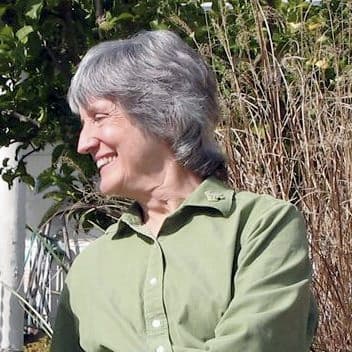
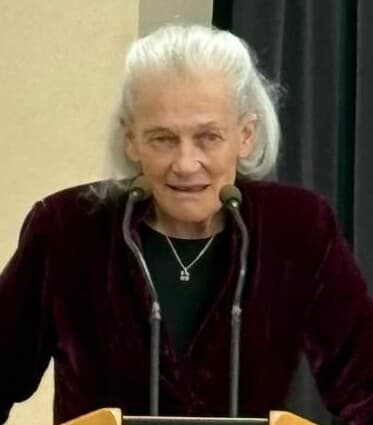

This imaginary interview was generated by artificial intelligence from sources documented in Christine Delphy's profile. It dramatises what the figure might have said based on what we know about them, but does not constitute attested historical testimony. For primary sources and factual documentation, refer to the full profile.