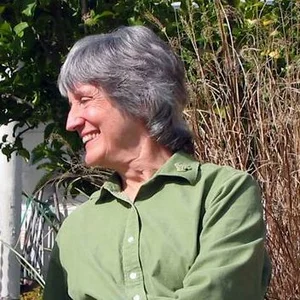

Donna Haraway is an American academic, feminist theorist, and historian of science. Known for her “Cyborg Manifesto” (1985), she questions the boundaries between human, animal, and machine, and rethinks the relationships between nature, technology, and feminism.
Donna Haraway(1944 — ?)
Donna Haraway
États-Unis
6 min read
Frequently asked questions
Famous Quotes
« I would rather be a cyborg than a goddess.»
Key Facts
- Born on September 6, 1944, in Denver, Colorado (United States).
- Doctorate in biology from Yale University in 1972.
- Publication of the “Cyborg Manifesto” in 1985, a major text in feminism and science studies.
- Publication of “Situated Knowledges” in 1988, a key concept in her feminist epistemology.
- Professor emerita in the History of Consciousness department at the University of California, Santa Cruz.
Works & Achievements
Founding text that proposes the figure of the cyborg as a way to rethink feminism in the age of technology. It has become a global reference in gender studies and science studies.
Major article arguing that no knowledge is neutral: all knowledge comes from a situated point of view. An influential critique of scientific objectivity.
An investigation into how science has told the story of primates' lives, projecting onto them ideas about gender, race, and nature.
A collection gathering her essential essays, including the Cyborg Manifesto, which spread her thinking widely.
A reflection on the relationship between humans and dogs, extending her thinking from machines to animals.
A work exploring encounters between species and the way they transform who we are.
Book in which Haraway coins the concept of the Chthulucene and calls on us to “make kin” in the face of ecological crises.
Anecdotes
In 1985, Donna Haraway published her “Cyborg Manifesto” in a small left-wing magazine, the Socialist Review. In it she coined a phrase that has remained famous: “I would rather be a cyborg than a goddess.” The idea of a half-human, half-machine being that blurs the boundary between nature and technology scandalized some feminists but quickly became a cult text studied all over the world.
Before becoming a philosopher, Haraway was first a biologist: she earned a doctorate in biology from Yale University in 1972. This dual training, in both the life sciences and the history of ideas, explains why she is just as comfortable talking about cells, monkeys, and dogs as about politics and feminism.
A passionate dog lover, Haraway practiced agility (a dog obstacle sport) with her dog Cayenne. She drew a whole book from it, *The Companion Species Manifesto* (2003), in which she argues that we cannot truly understand what it means to be human without observing how humans live alongside animals.
To describe our era marked by ecological crises, Haraway coined the word “Chthulucene” in 2016. She proposed a provocative slogan: “Make Kin Not Babies,” inviting us to weave bonds between species rather than thinking only about human reproduction.
Haraway long taught in a department with a surprising name: the “History of Consciousness” program at the University of California, Santa Cruz, a place renowned for blending philosophy, science, the arts, and politics without respecting the usual boundaries between disciplines.
Primary Sources
The cyborg is a creature in a post-gender world. In the end, I would rather be a cyborg than a goddess.
I would like a doctrine of embodied objectivity that accommodates paradoxical and critical feminist science projects: feminist objectivity means quite simply situated knowledges.
Dogs are not a projection, nor the realization of an intention, nor the telos of anything. Dogs are dogs, that is to say, a species in an obligatory, constitutive, historical, and shifting relationship with human beings.
Our task is to make trouble, to stir up potent responses to devastating events, but also to settle troubled places. Make kin, not babies!
Key Places
City in the American West where Donna Haraway was born in 1944 and spent her childhood.
Prestigious Connecticut university where Haraway earned her doctorate in biology in 1972.
California campus where Haraway taught for decades in the History of Consciousness department.
Institution where Haraway taught the history of science early in her career, before Santa Cruz.
Institution where Haraway completed her first undergraduate studies, in zoology, philosophy, and English literature.
Typical Objects
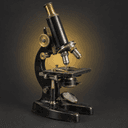
Scientific instrument with which Haraway, trained as a biologist, observed living things at the scale of cells. It symbolizes her scientist's way of looking at the world.
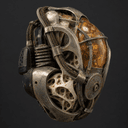
An imaginary being, half organism and half machine, that Haraway uses as a symbol for thinking about a world where nature and technology blend together. It is an object of thought more than a material object.

Writing tools with which Haraway composed her manifestos and books. The computer also embodies the information technologies she analyzes.
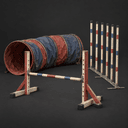
Hurdles, tunnels, and weave poles used in the sport she practiced with her dog Cayenne. They illustrate her reflection on “companion species.”
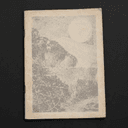
A short, committed text published on paper, through which Haraway launches her ideas into public debate. The “manifesto” form is one of her signatures.
School Curriculum
Vocabulary & Tags
Key Vocabulary
Tags
Daily Life
Morning
As an academic, Haraway often begins her days with reading and writing, in the quiet of her office or her California home. Coffee accompanies her notes and the preparation of her courses.
Afternoon
The afternoon is devoted to teaching at the University of California, Santa Cruz, to discussions with her students, and to seminars where scientific, philosophical, and political ideas are exchanged.
Evening
In the evening, she continues her research, exchanges ideas with other thinkers and friends, or spends time with her dogs, which directly nourish her reflection on companion species.
Food
Like an American academic of the late twentieth century, her diet is that of modern everyday life: simple meals, common products, and a growing attention, within her intellectual circle, to the ecological questions tied to food.
Clothing
Haraway wears the ordinary, comfortable clothing of contemporary university life, far from any uniform: practical outfits suited to teaching, writing, and outdoor activities with her dogs.
Housing
She lives in a house in California, near Santa Cruz, surrounded by nature and shared with her animals — a setting that inspires her thinking on the bonds between humans, animals, and the environment.
Historical Timeline
Period Vocabulary
Liens externes & ressources
Références
Œuvres
A Cyborg Manifesto (Manifeste cyborg)
1985
Situated Knowledges (Savoirs situés)
1988
Primate Visions
1989
Simians, Cyborgs, and Women
1991
The Companion Species Manifesto (Manifeste des espèces compagnes)
2003
When Species Meet (Quand les espèces se rencontrent)
2008
Staying with the Trouble (Vivre avec le trouble)
2016
See also
Related Characters
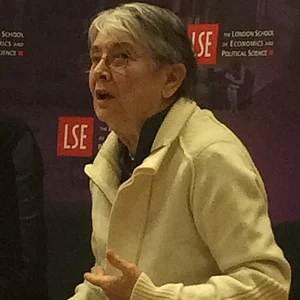
Christine Delphy
1941 — ?
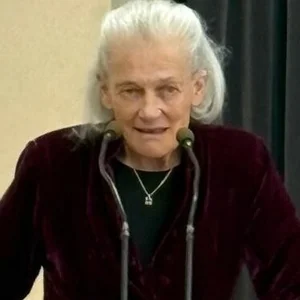
Élisabeth Badinter
1944 — ?
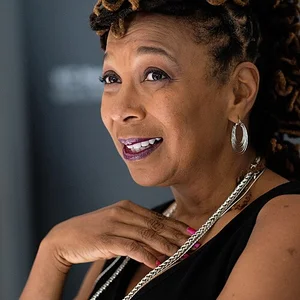
Kimberlé Crenshaw
1959 — ?
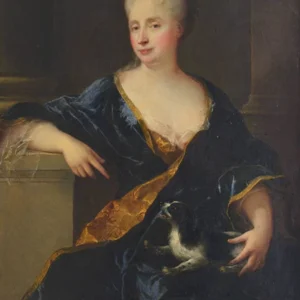
Anne Thérèse de Marguenat de Courcelles, marquise de Lambert

Émilie du Châtelet
1706 — 1749
Hypatia of Alexandria
vers 355/370 — 415