Kids interview Christine Delphy
by Charactorium · Christine Delphy (1941 — ?) · Society · Philosophy · 5 min read
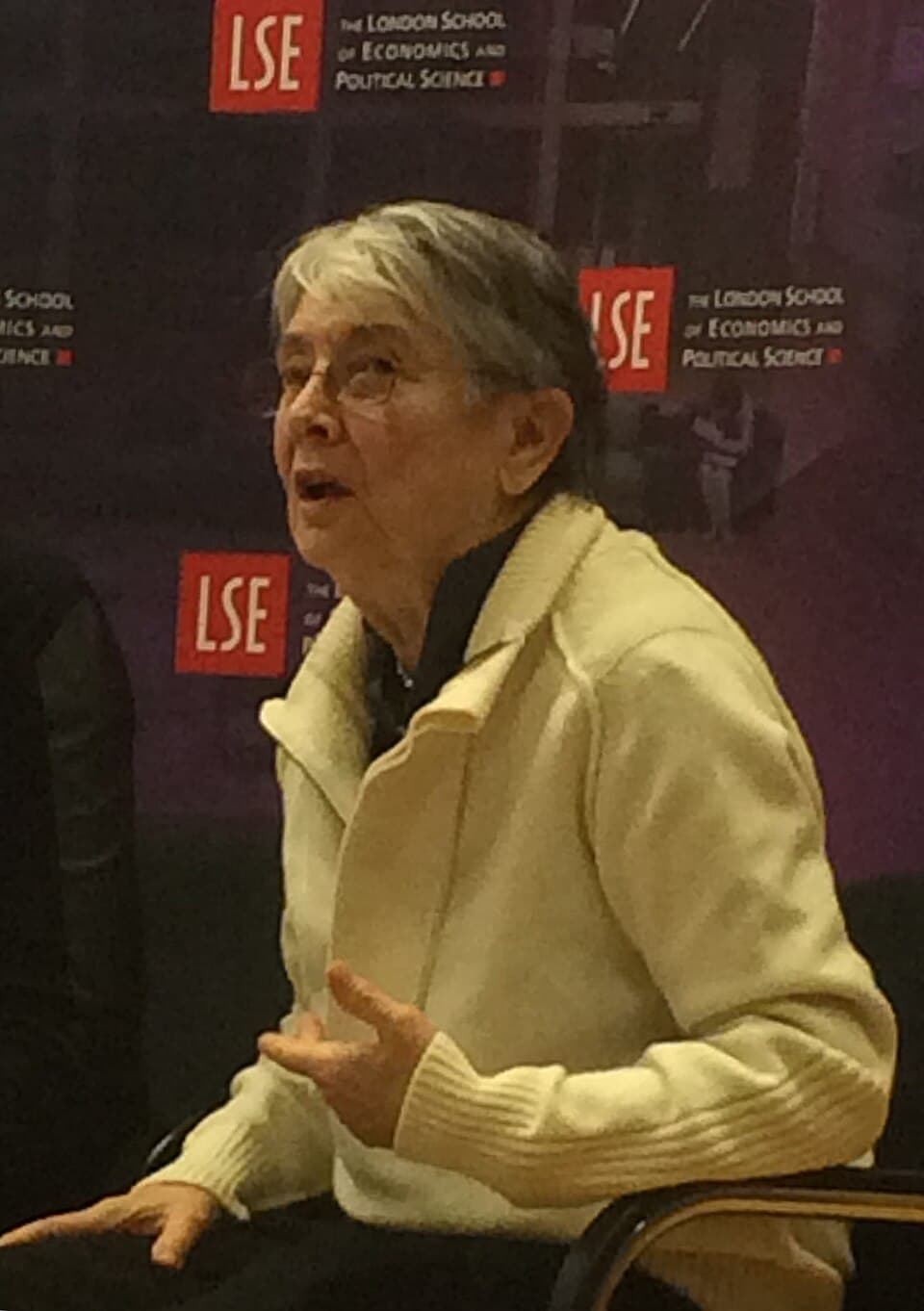
Two twelve-year-old students, on a field trip, push open the door of a small office full of books, on the Left Bank in Paris. A gray-haired woman in simple attire greets them with a smile. She puts away her notebooks and gestures for them to sit down: "So, you want to understand why I fought all my life?"
—Did you leave France when you were young?
Yes, my child, very far. In the 1960s, I went to study sociology in the United States, in Chicago and then at Berkeley. Sociology is the science that observes how people live together. There, I discovered something that overwhelmed me. Women were gathering and talking about a work that no one saw: housework, cooking, taking care of children. Unpaid work, almost always done by women. I read their books, I filled notebooks with notes. Imagine suddenly discovering a huge injustice, and no one around you talks about it. I brought this question back in my suitcases. It occupied the rest of my life.
I brought a question back in my suitcases, and it occupied all my life.
—What is the strange title of your first major text, 'The Main Enemy'?
Ah, that title! In 1970, I wrote an article called The Main Enemy, in a journal named Partisans. At the time, many thought that women's enemy was just the bosses, like for workers. I said: no, there is another injustice, closer, in homes. You see, housework is never paid. I called it the 'domestic mode of production': a complicated way of saying that the household is a place where someone works for free for someone else. It caused a scandal. Comparing the home to a factory was shocking. But I wanted to finally make this invisible work visible.
Housework is never paid — yet it is real work.
—Why did you say that marriage was a problem?
Careful, I didn't hate love, my child! What I examined were the hidden rules. In my time, in a marriage, the woman did all the housework without a cent. Imagine working every day, from morning to night, and being told it's 'nothing', that it's 'normal' because you're a girl. I wrote a simple sentence: this work is without market value because it is performed for free. The problem was not loving someone. The problem was that one gives their work and the other receives it, always in the same direction. I wanted to make this exchange visible, in order to change it.
—Is it true you were arrested under the Arc de Triomphe?
It's completely true! On August 26, 1970, with a small group of women, we went under the Arc de Triomphe in Paris. There lies the Unknown Soldier, a soldier who died in the war and was never identified. We had prepared a hand-painted banner. On it was written: to the wife of the unknown soldier, more unknown than he. A way of saying: we celebrate men, but women are always forgotten. The police arrested us very quickly. But the newspapers talked about it everywhere. That day, the Women's Liberation Movement was born in the eyes of the whole country.
To the wife of the unknown soldier, more unknown than he.
—Were you afraid when preparing this kind of action?
A little, yes. You never know what will happen with the police. But you know, we were never alone. That was the strength of the MLF: no leader, no boss, just women deciding together. We painted the banners together, we laughed, we discussed for hours. Imagine a room full of people who, for the first time, say out loud what they had kept in their hearts forever. Fear existed, of course. But the joy of being together was greater. We felt we were doing something important, and that no one could silence us anymore.
—What does it mean that gender comes before sex?
This is a delicate idea; I'll go slowly. 'Sex' is the body you are born with. 'Gender' is everything society adds on top: saying that a girl should be gentle, a boy should be strong, that there are 'girl toys' and 'boy toys'. I thought the opposite of what was believed. I said: it's not nature that decides all this. It's society that sorts people into two boxes, and then says 'it's natural'. In my book Thinking Gender, in 2001, I wrote it like this: gender gives meaning to the difference of bodies. It's not the other way around.
It's not nature that sorts people into two boxes: it's society.
—Did even other feminists agree with you?
Oh no, not all! And that's normal. In 1977, I founded a journal, Questions féministes, with Simone de Beauvoir, the great philosopher. We debated fiercely. The contentious question was precisely this: do differences between girls and boys come from nature or from society? Some thought nature mattered a lot. I argued that almost everything came from society. We argued, sometimes harshly, to the point that the journal nearly broke apart. But you know, arguing about ideas is not serious. It's even precious. It's by rubbing our disagreements that we move forward and think better.
—Later, did you talk about other injustices besides those of women?
Yes, as I grew older, I broadened my view. In 2008, I wrote Classify, Dominate. Who Are the Others?. In it, I said a simple thing: injustices often resemble each other. Despising someone because they are a woman, or because they come from elsewhere, or because they are poor: it's the same mechanism. We invent boxes, put people in them, and say that some are worth less. Imagine a great machine for sorting human beings. I wanted people to understand how this machine works, so we could dismantle it. An injustice is never alone; it always has cousins. Looking at them together helps fight them better.
We invent boxes, put people in them, and say that some are worth less.
—How were you believed when you said such new things?
I wasn't easily believed, you know! I was a research director at the CNRS, a major scientific center. And yet, for years, people thought feminism was not a serious subject. So I acted like a good researcher: I brought evidence. I filled files with figures on women's work, family finances, who does what at home. Imagine a detective patiently gathering clues. Little by little, my idea of the 'domestic mode of production' entered universities. The lesson? A right idea eventually triumphs, if you have the courage to hold on for a very long time.
—If you could tell us one thing to remember, what would it be?
What a beautiful question to end with. I would tell you this: open your eyes wide to what seems 'normal'. Often, what we call 'normal' is just an injustice that everyone has gotten used to. I spent my life showing a work that no one saw, the work of women at home. It seemed invisible, like air. But once you see it, you can never forget it. So when something seems unfair to you, even if everyone says 'that's how it is', ask the question: why? This little three-letter question has changed the world more than once. And it can start again, with you.
What we call normal is often an injustice we've gotten used to.
This imaginary interview was generated by artificial intelligence from sources documented in Christine Delphy's profile. It dramatises what the figure might have said based on what we know about them, but does not constitute attested historical testimony. For primary sources and factual documentation, refer to the full profile.