Imaginary interview with Confucius
by Charactorium · Confucius (550 av. J.-C. — 478 av. J.-C.) · Literature · Philosophy · 7 min read
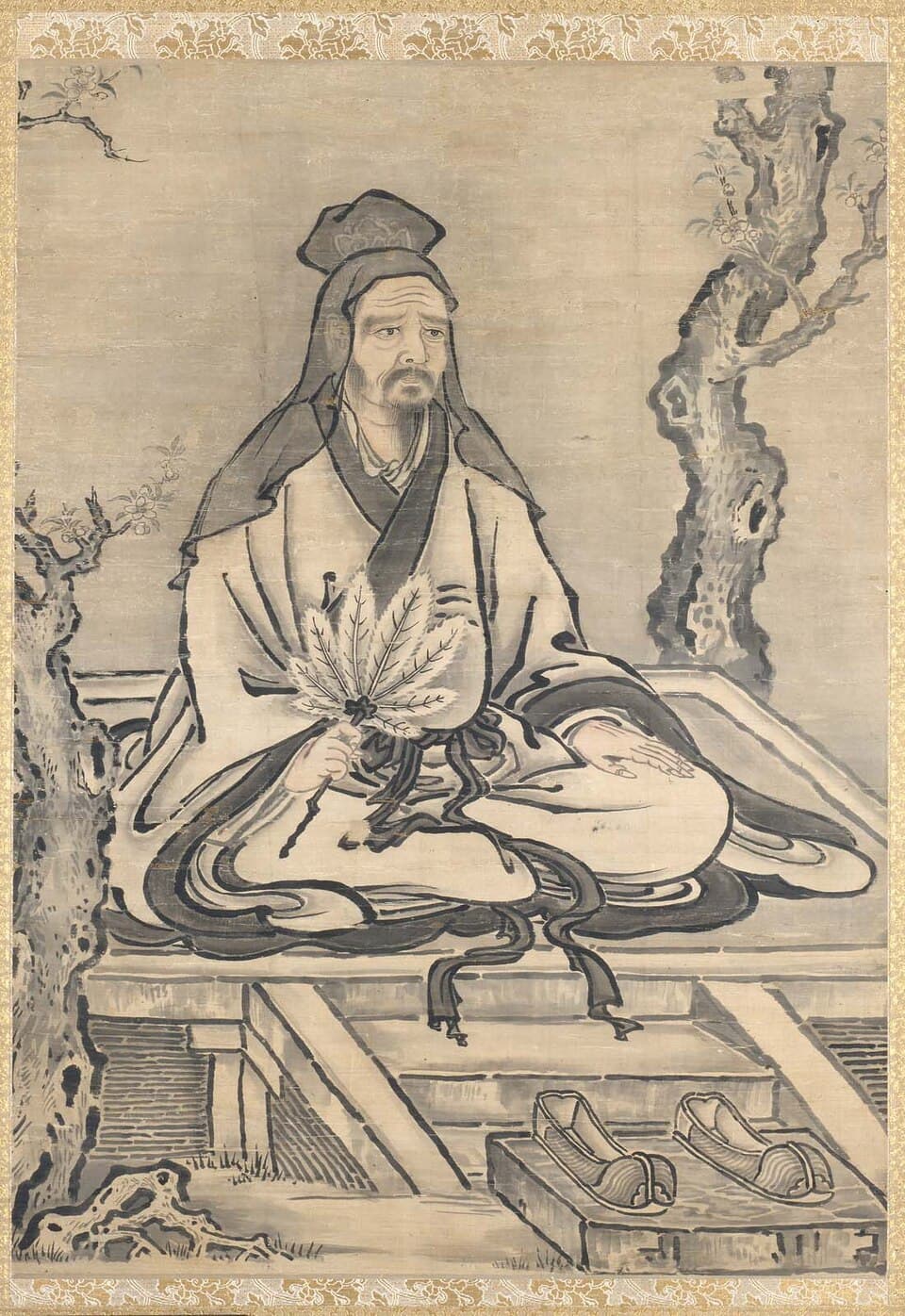
We find Confucius in the courtyard of his house at Qufu, on a late autumn afternoon — the light already pale, a bundle of jiandu bamboo strips spread across his knees. He has been annotating the texts for the better part of a day and sets them aside only briefly, gesturing toward a low mat. At seventy, he carries the stillness of a man who has failed at most of what he set out to do, and seems, against all expectation, not unduly troubled by it.
—People around you use words like sage, master, even the uncrowned king of Zhou. How do you understand your own role?
I am none of those things, and I have been plain about this from the beginning: I transmit, I do not create. The Zhou kings — Wen, Wu, the Duke of Zhou — those were men who actually shaped a world. I found that world already crumbling and spent my life gathering its pieces. The Wujing, the five great texts I have read and re-read until the cords wore through — I did not write them. I tried only to preserve what the ancients had the wisdom to build. There is no shame in being a custodian. A keeper of fire is not the fire itself. What I ask of my students is not to admire me, but to look carefully at what I am pointing toward.
A keeper of fire is not the fire itself.
—Your mornings are described as following an almost unchanging sequence — ablutions, offerings, specific robes chosen according to the day. What does that kind of regularity actually give you?
It gives me the morning itself. Without the rite, one merely wakes up — the body rises but the mind drifts. When I wash, when I choose the proper robe for what the day demands, when I make my offering to the ancestors, I am not performing ceremony for anyone watching. I am reminding myself what I am and what I owe. Li — the rites, the proper form of things — is not decoration laid over life. It is the skeleton of it. I will not receive a guest in my sleeping robe, and I will not eat meat that has been cut against the grain of the joint. These are not eccentricities. They are the visible signature of an inner order. When that order breaks down at the table or at the threshold, it has usually already broken down inside.
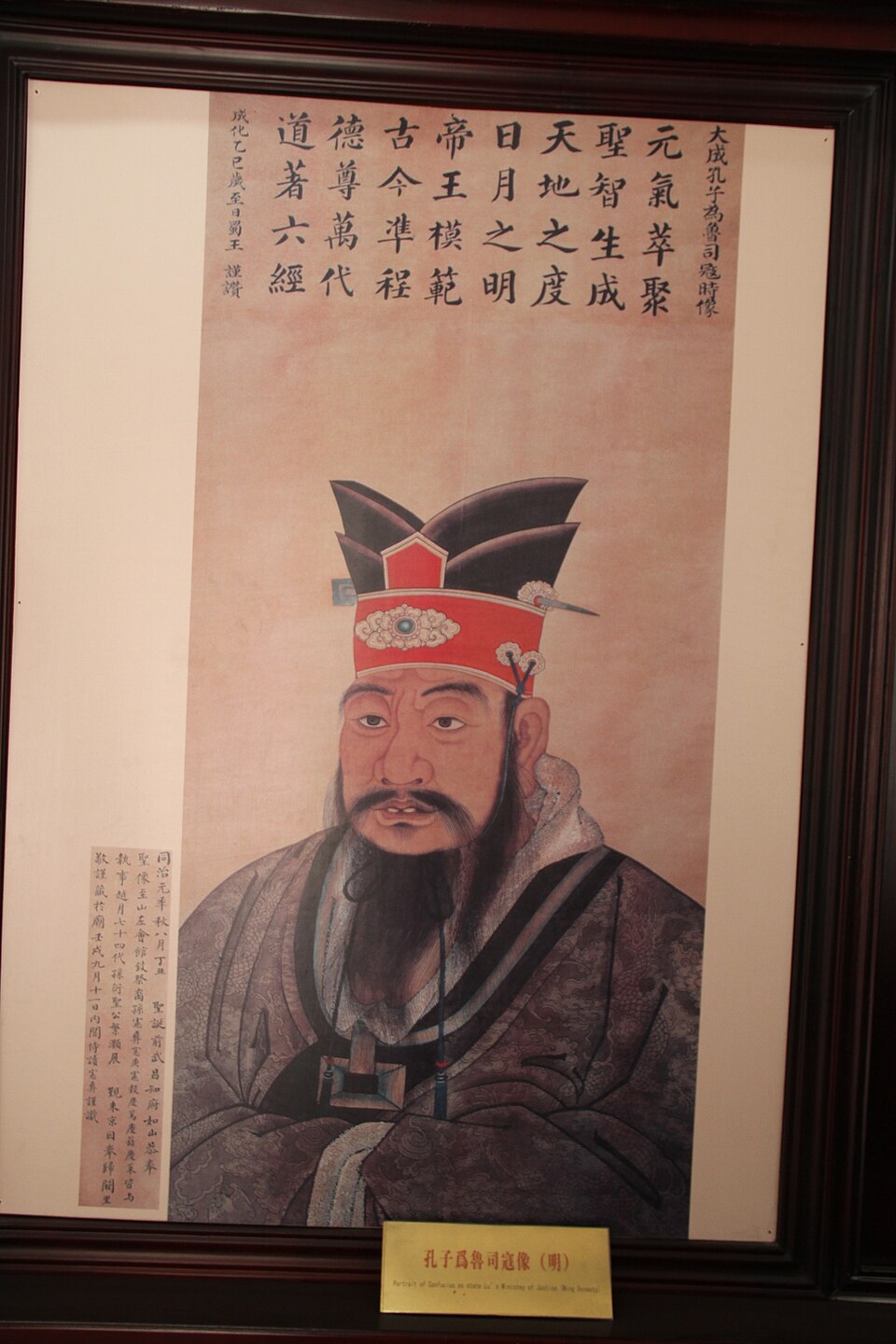
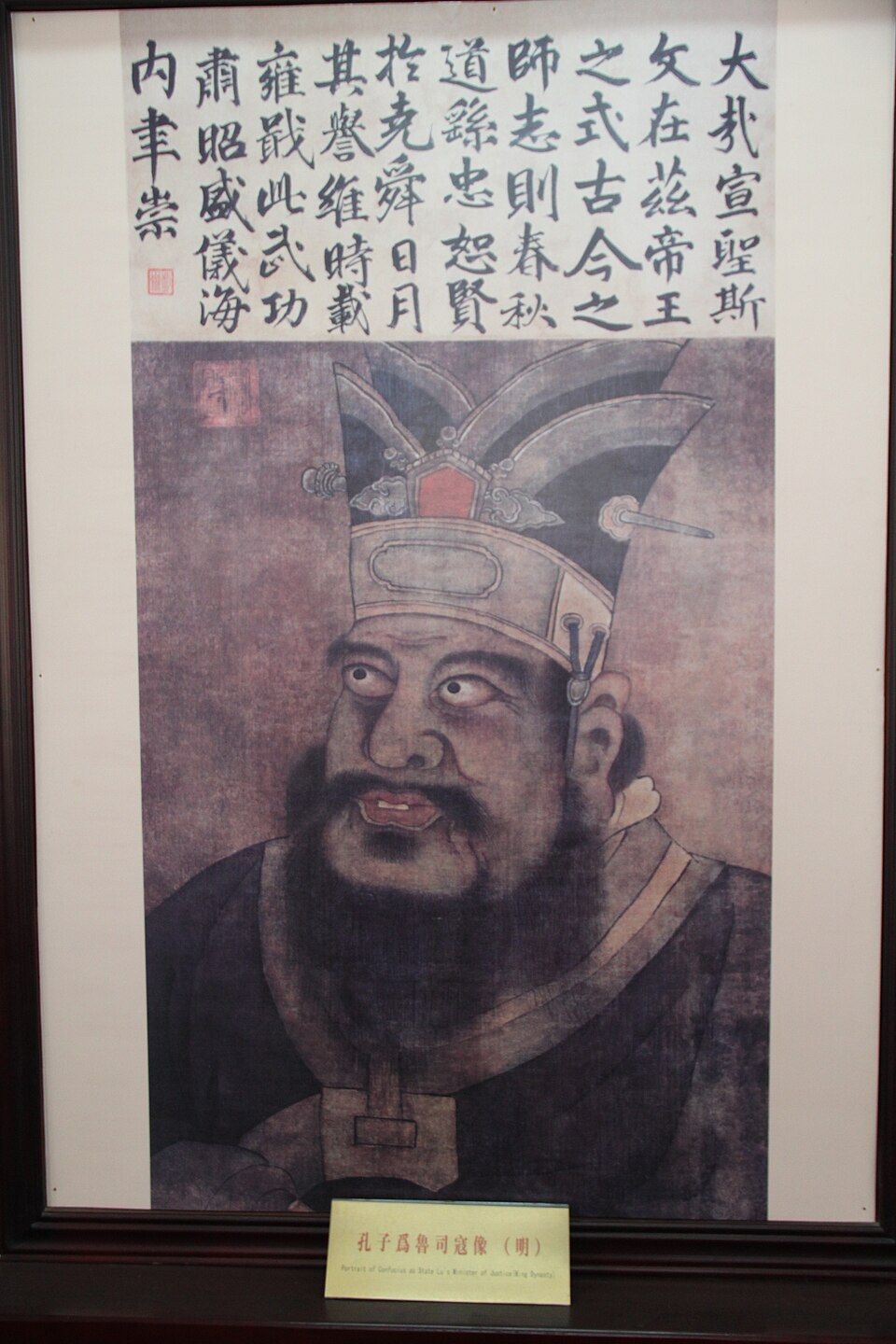
—Around 500 BC, the Duke of Lu appointed you Minister of Justice — Sikou. After so many years spent arguing from the outside, what did that moment feel like?
I will be honest: I felt the weight of it more than the honor. I had been teaching that a state governed by ren — by genuine human concern for others — would heal itself almost without effort. Now I had to demonstrate this, not in a courtyard with disciples, but in a court with rivals. What surprised me was how quickly the mood of Lu shifted, at least at first. I had done nothing yet except be present in the role. People seemed to straighten, somehow. My colleagues found it unsettling; I found it instructive. It told me that zhengming — calling things by their right names, giving proper men proper functions — was not merely a theory. It was a force.
I had done nothing yet except be present in the role.
—Yet you left — or were pushed out — within a few years. What went wrong when political reality met your principles?
Courts are not classrooms. In a classroom, the student who disagrees with me can argue back; I rather enjoy that. In a court, the minister who challenges the powerful families must be careful not to enjoy it too much. I made enemies not by wrongdoing but by working — I reduced certain privileges that had grown comfortable at the state's expense, and that is enough to make a man's position untenable. I left Lu in 497 BC without ceremony. I have never claimed it was anything other than a failure. But I ask myself sometimes whose failure it actually was. Zhengming, as I teach it, requires that rulers be willing to hear the names rectified. Duke Ding was not, in the end, willing.
—You spent the next thirteen years moving between the courts of Wei, Chen, Cai, and others, looking for a prince who might actually govern by your principles. What was the first year of that wandering like?
Strange. My disciples were with me — Zilu, Yan Hui, the others — and we were not destitute. We had horses and a cart. But leaving Lu meant leaving everything I had built there: every connection, every small victory, every student I had watched change over years of study. The court of Wei received us first, and Duke Ling was polite — polite in the way that keeps a visitor comfortable while leaving his ideas entirely untouched. I remember sitting one evening in Wei and thinking: this is the argument I have been making for twenty years, and it finds no soil. Perhaps the soil is the problem. Perhaps the season is wrong. I did not abandon the argument, but I began to understand that patience was not a virtue I was practicing by choice. It was a discipline I had no choice but to enter.
—During those years you were reportedly surrounded and held by force somewhere between Chen and Cai — cut off from food for days. How did you hold yourself together during that?
My disciples grew frightened, and a few grew angry. Zilu, who was never afraid of anything on a road, paced the perimeter like a caged tiger and demanded to know why I was not more alarmed. I told him what I believe: that a man of genuine character does not suffer only when circumstances are bad. He has developed something that circumstances cannot dissolve. I took out the guqin — that small lute I have carried since my youth — and played it until Zigong came to ask how I could remain unmoved. I was not unmoved. I was simply clearer than my fear. The strings do not lie about where you are inside. They told me I was holding.
I was not unmoved. I was simply clearer than my fear.
—In 484 BC, you returned to Lu at last, invited back by Duke Ai. What did it feel like to step into the city you had left thirteen years earlier?
I felt how old I had become. Qufu was not much changed — the streets, the market, the smell of millet cooking in the morning — but I came back already knowing that the political work was finished. There would be no second appointment, no court that would put my ideas into practice in my lifetime. I accepted that. I think I needed to accept it before I could do the last and most important thing: gather my students around me and go back, seriously, to the texts. Yan Hui was still alive then. He died two years later, and I wept for him as I would for a son. But in those two years we read together with a depth I had never found before. The Chunqiu — those chronicles of Lu — took their final shape in that period. A single careful word, chosen over a careless one, can carry a moral judgment across generations.
—The conversations compiled in the Lunyu show you giving what look like opposite answers to different students asking the same question. Was that inconsistency, or was it deliberate?
Method. A physician does not prescribe the same herb for every ailment, even when two patients describe the same fever. Zilu was brave to the point of recklessness — when he asked me about a virtue, I told him to slow down, consult his elders, let the question breathe. Ran Qiu was timid by nature — I told him the same virtue required him to act at once, to trust what he already knew. The Lunyu is sometimes read as a system. It is not a system; it is a record of specific encounters, each shaped by who was sitting across from me. What I tried to give each student was not doctrine but a way of seeing. If two of them came away with opposite instructions, and both became steadier men for it, I would call that a consistent result.
—A disciple once asked you whether there was a single word that could serve as a guide for an entire life. How did you answer?
I told him: shu — reciprocity. Do not do to others what you would not wish done to yourself. He was hoping, I think, for something more elaborate. Students often want a comprehensive list; it feels safer, more portable. But a list can be forgotten, misapplied, argued around. Shu cannot be misapplied, because it asks only that you honestly imagine yourself receiving whatever you are about to do. That is the simplest question, and also the hardest one — because honest imagination of another person's position requires exactly the kind of ren, that genuine human warmth, that most of us spend our lives quietly avoiding. The word fits in a single breath. The practice takes a lifetime.
—Music appears throughout your teaching — you play the guqin yourself, and the great bronze zhong bells figure in every court ceremony you describe. What does music do that words cannot?
Music reaches the part of a person that argument cannot touch. I have watched students grasp ren through a single phrase of music before they could explain it in words — and that understanding stayed with them, which is the test. The great bronze bells at court ceremonies do not merely mark time; they organize the space around them. Everyone present feels the same vibration at the same moment. That is li achieved through sound: a shared order that does not need to be argued for. When I play the guqin alone in the evening, I am not performing for an audience. I am, in the truest sense, practicing. The strings respond to where I am inside. A day spent badly shows up in the playing, whether I intend it or not. The instrument does not flatter you.
—The work of editing and transmitting the five great classical texts — the Wujing — consumed years of your life. What exactly were you trying to save?
The memory of how things worked when they worked. Zhou civilization at its height — the reigns of Wen and Wu, the regency of the Duke of Zhou — those were not myths I was preserving out of sentiment. They were the last time anyone had successfully organized a large territory around ren and li rather than force alone. By the time I was born, 771 BC was already two centuries back and half-forgotten. The odes, the ancient rites, the historical chronicles — those texts are the archive of a world that functioned. To let them perish through neglect seemed to me a catastrophe that was not merely cultural but entirely practical. You cannot build toward something you can no longer picture. I wanted my students, and perhaps their students, to be able to picture it.
—Looking at the fractured world around you — the feudal lords at each other's throats, courts that have turned you away one after another — do you believe what you have spent your life describing is actually achievable, or have you been teaching toward something permanently out of reach?
That is the question my most impatient disciples ask, usually the Zilu types who want results visible before sunset. I do not think it is the right question. Learning and putting into practice what has been learned — is that not already a joy? The text I have lived with longest begins with that sentence, and I believe it with the same stubbornness I brought to the court of Wei and the roads between Chen and Cai. If the world I describe arrives while I am alive to see it, good. If it arrives a hundred years after I am gone, it is still worth having worked toward. And if it never arrives — then at least a great many men will have lived more carefully in the attempt. I have never claimed to be building a certainty. I have been building a direction.
Read further
This imaginary interview was generated by artificial intelligence from sources documented in Confucius's profile. It dramatises what the figure might have said based on what we know about them, but does not constitute attested historical testimony. For primary sources and factual documentation, refer to the full profile.