Kids interview Confucius
by Charactorium · Confucius (550 av. J.-C. — 478 av. J.-C.) · Literature · Philosophy · 6 min read
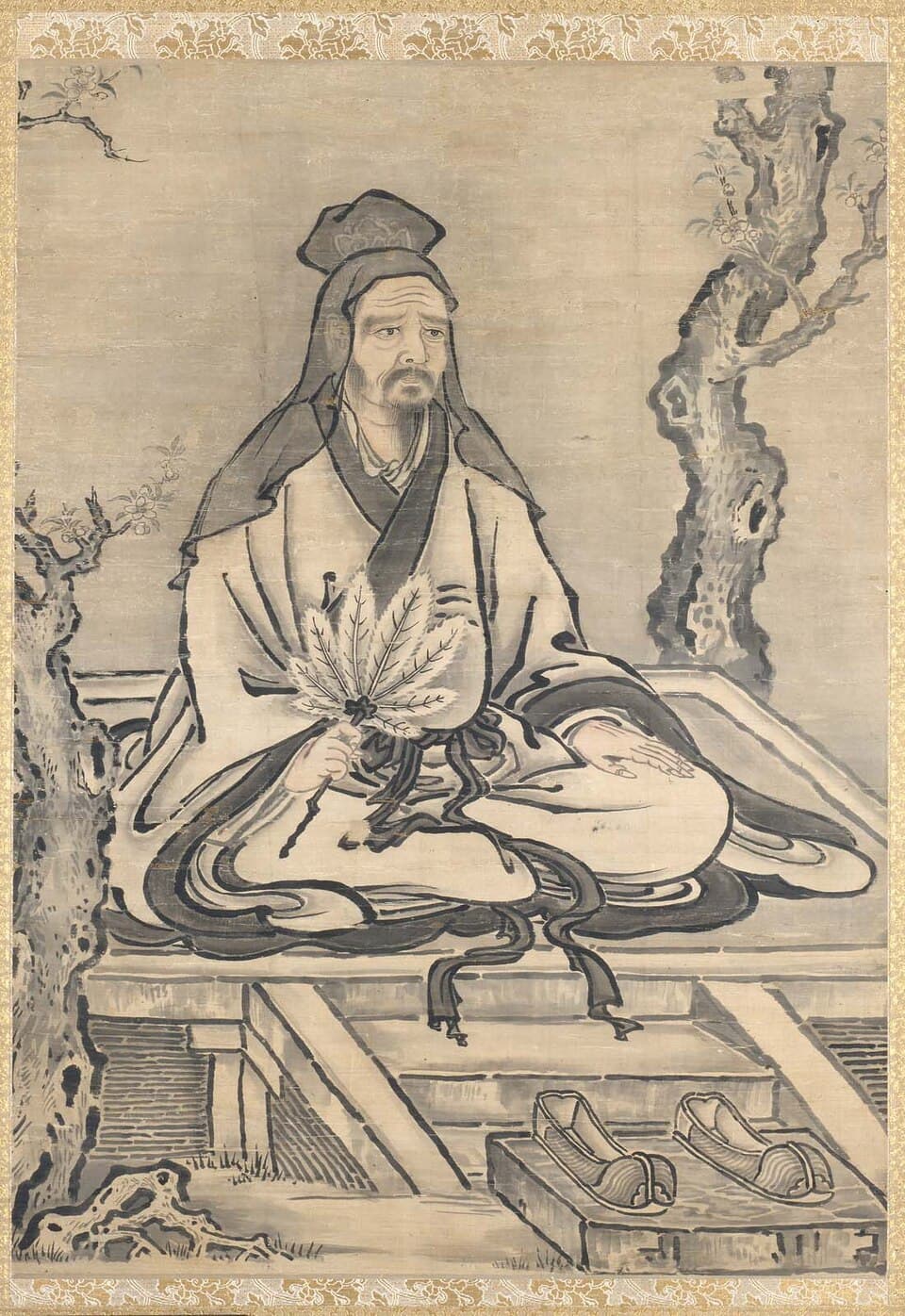
Two students, twelve years old and brimming with questions, have come to meet the philosopher of Qufu. This morning, they find him not seated on a throne, but in his garden — surrounded by bamboo tablets and the faint smell of incense rising from the ancestral altar nearby.
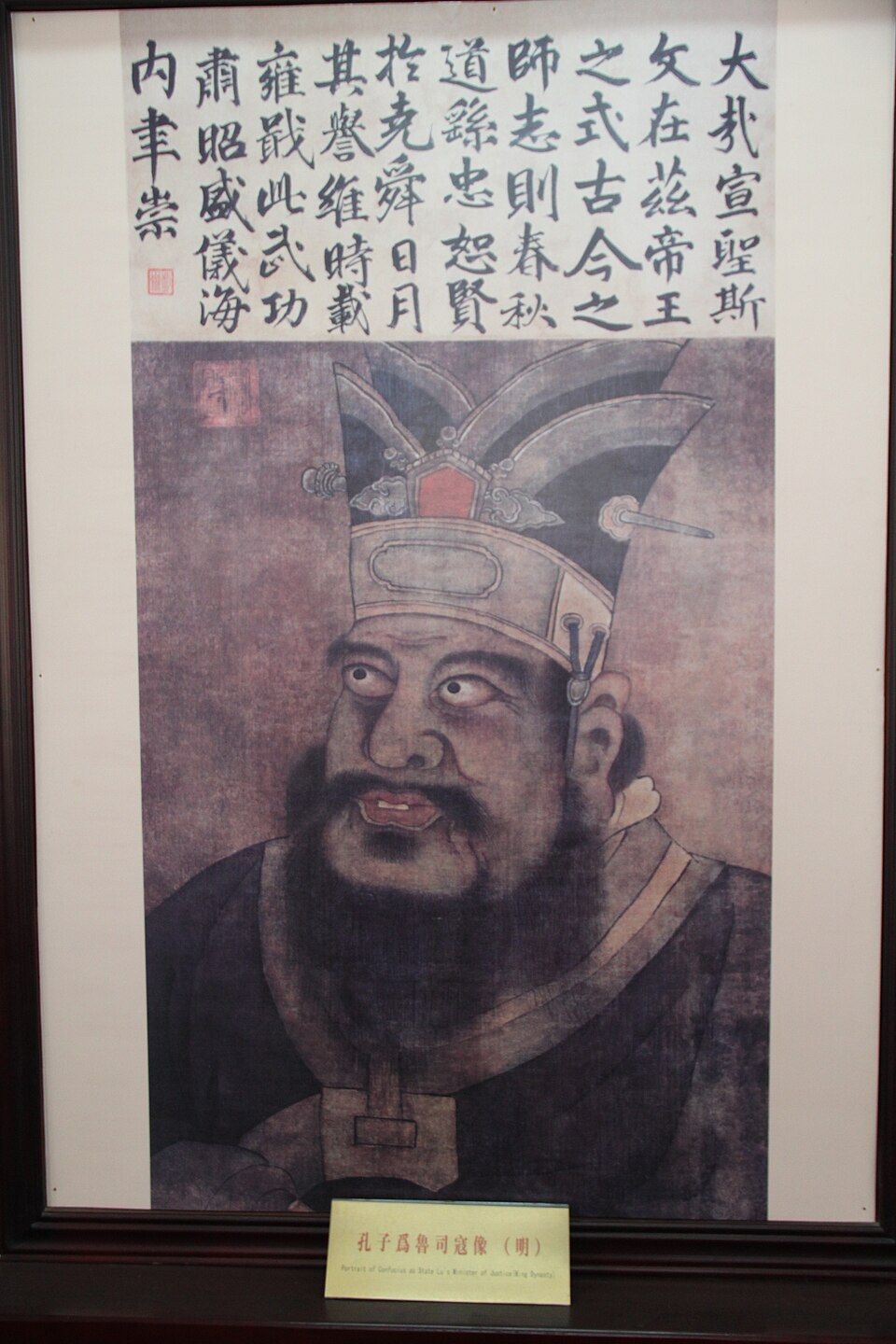
—How old were you when you became Minister of Justice?
I was about fifty years old — quite late, you know, to finally hold a real post at court. The duke of Lu, my home state, gave me the role of Sikou — the one responsible for order and justice. I had waited years for this chance. And something unusual happened when I took the post: the people of Lu seemed to straighten up almost by themselves. Not because I frightened them — no, not at all. They simply saw that someone who truly believed in goodness was at work. When a candle is lit in a room, you feel it immediately. That is how I thought of virtuous government: not a fist pressed down, but a light held up.
Virtuous government is not a fist pressed down — it is a light held up.
—Why did they throw you out if everything was going so well?
Ah — that question touches something that still stings a little. A prince surrounded by advisors who enjoy luxury and flattery is very hard to keep on the straight path. The neighboring state of Qi sent a gift to our court — fine horses, musicians, dancers — all perfectly calculated to distract the duke from his duties. And it worked. He forgot about governing. I could no longer stay. I was not arrested — they simply made it impossible to remain with dignity. So I packed my things, gathered my closest disciples, and left Qufu in 497 BC. I thought I would be back in a few months. It turned out to be thirteen years.
—What was it like to leave your home and just walk away for so long?
Imagine leaving your street, your house, your whole neighborhood — without knowing when you will return. That is exactly how it felt. I traveled with a small group of disciples in a covered cart, moving from state to state — Wei, Chen, Cai, Chu. We were often cold. Sometimes hungry. Once, near Chen, enemy soldiers surrounded us completely and we had no food for seven days. My disciples were losing hope. But I kept playing my guqin — my seven-string lute — to keep our spirits steady. I believed that as long as we could still make music together, we had not lost what mattered most. And looking back, I think that was true.
As long as we could still make music, we had not lost what mattered most.
—Were you sad when all those princes kept saying no to you?
Honestly? Yes. There were moments of real tiredness. I would arrive at a court, explain my ideas about governing with virtue — and the prince would nod politely, then do nothing. Or worse, send me away without a real hearing. Once I was actually imprisoned! Can you imagine — a philosopher behind bars! My disciples panicked. But I told them: if Heaven has truly given me the mission of transmitting wisdom, then no petty lord can extinguish that. I believed it. Most of the time. There were evenings when I doubted. But doubt, too, is a form of careful thinking. You should not be afraid of it.
—How did you manage to teach three thousand students at once?
Never all three thousand at the same time — that would have been chaos! They came to me in small groups, or sometimes one by one. And the most important thing I discovered is this: you cannot teach everyone the same way. One student was bold and acted too fast — I told him to slow down and think twice before speaking. Another was timid and hesitated — I encouraged him to trust himself and act. The same advice, given to the wrong person, can cause harm instead of good. It is like water: it quenches a thirsty traveler, but can drown a man already struggling in a river. Knowing your student is half the teaching.
—Why did you teach music? That seems strange for a philosopher.
I can see why it surprises you! But listen: I played my guqin — the seven-string lute — every single day. Not for amusement. Music is a discipline of the whole self: your fingers must be precise, your breathing calm, your mind fully present. When a note sounds true, the noise inside you goes quiet. I taught my students the six noble arts — music, archery, chariot-driving, calligraphy, mathematics, and the rites. These are not separate subjects. They all train the same thing: a person who knows how to govern themselves. And only a person who governs themselves well can ever hope to govern others with fairness. That is the entire idea.
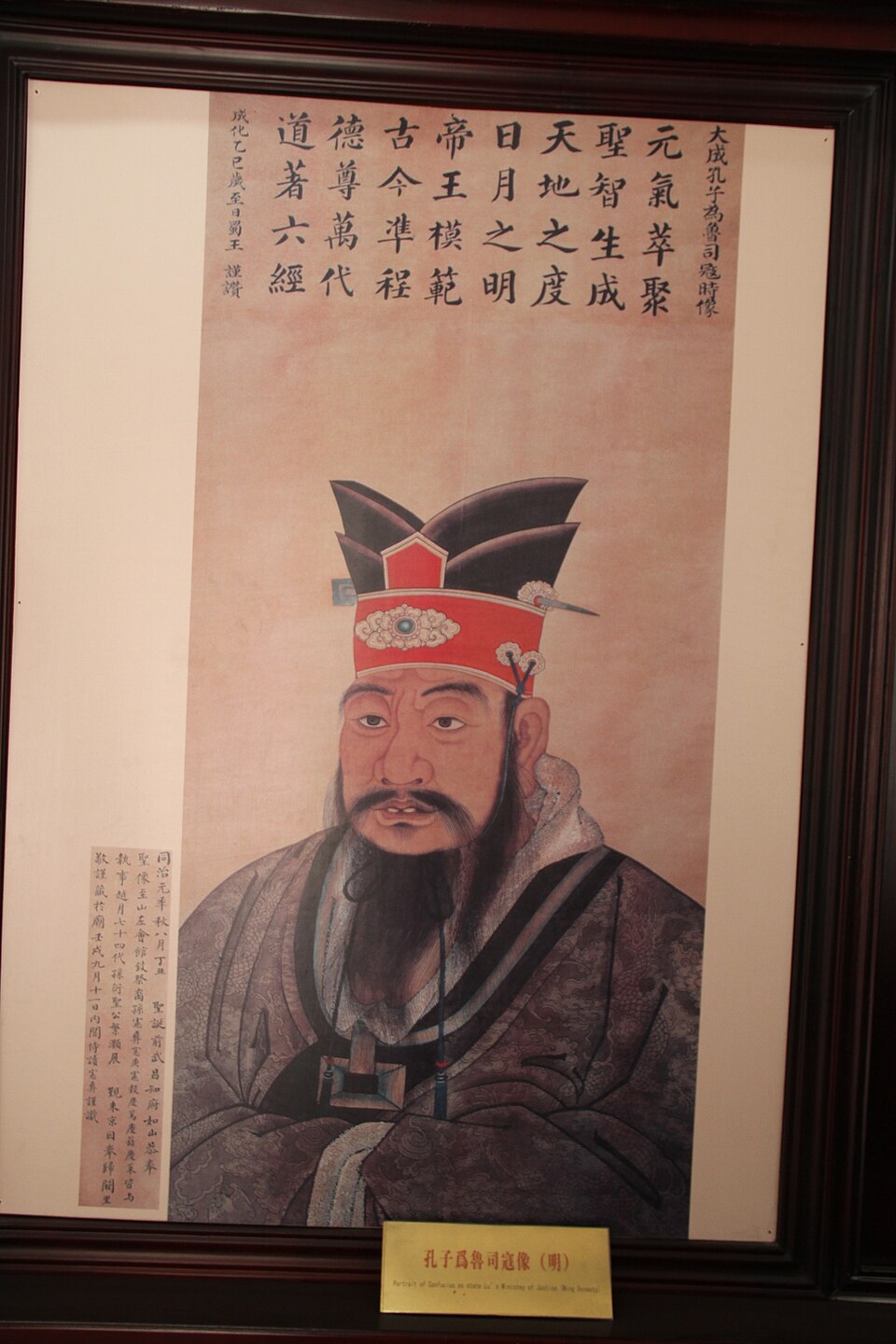
—Why did you need completely different clothes for every single occasion?
I can see that seems odd to you! But think about it this way: if you walk into a room where something solemn is happening, wearing old muddy shoes, what does that say to everyone there? It says: this person did not care enough to notice. For me, clothing was not about fashion. The lifu — the ceremonial robes — were a message to the people around you: that you respect them, that you understand the weight of the moment. I had different robes for teaching, for performing ancestral rites, for presenting myself at court. Each one told the truth about the situation. Getting that right — we call it Li, proper conduct — is how you make the invisible order visible.
—Did you really refuse to eat food that was badly cut or out of season?
I did! And I suspect my disciples rolled their eyes at me more than once. But here is the reason: the way food is prepared tells you whether the person who made it paid attention. Meat cut carelessly, rice left undercooked, fruit brought at the wrong season — these are small signs of inattention. And I believe attention is everything. If you rush through a meal without noticing what is in front of you, you rush through life without noticing the people beside you. My mornings always began the same way: ablutions, offerings at the ancestral altar, then dressing carefully for whatever the day required. Small acts of care, repeated every single day, build a whole life.
—Everyone says you were a great philosopher. But you said you weren't, right?
I said something more precise: I called myself a transmitter, not an inventor. Long ago, the wise kings of the Zhou dynasty governed with virtue, music, and proper rites. Their wisdom was real and it worked. But by my time, it was crumbling. Lords fought each other for territory, ceremonies were performed carelessly, children disrespected their elders. I did not invent a new philosophy. I swept the dust off an old one. I even traveled to Luoyi, the Zhou capital, to study the ancient rites firsthand — to understand what had once made things right. A good gardener does not grow trees out of nothing. He tends the ones already planted and nearly forgotten.
I swept the dust off an old wisdom — I did not invent a new one.
—What were those bamboo tablets you wrote everything on?
Bamboo tablets — jiandu — were our books! Imagine thin strips of dried bamboo, each one holding a few lines of text written in ink. You threaded many together with cords to make a whole text — heavy, and you had to roll them up with care. I spent enormous time editing the five great classical texts, the Wujing — the Book of Odes, the Book of Documents, the Book of Changes, the Book of Rites, and the Annales. The Yi Jing alone, the Book of Changes, I read so many times that I wore through the binding cords three times over! My disciples found that amusing. But a book is not finished when you first read it. It is finished when you have truly understood it — and that can take a lifetime.
—After thirteen years away, how did it feel to finally come back home to Qufu?
I returned to Lu in 484 BC, invited by the duke. I was sixty-seven years old — my hair was white. I had left as a minister full of ambition. I came back as an old man who had slept in hundreds of strange beds and eaten meals in courts that no longer exist. And very soon after my return, I lost Yan Hui — my most beloved disciple, the one I loved almost as a son. He died young, in 481 BC, and I wept without trying to hold it back. People were surprised: the Master, weeping in public! But grief is not weakness. It is proof that something mattered to you. After that, I spent my last years teaching and finishing the Chunqiu — my chronicle of Lu. A final gift.
—If you could give us one piece of advice to take back to school, what would it be?
One piece of advice... Let me think carefully, because you deserve an honest answer, not just a pretty saying. Here it is: do not learn things in order to show off. Learn because understanding something makes you better — more careful, more kind, more just. I used to say to my students: 'Learn and put into practice what you have learned — is that not a joy?' You see, knowledge that stays locked inside your head alone is like a seed that never touches earth. It does nothing. But knowledge you actually use — even in one small thing, with one person, on one ordinary day — that is alive. Carry that back with you.
Read further
This imaginary interview was generated by artificial intelligence from sources documented in Confucius's profile. It dramatises what the figure might have said based on what we know about them, but does not constitute attested historical testimony. For primary sources and factual documentation, refer to the full profile.