Imaginary dialogue between César Chávez and Dolores Huerta
by Charactorium · Dolores Huerta (1930 — ?) · Society · 6 min read
It is on the arid heights of La Paz, at the headquarters of the United Farm Workers in Keene, that César meets Dolores in the spring of 1990. The wind from Kern County makes the black and red flag with the Aztec eagle snap above the office cluttered with flyers and membership lists. They have been fighting side by side for twenty-eight years, since that day in 1962 when they together laid the first stone of the union in Fresno. César has not come as a leader, but as a companion: he wants to hear, behind the slogans that the whole country repeats, the woman who forged them in the dust of the fields.
—Dolores, do you remember when we launched the Delano strike in 1965? How did you sustain that grape boycott for five whole years?
You who were by my side, César, know that this was no ordinary strike. The growers could replace every picker overnight; so I took the fight where they could not break it: into the supermarkets of New York, Boston, Chicago. I spoke to housewives, students, priests, asking them for one thing: don't touch another grape from California. Millions of people obeyed, out of solidarity. Five years, day after day, picket lines at the doors. And in 1970, those same growers who despised us came to sign the first contracts. We won not by force, but because a nation refused to eat the fruit of injustice.
We won because a nation refused to eat the fruit of injustice.
—Many thought the boycott was doomed from the start. What made you believe that we could bring the largest vineyards in the country to their knees?
Because I understood where our true strength lay, César. A worker alone in a field is invisible, without recourse, without a voice. But the consumer holds the grower's money in their hand at the moment they choose what to buy. That is where the real power struggle took place: at the checkout. Our weapon was not violence, it was negociación colectiva backed by the conscience of an entire people. When I went knocking on the doors of parishes and universities, I was not begging for charity: I was making visible those whom no one wanted to see. The workers were not asking for handouts; they were demanding their rights. Once that idea took root in people's minds, no vineyard was too big for us.
The workers were not asking for handouts; they were demanding their rights.
—I have so often seen you standing before all of us. Tell me about your mornings, Dolores, when you joined the fields before dawn.
I got up before the sun, like the pickers themselves. By five or six, I was already at the farm gates, a cup of black coffee in hand, to talk to the men and women before the foremen arrived. It is there, in those minutes stolen from the night, that you win a union: a face, a handshake, one more name in the notebook. I never believed in grand speeches that only serve the speaker. Every moment is an opportunity to organize, every person a potential activist, every minute a chance to change the world. The bullhorn came later; but the real work was to listen first, one by one, to those the country preferred to forget.
Every moment is an opportunity to organize, every person a potential activist.
—You filled those notebooks with signatures until nightfall. Why were you so determined to recruit yourself, in the dust, rather than delegate?
Because a name written in a notebook, César, is not a statistic: it is a promise. When a woman who has been picking lettuce since dawn puts her mark on my list, she entrusts me with her fear of being fired, her family, her dignity. That cannot be delegated. My notebooks full of signatures were tangible proof that we were not a handful of agitators, but thousands determined to stand together. And besides, you don't convince anyone from an office. You have to feel the heat of the field, share the tortilla a family offers you, sometimes sleep at their homes. Collective strength is not decreed; it is built face by face, in trust, day after day, until it becomes irresistible.
A name written in a notebook is not a statistic: it is a promise.
—You are the mother of eleven children, Dolores, and I have seen you come to the picket lines with them. How could you lead the struggle without sacrificing them?
I was criticized for it all my life, César, and for a long time it tore me apart. But I finally understood that I was not sacrificing my children: I was giving them the highest education I could offer. On the picket lines, they learned what no school teaches: solidarity, the courage to stand up, the dignity of those who are humiliated. They saw their mother fighting for families who had no clean water or toilets in the fields. Yes, they missed me at home. But they gained a more just world to build. Raising children to see injustice and fight it is giving them a compass for life.
I was not sacrificing my children: I was giving them the highest education I could offer.
—That cry you launched in Arizona in 1972, Sí, se puede, people everywhere are taking it up. Where did it come to you that day?
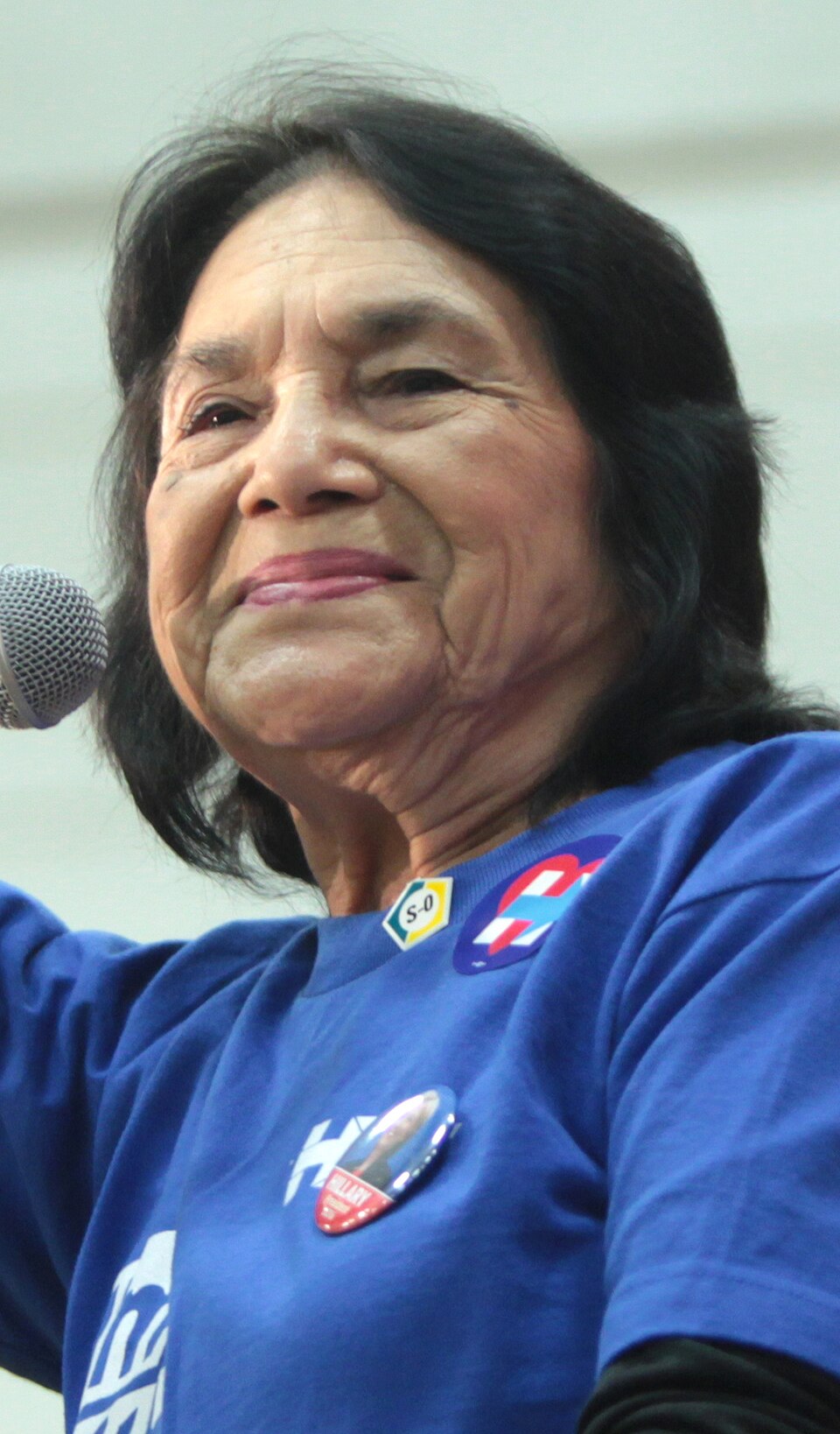
They told us it was impossible, César. In Arizona, a law wanted to ban us from striking and boycotting; the dignitaries, even some of our own, kept saying we could do nothing, no se puede. That resignation infuriated me. So I answered: Sí, se puede — yes, we can. It was not a calculated slogan; it was a refusal to bow our heads. The word caught fire among the pickers because it said out loud what they no longer dared to believe: that the oppressed, by organizing, can wrest justice. That is La Causa: not three words on a sign, but the conviction that a united people is never condemned to endure. As long as it is said, no one can silence us.
They told us no se puede. I answered: yes, we can. It was not a slogan; it was a refusal to bow our heads.
—You who speak so well on both sides of the border, why insist on the word Chicano and on Spanish in our American gatherings?
Because self-shame is the first weapon of the powerful, César. For generations, our people were taught to lower their eyes, hide their language, make themselves small. When a picker shouts Huelga! on the line, or a corrido is sung at night among families, he is not just protesting: he is lifting his head, saying he exists and is proud. Chicano is not an insult; it is a flag turned around. Our movement was never just about wages; it is about dignity. You can sign all the contracts in the world; if a man dare not speak his name in his own language, he is not yet free. Pride is the root of everything else.
Chicano is not an insult; it is a flag turned around.
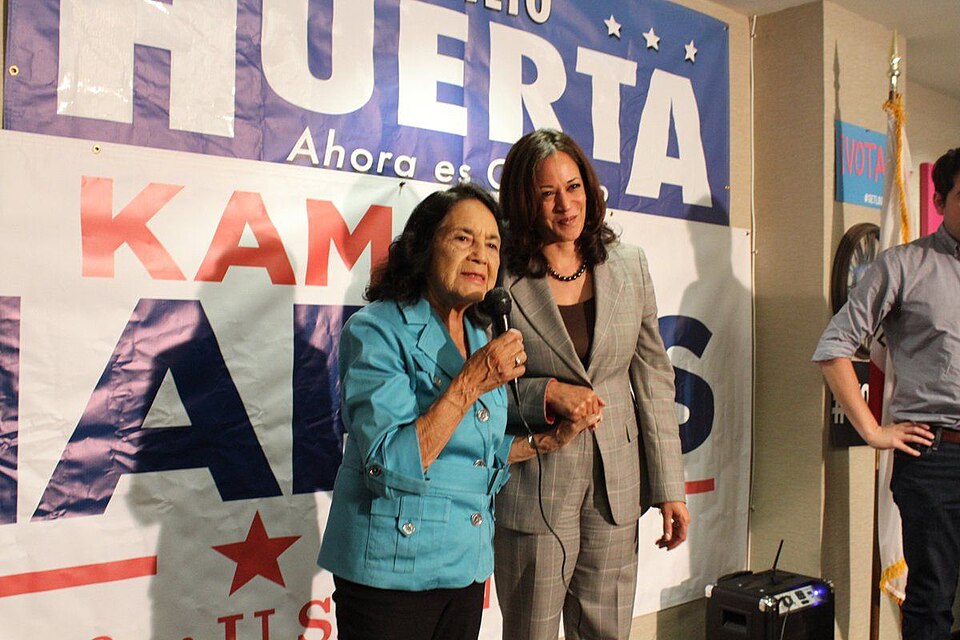
—Two years ago, in San Francisco, the police broke you with batons. How do you still live with that, Dolores?
My body bears the mark, César: broken ribs, a ruptured spleen. We were protesting peacefully, without a stone, without a cry of hatred, and they beat a fifty-eight-year-old woman like cattle. I thought I would die on that sidewalk. But the camera filmed everything, and the country saw what field workers have always endured, far from the lenses. The city had to reform its methods. I do not tell this to be pitied — pity liberates no one. What those blows confirmed to me is that our struggle disturbs enough for them to try to break it in the flesh. That means it matters. And a movement that matters cannot be stopped with batons.
A movement that matters cannot be stopped with batons.
—You always talk about restoring dignity to the invisible. When you testified before the Civil Rights Commission, who did you have in mind?
I had the women in mind, César. Those who plant lettuce and pick grapes under a blazing sun, without water, without toilets, without protection from the pesticides sprayed on them. They are invisible: no voice, no recourse, no protection. Before that commission, I did not speak as an activist asking for a favor — I spoke to give back what had been stolen from them: their dignity. A nation that claims to be just cannot feed its children on the labor of beings it treats as shadows. My role is not to speak for them forever; it is to teach them to speak for themselves, until no commission, no governor, no grower can pretend not to see them.
They are invisible: no voice, no recourse. I came to give them back their dignity.
—After so many years of roads and fields, Dolores, what still keeps you standing every morning before sunrise?
The same thing as on the first day, César: the conviction that nothing is ever won forever. Contracts are renegotiated, laws roll back, and a new generation of pickers is born every year in the same dust. If we let down our guard, everything we have wrested can be taken back. So I keep getting up before dawn, filling my notebooks, training young people who will take over. I do not believe in saviors or providential leaders; I believe in ordinary people who discover their own strength. As long as there is a family treated like a shadow in a field in California, there will be work for me. And as long as I can hold a bullhorn, I will hold it.
I do not believe in saviors; I believe in ordinary people who discover their own strength.
This imaginary interview was generated by artificial intelligence from sources documented in Dolores Huerta's profile. It dramatises what the figure might have said based on what we know about them, but does not constitute attested historical testimony. For primary sources and factual documentation, refer to the full profile.