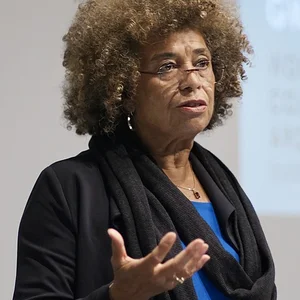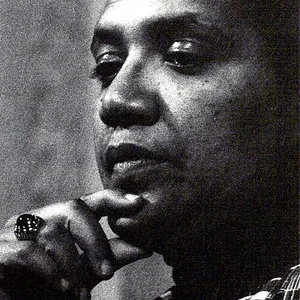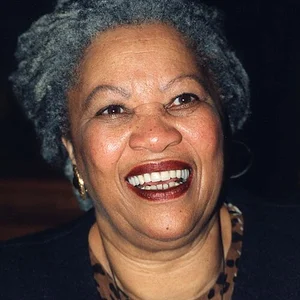

A towering figure of 20th-century African American literature, Toni Morrison wrote landmark novels exploring the Black American experience, particularly slavery and its lasting trauma. She received the Nobel Prize in Literature in 1993, becoming the first Black woman to be awarded that honor.
Toni Morrison(1931 — 2019)
Toni Morrison
États-Unis
8 min read
Frequently asked questions
Famous Quotes
« If there's a book that you want to read, but it hasn't been written yet, then you must write it.»
« You wanna fly, you got to give up the shit that weighs you down.»
« Home is not a place, it is a time.»
Key Facts
- Publication of Beloved in 1987, a landmark novel about slavery and its psychological aftermath
- Pulitzer Prize for Fiction in 1988 for Beloved
- Nobel Prize in Literature in 1993, recognizing her contribution to world literature
- Professor at Princeton University, contributing to the establishment of African American studies
- Foundational voice in the contemporary African American literary canon, translated into numerous languages
Works & Achievements
Toni Morrison's debut novel, exploring the psychological trauma of Black women in segregation-era America. This groundbreaking work established the author's distinctive narrative voice and remains a cornerstone of African-American literature.
A novel examining the friendship between two Black women and the complex moral choices within an African-American community. The work deepens Morrison's exploration of Black female identity and individual freedom.
A masterwork blending magical realism with African-American history, following a man's quest for identity and roots. This novel cemented Morrison's international reputation and won the National Book Critics Circle Award.
A landmark novel inspired by the true story of an enslaved woman, exploring the inescapable trauma of slavery and its generational consequences. Universally acclaimed, this masterpiece won the Pulitzer Prize in 1988.
A novel exploring the founding of an all-Black utopian community and its internal contradictions, questioning notions of identity, inclusion, and exclusion. The work deepens the themes of redemption and loss that run throughout Morrison's body of work.
Toni Morrison becomes the first Black woman to receive the Nobel Prize in Literature, a landmark recognition of her contribution to world literature. Her acceptance speech remains a powerful meditation on the power of language and the responsibility of writers.
A novel set in the seventeenth century, exploring the origins of racism and slavery in colonial North America. The work reveals how racial divisions were historically constructed in the New World.
Anecdotes
Born Chloe Ardelia Wofford in 1931 in Ohio, Toni Morrison grew up in a family with a strong oral tradition, where stories and legends were passed down from generation to generation. This early immersion in the power of storytelling deeply shaped her writing and her belief that literature could give voice to forgotten or marginalized experiences.
In 1988, her novel 'Beloved' won the prestigious Pulitzer Prize for Fiction, marking a major turning point in her literary recognition. The novel, inspired by the true story of an enslaved woman who chose to kill her children rather than see them condemned to slavery, has become a classic of world literature.
In 1993, at the age of 62, Toni Morrison received the Nobel Prize in Literature, becoming the first Black woman to receive this honor in the history of the award. The Swedish Academy recognized her 'for her novels characterized by visionary force and poetic import, giving life to an essential aspect of American reality.'
Alongside her career as a novelist, Toni Morrison taught at Princeton University for more than two decades, mentoring generations of writers and students. She demonstrated that academic engagement and literary creation could coexist in a deeply fruitful way.
Her final novel, 'God Help the Child', published in 2015 when she was 84 years old, confirms that she never stopped exploring profound themes of identity, parenthood, and redemption. This creative productivity sustained until the very end of her life stands as a testament to her unwavering passion for literature.
Primary Sources
It was not a story to pass on. She had come up from drowning, up through the layers of nothing. And the woman clinging to her was the only thing she knew.
If you want to fly, you have to give up the things that weigh you down.
It had occurred to Pecola some time ago that if her eyes, those real eyes that were looking at her, could be changed, that her real hair could be changed, her real home improved, her real mother escalated, then real kindness could be born.
The function of narrative is to illuminate the human condition and give testimony to the terrible power of history and human experience.
In that place, where they tore the nightshade and blackberry patches from their roots to make room for a playground, Sula Peace had promised a story.
Key Places
Toni Morrison's birthplace on February 18, 1931. This industrial city in northern Ohio deeply shaped her literary world and her exploration of African American communities.
Toni Morrison taught at Princeton from 1989 to 2006 as a professor of creative writing. It was within this prestigious academic setting that she continued to develop her thinking on literature and the African American experience.
A major hub of Toni Morrison's professional life, where she worked as an editor at Random House and built her career as a writer. The city was home to the publication of many of her landmark works.
The site where Toni Morrison received the Nobel Prize in Literature in 1993, a major international recognition of her work and its impact on world literature.
Toni Morrison served as a visiting professor and fellow at Oxford, where she contributed to British literary studies and helped bring African American literature to a wider international audience.
Typical Objects

An essential working tool for 20th-century writers. Toni Morrison used this type of machine to compose her major novels such as 'Beloved' and 'Song of Solomon', representing the writer's creative act.

Toni Morrison's landmark novel published in 1987, exploring the trauma of slavery in the United States. This major work was decisive in earning her international literary recognition and the Nobel Prize.

The highest distinction awarded to Toni Morrison in 1993, symbolizing her worldwide recognition as a major literary voice. She was the first Black woman to receive this prestigious honor.

The writer's personal writing instrument, used for annotation, revision, and drafting her texts. The pen represents the meticulous work of literary creation and the careful refining of a body of work.

A tool writers use to record ideas, inspirations, and research. For Toni Morrison, this kind of notebook would have served to develop her thinking on African American history and slavery.

Documents, accounts, and historical testimonies that Toni Morrison consulted to inform her novels. These primary sources illustrate her method of deep research to authentically portray the experience of enslavement.

A symbol of her academic career, Toni Morrison taught at Princeton University and received numerous honorary distinctions. She embodied the engaged scholar-writer committed to the transmission of knowledge.

Representing the tensions and Toni Morrison's commitment to African American identity within the American nation. Her works explore the paradox of belonging in a context of historical oppression.
School Curriculum
Vocabulary & Tags
Key Vocabulary
Tags
Daily Life
Morning
Toni Morrison begins her day early, often before dawn, dedicating the morning hours to writing before her professional obligations. She makes a cup of coffee and settles at her desk or worktable — a cherished time when she composes her novels with focused concentration, far from the distractions of the day.
Afternoon
Afternoons are generally devoted to her professional activities: teaching at Princeton or Texas Southern University, giving public readings, or meeting with editors and journalists. She takes an active part in intellectual debates and cultural events centered on African American issues.
Evening
Evenings are divided between family life, reading, and reflection. Morrison has dinner with family, engages in stimulating conversation, and often continues writing or revising manuscripts late into the night, her creative process intensifying as the day winds down.
Food
Her diet reflects her Southern African American heritage, with influences from home cooking: balanced meals featuring poultry, seasonal vegetables, rice, and slow-cooked dishes. She eats regularly and mindfully, favoring family meals whenever possible.
Clothing
Morrison dresses simply but elegantly, often in dark, classically cut clothing that reflects her standing as an intellectual and academic. She favors comfort and understated style, with discreet accessories and a polished, distinguished appearance befitting her role as a celebrated author and professor.
Housing
She lives in comfortable, spacious homes — first in Princeton, then in a historic house in New York — a reflection of her status as a Nobel Prize-winning author. Her interiors are filled with books, manuscripts, and cultural objects, creating an environment conducive to literary creation and intellectual life.
Historical Timeline
Period Vocabulary
Visual Style
Un style visuel mêlant peinture à l'huile, collage et matériaux texturés, inspiré par le mouvement des arts noirs des années 1960-70. L'ambiance est introspective et chargée d'émotion, avec des jeux de lumière chaude contrastant des ombres profondes, évoquant la profondeur psychologique et la mémoire collective afro-américaine.
Sound Ambience
Une ambiance sonore profonde et introspective évoquant l'héritage afro-américain et l'œuvre littéraire de Toni Morrison, mêlant traditions musicales du Sud américain, voix narratives poignantes et éléments sonores historiques pour créer un espace immersif de mémoire collective et de réflexion existentielle.
Liens externes & ressources
Références
Œuvres
The Bluest Eye
1970
Song of Solomon
1977
Paradise
1997
Lecture du Prix Nobel de littérature
1993