Imaginary interview with Dolores Huerta
by Charactorium · Dolores Huerta (1930 — ?) · Society · 6 min read
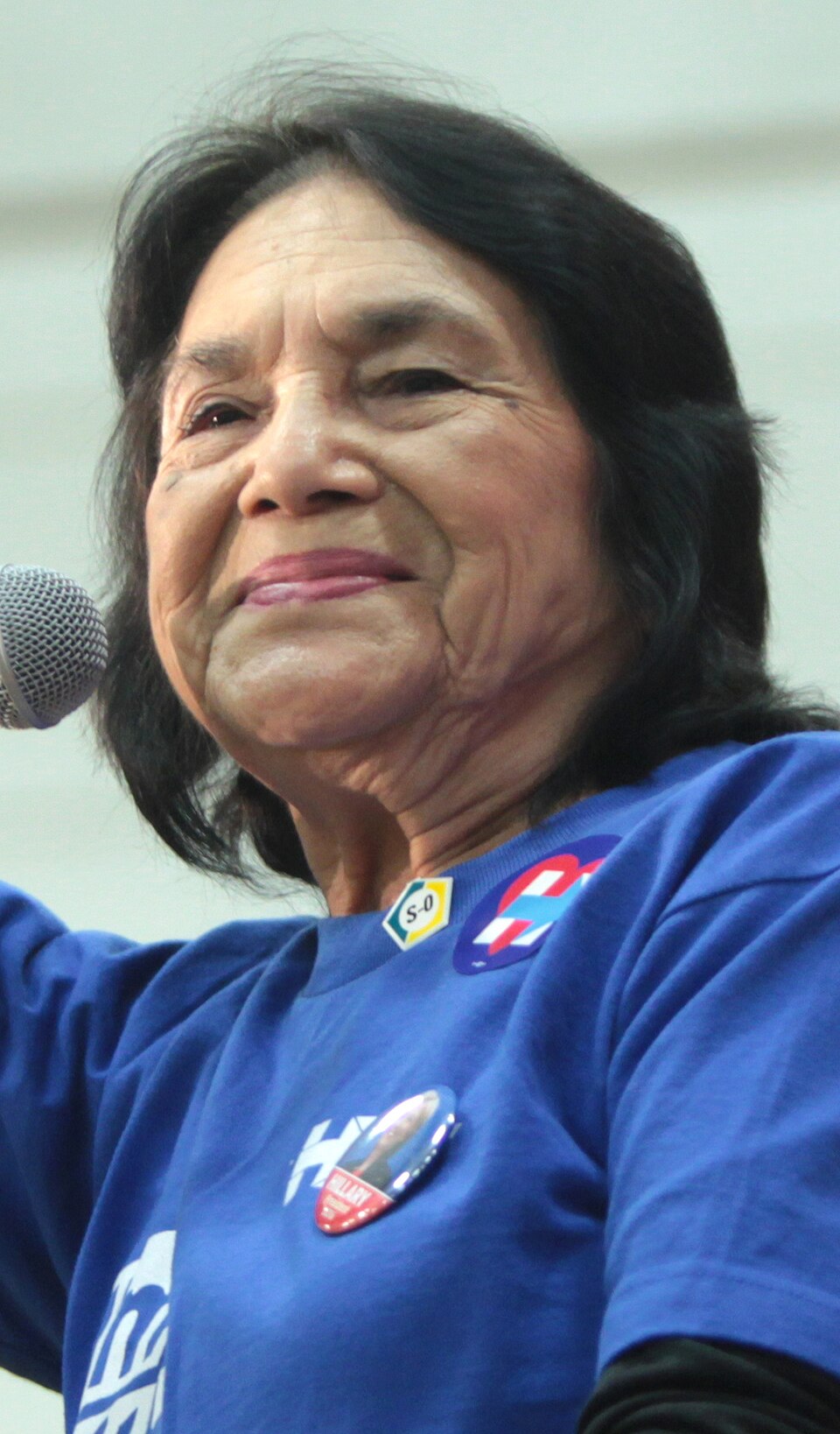
San Joaquin Valley, late afternoon. The dust from the grape fields settles over the rows of vines as a small woman, a scarf in her hair, packs a megaphone into the trunk of an old car. Dolores Huerta agrees to sit for a moment in the shade of a shed to tell a life spent organizing those no one wanted to see.
—How do you convince millions of Americans who will never set foot in a field to stop buying grapes?
You hold up a mirror. Starting in 1965, from Delano, we understood that the real vine wasn't growing in the valley but in the supermarkets of big cities. So I took my huelga under my arm and went knocking on doors in New York, Boston, Toronto. In front of every grocery store, a Boycott Grapes sign and someone to explain that a grape is the bent back of a man denied water and toilets. Five years. Five years asking housewives to let the grapes rot on the shelves. And one day in 1970, the big growers signed. The boycott is not a weapon of the poor: it is the most powerful weapon there is, because it turns every kitchen into a picket line.
A grape is the bent back of a man denied water and toilets.
—What role did your megaphone play in those long days of mobilization?
You know what a California field is? An ocean. A naked voice drowns in three meters. My megaphone was my real work tool, more than the typewriter I typed flyers on at night. From five in the morning, before the foremen arrived, I would join the workers at the entrance of the farms, a cup of black coffee in hand, and I would shout the word huelga until the farthest row heard it. Under the black and red flag of the United Farm Workers, with its Aztec eagle, that megaphone carried less my voice than theirs. My job was never to speak for people. It was to make the sound of their own anger loud enough so they were no longer afraid to hear it.
My job was never to speak for people, but to make the sound of their own anger loud enough.
—You raised eleven children while leading these struggles. How did you manage both?
I was criticized for it all my life, especially by men in the movement, especially by journalists. “A mother of eleven on the road?” But I never believed you had to choose between rocking a child and building a world where they could live standing tall. My little ones grew up on picket lines, between two signs, in borrowed housing from worker families where we slept ten to a room. In the evening, when I was passing through, we dined on tortillas and frijoles, simply. I told them I couldn't give them a big house, but that dignity is better learned on a picket line than in any school. Fighting for justice was the education I gave them. Today I know they received it.
Dignity is better learned on a picket line than in any school.
—What did an ordinary day look like for you in those years of struggle?
It began before the sun and ended long after it. I had no home, in the sense you mean: a succession of rooms, couches, corners of floors offered by workers. In the afternoon, I traveled from one farm to another in the San Joaquin Valley, I negotiated, I listened to a man tell me he had been fired for asking for drinking water. In the evening, in a parish hall, I took the megaphone and galvanized. Then I answered union mail late into the night, because each letter was one more signature, one more collective force. I was often asked where I found the energy. The truth is, you don't need rest when you are convinced that every minute can change the world.
You don't need rest when you are convinced that every minute can change the world.
—The slogan “Sí, se puede” went around the world. Do you remember the moment it was born?
Arizona, 1972. The state had just passed a law to ban us from boycotting and striking, and everyone around me kept saying: no se puede, it can't be done, it's over, give up. I answered: sí, se puede. Yes, we can. Three words, against an entire law. It wasn't a calculation, it was a revolt of the tongue: they would not also take away our right to hope. The word ran from mouth to mouth in the fields like a corrido, those ballads where the people sing of their heroes. Decades later, a young senator made it his “Yes We Can.” I don't claim paternity of a word — I believe such phrases belong to all those who refuse to be told no.
Three words against an entire law: they would not also take away our right to hope.
—What would you say to those who think a slogan doesn't change the material reality of workers?
I would tell them to come one morning to a picket line. A right word, at the right moment, is not hot air: it's what makes an exhausted man stay one more hour, what makes a family hold out for five years of boycott. The term Chicano, for example, which my generation reclaimed in the sixties — it wasn't just a word. It was a pride wrested away, a way of saying we were no longer invisible. La Causa rested on a few syllables in Spanish, but it made collective contracts signed and laws passed. The powerful have money, land, police. The poor have only their numbers and their words. So when that's all you have, you learn to choose them like weapons.
The poor have only their numbers and their words; you learn to choose them like weapons.
—In 1975, California finally recognized the right of farmworkers to unionize. What did that law mean to you?
A revenge on silence. For years, I had repeated the same thing, even before the Civil Rights Commission: “The women who pick the grapes, who plant the lettuce — they are invisible. They have no voice, no recourse, no protection. We are here to give them back their dignity.” The Agricultural Labor Relations Act of 1975 was that finally carved into the marble of law: those women, those invisible men, became subjects of rights. Negociación colectiva was no longer a favor to be begged for, but a right to be demanded. I spent weeks in the corridors of Sacramento, where we had marched four hundred kilometers in 1966. Wringing a law out is not glorious: it's exhausting, technical, thankless. But it's the only way to make a victory impossible to take back.
Those women, those invisible men finally became subjects of rights.
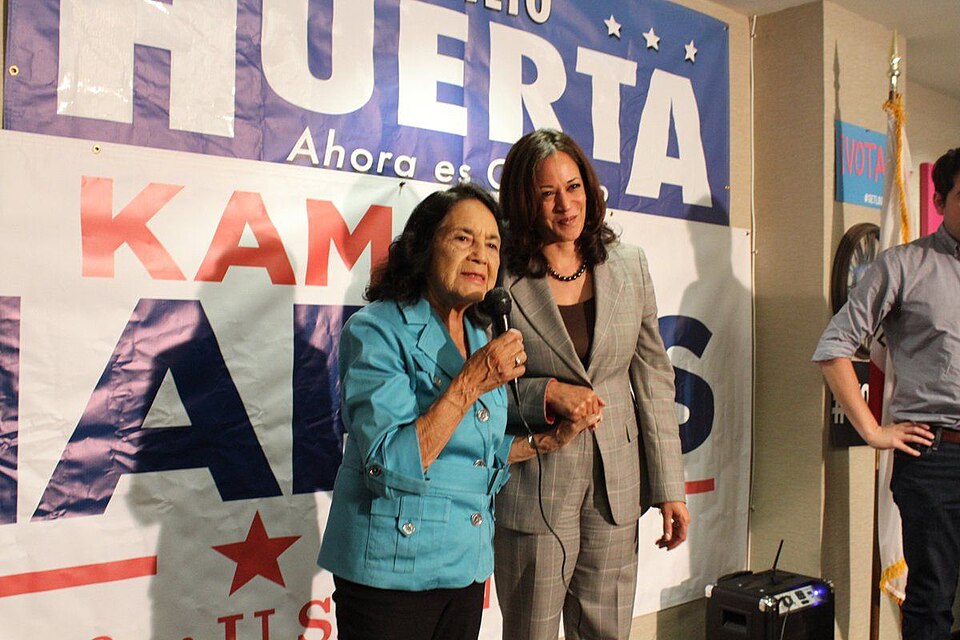
—How did you manage to make the voice of those society preferred to ignore heard?
By refusing to treat them as victims. Before the AFL-CIO, I once said: “Farm workers are not begging for charity — they are demanding their rights.” That's my whole method. You don't beg for pity, you demand what is owed. I was born in Dawson, a mining town in New Mexico now erased from the map; I know where these people come from and how much they were taught to bow their heads. My work, petition booklet in hand, was to go up and down the rows one by one, signature after signature, until fear changed sides. Every person I met was an activist who didn't know it yet. The whole art is to reveal it to them before the foreman discourages them.
You don't beg for pity, you demand what is owed.
—In 1988, in San Francisco, you were seriously injured by police during a peaceful rally. What did you take away from that?
Broken ribs, a spleen that had to be removed, and a reinforced certainty. We were peacefully protesting the president's agricultural policy, and the batons came down. The worst, and the best, is that cameras were filming. The country saw what farmworkers have silently endured for generations, except this time it was on a sidewalk in San Francisco, in broad daylight. The city had to reform its methods. I could have stopped there, at fifty-eight, my body in pieces. But a life spent on picket lines teaches you one simple thing: the violence inflicted on you is an admission of your strength. They don't strike those they don't fear.
The violence inflicted on you is an admission of your strength: they don't strike those they don't fear.
—In 2012, the president awarded you the Presidential Medal of Freedom. How does one experience such consecration after so many years of struggle?
With a slightly ironic smile, I admit. Eighty-two years old, and they put the highest distinction of the country around my neck, from the hands of the same man who had borrowed my “Sí, se puede.” I thought of all those whose names will never be engraved on a medal: the lettuce pickers, the mothers who housed me and shared their last tortilla. That medal wasn't mine, it was theirs. I had founded in 2002 my foundation to train young activists, precisely because I knew that no decoration can replace the next generation. You don't retire from justice. As long as a worker is treated as invisible, there will be someone to organize — and as long as I can stand, it will be me.
You don't retire from justice.
This imaginary interview was generated by artificial intelligence from sources documented in Dolores Huerta's profile. It dramatises what the figure might have said based on what we know about them, but does not constitute attested historical testimony. For primary sources and factual documentation, refer to the full profile.