Kids interview Eileen Chang
by Charactorium · Eileen Chang (1920 — 1995) · Literature · Culture · 5 min read
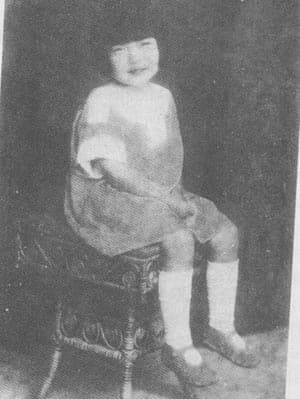
That morning, two twelve-year-old visitors pushed open the door of a small apartment full of manuscripts. A lady was waiting for them, dressed in a robe of dazzling colors. Her name was Eileen Chang, and she had many things to tell them.
—What was your house like when you were little?
You know, my child, my family was a great family from Shanghai, once very noble, but slowly crumbling. Imagine a beautiful mansion on Jing'an Avenue, with large dark and cold rooms. My father smoked opium — a drug that makes people absent, and sometimes violent. One day, I wanted to join my mother, who had left for Europe. My father got angry. He locked me in the house for months. I was like a bird in a gilded cage. I never forgot that fear. Later, my novels became filled with women imprisoned by their families.
I was like a bird in a gilded cage.
—What did your house smell like?
Ah, what a funny question! In the hallways, there was that sweetish smell of opium, a little sickening, clinging to the curtains. And then, coming from the kitchens, the smell of braised pork and jasmine tea. I loved food, you know. At home, a meal told everything: who was rich, who was in charge, who had to be quiet. I watched the dishes as one reads a book. That house was sad, but my senses were wide awake. Perhaps that is where I learned to observe everything without being seen.
—How old were you when you became famous?
I was twenty-three years old, in 1943. Imagine: the city of Shanghai was occupied by Japanese soldiers, war raged everywhere. And yet, people kept reading! I published two stories in a magazine called Miscellany. The first, The Golden Cangue, told of a woman made cruel by the money of a marriage. The second, Love in a Fallen City. Within weeks, all of Shanghai was talking about me. It was dizzying: an unknown young girl, become famous in the middle of a war. I think people needed real stories to endure such hard times.
—How did you manage to write such sad stories?
I didn't write to make people cry, you know. I wrote to tell the truth, even when it stings. In The Golden Cangue, my heroine is as if chained to her husband's gold. Little by little, that money poisons everything, even the love she feels for her children. Some compared this book to those of Flaubert, a great French writer I admired. My secret? I watched people without judging them, but without lying to myself either. I wrote mostly at night, by the light of my lamp, a cup of tea beside me. True love stories rarely end like fairy tales.
—Is it true that you designed your own dresses?
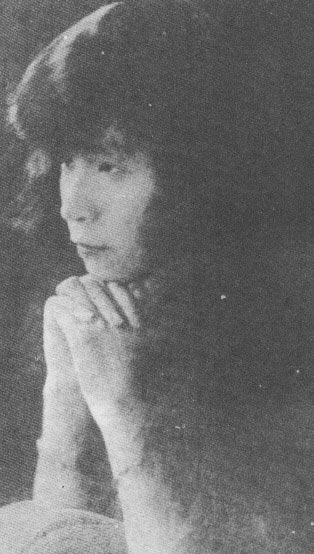
Yes! And I was proud of it. Those dresses were called qipaos — fitted Chinese dresses with a nice straight collar. But mine were not like the others. I designed them myself: giant flowers, dazzling colors, bold stripes. Then a tailor sewed them to measure, just for me. Imagine a gray street, full of people dressed in dark because of the war… and me passing by, bright as a tropical bird! People turned around. Some found me too eccentric. I didn't care. My dresses said: I am alive, and I choose who I am.
My dresses said: I am alive, and I choose who I am.
—Weren't you afraid people would make fun of you?
A little, at first. But you know, during the war, everyone was afraid: afraid of bombs, afraid of soldiers, afraid of running out of rice. So I refused to be afraid of a simple dress! Wearing my bright colors was my small resistance. Not with weapons — I wouldn't have known how. But with beauty. In a world that wanted to make us gray and silent, I answered with flowers on my qipao. It may seem trivial, a dress. But sometimes, staying yourself when everything collapses is already courage.
—Is it true that you married someone people didn't like?
Yes, and it is a painful part of my life. In 1944, I married a man, Hu Lancheng. He was intelligent, he spoke well, and I was in love. But he worked for a government that obeyed the Japanese, the very ones occupying my country. When the war ended, many people blamed me for that marriage. I was even accused of betrayal. You see, my child, one can love someone and be terribly wrong about them. The heart does not always ask reason's opinion. I paid dearly for that mistake.
—And what happened afterwards with him?
He cheated on me, again and again. I finally understood that our story was over. In 1947, I wrote him a letter to say goodbye. And I did something strange: I sent him money. I wrote to him: “We loved each other as the best I could give. I send you enough to live on for six months, so that we may be quits.” I wanted to leave with my head held high, owing him nothing. That was my way of closing the door myself, instead of letting it slam.
—Why did you go live so far away, in America?
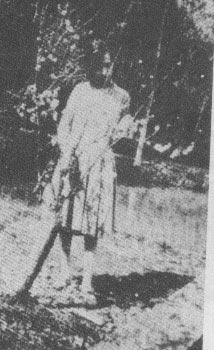
After the war, a new government came to China, that of Mao. He did not like my books: he found them too bourgeois. In 1952, I left Shanghai for Hong Kong. There, I wrote a novel in English, The Rice-Sprout Song. It told of the hunger and misfortunes of peasants forced to pool everything. Then, in 1955, I took a ship for America. Imagine what it is: to leave your city, your language, everything you know, to start over on the other side of the world. I never saw the China of my childhood again.
—Were you sad, all alone over there?
Yes, very. In America, I became more and more solitary. I moved constantly. I even fled tiny insects I thought I saw everywhere — a fear that gnawed at me. I lived in small apartments in Los Angeles, surrounded by my manuscripts, writing still and always. I had been so famous in Shanghai, and there, almost no one knew me. Silence had become my home. It's a strange fate, you know: to go from full light to shadow. But even in the shadow, I kept writing. It was the only thing that had never abandoned me.
Even in the shadow, I kept writing.
—What would you like to be remembered for?
Oh, what a beautiful question you ask me. I don't know if I will still be read in a hundred years — that is the mystery of every writer. But if I could choose, I would like this to be remembered: I looked at people face to face, with their weaknesses and their dreams, without ever despising them. My heroines are not perfect princesses. They are real women, who love badly, who make mistakes, who resist as best they can. And then, if one day you come across a qipao with dazzling flowers… think of me. Remember that a young girl from Shanghai dared to be herself, in the midst of a storm.
This imaginary interview was generated by artificial intelligence from sources documented in Eileen Chang's profile. It dramatises what the figure might have said based on what we know about them, but does not constitute attested historical testimony. For primary sources and factual documentation, refer to the full profile.