Imaginary interview with Eileen Chang
by Charactorium · Eileen Chang (1920 — 1995) · Literature · Culture · 6 min read
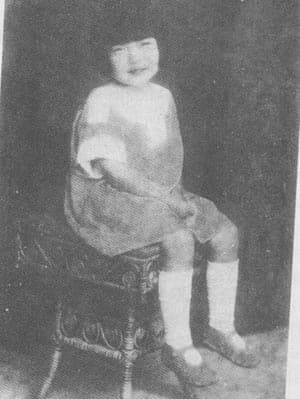
Los Angeles, an afternoon in the late 1980s. In a Westwood apartment with drawn curtains, amid piles of manuscripts and suitcases never quite unpacked, a small woman in a faded qipao agrees, for once, to speak. Her voice is low, her irony intact, and Shanghai is never far away.
—Do you remember the house where you grew up, on Jing'an Avenue?
I remember it as a long, dark corridor. My father smoked opium in the back rooms, and when I wanted to join my mother who had left for Europe, he locked me in that Shanghai house for months, like putting away an inconvenient object. I listened to the trams passing under the windows, that free world I could no longer touch. That, I think, is where all my imprisoned women were born. When I wrote The Golden Cangue in 1943, I wasn't inventing that stale smell, that time rotting in place: I was still breathing it. A declining family keeps its fine furniture and old grudges; it suffocates you politely. I learned very early that money and blood hold people more tightly than any prison.
A declining family keeps its fine furniture and old grudges; it suffocates you politely.
—Why does the image of the moon appear so often in your stories?
Because it's the only thing you can look at when you're locked up. In The Golden Cangue, I write that thirty years have passed over that moon, “as if you had walked through a long, dark, narrow, oppressive corridor. The further you go, the more time passes, and the moon sleeps at the other end, shining for people on the other side.” The moon of Shanghai is not romantic; it is indifferent: it shines for those outside while you rot inside. My mother gave me a taste for Europe, painting, the piano; my father gave me the walls. Between the two was that cold moon, witness to everything and accomplice to nothing. I spent my life as a writer describing people who look at it from the wrong window.
The moon of Shanghai is not romantic; it is indifferent.
—How did the fall of Hong Kong change your view of people?
I was studying literature at the University of Hong Kong since 1939, a serious little scholarship student in a colonial city that thought itself eternal. Then the Japanese arrived in December 1941, and I saw an entire city collapse in a few days. I returned to Shanghai in fragments, on foot, by boat, in the chaos of refugees. From that catastrophe I drew Love in a Fallen City. Bai Liusu, my heroine, is a divorcee over thirty — “in Shanghai, a divorced woman over thirty was barely good enough to throw away.” It took a city falling, bombs tearing the sky over Hong Kong, for her and her libertine to finally come together. That is what war taught me: it doesn't make people better; it makes them available.
War doesn't make people better; it makes them available.
—Is it cruel to make a love story emerge from the collapse of a city?
Cruel, perhaps; honest, certainly. A catastrophe that swallows thousands of lives can, by accident, save a single couple — that is precisely the moral disorder that interests me. In Love in a Fallen City, the fall of Hong Kong in 1941 is not a tragic backdrop; it is a matchmaker. Bai Liusu becomes free only because the world around her crumbles and loosens the grip of propriety. I distrust grand heroic feelings; I prefer the petty, mean truths that survive bombings. Ordinary people don't think about History when everything is burning: they think about whether they will be loved before they die. That is what I wanted to write, without judging it — the tender selfishness of the living amid the rubble.
A catastrophe that swallows thousands of lives can, by accident, save a single couple.
—Your 1944 marriage was much criticized. What do you say about it today?
I married Hu Lancheng in 1944, and yes, he worked for the Wang Jingwei government, those who collaborated with the Japanese occupiers. I never liked politics; I loved a man, which is stupider and more unforgivable in the eyes of the world. After the war, I was made to pay for that marriage as a fault, as if a woman should choose her heart according to borders. He collected infidelities like others collect stamps. In 1947 I wrote him a final letter and sent him money: “I am sending you enough to live on for six months, so that we may be quits.” Settling a love story like a bill — that is what I was reduced to. You think you will pay with words; you end up paying with banknotes.
I loved a man, which is stupider and more unforgivable in the eyes of the world.
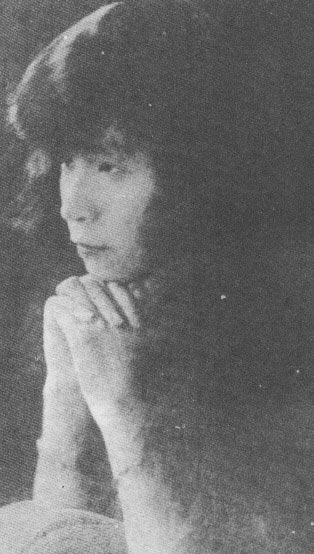
—Why did you want that marriage to live again, decades later, in a novel?
Because you don't get rid of a man by giving him back his freedom; he remains in the lining of memory. I wrote Little Reunions in the 1970s, a book where I laid myself bare without mercy, with that relationship at its center. I left in it a sentence that sums me up: I had thought love could overcome everything, but love was also a worn garment you end up putting away in a drawer. I asked that it be published only after my death — we had to wait until 2009. Candor has a price that can only be paid in death. In my lifetime, I would have reopened wounds, my own and others'; gone, I no longer cause scandal, I become a document. It was my way of saying everything without having to bear the gaze of those who listen.
Candor has a price that can only be paid in death.
—People still talk about your dresses. What did those qipaos really represent?
In gray wartime Shanghai, where sobriety was almost a patriotic duty, I wore qipaos with giant flowers, insolent stripes, colors that slapped the eye. I designed them myself and had them custom-made, then I would parade down Nanking Road like a walking challenge. People saw eccentricity; it was graver than that. When a world collapses, dressing becomes a declaration: I refused to blend into the general mourning, to let the war decide my colors. The qipao, that mandarin-collared garment, was my last sovereign territory, the only thing that neither my father, nor the war, nor History could take from me. They called me vain. I replied that vanity, in a powerless woman, is sometimes the only form of courage left to her.
Vanity, in a powerless woman, is sometimes the only form of courage left to her.
—What would you say about the place of clothing and meals in your writing?
Grand feelings lie; a poorly ironed collar never does. I have always believed that you understand a family better by what it eats and the cut of its robes than by its grand declarations. A Shanghai bourgeois woman hesitating between two qipao fabrics betrays her rank, her fear, her coquetry — everything she will never say aloud. In my essays in Written on Water, in 1944, I wrote about fashion, cinema, food, and was called frivolous. But braised pork on a table, the jasmine tea offered or refused — these are entire hierarchies, tendernesses and humiliations. I watched people as one reads a menu: their appetites, their lacks, their pretensions. Great History passes; the way you hold your chopsticks remains.
Grand feelings lie; a poorly ironed collar never does.
—After leaving Communist China, you wrote a very political novel. How did it come about?
I was not made for the new regime, and it had no use for my stories of qipaos and disenchanted loves. I left Shanghai for Hong Kong in 1952, and there I worked for the United States Information Service, which was looking for writers. From that period came The Rice-Sprout Song, in 1954, which I wrote directly in English. I describe, with a coldness I intended to be clinical, the famine and violence of the collectivization of the countryside. Some will say it was an American commission, propaganda. Perhaps. But I had seen too closely how an ideology starves people in the name of their happiness. I never had political faith; I only had a deep allergy to those who claim to rewrite hearts by decree. Writing that, in exile, was still describing prisoners.
I had a deep allergy to those who claim to rewrite hearts by decree.
—You live very reclusively today. How do you see the end of your journey?
I move constantly, from one Los Angeles studio to another, pursued by parasites no one else sees. I know it well: people think me mad, or pathetic. But after a lifetime of watching others from a window, I ended up no longer bearing being watched in return. Around me there are only boxes, unfinished manuscripts, a few pieces of furniture. I once wrote, in Written on Water, that I wanted to live “in a burst of light now, right away,” that I did not have the patience to wait. That light, I had it in Shanghai at twenty-three, and nothing since has had its intensity. The rest is only a long epilogue. If I am read again someday, from the other side of my death, so much the better: I will already have gone into the other room.
After a lifetime of watching others from a window, I no longer bore being watched in return.
This imaginary interview was generated by artificial intelligence from sources documented in Eileen Chang's profile. It dramatises what the figure might have said based on what we know about them, but does not constitute attested historical testimony. For primary sources and factual documentation, refer to the full profile.