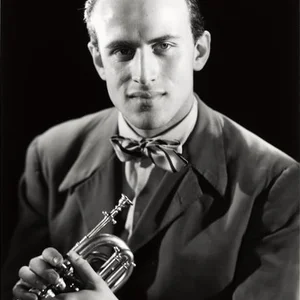

French writer, musician, and artist (1920–1959), an iconic figure of Saint-Germain-des-Prés. Author of Froth on the Daydream, he embodied the spirit of the postwar generation, blending jazz, literature, and provocation.
Boris Vian(1920 — 1959)
Boris Vian
France
8 min read
Frequently asked questions
Famous Quotes
« I've always wondered why people do serious things.»
« Youth must have its day — and so must old age, for that matter.»
Key Facts
- 1920: Born in Ville-d'Avray
- 1946: Publication of Froth on the Daydream
- 1946: Publication of I Spit on Your Graves under the pseudonym Vernon Sullivan
- 1954: Wrote the song Le Déserteur, which was banned from radio
- 1959: Died at 39 from a heart attack
Works & Achievements
A poetic and surrealist novel considered Vian's masterpiece. The love story of Colin and Chloé, overshadowed by illness and death, blends fantasy, jazz, and deep melancholy.
A noir novel presented as an American translation, denouncing racism in the United States. The scandal surrounding its publication and the ensuing trial made Vian a controversial figure.
An absurdist and surrealist novel following an expedition building a railway to nowhere. A perfect illustration of Vian's taste for absurdity and mockery.
A pacifist song addressed to the President of the Republic by a conscript refusing to go to war. Banned from radio, it became an anti-war anthem sung at protests against the Algerian War.
The last novel published during Vian's lifetime, rejected by several publishers. A dark tale about the mother-child relationship and the absurdity of the world, now considered one of his most accomplished works.
An absurdist play depicting a family fleeing an inexplicable noise into ever-smaller apartments. Staged just months before his death, it anticipates the theatre of Ionesco.
A critical essay on French popular music, blending humor with serious analysis. A testament to Vian's commitment to a living, popular culture, in opposition to academic stuffiness.
Anecdotes
Boris Vian published L'Écume des jours in 1947, but it was under the pseudonym Vernon Sullivan that he wrote I Shall Spit on Your Graves the same year, presenting it as the translation of an American novel. The scandal was enormous: the book was prosecuted for obscenity, and Vian was eventually forced to admit the deception, which led to a highly publicized trial.
A graduate engineer from the École Centrale, Boris Vian invented whimsical gadgets and filed several absurd patents, including a piano-cocktail — an imaginary machine in L'Écume des jours — that would mix drinks based on the notes played. This passion for zany mechanics reflected his love of blending disciplines.
A passionate jazz enthusiast, Boris Vian played trumpet in the basement clubs of Saint-Germain-des-Prés alongside musicians such as Claude Luter. He also translated many American crime novels into French and was a close friend of Miles Davis during the American trumpeter's Parisian tours.
Boris Vian died on June 23, 1959, at a private screening of the film adaptation of I Shall Spit on Your Graves — a film he publicly disowned. He collapsed in the theater just minutes after the screening began, the victim of a heart attack at only 39 years old, as if he could not bear to watch his work being betrayed.
Primary Sources
Colin was twenty and he loved Chloé. He had a comfortable apartment, money invested, a cook named Nicolas and a friend named Chick, who was passionate about Jean-Sol Partre.
I refuse this prize because I do not wish to be co-opted by an institution that represents everything I oppose in the literary establishment.
Jacquemort was a psychiatrist. He wanted people's souls. Not their money. Not their love. Their souls.
Jazz is neither Black music nor white music. It is a living music, one that breathes, that evolves, and that deserves to be heard with open ears rather than closed minds.
I am half Black and no one knows it. My brother was lynched because he loved a white girl. I will have my revenge.
Key Places
A meeting place for the post-war intelligentsia, where Vian rubbed shoulders with Sartre, Beauvoir, and Camus. It was in this vibrant environment that the spirit of his generation took shape.
A legendary jazz club where Boris Vian played the trumpet and where existentialist youth gathered to dance and debate. The venue embodied the spirit of freedom that defined post-war Paris.
Boris Vian was born on March 10, 1920, in this well-to-do commune in the Hauts-de-Seine. His comfortable childhood and a heart condition diagnosed in his teens shaped his lifelong relationship with life and death.
A prestigious engineering school where Vian earned his degree in 1942. This rigorous scientific training fed his taste for poetic mechanics and the absurd inventions that populate his novels.
The burial place of Boris Vian, where he has rested since 1959. His simple grave has become a place of pilgrimage for readers and jazz enthusiasts alike.
Typical Objects

Boris Vian played trumpet in the basement clubs of Saint-Germain-des-Prés. The instrument symbolized his double life as an engineer and an artist, and his deep love for American jazz.

Vian wrote his novels and articles on a mechanical typewriter, often working through the night at a frantic pace that took a heavy toll on his ailing heart.

His collection of American jazz records — Duke Ellington, Charlie Parker, Miles Davis — was at the heart of his daily life and cultural identity.

A symbol of an entire generation's fascination with American culture, whiskey accompanied the jazz-filled nights and philosophical discussions in the basement clubs of Paris.

A graduate of the École Centrale, Vian filled notebooks with mechanical drawings and whimsical inventions, blending serious engineering with poetic fantasy.

France's leading jazz magazine, for which Vian wrote regularly, was scattered around his apartment and stuffed in his pockets — a testament to his role as a cultural ambassador.
School Curriculum
Vocabulary & Tags
Key Vocabulary
Daily Life
Morning
Boris Vian, who suffered from a congenital heart defect diagnosed in his teens, would rise late and avoid physical exertion. He spent his mornings reading newspapers — particularly Combat — and corresponding with his editors and friends. His wife Michelle would make coffee while he caught up on world news.
Afternoon
Afternoons were devoted to writing, usually in his apartment on the rue du Faubourg-Poissonnière and later at the impasse Florimont. Vian worked quickly, almost in a trance, sometimes producing a novel in just a few weeks. He also received friends, musicians, and journalists in an apartment that served as an informal literary salon.
Evening
Evenings meant intense social life: dinners with Sartre, Beauvoir, Queneau, or Prévert, followed by trips down into the jazz cellars of Saint-Germain-des-Prés. There, Vian would play trumpet or listen to American musicians passing through Paris. These lively nights took their toll on his fragile heart, yet he couldn't do without them.
Food
Vian ate simply, in the bourgeois fashion of his upbringing, though he mostly frequented the bistros and cafés of the Left Bank. Food interested him less than wine and American whiskey — symbols of the jazz culture he loved. His heart condition theoretically called for a degree of moderation that he did not always observe.
Clothing
Vian favored the characteristic look of the postwar intellectual bohemian: black turtleneck, velvet jacket, sometimes a beret. He rejected the bourgeois elegance of his background in favor of a studied nonchalance that expressed his belonging to the new intelligentsia of Saint-Germain-des-Prés.
Housing
Vian lived in several Parisian apartments, the most famous being at the impasse Florimont in the 14th arrondissement. These lodgings were cluttered with books, jazz records, mechanical gadgets, and scattered manuscripts. The apartment served equally as a writing studio and a gathering place for the Parisian intellectual elite of the era.
Historical Timeline
Period Vocabulary
Visual Style
L'univers visuel de Boris Vian oscille entre le noir et blanc contrasté des caves jazz parisiennes et un surréalisme poétique, mêlant existentialisme rive gauche et influences du roman noir américain.
Sound Ambience
L'univers sonore de Boris Vian mêle les caves de jazz enfumées de Saint-Germain-des-Prés, le claquement nocturne d'une machine à écrire et les disques vinyle de bebop américain.