Imaginary interview with Emily Dickinson
by Charactorium · Emily Dickinson (1830 — 1886) · Literature · 6 min read
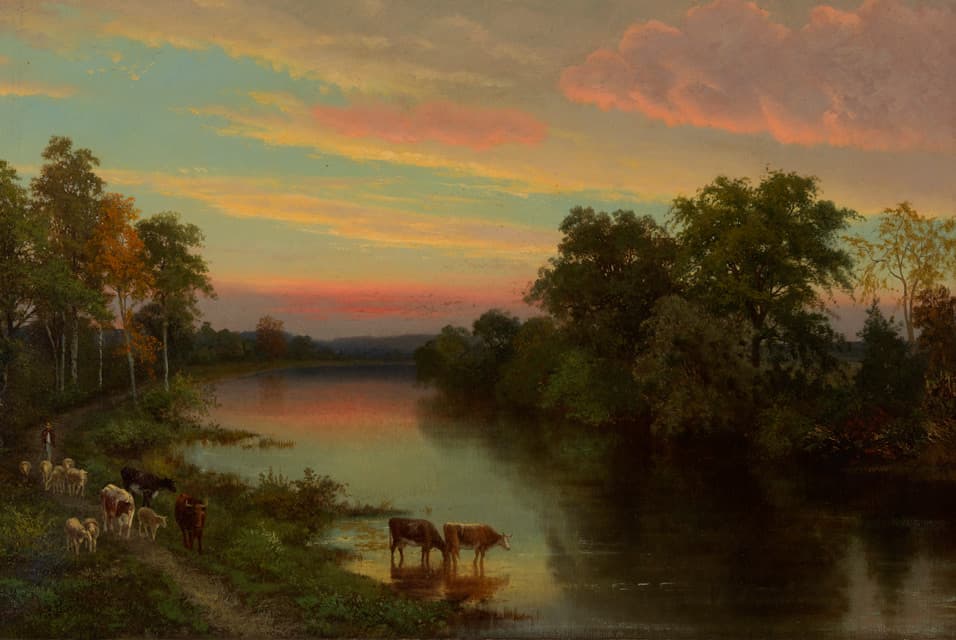
Amherst, Massachusetts, late spring afternoon. The light falls slantwise on the Homestead garden, and a first-floor door remains ajar, just enough for a voice to pass without a face appearing. It is from there, from her room lined with manuscripts and dried flowers, that Emily Dickinson has agreed to respond.
—Why do you receive your visitors behind a barely open door, without ever showing yourself?
Because a half-open door lets through what matters — the voice, the spirit — and holds back what clutters. At the Homestead, I keep the world at the exact distance where it becomes bearable, neither closer nor farther. They say in Amherst that I am the Lady in White, and it is true that I have worn only pale muslin for years; white is a page, and I prefer to live as one writes, in reserve. To the neighborhood children, I lower my bread in a wicker basket from the window, rather than opening the great door. It is not coldness. It is that all direct contact seems to me a page corrected by a hand too hasty, and I cherish my erasures.
A half-open door lets through the voice and holds back what clutters.
—How do you respond to those who describe you as a recluse cut off from everything?
The word recluse amuses me, because it forgets the ink. I have written, they say, over a thousand letters: one is not alone when one holds so firmly the thread with the living. My first-floor room overlooks the street and the garden; I see the seasons and funerals pass, I hear the voices of the household rise from the parlor in the evening. I did not withdraw from the world, I chose through which opening it would enter. The window rather than the door, the letter rather than the visit, the basket of bread rather than the handshake. It is a geography, not an escape. I live at the center of Amherst as one lives at the center of a poem: motionless, and traversed by everything.
—What do these hand-sewn notebooks you call fascicles represent to you?
They are my own books, those I have entrusted to no printer. I fold four or five sheets, sew them with thread, and copy fair what I deem stands firm. Forty of these fascicles sleep in my room, nearly eight hundred poems awaiting no one's approval. For me, the printed page is an auction: one sells the voice to the highest bidder, corrects it, smooths it. My needle does better than the press — it binds without betraying. When I need a page, I sometimes take the back of an envelope, and the poem settles there like a bird in a hedge. Publication, I have been told, would be as foreign to me as the firmament to a fin. I prefer the thread.
My needle does better than the press: it binds without betraying.
—Do you remember the rare poems published during your lifetime?
A dozen, no more, and almost all against my will. They were taken from me, combed, my dashes straightened as one straightens a child's hair before church — and the poem, thus corrected, no longer breathed. My dashes are not hesitations: they are thresholds, suspensions of breath, the place where the verse looks over the edge. To erase them is to stop my mouth. That is why I preferred the chest to the gazette. My sister Lavinia will find all that one day, I suppose, sorted and sewn — and only then will the world read what I did not wish to sell it. Better to be read too late than amputated in time.
My dashes are not hesitations, they are thresholds.
—Why does death appear so often in your writing, and in almost amiable guise?
Because she is the most assiduous of my visitors, and one cannot pretend to ignore the one who knocks each season in Amherst. Rather than flee her, I invited her into the carriage. In one of my poems, Because I could not stop for Death, she stops politely for me, like a gallant coachman, and the carriage holds only the two of us — and Immortality as a third. I make her neither a fury nor a skeleton: I render her courteous, because that is how she is terrible. True terror need not shout; it sits beside you and adjusts the horse's pace. I prefer to look that face straight on, from within, than to turn away my eyes as I was taught in church.
True terror does not shout: it sits beside you and adjusts the horse's pace.
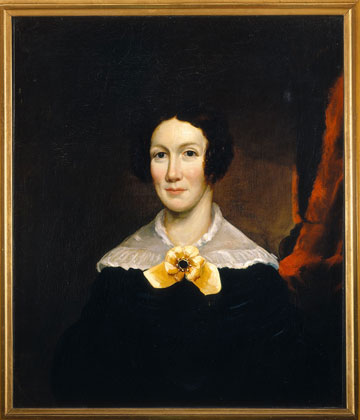
—How did you come to describe the moment of dying from within, as in the poem of the fly?
Because it is the one instant from which no one returns to tell it, and silence has always seemed to me a provocation. In I heard a Fly buzz — when I died, I wanted to hold the pen up to the last breath, and what I place at the solemn threshold is not an angel, but a fly — its blue, uncertain buzz between the light and me. One expects majesty, one receives an insect. That is exactly where truth lives: in the concrete detail that disturbs the grand scene. Immortality, for me, is never a catechism certainty, it is an open question, and a fly perched upon it says more than a sermon. I believe one writes death well only by refusing to make it noble.
One expects majesty, one receives an insect: that is where truth lives.
—What were you seeking when you first wrote to critic Thomas Higginson in 1862?
One thing only, and I asked him bluntly: “Are you too deeply occupied to say if my Verse is alive?” To know if my verses breathed — not if they pleased, not if they would sell, if they were alive. That year, I had a terror I could confide to no one, and I sang as a child sings passing near a cemetery: because I was afraid. Higginson did not entirely understand me, he found my poems too abrupt, my rhymes too oblique — but he answered me, for twenty years. He became my main interlocutor, the man to whom I sent my riddles by post. I did not ask him for a master. I asked him for a witness.
I did not ask him for a master, I asked him for a witness.
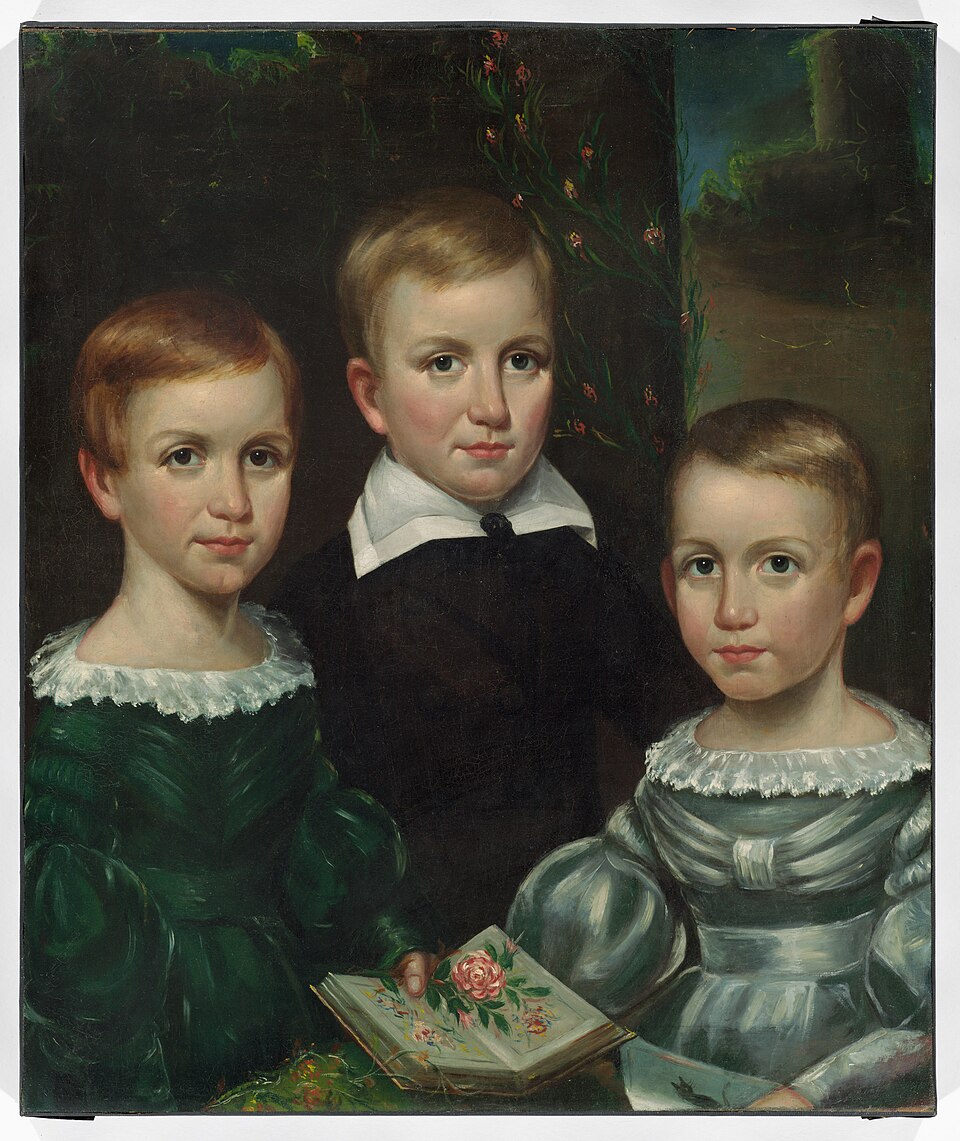
—What would you say about your oblique way of approaching truth in your verses?
That one must tell all the truth, but tell it slant — as I write somewhere. Truth taken head-on dazzles and blinds, just as one does not explain lightning to a child all at once. I prefer ellipsis, allusion, the word that shows while half-hiding. My dashes serve that, and my fondness for the hymn, that measure inherited from the hymns of my childhood, which lulls the ear while the meaning, itself, steps aside. Higginson called it my “spasm” — I call it aiming true without aiming straight. Truth must dazzle gradually, or every man would go blind. It is a matter of threshold, again: the amount of light a soul can receive without burning.
One must tell all the truth, but tell it slant.
—You are imagined bent over your poems, but you also kept an herbarium and a bakehouse. How does that fit together?
Like root and flower — it is the same plant. From age fourteen, I dried, labeled, classified over four hundred species in my herbarium, preserved today at Amherst College. Naming a flower accurately is not far from finding the right word: botany taught me precision, and precision is the poet's politeness toward the world. In the morning, I knead the household bread; I even won a prize at the local fair for my rye bread. Believe me, one does not make a good verse any differently than a good loaf: you must weigh, wait for it to rise, and know when to stop touching. The garden, the oven, and the poem demand the same patient attention.
Naming a flower accurately is not far from finding the right word.
—How do the garden and nature nourish what you write?
The garden is my first book, and the oldest. In the afternoon, I devote myself entirely to it: I cultivate, observe, note as a naturalist what a bee or a robin teaches me. There was born the image of hope — Hope is the thing with feathers — that feathered thing that perches in the soul and sings a tune without words, never stopping. I did not invent the bird: I watched it, for a long time, from my window and from my flowerbeds. The Transcendentalism of Emerson, which one breathed then in New England, taught that the divine is read in nature rather than in church; I did not need to be taught it — it sufficed to hold a dried petal in my hand and see in it the whole firmament.
The garden is my first book, and the oldest.
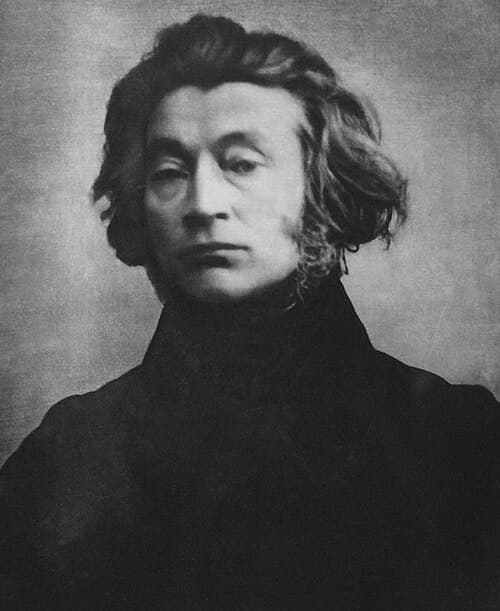
This imaginary interview was generated by artificial intelligence from sources documented in Emily Dickinson's profile. It dramatises what the figure might have said based on what we know about them, but does not constitute attested historical testimony. For primary sources and factual documentation, refer to the full profile.