Imaginary dialogue between Thomas Wentworth Higginson and Emily Dickinson
by Charactorium · Emily Dickinson (1830 — 1886) · Literature · 6 min read
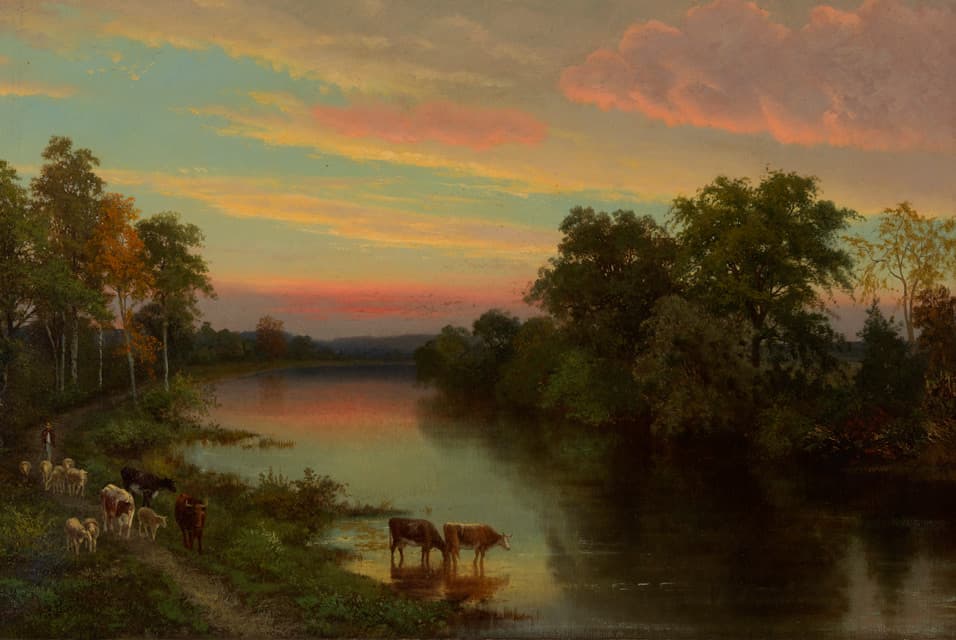
It is in the hushed parlor of the Homestead in Amherst, this autumn of 1883, that Thomas Wentworth Higginson meets Emily Dickinson. The late-afternoon light falls obliquely on the upright piano and a wicker basket by the window. For over twenty years they have been writing to each other—since that April letter when she asked him if her verse was alive—and he has so rarely seen her in the flesh. This time he comes not as a critic, but as a witness to a body of work the world still ignores.
—Emily, you first wrote to me in April 1862 to ask if your verse was alive. Why me, a stranger, on that day?
You who kept that letter know better than anyone the state I sent it in. I had read your article in the Atlantic where you advised young authors, and I thought I heard someone who would not mock. I dared not ask my father, nor anyone in Amherst—they would have corrected me as one corrects a spelling mistake. You were far enough away to be frank and serious enough not to lie. I wrote to you like the boy who whistles past the graveyard: because I was afraid. I needed a stranger's voice to tell me if what I was doing breathed, or if I was only stirring dead words.
I wrote to you like the boy who whistles past the graveyard: because I was afraid.
—I found you bewildering—your rhythms defy all rules. Did I ever discourage you by suggesting you discipline your verse?
You advised me to wait before publishing, and you thought my meter irregular, my breath too short or too long. I never held it against you, Wentworth—you said what you thought, and that is rare. But I could not obey. Cutting my dashes, straightening my rhymes would have been cutting off the breath at the very moment it seeks air. My poetry does not march in step; it stumbles on purpose, because truth itself stumbles. Perhaps you wanted to protect me from a world that would not understand. I answered you by continuing, in the shadows, to do exactly what I was doing. You were my judge, yet never my master—and I believe that is what held our bond so long.
You were my judge, yet never my master.
—You spoke to me of booklets sewn by your own hand. What are these fascicles you keep secret in this room?
They are my books, the ones no one prints. I recopy the poems I want to keep, fold four or five sheets, sew them with thread, and there is a booklet. I have bound dozens, sleeping in my bureau. It is my way of editing without an editor, of publishing without a press. Ten poems were taken from me in my lifetime, often without asking, and they were straightened like a crooked tree—so I decided to become my own binder. These booklets are the form I choose for my verse, the only one where I fully recognize them. When I am gone, someone may find them; or no one. That changes nothing of what they contain today.
It is my way of editing without an editor, of publishing without a press.
—You stubbornly refuse to publish, despite my encouragements. Why this restraint, when so many authors dream of nothing else?
Publication, you see, seems foreign to the spirit. Selling the soul at auction is not for one who has an attic full. I do not write for the market; I write because something in me demands it, and it would fall silent if I handed it over to the newspapers. You offered more than once to open a door; I kept it closed, gently. It is not disdain for the reader—it is that the public's praise and blame would tear me from the silence where my verses are born. My booklets suffice. If my work is to live, let it live when I am no longer here to blush or boast over it. Fame feeds only the dead, and even then, poorly.
Fame feeds only the dead, and even then, poorly.
—Many of your poems face death head-on, almost from the inside. Where does this familiarity with it come from?
She is my neighbor, Wentworth, as the graveyard is to this house. I grew up hearing the bells toll for the neighborhood children; the war later filled the newspapers with young names. Death is not an abstraction here: she walks down the street. So I wanted to write it not from afar, as a mourner, but up close—at the very moment one expires, when a fly buzzes against the windowpane and it is, suddenly, more present than the promised eternity. I do not know what follows. Immortality, for me, is not a catechism certainty; it is the great open question, the one that keeps me awake. I prefer to face it squarely rather than drape it in consolations I only half believe.
Death is not an abstraction here: she walks down the street.
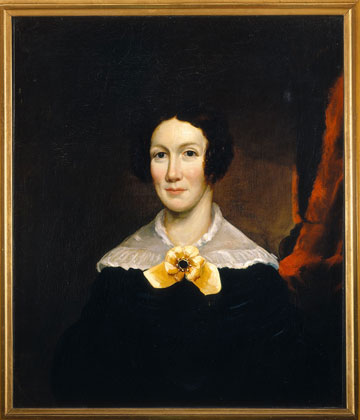
—In one of your poems, Death stops courteously to take you for a drive. This gentleness is surprising—did you intend it that way?
Yes, I wanted him gallant. Terror has been painted so often; I wanted to see Death as a polite coachman, stopping because I had no time to stop for him. We ride unhurriedly—he, I, and Immortality as the only third passenger. It is more a promenade than a torment—and that is precisely what disturbs. When dread becomes courteous, it enters through the door one has opened smiling. I learned that from the hymns of my childhood: they sing of the end to peaceful tunes, and the peaceful tune makes it more real. I prefer to tame the monster than to scream before it. At least, this way, I still hold the pen when he takes the reins.
When dread becomes courteous, it enters through the door one has opened smiling.
—You are said to be a recluse, draped in white, barely receiving visitors. I who have crossed your threshold wonder: is this a legend?
You crossed this door, it is true, and so you know I am not a ghost. But I confess: I often receive through a half-open door, or lower a basket of bread to the children from the window rather than open it. It is not disdain—it is that the world, in full dose, exhausts and disperses me. The white I wear is not a costume; it is simpler, cleaner, and spares me from choosing. A legend of a strange lady is built around this, and I let it be: it protects me better than a wall. Behind the withdrawal, I am not absent—I am elsewhere, busy with what cannot be seen from the street. Distance is my window, not my prison.
Distance is my window, not my prison.
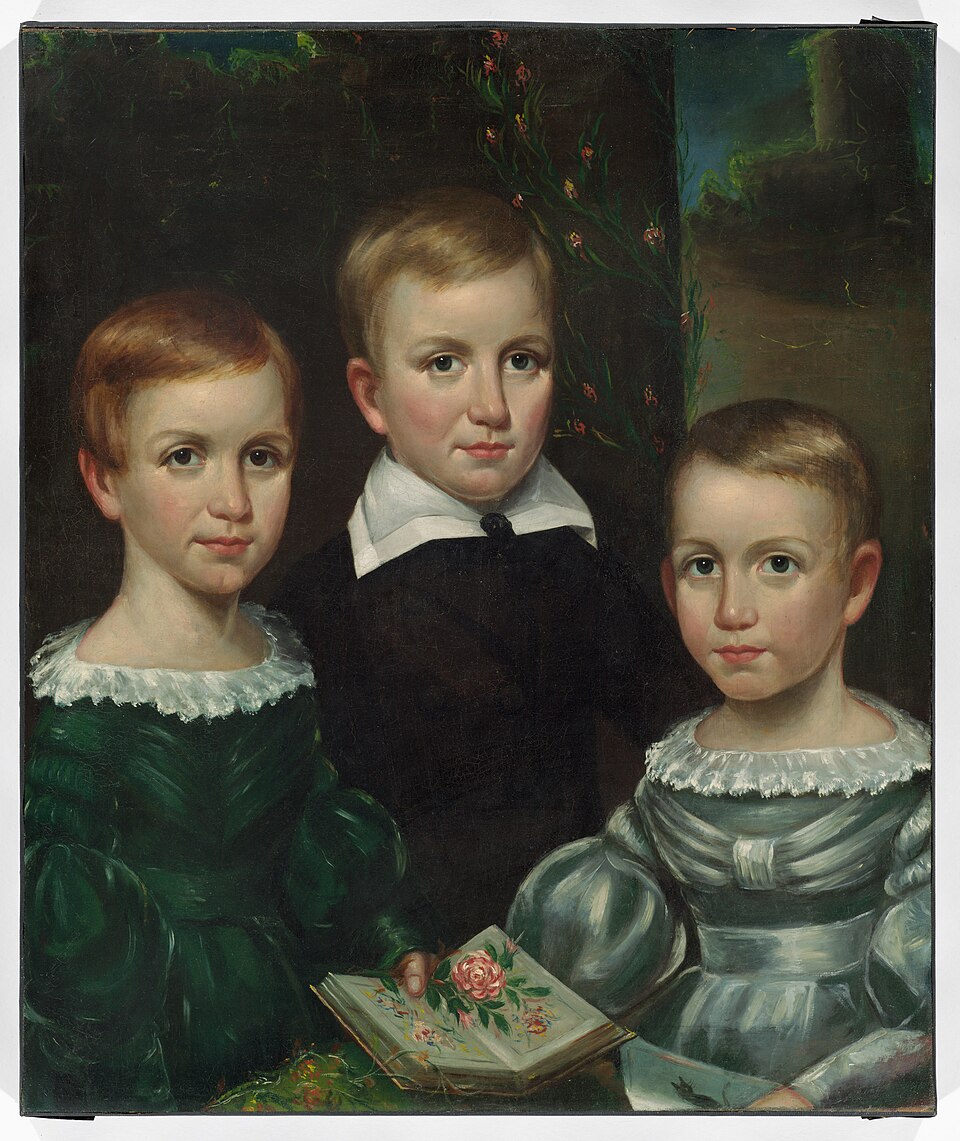
—Does this isolation cost you, or have you chosen it as one chooses a tool for one's work?
I have chosen it, and it costs me—both at once, without contradiction. One does not make a work like mine in full uproar; I need silence as the painter needs light. But I am not made of marble: I love, I lose, I weep for the absent, and each death takes a little of my breath. My father, my mother, friends—each departure tightens the circle. The outer world, I have let in through a thousand letters; I have written more than I have spoken. It is not a cell, Wentworth, it is a workshop whose door I wanted narrow. Whoever I let in enters—you, for example, and from far away. The rest I hold at the length of a pen.
—When I write to you, I forget you are also, they say, an award-winning baker. Do the woman of the garden and the woman of verse get along?
They are the same, and you would be wrong to separate them. In the morning, I knead rye bread—I even won a prize at the Amherst fair, of which I am prouder than you might think. In the afternoon, I am in the garden, or bent over my herbarium where four hundred dried plants sleep, labeled by my hand since I was fourteen. Do you think these gestures are far from poetry? To observe a flower until you know it is already to name the world. The rising bread and the coming verse belong to the same patient art. I do not descend from heaven to write; I rise from the oven and the flowerbed, my hands still full of flour and earth. That is where my poems begin.
The rising bread and the coming verse belong to the same patient art.
—Your verses often borrow the meter of the hymns we sang at church. Is this a heritage you claim or subvert?
Both, again—I am made of acknowledged contradictions. The hymn meter, those eight- and six-syllable lines, I have had in my ear since childhood, like every New England girl. My piano taught me its music. But if I borrow the form of the hymn, it is often to lodge there a doubt the hymn forbids. I take the pious air of prayer and slip in a question that has no answer. Puritanism gave me my rhythm; it did not give me its certainties. At Mount Holyoke, they wanted me to confess my faith before everyone: I refused, and came home. I keep my fathers' melody and sing my own words upon it, sometimes heretical.
Puritanism gave me my rhythm; it did not give me its certainties.
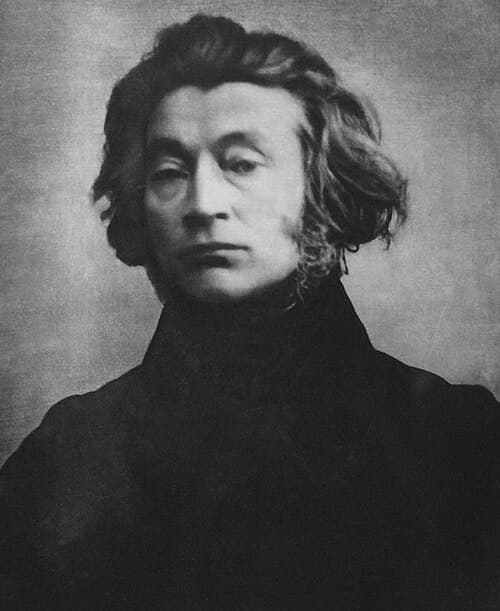
This imaginary interview was generated by artificial intelligence from sources documented in Emily Dickinson's profile. It dramatises what the figure might have said based on what we know about them, but does not constitute attested historical testimony. For primary sources and factual documentation, refer to the full profile.