Imaginary dialogue between Didon and Aeneas
by Charactorium · Aeneas · Mythology · 6 min read
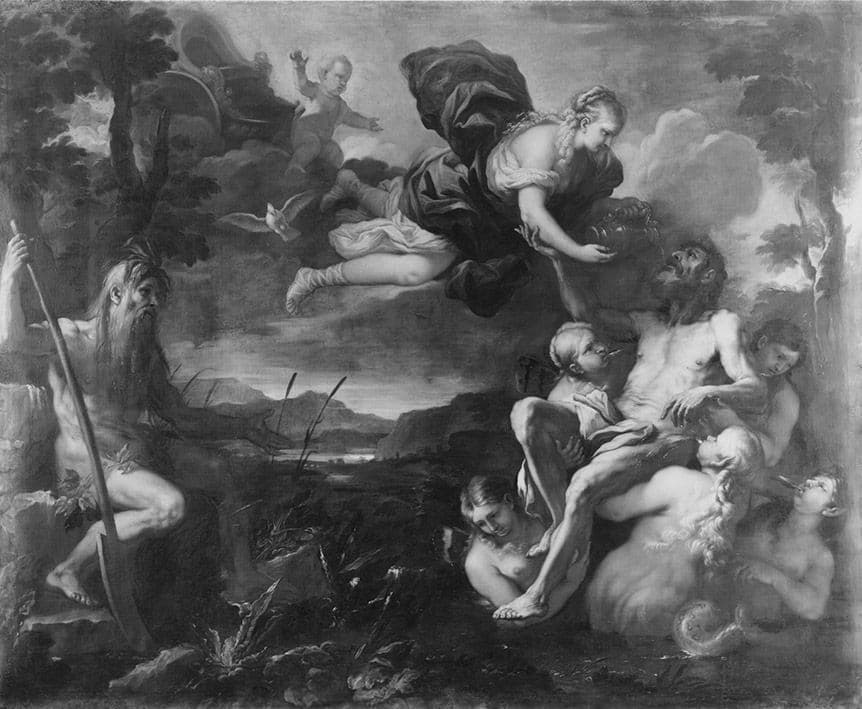
It is under the porticoes of the palace of Carthage, one evening in the first year after the Trojan shipwreck, that Queen Dido meets her guest Aeneas again. The bronze lamps burn scented oil, and in the distance one hears the surf against the moles of the new city. She took him in begging for winds, covered him with gold and feasts; but already the rumor runs that the gods are calling him westward. Tonight, before everything breaks, she wants to understand the man she welcomed to her table.
—Aeneas, they say you fled burning Troy with your old father on your shoulders. Tell me about that night, as you lived it.
The night Troy burned, Dido, I did not hesitate long. The Greeks were pouring out of the horse's belly, the roofs were collapsing, and my first move was to load my father Anchises onto my shoulders. He clutched our household gods, the Penates, and in my hand I held little Ascanius, who trotted to keep up with my pace. I could have seized my weapons and died gloriously in the streets — a warrior would have done so. But the gods commanded me to save my own, not to perish. In the smoke I lost my wife Creusa, and that wound has never left me. You who received me like a prince see in me a hero; that night, I was only a son and a father.
That night, I was only a son and a father.
—Many would have taken the gold and weapons from their house. Why an old man and a child rather than your treasures, son of Anchises?
Because gold can be bought again, Dido, but a father cannot be found again. Among us, duty toward the gods, ancestors, and blood comes before everything else: that is what my people call pietas. Abandoning Anchises to the flames to save coffers would have been betraying myself and offending heaven. The Penates he carried were worth a thousand palaces: they are the soul of Troy, which I carry to replant elsewhere. A man who does not honor what made him has nothing to found. I chose to carry my past on my shoulders rather than my riches in my arms; and it is that burden, you see, that led me to your shores.
Gold can be bought again, but a father cannot be found again.
—Do you remember the evening when my people took you in, shipwrecked, on my shores? I opened Carthage to a stranger. What did you feel then?
I remember it like a dream, Dido. The winds had broken us, my fleet was scattered, and I walked in your new city without knowing whether I would be slaughtered or welcomed. Then you seated me at your table, you offered wine and bread to wanderers who no longer had a homeland. I saw a queen building walls while I had only ashes behind me. When you asked me to tell of the fall of Troy, I wept before all your people, and you did not laugh. What you gave me here is not just a roof: it is the memory that a man deprived of everything can still be treated as a sacred guest. That, I will never forget.
—And yet I feel you already leaving, Aeneas. What force tears you from this city — and from me — despite everything?
Do not think I leave with a light heart, Dido; it is not of my own will that I depart your shores. The gods harass me even in my sleep: a messenger from heaven reminded me that my road does not end here, that I must reach Italy and plant the gods of Troy there. If I listened only to my desire, I would stay and build your walls at your side. But I do not belong to myself. I carry a people, a father in the tomb, a son whose future is not yet born. To refuse the Fatum would be to condemn all those who trusted me. Understand, I beg you: I am not fleeing a queen, I am obeying an order older than my own heart.
I am not fleeing a queen, I am obeying an order older than my heart.
—This Italy that the oracles promise you — what are you supposed to build there? What duty calls you so strongly, Aeneas?
I have been promised, Dido, a land in the west where I must found a new city. There, the oracle says, the gods of Troy will find a lasting home, and from them will spring a race destined for great things. I do not go to conquer for glory: I seek soil where I can rekindle the sacred fire I saved from the flames. My father repeated it to me before he died, the Penates themselves signified it to me in the night. I must unite my wandering Trojans with a Latin people, blend our bloods, and make one homeland out of two exiles. It is a burden more than a triumph. I may not see that city grow; but I must lay its first stone, even if it costs my last strength.
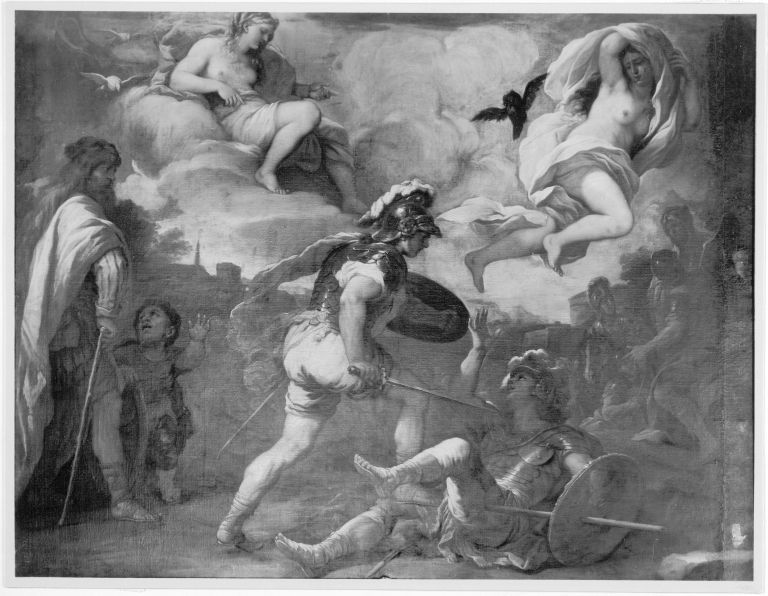
—It is whispered that a Latin wife and a war await you there. Do you fear shedding blood for a land that is not yours?
I do fear it, Dido, and I would be mad to claim otherwise. The omens foretell that a king of Latium will give me his daughter, Lavinia, to seal the alliance of the two peoples; but such a union comes at a price. A prince of that land, they say, already desired her, and he will not yield without a fight. I did not flee ten years at sea to go sowing death lightheartedly. Yet if war is forced upon me, I will wage it, because destiny is not founded on wishes but on courage. I have seen enough of a city burning to know the price of blood. I only pray that the soil where resurrected Troy will rest does not drink too much before bearing its fruits.
—You speak of Anchises in the past tense. Did death take him from you during that long voyage, before you landed on my shores?
Yes, Dido, and it is my deepest wound. After so many seas crossed, just when I thought the worst was behind us, my father passed away on the shores of Sicily, at Drepanum. He who had survived the burning of Troy, he whom I had snatched from the Greeks on my shoulders — old age took him when I thought him safe. I mourned him, then held funeral games for him, as befits a son. You saw me master of myself at your table; know that I carry within me a mourning that no feast can soothe. The guide of my entire flight is no longer here to tell me if I did right. And without him, from now on, I must read the sky.
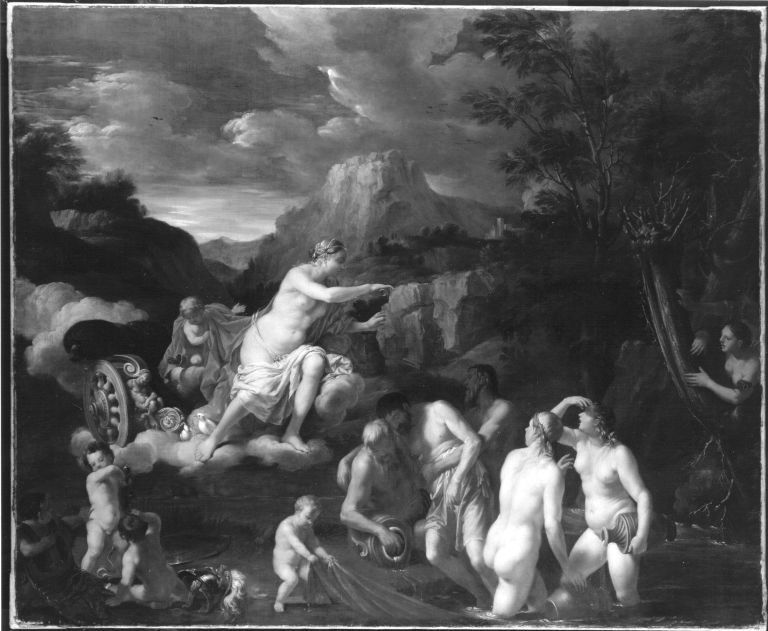
—Would you, if the gods allowed it, wish to hear his voice again — even among the shades of the dead, Aeneas?
More than anything, Dido. I have been told of a priestess, the Sibyl who serves Apollo near Cumae, on the Italian coast. She has the power to open for the living the road that descends to the dead, for those who know how to appease her. If this is granted to me, I will go seek my father's shade at the threshold of the Underworld. Not to weep again, but so that he may reveal to me what awaits my people, and that I may finally know if so many trials have meaning. A son has the right to ask his father if he has traced the right path. I believe that there, among the darkness, awaits the revelation of all for which I suffer. That thought alone gives me the strength to board each day.
—This Fatum you invoke constantly, Aeneas — is it not heavy to carry a life written before it is lived?
It is heavier than my father on my shoulders, Dido, and I carry it every hour. You think me free, standing before you; I am not. Since the fall of Troy, I know that my steps are traced in advance, that I must go where heaven pushes me, love or leave according to its order. An ordinary man chooses his road; I merely fulfill mine. It is a greatness, I admit, but also a chain. The Fatum does not ask me if I am weary, if it costs me to leave you, if I sometimes dream of a simple life under a quiet roof. I am the instrument of a design that surpasses me. That is why I seem cold when I bleed inside.
The destiny is heavier than my father on my shoulders, and I carry it every hour.
—And this race you are to engender — will you ever see it, or are you only the first link in an endless chain?
I believe I am only the beginning, Dido. The oracles promise me that from my son Ascanius — whom my people also call Iulus — will be born a line of kings, and from that line a city of which they say it will know no bounds. But these splendors, I will not behold them. I must only land, found, plant the sacred fire, and then fade away. I am the ferryman, not the goal. It is a strange destiny to toil for an age when one will be only a name murmured by descendants. Yet I submit to it: a man is magnified by serving something greater than himself. If my suffering today makes the glory of my people tomorrow, then I will not have wandered your seas in vain.

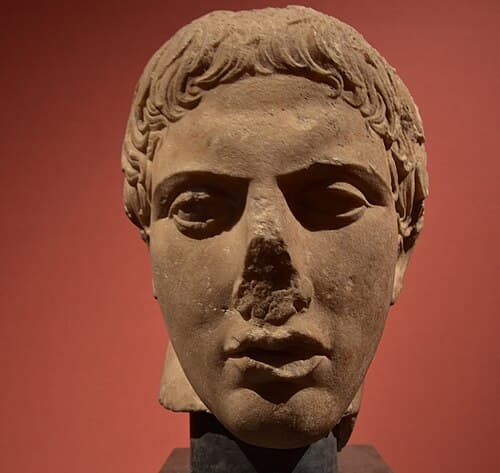
This imaginary interview was generated by artificial intelligence from sources documented in Aeneas's profile. It dramatises what the figure might have said based on what we know about them, but does not constitute attested historical testimony. For primary sources and factual documentation, refer to the full profile.