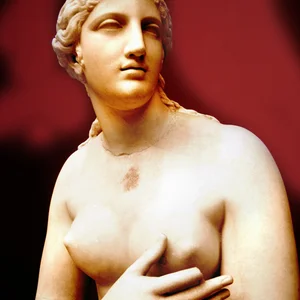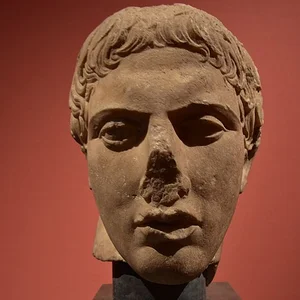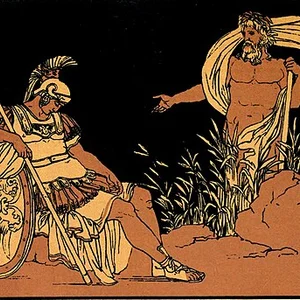

Hero of Greco-Roman mythology, son of Aphrodite and Anchises. Aeneas is the central figure of Virgil's Aeneid, a Latin epic recounting his journey from Troy to Italy, where he becomes the mythical ancestor of ancient Rome and the Julio-Claudian dynasty.
Aeneas
Aeneas
8 min read
Frequently asked questions
Key Facts
- Aeneas flees Troy after its destruction by the Greeks, carrying his father Anchises on his shoulders
- Virgil composed the Aeneid (late 1st century BCE), tracing Aeneas's journey from Troy to Italy
- Aeneas settles in Italy and founds the dynasty from which Rome would be born, according to Roman legend
- Dido, queen of Carthage, welcomes Aeneas but takes her own life after his departure — an episode greatly developed by Virgil
- The Aeneid establishes a mythological link between ancient Greece and Rome, legitimizing Roman greatness
Works & Achievements
Virgil's Latin epic featuring Aeneas as its central hero. This landmark work of Roman literature recounts Aeneas's journey from the fall of Troy to his settlement in Italy, laying the mythical foundations of Rome.
Aeneas founds the city of Lavinium in Italy, the first lasting settlement of the Trojans on Italian soil. This founding marks the crucial turning point of his odyssey and establishes the roots of what would become Roman civilization.
A major armed conflict in which Aeneas faces the Italian peoples, led most notably by Turnus. His victory consolidates the Trojan settlement in Italy and legitimizes Aeneas's right to build an empire.
The union between Aeneas and Lavinia, daughter of King Latinus, symbolizing the alliance between the Trojans and the Italian peoples. This marriage is essential in establishing the dynastic legitimacy of the future kings of Rome.
Aeneas is presented as the mythical ancestor of the Julio-Claudian dynasty and of Rome itself, through his son Ascanius (Iulus). This divine and heroic genealogy confers a sacred legitimacy upon Roman civilization.
A seven-year journey from the destruction of Troy across the Mediterranean, including stays in Carthage and various other regions. This voyage forms the narrative heart of the Aeneid and embodies the trials of the civilizing hero.
Anecdotes
According to the mythological tradition recounted by Virgil in the Aeneid, Aeneas escapes from burning Troy carrying his elderly father Anchises on his shoulders, while his son Ascanius follows behind. This act of filial piety made him a model of virtue for the Romans, who saw in him the embodiment of family duty and respect for one's ancestors.
Virgil's Aeneid, written between 29 and 19 BC, tells the story of Aeneas's long journey from the ruins of Troy to Italy. During his wanderings, he meets Dido, the Queen of Carthage, with whom he has a love affair before abandoning her to fulfill his destiny — an act that leads to the queen's death.
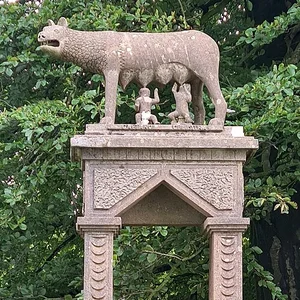
In Roman mythology, Aeneas is presented as the founding ancestor of Rome and a direct forefather of Romulus and Remus. His son Ascanius is said to have founded Alba Longa, from which came the kings who would eventually father the legendary founders of Rome three centuries later.
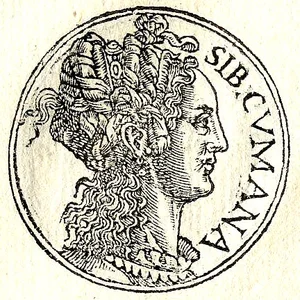
In the Aeneid, Aeneas descends to the Underworld guided by the Cumaean Sibyl to meet the shade of his father Anchises. Anchises reveals to him the glorious future of his descendants and the great destiny of Rome, lending an epic and divine purpose to his entire quest.
Roman emperors, most notably Augustus, used the figure of Aeneas to legitimize their power. Augustus claimed descent from Aeneas through his ancestor Venus, placing himself under divine protection and presenting himself as the heir to a sacred mission to found and expand Rome.
Primary Sources
I sing of arms and the man, he who, exiled by fate, first came from the coast of Troy to Italy, and to Lavinian shores.
Then Aeneas rose up, that brave warrior in battle. He rushed forward, clad in his gleaming armor, and Achilles, seeing him, advanced to meet him in combat.
Aeneas, the pious warrior, fled the burning walls of Troy, carrying his father on his shoulders and leading his young son by the hand.
Aeneas, son of Anchises and Aphrodite, founded Lavinium in Italy, from which would spring the royal lineage of Troy that would establish Rome.
Key Places
A city of Phrygia in Asia Minor where Aeneas was born and fought during the Trojan War. It was from Troy that he began his legendary exodus after the city's fall.
The capital of Carthage in North Africa where Aeneas met Queen Dido. According to the Aeneid, he stayed there before continuing his journey toward Italy.
The final destination of Aeneas's journey according to legend. There he founded the city of Lavinium and became the ancestor of the Romans, thus establishing the mythical foundations of Rome.
A mountain in the Troad region of Asia Minor where Aeneas and the Trojans took refuge during the fall of Troy before setting out in exile.
A Mediterranean island where Aeneas stopped during his voyage to Italy. There he held funeral games in honor of his father Anchises, who had died at Drepanum.
A Greek colony in Campania where Aeneas consulted the famous Sibyl, priestess of Apollo, who foretold his future in Italy and granted him passage to the Underworld.
Typical Objects
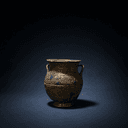
An epic poem composed by Virgil in the 1st century BC, recounting Aeneas's journey from Troy to Italy. It is the major literary work that immortalized this hero and established his importance in Roman mythology.
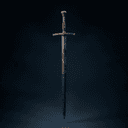
Typical warrior equipment of Trojan heroes and early Roman soldiers. Aeneas is depicted as a valiant warrior who fought in the Trojan War wearing forged armor and carrying weapons.

A central element of Aeneas's journey, as he flees Troy with his fleet to cross the Mediterranean. Ancient sailing and rowing ships embody his adventures and legendary wanderings.
📷 CC BY-SA 4.0 · Wikimedia Commons ↗
A symbol of Roman power representing authority and the founding of Rome. Aeneas is considered the mythical ancestor of Roman kings and emperors, which explains the connection between this hero and the insignia of power.
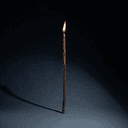
A symbol of quest and nighttime travel in the ancient world. It represents Aeneas's journeys through darkness and the divine guidance that accompanies him throughout his odyssey.
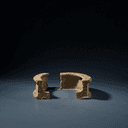
A representation of the besieged city that Aeneas leaves after its destruction. The ramparts of Troy symbolize the apocalypse of the Trojan world and the starting point of the legend of Aeneas.

An abstract concept that can be made tangible through tablets or scrolls. Divine fate guides Aeneas throughout his epic, determining his journey and his founding of Rome.

A symbol of Aeneas's religious devotion, as he honors the gods throughout his journey. It represents the Roman religious traditions that the hero is said to have passed down.
School Curriculum
Vocabulary & Tags
Key Vocabulary
Tags
Mythologie
Daily Life
Morning
Aeneas, a Trojan prince of high rank, begins his day by rising before dawn to fulfill his religious duties to the gods. He takes part in sacrifices and libations, then eats a light meal of bread and diluted wine, before preparing for the day's military or diplomatic activities.
Afternoon
The afternoon is devoted to military training, horsemanship, and armed combat — essential skills for a warrior of his standing. He may also attend councils with the Trojan chieftains to discuss military strategy, or oversee his troops and servants in managing the affairs of his oikos (household estate).
Evening
As night falls, Aeneas shares a formal meal with his family and companions, enjoying grilled meats, fruits, and wine. The evening ends with rest, conversation around the fire, and the fulfillment of religious duties before sleep.
Food
As a noble warrior, Aeneas primarily eats meat (lamb, goat, beef), barley or wheat bread, dried fruits, cheese, and wine — either undiluted or mixed with water. Mediterranean staples such as olives and fish occasionally round out his diet, which is rich in protein and suited to his physical demands.
Clothing
Aeneas wears a tunic of linen or wool, covered by a bronze or leather breastplate when in arms. A nobleman's cloak (himation) drapes his shoulders, and he wears sandals or warrior's boots. His appearance reflects his princely status, enhanced by bronze or gold jewelry.
Housing
As a Trojan prince, Aeneas resides in the royal palace or in his own noble residence within Troy — a stone-walled building with spacious rooms reserved for his family. His home includes private chambers, reception halls, kitchens, and quarters for servants, typical of Mycenaean aristocratic dwellings.
Historical Timeline
Period Vocabulary
Visual Style
Un style pictural héroïque mêlant l'esthétique antique greco-romaine à la grandeur baroque, privilégiant l'huile et le clair-obscur dramatique. L'atmosphère évoque l'épopée et le voyage légendaire, avec des teintes dorées et rouges sang symbolisant le destin divin et les épreuves guerrières d'Énée.
Sound Ambience
Une ambiance sonore épique et immersive mêlant les bruits de la mer antique, les cordes célestes évoquant la protection divine, et les échos lointains de batailles glorieuses, créant une atmosphère de quête mythologique chargée de destin.
Liens externes & ressources
Références
Œuvres
L'Énéide
29-19 av. J.-C.
Fondation de Lavinium
vers 1200 av. J.-C. (tradition)
Bataille du Tibre
vers 1200 av. J.-C. (tradition)
Mariage avec Lavinia
vers 1200 av. J.-C. (tradition)
Lignée dynastique romaine
vers 1200 av. J.-C. (tradition)
L'Odyssée troyenne
vers 1200 av. J.-C. (tradition)