Kids interview Aeneas
by Charactorium · Aeneas · Mythology · 5 min read
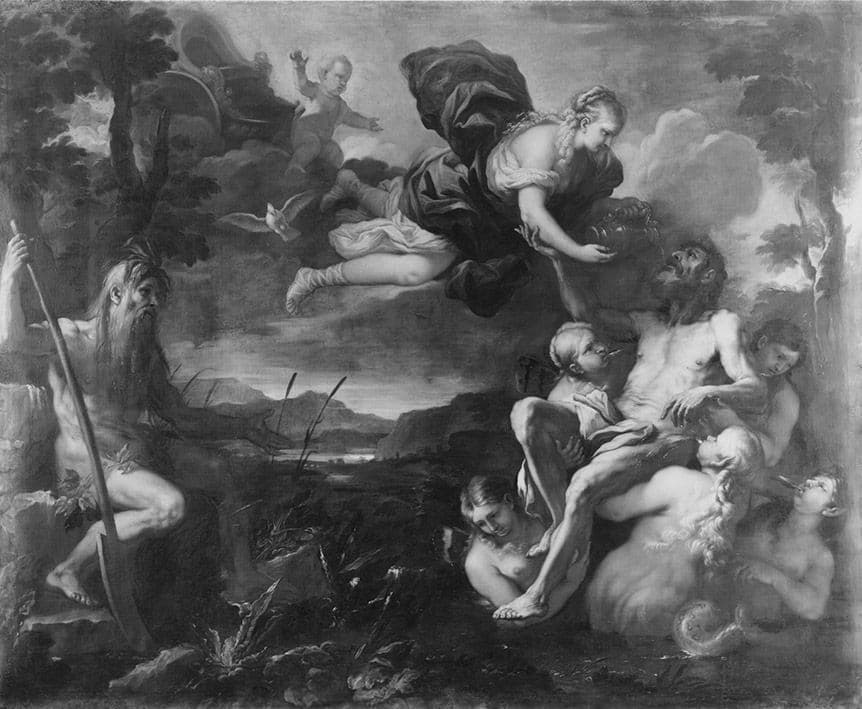
Two twelve-year-old visitors on a school trip have set their backpacks down near an old wooden ship. Before them, a warrior with a gentle look, wrapped in a dusty cloak, agrees to tell his story. He smiles: he is rarely questioned with such curiosity.
—What was it like, the night you fled your burning city?
Ah, my child, it is my greatest sorrow. Troy, my city, was burning. Imagine huge walls collapsing in flames, screams everywhere, the night red as a furnace. I could have fled alone. But I hoisted my old father Anchises onto my shoulders — he could no longer walk. And I took my little boy, Ascanius, by the hand. Three generations on a single road. My father was heavy, but I didn't hesitate for a second. Saving your family is what matters most. That is what the Romans later called pietas: duty toward your family and your gods.
My father on my shoulders, my son by the hand: three generations on a single road.
—Why carry your father instead of running faster alone?
You see, many men would have abandoned the old man to save their own skin. I could not. Anchises had taught me to walk, to pray to the gods, to hold a spear. Leave him in the fire of Troy? Never. On my back, he clutched our little sacred statues, those of our ancestors. Imagine: you carry your grandfather and, at the same time, all the memory of your family. It is heavy, but it gives you a strange strength. The poet Ovid told this story centuries after me. I think people remember it because deep down, everyone would want to be saved like that.
On my back I carried my father, and with him all the memory of my family.
—They say you loved a queen. Who was she?
Her name was Dido, and she ruled over Carthage, a magnificent city by the sea in North Africa. My ships had arrived there, exhausted by the storm. She welcomed me, fed me, listened to my misfortunes. And yes, we loved each other. I could have stayed with her, warm, forever. Imagine a peaceful life, in a palace, far from battles. But a voice inside kept saying: 'Your road is not over.' My destiny called me to Italy. So I did the hardest thing in my life: I left. And it broke us both.
I could have stayed warm with her; my destiny called me elsewhere.
—Were you sad to leave her? It seems cruel, though.
Sad? I was torn apart, my child. Do not think leaving relieved me. Dido wept, she begged me, and I climbed back onto my ship with my heart in pieces. You know, sometimes you must do something both right and terrible at the same time. The gods had set me a mission: to found a new land for my Trojan people. If I stayed in Carthage, thousands of people who trusted me would never have a homeland. That is what they called Fatum, fate: a road traced in advance that you cannot refuse. But no fate erases the pain of having hurt someone you loved.
Sometimes you must do something both right and terrible at the same time.
—Is it true you went down among the dead? Weren't you afraid?
Yes, I was afraid, terribly. Before descending, I went to see the Sibyl of Cumae, a priestess who spoke for the god Apollo. She lived in a dark cave and knew the way to the underworld. Imagine a long tunnel plunging underground, to the land of shadows, where the dead go. I went there for one reason only: to see my father Anchises again, who had died during the journey. And there, in that gloom, he showed me the future. He made me see the souls of great men who would be born from my lineage. My fear turned into courage.
I went down among the dead for one reason only: to see my father again.
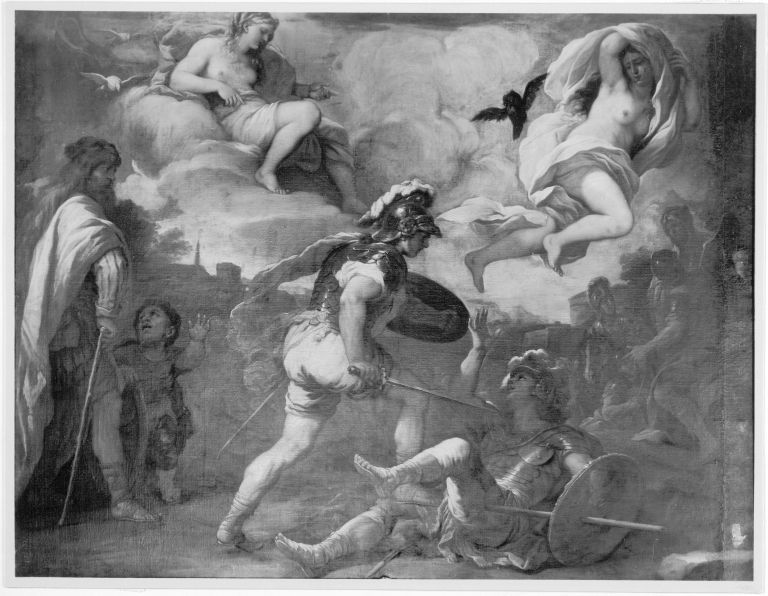
—What did your father show you down there?
Something that took my breath away, my child. In the twilight of the Underworld, Anchises pointed out luminous souls waiting to be born. 'Look,' he said, 'here is your lineage.' He told me that a great city would one day arise from my sons, a city that would rule the world. I did not understand everything, but I felt my journey had immense meaning. Imagine being shown, as in a dream, your children's children, and being told: 'It is for them you suffer today.' After that, I never wanted to give up again. My wandering became a mission.
It is for your children's children that you suffer today.
—When you arrived in Italy, were you welcomed?
Not really! When I set foot in the region of Latium, in Italy, old King Latinus was willing to accept me. He even promised me his daughter, Princess Lavinia, in marriage. But another prince, Turnus, also wanted to marry her. He was furious. So war broke out, near the Tiber river. Imagine: after seven years at sea, storms, and grief, I still had to fight for the right to settle! I was tired, but I had not crossed the whole Mediterranean to back down. This land, my gods had promised it to me. I defended it with weapons in hand.
I had not crossed the whole sea to back down before a final battle.
—And that city you founded, what was it called?
I called it Lavinium, in honor of my wife Lavinia. It was the very first city built by us, the Trojans, on Italian soil. Imagine: after losing everything, after years on the water sleeping in wooden ships, you finally plant solid walls in the ground. You dig, you build houses, an altar for the gods. My people, who no longer had a homeland, finally had one. My marriage to Lavinia united my Trojans with the peoples of Italy: two peoples becoming one. From this small city, very great things would one day be born.
After years on the water, you finally plant solid walls in the ground.
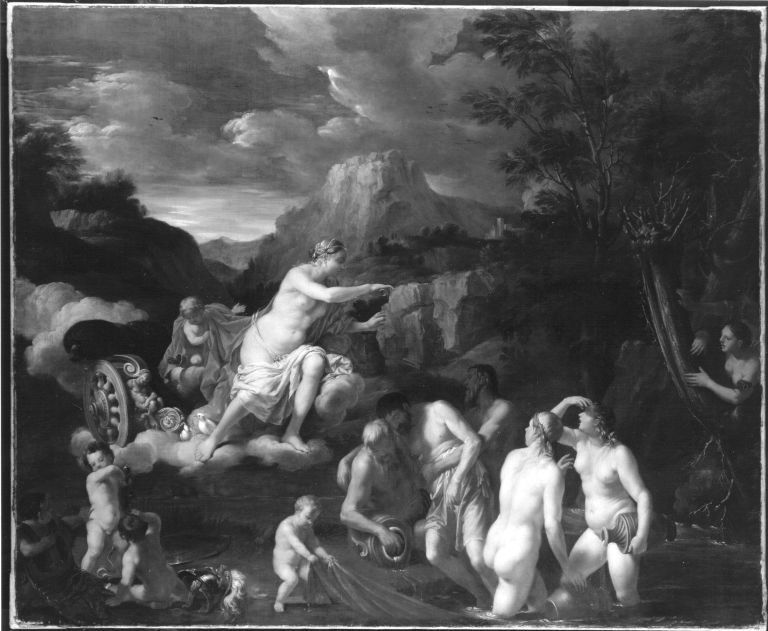
—Why does everyone say you are the ancestor of the Romans?
Good question, my child! It all starts with my son Ascanius, also called Iulus. He founded another city, Alba Longa. And from his descendants, many generations later, the founders of a vast city would be born: Rome. The historian Livy wrote it in his books. Imagine a great tree: I am at the very bottom, at the root, and Rome is the giant trunk growing above. The Romans loved to say they descended from a hero from Troy, son of a goddess. That gave their city a sacred origin. It is a heavy thing, you know, to be the beginning of a people.
I am the root, and Rome the giant trunk growing above.
—There was an emperor who used your story, wasn't there?
Yes, Emperor Augustus, who ruled Rome long after my death. He claimed to be descended from me, and therefore from my mother, the goddess Venus. Can you imagine? Calling yourself a goddess's grandson! It made him almost sacred in the eyes of the people. He asked the poet Virgil to write my story in a great poem, the Aeneid, completed around 29 BC. An epic is a long tale that sings the exploits of a hero. Thanks to this book, my name has crossed the centuries. Sometimes, my child, you become famous not for what you did, but for what others tell about you.
You become famous not for what you did, but for what others tell about you.
—Last question: what did you eat in the morning during the journey?
Oh, nothing grand, my child! In the morning, before anything, I thanked the gods with a small offering — a little wine poured on the ground. Then I had a light meal: barley or wheat bread, sometimes a bit of cheese, and wine mixed with water, never pure in the morning. On the ship, it was even rougher: hard bread, dried fruits, whatever the sea and stops gave us. Imagine always eating standing up, the ground moving under your feet, salt on your lips. We dreamed of a real hot meal, sitting, in peace. That too is exile: being hungry for simple, small things.
That too is exile: being hungry for simple, small things.

This imaginary interview was generated by artificial intelligence from sources documented in Aeneas's profile. It dramatises what the figure might have said based on what we know about them, but does not constitute attested historical testimony. For primary sources and factual documentation, refer to the full profile.