Imaginary interview with Aeneas
by Charactorium · Aeneas · Mythology · 5 min read
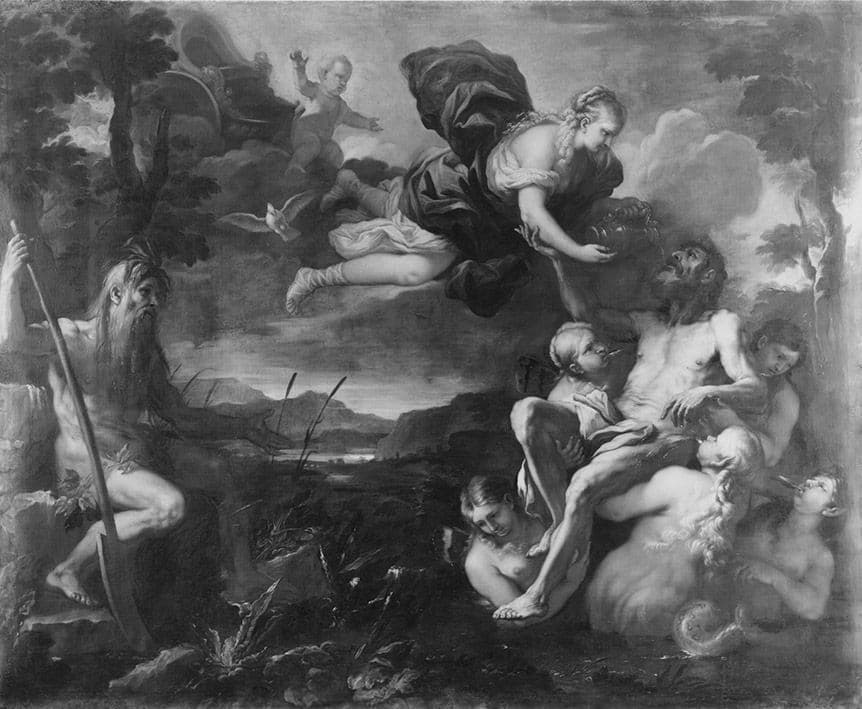
On the shore of Lavinium, where the Trojan fleet finally touched a promised land, a man gazes at the sea that has tossed him so much. His face weathered by ten years of salt and fire, Aeneas agrees to look back on his long exodus, from the fallen walls of Troy to this Latin soil where a destiny greater than himself takes root.
—How did you leave Troy on the night of its fall?
The city burned like a torch thrown into the night, and the Greeks poured out of the belly of their wooden horse. I loaded my old father Anchises onto my shoulders, for his legs could no longer carry him, and I took my little Ascanius by the hand so he would not get lost in the smoke. Everything I am is captured in that image: a son saving his father and his child while the walls collapse. My people call this pietas, the duty owed to the gods, to blood, to ancestors. I took nothing from my coffers, only the household gods and these two lives more precious than the gold of Phrygia.
A son saving his father and his child while the walls collapse.
—Why were you so determined to save Anchises rather than fight to the end?
A man who dies by the sword in a lost city dies twice: for nothing, and without leaving a son to mourn him. My father had raised me on the slopes of Mount Ida, where we Trojans had taken refuge; carrying him on my back was carrying my entire lineage toward what was to come. I am sometimes called Aeneas Anchisiades, the son of Anchises, and this formula is not a mere name: it tells where I come from and to whom I owe loyalty. Abandoning the old man to the flames would have been betraying the gods themselves. A warrior's courage is worth nothing if it forgets respect for the blood from which he springs.
A man who dies by the sword in a lost city dies twice.
—Do you remember your arrival at Carthage?
Neptune's storms had shattered my fleet and cast my ships onto the African coast. There reigned Dido, a builder queen, who welcomed me into her new city when I was a shipwrecked man without a kingdom. I told her of the fall of Troy and my wanderings, and between us was born a sweetness I no longer expected after so many griefs. Carthage could have become my harbor, my journey's end, my rest. But a man like me does not belong to himself: his path is traced elsewhere, and the happiness one tastes by the sea is but a halt, never a home.
The happiness one tastes by the sea is but a halt, never a home.
—How do you justify having abandoned Dido to set sail again?
There is no justice in what I did, only the Fatum, that destiny which the gods write and no mortal can tear. The messengers of Olympus came to remind me that Italy awaited me, that my descendants were to be born there, and that my heart had no say. I had the sails hoisted in the night, and Dido, from atop her walls, cursed me before taking her own life. This pain still follows me like a shadow over the sea. But what can a man do against the divine will? I wept, and I obeyed: that is the full weight of being the instrument of a design greater than one's own life.
I wept, and I obeyed: that is the full weight of being the instrument of a design greater than oneself.
—What would you say about your descent into the Underworld?
At Cumae, I consulted the Sibyl, priestess of Apollo, whose voice echoed from the depths of her cave. She opened for me the path to the world below, beyond the rivers that no living man crosses. I went down for one reason only: to see again the shade of my father Anchises, who died on the way before seeing the promised land. There, among the pale souls, he spoke to me not of the past but of the future: he showed me the heroes yet to be born, the long line of those who would spring from my blood and build a city mistress of the world. No trial changed me as much as this journey through the darkness.
He spoke to me not of the past but of the future, the long line of those who would spring from my blood.
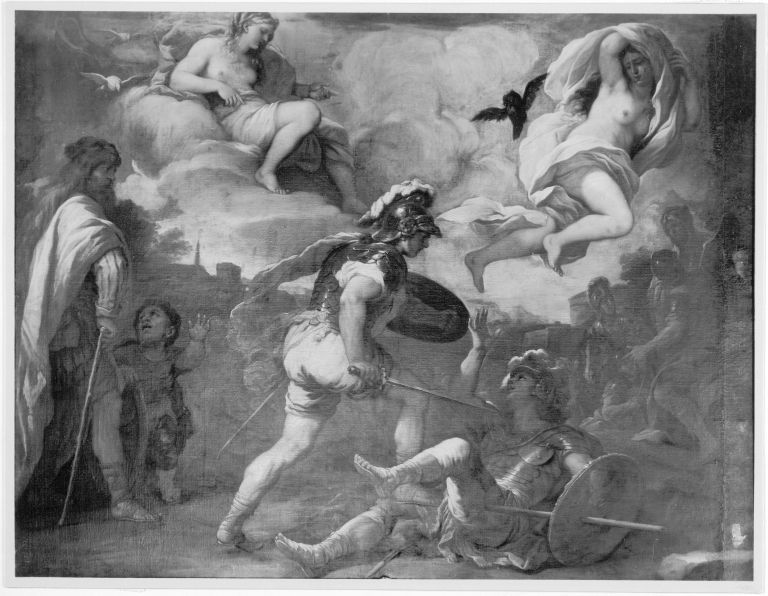
—How did you feel when you learned the destiny of your lineage?
A dizziness at first, then a strange peace. My father Anchises, in the gloom of the Underworld, unrolled before me faces I would never know, kings and conquerors who would carry my blood without bearing my name. I understood then that my wandering was not a punishment but a seed: every storm weathered, every grief, every sail hoisted reluctantly prepared a harvest that others would reap. The Fatum ceased to be a chain and became a promise. People consult oracles to know their fate; I saw a thousand years of future in the eyes of a dead man, and I returned from it with a steadier heart.
My wandering was not a punishment but a seed.
—How did you manage to found a city on this land of Latium?
When my ships at last sailed up the mouth of the Tiber, I knew the prophecy was fulfilled: it was here, and nowhere else, that I was to plant my penates. I founded Lavinium, the first lasting settlement of the Trojans in this land, after so many years of having no homeland but a ship's deck. But no soil is given without a fight: I had to face Turnus and the Italic peoples before peace was established. This modest town, set between the sea and the hills, was not much to look at. Yet I already saw in it the root of a tree whose branches I would never see.
I already saw in it the root of a tree whose branches I would never see.
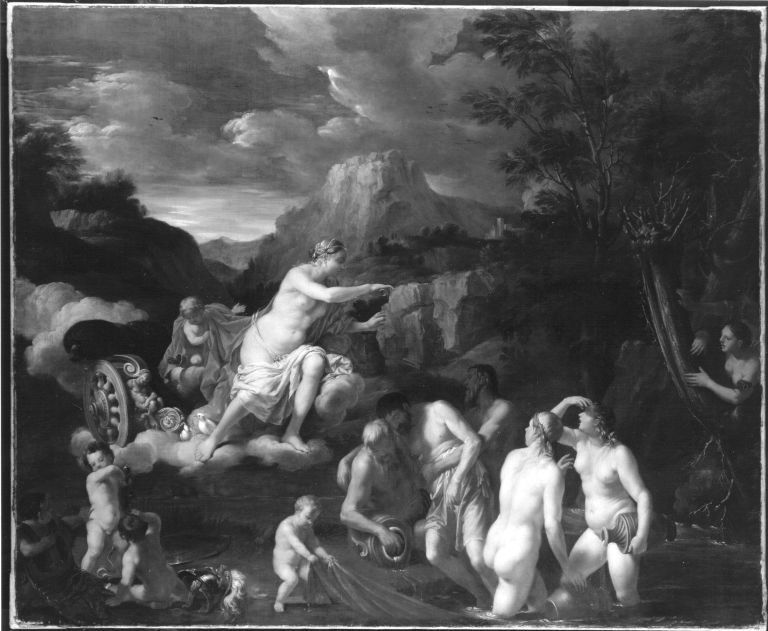
—What meaning do you give to your marriage with Lavinia?
King Latinus gave me his daughter Lavinia, and this union was worth more than a dowry or an alliance between two houses. It sealed the marriage of two peoples: the Trojans who came from the east in flames and the sons of Latium rooted in their soil. From this bed would be born a lineage that would be neither wholly Trojan nor wholly Latin, but something new. My son Ascanius would found Alba Longa, and from that city would come the kings from whom would one day descend the builders of a city on seven hills. I was not just marrying a woman: I was marrying a land, and I was tying the thread of a foundational mythology of which I was only the beginning.
I was not just marrying a woman: I was marrying a land.
—It is said that powerful men would one day claim your blood. What do you think of that?
My mother is Venus, the goddess born from the foam, and that is no small inheritance to pass on. If I could imagine that I would be remembered many generations later, I believe the great ones of this world would want to claim descent from this divine lineage — for tracing back to a goddess is to place one's power under the protection of heaven. A leader who descends from Venus does not rule by force alone: he rules because the gods have willed it so. I do not know what names these men will bear nor what cities they will rule. But I suspect that my piety and my blood will one day serve to legitimize thrones of which I have no idea.
Tracing back to a goddess is to place one's power under the protection of heaven.
—Why should a hero like you remain in the memory of men?
I am not the strongest of warriors: on the walls of Troy, Achilles himself made me retreat, and only a god saved me from his spear. What I bring is not the dazzling glory of victory, but the endurance of one who carries a burden to the end. I saved my father from the flames, crossed the Underworld, renounced love, faced Turnus — not for myself, but for those who would come after. If I am ever sung in an epic, I would like that to be remembered: the hero who endures is not the one who strikes the hardest, but the one who bends under destiny without ever letting go of what he must pass on.
The hero who endures is not the one who strikes the hardest, but the one who bends without ever letting go of what he must pass on.
This imaginary interview was generated by artificial intelligence from sources documented in Aeneas's profile. It dramatises what the figure might have said based on what we know about them, but does not constitute attested historical testimony. For primary sources and factual documentation, refer to the full profile.