Imaginary interview with Epictetus
by Charactorium · Epictetus (50 — 138) · Philosophy · 7 min read
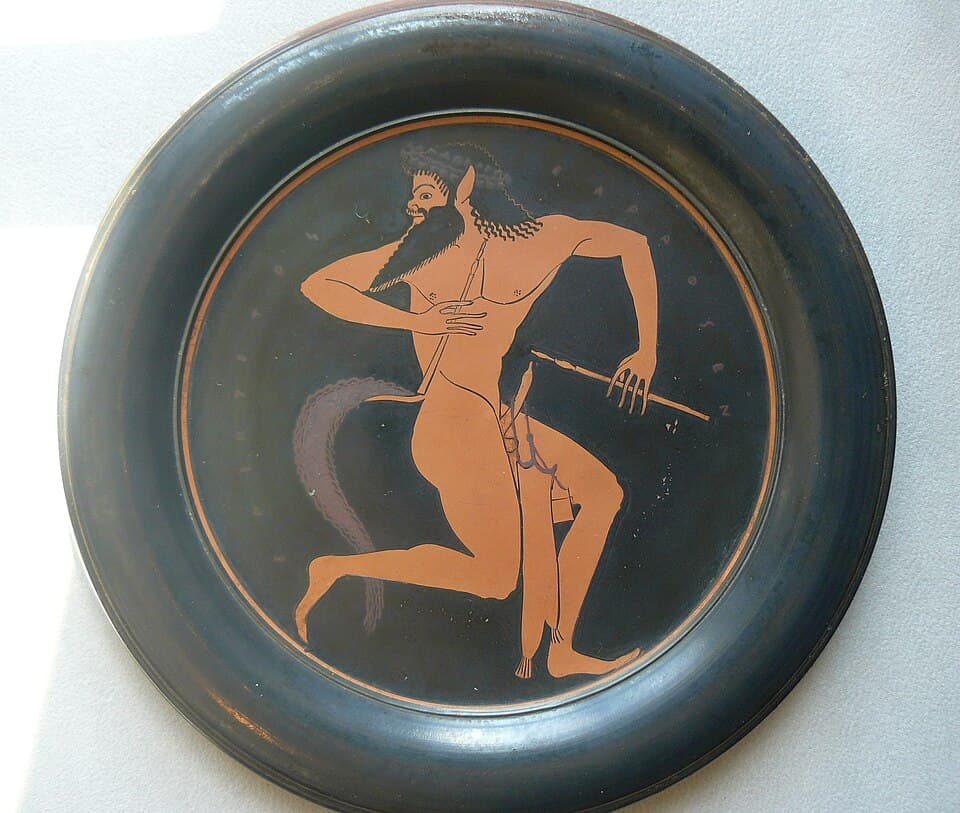
Nicopolis, in Epirus, at dusk on an autumn day. In a house without a lock, furnished with a mat and a lamp, a lame old man receives us, leaning on his staff. He was a slave; he became the master to whom the sons of the Empire come to ask how to become free.
—Do you remember the child you were, where it all began?
I was born in Hierapolis, in Phrygia, in another's house. They gave me the name Epictetus — a name that said what I was: an acquisition, a thing that is owned. My leg, you see it, no longer carries me like others; I walk leaning on this staff, and I am not ashamed. For a man can be chained in body and free within, or walk straight while dragging his chains everywhere. As a child, I knew nothing of logos, that reason which orders the world; I carried water, I obeyed, I was silent. But already I sensed this, which my whole life has only confirmed: one can bind my feet, but cannot bind my judgment. Slavery taught me this better than any free-born master could have done.
—They say your master twisted your leg. What happened that day?
Epaphroditus, my master, was a freedman of Nero who had become powerful at the palace — and power, in one who has not worked on his soul, quickly turns to cruelty. One day, as he amused himself by twisting my leg, I said without raising my voice: “You will break it.” He continued. The bone gave way. And I said only: “I told you so.” One can see something there, if one looks carefully: the pain was in my leg, not in my judgment. He thought he held me entirely; he held only a limb. It is not things that trouble us, but the opinion we have of them. My leg remained stiff; from it comes this staff on which I pace the portico while speaking. I do not curse it. It was my first lesson, and the most lasting.
The pain was in my leg, not in my judgment.
—How did you leave Rome for this Greek city?
Under Domitian, toward the end of his reign, an edict drove philosophers from Rome and Italy. We were regarded as troublemakers, men who asked too many questions and bent the knee poorly before the great. I packed my bag — it was quickly done, I never owned much — and crossed the sea to Nicopolis, in Epirus, that city Augustus had founded to celebrate his victory. Exile? They imposed it on me as a punishment; I made it the place of my school. For here is what depended on me: not to remain in Rome — that was not in my power — but to teach wherever I was thrown. The tyrant could dispose of my body and my steps; he could not take away that for which I breathe. I opened my door to young men from all over the Empire.
—Who truly trained you in philosophy?
Once freed, after the fall of Nero, I became a student of Musonius Rufus, the most demanding of the Stoic teachers in Rome. He sought neither to please us nor to make us admire his turns of phrase. He corrected us harshly, and that was his way of loving us: a philosopher, he said in essence, must feel his faults as the sick man feels the scalpel. I understood from him that the school is not a place of pleasure but an infirmary of the soul — one does not enter it healthy. Before him, I had served Epaphroditus; with him, I became a disciple, which is another form of service, but a willing one. Everything I teach today in Nicopolis, I owe to that rigor I received. One transmits well only what one has oneself learned harshly.
—Where does your teaching begin?
With a distinction, always the same, that I repeat to everyone until it enters the bones. My disciple Arrian placed it at the threshold of that little book called the Manual: “Some things are up to us, and others are not. Up to us are judgment, desire, aversion — in short, all that is our own doing. Not up to us are body, wealth, reputation, power.” Hold this firmly, and you are free. Confuse the two, wish to command what does not obey you, and you are a slave, even on a throne. The Greeks call prohairesis that faculty of choice, the only good that is truly ours. The rest — my leg, my exile, the mood of the powerful — belongs to the course of things.
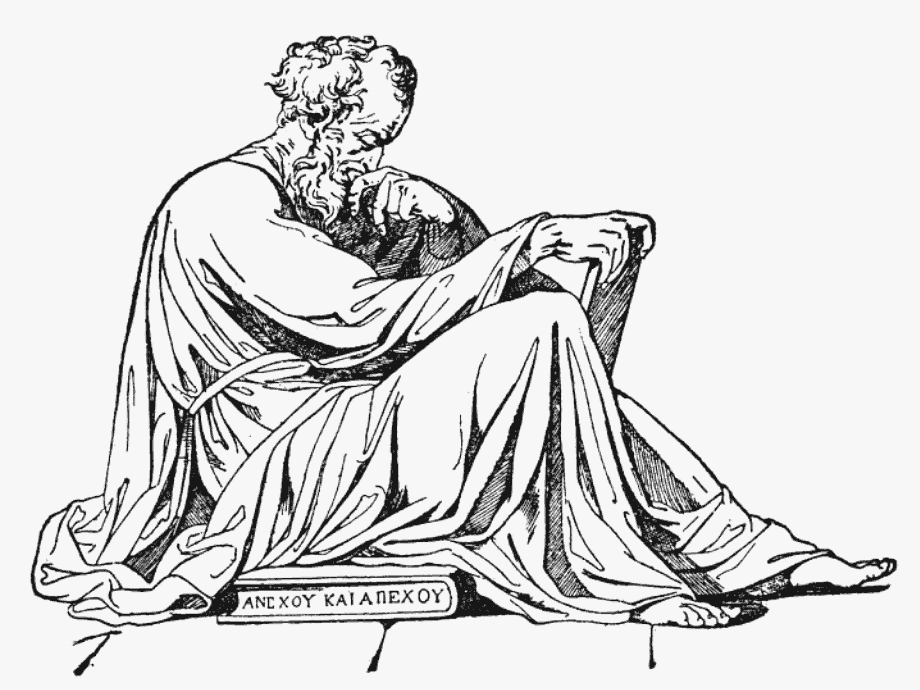
—What, exactly, do you call being free?
I am accustomed to tell my students, and Arrian recorded it in the fourth book of the Discourses: “Free is he who lives as he wishes, who can be neither constrained nor hindered nor forced, whose desires achieve their goal, whose aversions do not encounter what they would avoid.” Now how could you never be constrained, if you desire what depends on another? Desire health, and you tremble before fever; desire honors, and you crawl before those who distribute them. But regulate your desires on what is in your power — your judgment, your right will, what we call the hegemonikon, the ruling part of the soul — and no one will ever hold you. I was a slave in body, and freer then than many a senator draped in purple.
Freedom is not a condition one receives; it is a discipline one exercises.
—They say a thief taught you a lesson. Which one?
I had a small earthenware lamp, placed beside my mat, which I lit in the evening to stay awake. One night, a thief took it away. The next day, I did not make a drama of it: I got another, this time of iron. And I said to myself this, which was worth the lost lamp: I had been robbed because I possessed something that could be. The thief paid for my lamp with a price he does not know — he exchanged a bit of his soul for a bit of clay. I, on the other hand, lost nothing essential. Henceforth, everything that can be taken from me, I hold as a borrowed good, not as my own. That is the whole of enkrateia, self-mastery: not to be attached to what another's hand can reach. An iron lamp suffices to light the man who no longer fears losing it.
—How do you live here, in this house?
Go see it, if you wish: you will soon return. A straw mat to sleep on, a lamp, a few earthen bowls, and that is all. There is no strong lock on my door — why would I put one? One steals only what one covets, and in my house nothing is to be coveted. I eat barley bread, olives, figs, a little goat cheese; I drink water, and wine so watered that it no longer deserves its name. In the morning, I wash with cold water and put on my tribon, that coarse woolen cloak that distinguishes the philosopher. The Romans who come to hear me are astonished at such destitution; they have houses full of furniture and souls full of fears. I did the opposite. The body asks for little; it is opinion that demands palaces.
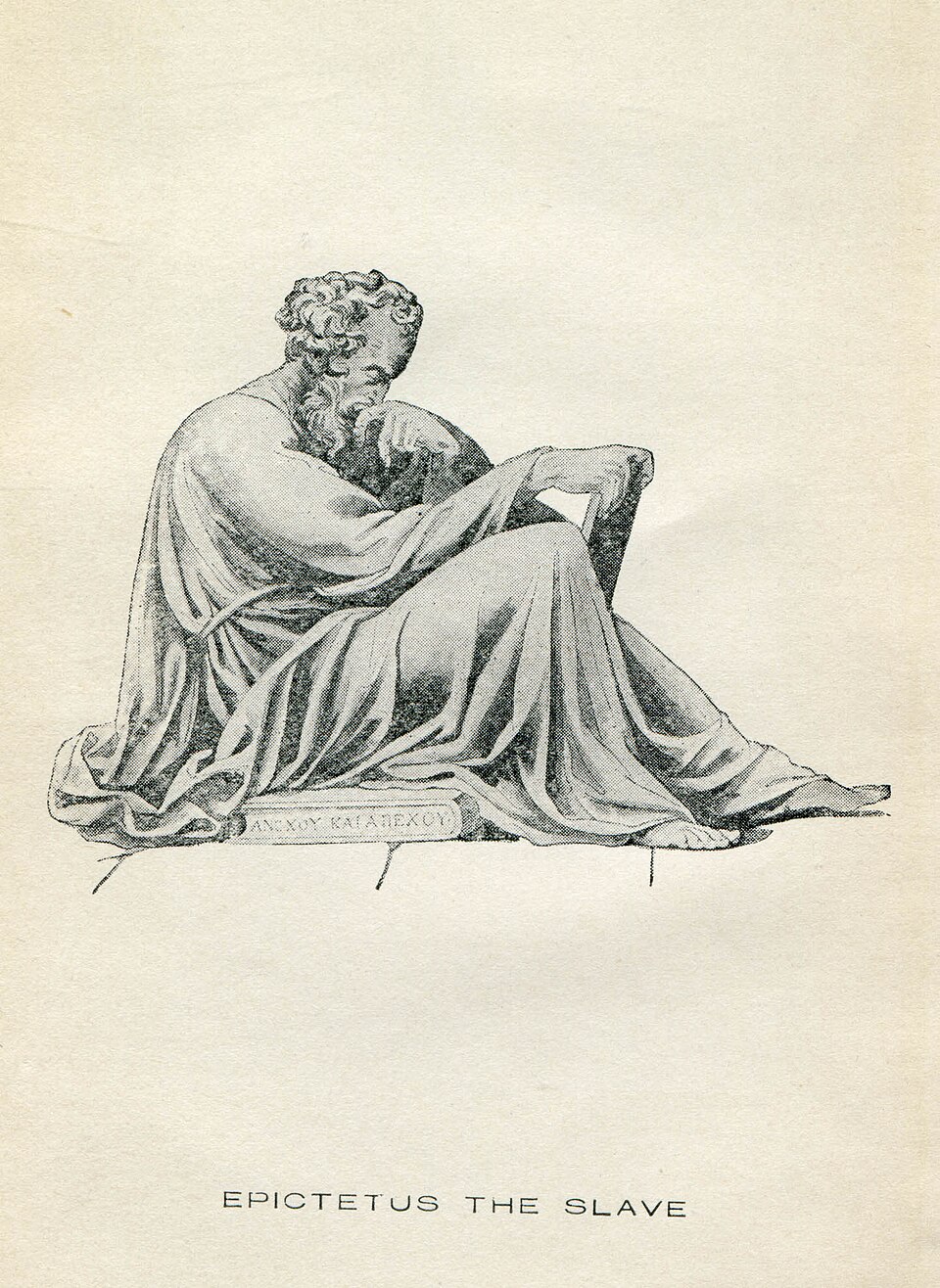
—Why have you never written anything with your own hand?
What use to blacken tablets? Philosophy is not made of books that one shelves, but of actions that one performs. Socrates too wrote nothing, and he remains the master of us all. I speak, I question, I press my students as one presses iron on the anvil — living dialogue strikes sparks that no dead page will produce. What I fear, you see, is the man who can recite beautiful treatises and who, at the first misfortune, laments like the others. What use then is his library? A precept recited without living it resembles a remedy left in its bottle: it cures no one. So I teach by word of mouth, in the manner of a diatribe, those lessons where one reasons while walking under the portico. If something of me must remain, let it be in the conduct of a man, not in ink.
—And yet your words reach us. To whom do we owe that?
To Arrian, that young man from Nicomedia who came to sit among my listeners. He took notes on his wax tablets while I spoke — not to compose a work, he said, but to keep memory of my voice and my way of thinking. It is he who assembled my lessons in the Discourses, then drew from them that summary one carries on oneself, the Manual. Strange destiny: here is a future consul, a governor of Cappadocia, a historian who will recount the campaigns of Alexander, and he spent his youth transcribing the words of an old lame freedman. I had asked nothing of him. If he had not taken the trouble to listen and write, my speech would have died with my breath, like a lamp carried away into the night. What I was unwilling to do for myself, a disciple's affection did.
What I was unwilling to do for myself, a disciple's affection did.
—What do you reply to those who fear death?
I tell them what Arrian recorded in the first book of the Discourses: “It is not things that disturb men, but the judgments they form about things. Thus death is nothing terrible, or else Socrates would have thought it so. But the judgment that death is terrible — that is what is terrible.” Reflect: death will come, whether you fear it or not; your fear adds nothing to it nor takes anything away, except that it spoils your life in advance. When I feel my strength leaving me, here in Nicopolis, I will return this borrowed body as one returns the inn where one has spent the night. I am not its owner, only its guest. The wise man does not resent being asked for what he has only borrowed. To live is to learn to give back — serenely, and at the appointed time.
Read further
This imaginary interview was generated by artificial intelligence from sources documented in Epictetus's profile. It dramatises what the figure might have said based on what we know about them, but does not constitute attested historical testimony. For primary sources and factual documentation, refer to the full profile.