Kids interview Epictetus
by Charactorium · Epictetus (50 — 138) · Philosophy · 5 min read
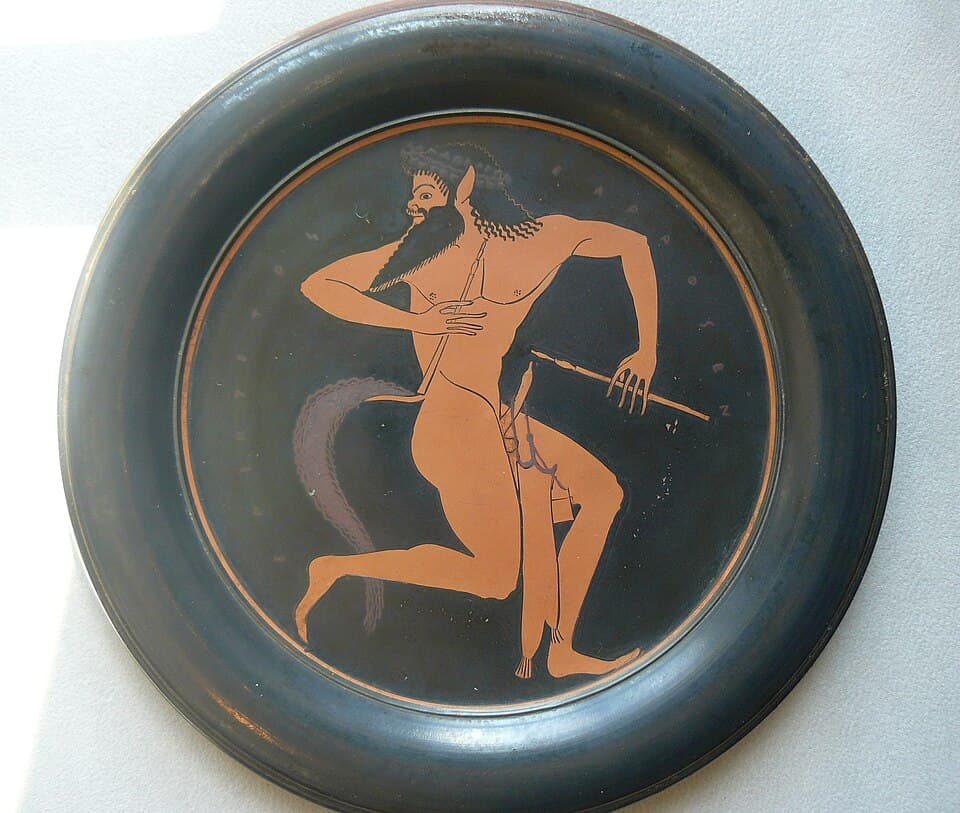
Two young visitors, barely twelve years old, pushed open the door of a small house in Nicopolis. An old man leaning on a crutch waited for them, with a patient smile. He invited them to sit near his lamp and ask all their questions.
—Is it true you were born a slave? What was that like, starting life that way?
Yes, my child. I was born in Hierapolis, in Phrygia, and as a little boy I was sold like an amphora. My master was called Epaphroditus, a powerful man in Rome. Imagine a great marble house where you have no rights, not even to your own time. You obey from morning till night. But you see, I understood something very early: they could chain my body, but never my thoughts. No one can enter your mind without your permission. That's where I began, without knowing it, to become a free man.
They could chain my body, but never my thoughts.
—Why do you limp? Did someone hurt you when you were little?
You have sharp eyes, you do. Yes, I've walked with this crutch for a long time. They say that my master, in a rage one day, was twisting my leg. I looked at him without crying and said calmly: 'You are going to break it.' When the bone gave way, I only added: 'I warned you.' It wasn't pride, you know. It was my way of showing that pain can grip the body without reaching the heart. A damaged leg is nothing much. A soul that panics over nothing—that is the real misfortune.
Pain grips the body, never the heart.
—What did your home smell like? Did you have nice things in your house?
Come and see, it's quick! A straw mat spread on the floor to sleep on, a water jar, and my lamp. It smells of oil and the wool of my old cloak, the tribon, that short, worn cloak that philosophers wear. No carpets, no gold. Do you know why? Because every object you own is one more little fear: fear it will be stolen, fear of losing it. I want to sleep peacefully. In the morning, I wash with cold water, and I'm ready. Light as air.
Every object you own is one more little fear.
—And your door has no lock? Aren't you afraid of being robbed at night?
Ah, it's happened to me! One evening, someone stole my clay lamp. The finest thing I had. The next day, I found an iron one, and I said to myself laughing: I lost my lamp because I owned something stealable! The thief, for his part, gained a lamp and lost a bit of his honor. I lost nothing important. For dinner, barley bread, a few olives, some figs, water. With so few needs, my child, there is almost nothing they can take from you.
I lost my lamp because I owned something stealable.
—I've heard you never wrote a book. Is that true? Why?
That's quite true, and it surprises you! I never took up the pen. You see, I taught like Socrates: by talking, by discussing, by asking a thousand questions. Philosophy, for me, is not ink on papyrus; it is a living word between you and me, right now. But I was lucky. A brilliant student, Arrian, took notes on his wax tablets during my lessons. Without him, everything would have vanished like smoke. The Discourses, the Enchiridion—he saved them. A master speaks, a disciple writes: that is how a voice crosses the centuries.
Philosophy is not ink; it is a living word.
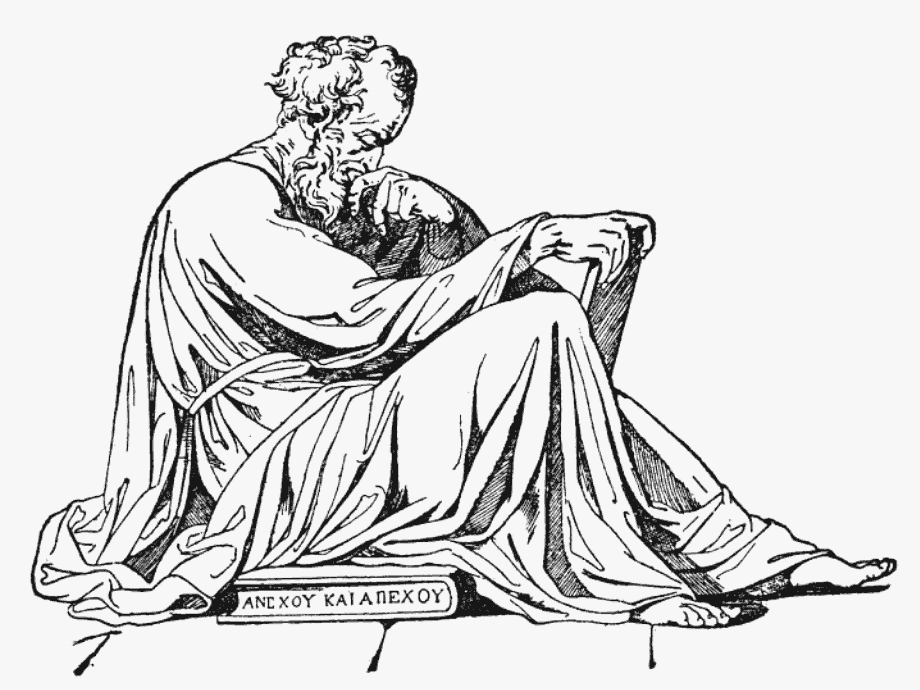
—What were your classes like? Did you sit and talk all day?
Oh no, I moved around a lot! In the afternoon, I paced the portico of my school in Nicopolis, my crutch in hand, and I spoke to my students as I am speaking to you. But mind you, I did not recite lessons. I asked questions, I gently challenged them, I took examples from everyday life: a journey, a meal, a broken amphora. In the morning, before all that, I did a quiet examination of myself. And in the evening, I asked myself: what have I done well today? Where have I fallen short? Learning, my child, is first of all looking at yourself.
—What is the most important thing you wanted to teach us?
Listen carefully, it's very simple, and it fits in one sentence. In life, there are things that depend on us and others that do not. What depends on you: your judgments, your desires, your choices. That is your treasure; we call it prohairesis, your inner freedom. What does not depend on you: your body, money, fame, the weather. Misfortune is to fuss over the second pile. Imagine a child crying because he cannot catch the moon. Sad for nothing! Tend to what is within your reach, and you will be peaceful.
There is what depends on you, and all the rest.
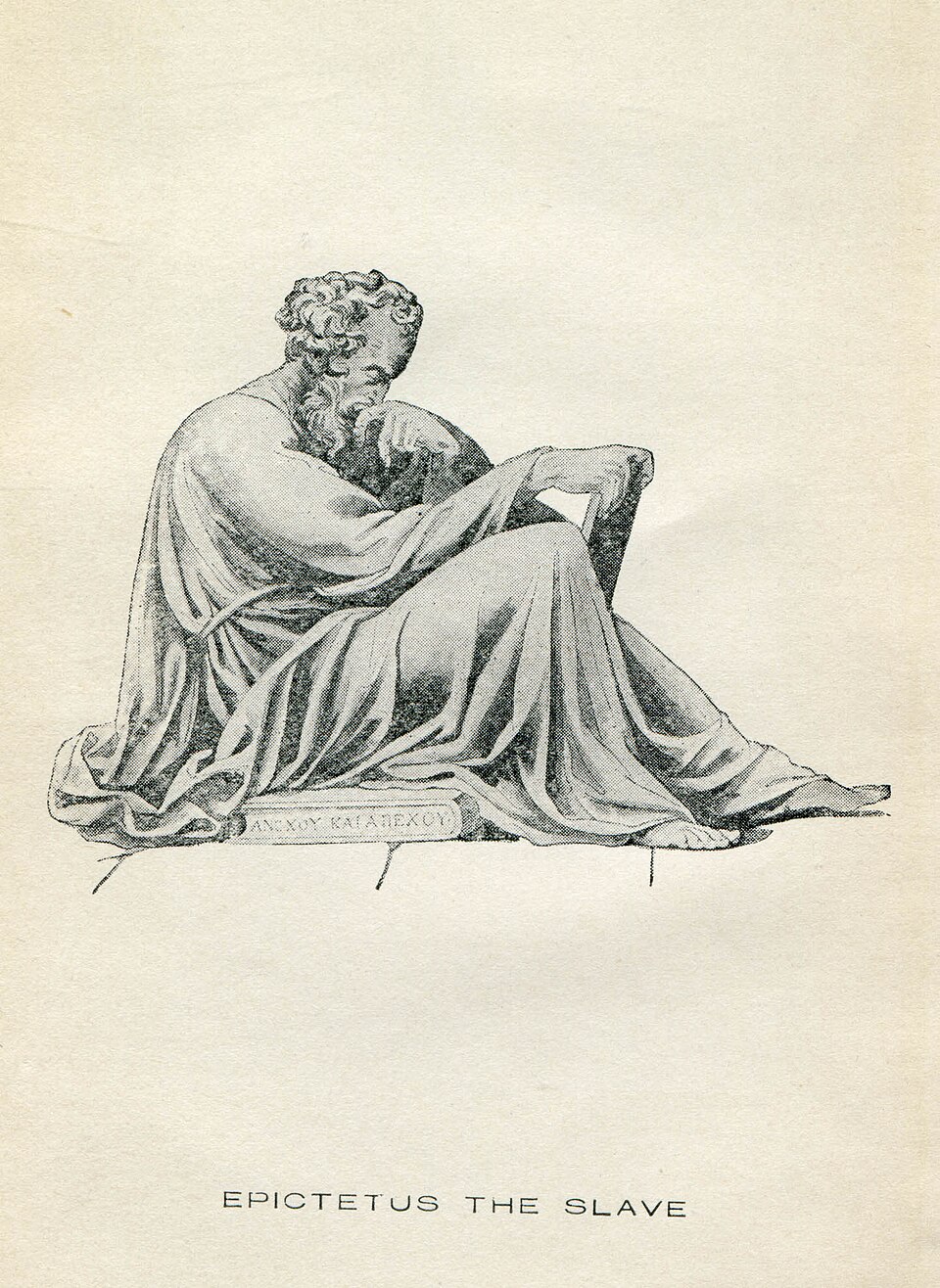
—But then, when you're very afraid of something, what do you do?
Good question, truly. You know, it is not things that frighten you, but the idea you have of them. Take a storm at night: the thunder does you no harm; it is the story you tell yourself in the dark that terrifies you. Death itself is nothing dreadful; it is what we think of it that chills the blood. So when fear rises, stop and ask: 'Does this depend on me?' If yes, act. If no, let go and breathe. Little by little, my child, you become master of your own heart.
It is not things that frighten you, but the idea you have of them.
—Is it true you were banished from Rome? Were you sad to leave?
Banished, yes! Emperor Domitian did not like philosophers: he thought we asked too many awkward questions. Around the year 90, he banished us all from Rome. So I left for Greece, to Nicopolis, by the sea. Sad? Not really, you know. They were tearing me from a city, not from my freedom to think. A tyrant can exile you from your country, but never from yourself. And look at the result: it was in this exile that I founded my school, and students came from all over the Empire. Sometimes, what seems like a punishment becomes the most beautiful path.
A tyrant can exile you from your city, but never from yourself.
—And is it true an emperor read you? How did that make you feel, a former slave?
That is one of the most astonishing things in my story. Long after me, an emperor named Marcus Aurelius, the most powerful man in the world, read my lessons. Someone had given him a copy, and he kept it carefully. Imagine: a lame former slave becoming, without intending to, the spiritual guide of an emperor! That proves something I really like. Wisdom does not care whether you were born a slave or a king. It knocks at every door. You too, my child, wherever you were born, can become free in your mind. And that, no one can ever take from you.
Wisdom does not care whether you were born a slave or a king.
Read further
This imaginary interview was generated by artificial intelligence from sources documented in Epictetus's profile. It dramatises what the figure might have said based on what we know about them, but does not constitute attested historical testimony. For primary sources and factual documentation, refer to the full profile.