Kids interview Euripides
by Charactorium · Euripides (480 av. J.-C. — 406 av. J.-C.) · Literature · 5 min read
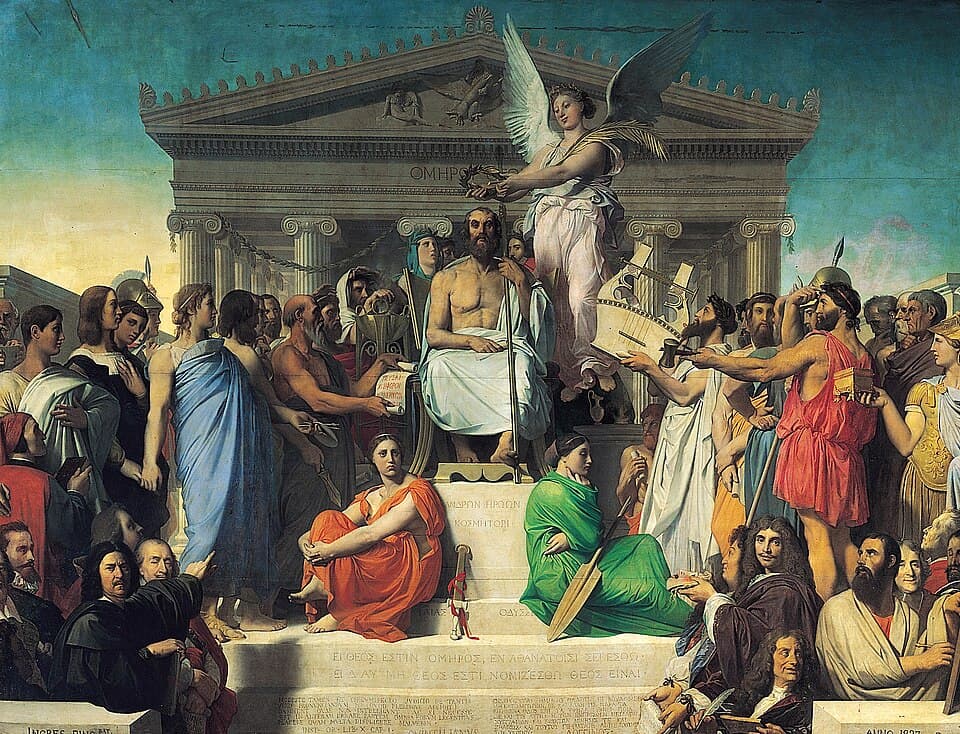
Two twelve-year-old students, on a field trip, climbed the hill to the Theater of Dionysus. There, sitting on a warm stone, an old man with a thick beard was waiting for them. It is Euripides, and he has all the time in the world for them.
—What was your home like when you wrote your plays in the morning?
My home was simple, my child. Walls of sun-dried brick on stone foundations, a small courtyard in the middle with an altar. Few pieces of furniture: a bed, chests, a few stools. But I had a treasure: a library full of papyrus rolls. In my time, that was rare; almost no one owned so many. In the morning, I rose at daybreak. I dipped some barley bread in watered wine, ate a few figs, and used the light to write. Imagine a silent room, just the scratching of the stylus. It was in that calm that my heroines were born.
A library full of rolls – that was my real treasure.
—They say you wrote in a cave. Why did you hide there?
Ah, you’ve heard that story! They say I used to retreat to a cave on the island of Salamis, facing the sea. That’s where I was supposedly born, on the day of a great battle. Why that cave? Because Athens was noisy, full of shouts, merchants, arguments in the Agora. I needed silence to hear my characters speak. Imagine: before you, only the moving water and the wind. Behind you, the cool shade of stone. With my stylus and wax tablet, I sketched dialogues, alone. They thought I was unsociable. In truth, I was listening.
I needed silence to hear my characters speak.
—Is it true you made gods descend through the air? How?
Yes! And it’s a beautiful machine. It was called the mèkhanè, a large wooden crane placed behind the scenery. With a system of pulleys, we lifted an actor playing a god, and presto, he appeared above the stage, as if suspended in the sky. The spectators were breathless. I used it so often that it gave rise to an expression: the god lowered by machine. In my time, you see, people believed that gods could appear at any moment in human life. My crane was my way of showing it for real.
A god descending from the sky – that was my wooden crane and pulleys.
—Why did you choose to put women at the center of your plays?
Because no one listened to them, my child. On stage, before me, heroes were mostly men, kings, warriors. I wanted to give a voice to those who were silenced. In Medea, my heroine is a wife betrayed by Jason, and she says something terrible and true: “Of all creatures that have life and thought, we women are the most miserable race.” Imagine the silence in the Theater of Dionysus when seventeen thousand people heard that. Some were shocked. But many, especially mothers, recognized their own lives in those words.
I wanted to give a voice to those who were silenced.
—Your heroines sometimes do horrible things. Did you hate them or love them?
I loved them, precisely because they were neither all good nor all evil. Like us. Take Hecuba, the old queen of Troy. In my play, she loses her children, her city, everything. And from a broken mother, she becomes a terrible avenger. Do we judge her? Or do we understand her? I showed the pain that transforms a heart. I never told the audience what to think. I held up a mirror. A wounded woman is not a monster: she is a human pushed to the edge. That is what I wanted my audience to feel, deep in their gut.
My heroines were neither all good nor all evil — like us.
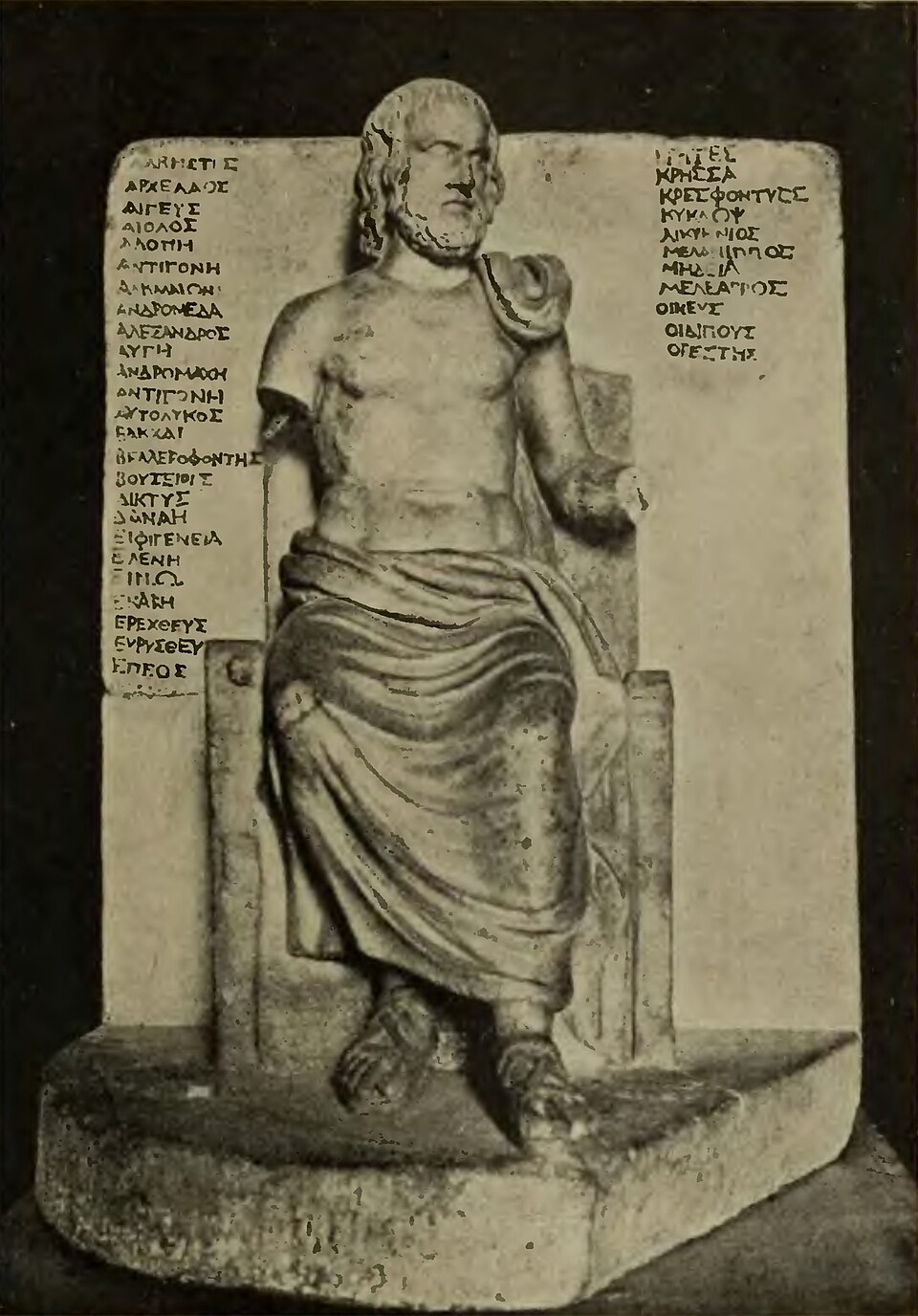
—You lived during a war? Did that affect your plays?
Yes, a long and cruel war between Athens and Sparta. It began the very year of my Medea. For years, we saw young men leave who never returned. So I wrote The Trojan Women. I don’t show glorious battles, no. I show women after the fall of their city, being led into slavery, weeping for their dead. In my time, it was bold to say that in the midst of war. Imagine a poet who, instead of singing the victors, shows you the tears of the vanquished. For me, theater was also meant to open eyes.
Instead of singing the victors, I showed the tears of the vanquished.
—Why did you leave Athens far behind at the end of your life?
You know, I was old and tired of the city. Athens had mocked me a lot, and the war dragged on. So, toward the end, I accepted the invitation of King Archelaus and left for Pella, in Macedonia, far to the north. There, I was respected, left to write in peace. It was in that distant land that I composed my last plays, including The Bacchae. Imagine an old man leaving his homeland, his language, his habits, to finally find calm. I died there, far from home, in 406 BC. But my words, they remained.
I left my homeland to finally find peace.
—Did you win many prizes for your tragedies?
Ah, that question stings a bit! No, my child. In my lifetime, I won only four times at the great contests, the Great Dionysia. My rival Sophocles, he won eighteen. Eighteen! Can you imagine how discouraging that was? The public didn’t always like my new ideas, my too-lively women, my too-human heroes. I was often ahead of my time, and being ahead costs dearly. But you see, I learned one thing: a prize of a day does not tell the value of a work. What matters is what remains when the contest is forgotten.
A prize of a day does not tell the value of a work.
—And after your death, what happened to your plays?
There, the beautiful surprise. After my death, my son presented my last tragedies, including The Bacchae and Iphigenia at Aulis. And guess what? They won the first prize, in 405 BC! A fifth victory, which I never saw with my own eyes. It’s sad and beautiful at the same time. Imagine: they snub you all your life, and the day you are gone, they finally crown you. My plays, which were rarely performed, became the most loved in the world. Medea is still performed, centuries later. Patience always eventually overcomes contempt.
They snub me all my life, and the day I leave, they crown me.
—If only one thing is remembered of you, what would it be?
What a beautiful question to end with. If you remember only one thing, remember this. The comic poet Aristophanes, who nevertheless mocked me a lot, summed up my life in a phrase he put in my mouth: “I made tragedy democratic: I made the woman, the slave, the master, the young girl, and the old woman speak.” There you have it. Before me, the stage belonged to the great. I opened the door to all the others, those who were never listened to. Whether you are a slave, a woman, or an elder, your pain deserved to be told. If my words help you listen to those who are unheard, then I have not written in vain.
I opened the stage to all those who were never listened to.
This imaginary interview was generated by artificial intelligence from sources documented in Euripides's profile. It dramatises what the figure might have said based on what we know about them, but does not constitute attested historical testimony. For primary sources and factual documentation, refer to the full profile.