Imaginary dialogue between Archélaos de Macédoine and Euripides
by Charactorium · Euripides (480 av. J.-C. — 406 av. J.-C.) · Literature · 5 min read
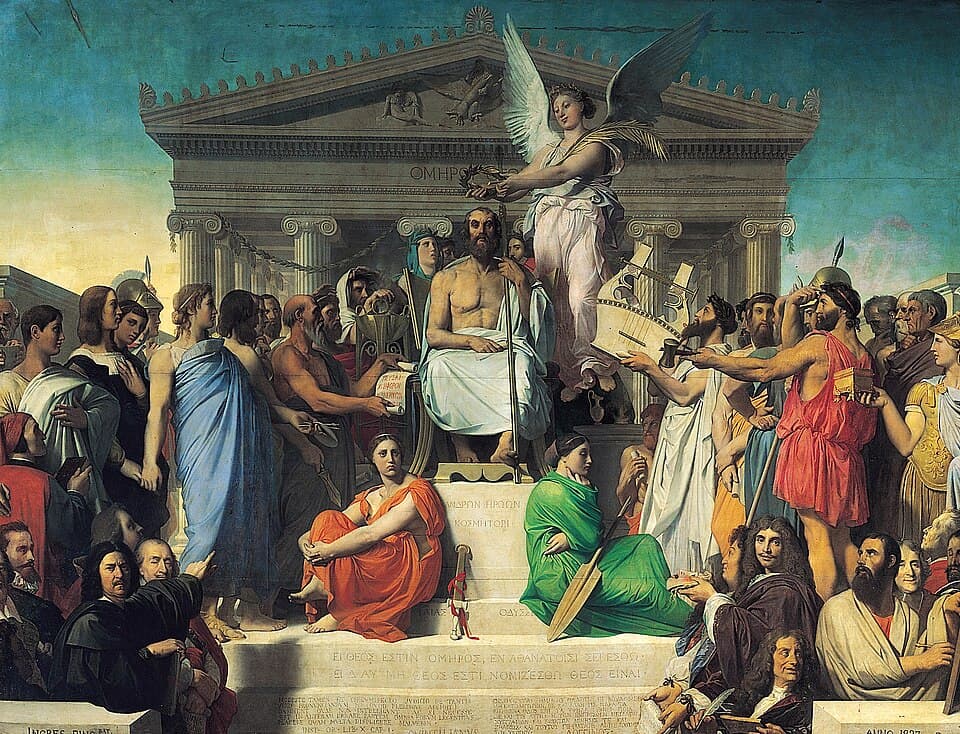
It is under the portico of the palace of Pella, in this year 407 BC, that King Archelaus meets his aging guest. The evening light glides over the papyrus rolls set beside a krater of wine cut with water, and in the distance one hears the barking of the royal pack. For months now Euripides has left Athens for the Macedonian court, and the king, who loves him as much as he admires him, comes this evening to hear him speak of his art, his solitude, and his bitterness.
—Euripides, my friend, ever since you lodged with me I hear you making bereaved women speak. Why this obsession of yours with giving them voice on stage?
King, you welcome me at your table and can therefore tell me plainly. When I put into Medea's mouth that we women are the most wretched race, Athens murmured. Yet who suffers more than she? Bought for a price, delivered to a master, repudiated for a more advantageous match. I wanted her anger to be heard, not as a monster, but as a wounded soul who reasons. With my old Hecuba too, I showed how pain turns a queen into an avenger. I am reproached for having made the woman, the slave, the old servant speak. I claim it: tragedy does not belong only to kings and heroes.
Tragedy does not belong only to kings and heroes.
—I am told that on Salamis you used to withdraw alone into a cave facing the sea. Do you find that same isolation here, in the calm of my Macedonia?
You have heard rightly, and you understand me better than Athens ever did. On my island, I had formed the habit of fleeing the tumult of the agora to write facing the gulf, alone with my rolls. I was taken for a misanthrope; I was merely a man who needs silence to hear his characters. Here, in your palace, I have found that peace again: no competition to fear every spring, no crowd to win over the next day. My library follows me everywhere, and it is she, more than banquets, who is my true company. Believe me, a poet has less need of applause than of a lamp and a closed door.
A poet has less need of applause than of a lamp and a closed door.
—You wrote The Trojan Women while Athens was launching her fleet toward Sicily. Were you not afraid, in the midst of war, to show your people the face of the vanquished?
Afraid, yes, but silence would have cost me more. While my city was drunk with her expedition, I set on stage the women of Troy, shared booty, mothers stripped of their sons. I did not show the glory of the victors, but the chains of the captives. Among mortals, I made them say, no one is free: one is slave to money, another to fate. Later, with Iphigenia in Aulis, I asked what price military glory is worth when a father slaughters his daughter so that the sails may swell. You who command armies, you know that every victory is paid for in tears that are never counted. The Peloponnesian War devoured my youth and that of Athens.
I did not show the glory of the victors, but the chains of the captives.
—Only four victories at the Great Dionysia, when Sophocles counts eighteen. Is this recognition that Athens denied you also why you came to me?
You touch where the wound is still fresh, and I will not hide it from you. Yes, four crowns in a whole lifetime, while my rival harvested them by the dozen. The judges loved flawless heroes; I gave them men who doubt, gods who are questioned. And Aristophanes, in his comedies, made the crowd laugh at my expense, mocking my supposed greengrocer mother, my heroes in rags. One can be famous and unloved, my king: all Athens knew my verses, but the agôn snubbed me. So when you opened your court to me, I saw there a rest that my homeland did not grant me. Whether the crowns come or not, from now on matters little to me.
One can be famous and unloved: all Athens knew my verses, but the agôn snubbed me.
—Here, in the evening, you speak to me of Anaxagoras and those Sophists you used to frequent at the agora. Yet you still have your gods descend by the crane. Do you truly believe in those gods?
A fine question from a king who has seen me doubt by the fireside. I used the mēkhanē so often that people joke about it: a god appears in the air and unties the plot. But do not be mistaken — that crane is also my irony. By frequenting Anaxagoras, who said the sun was a burning stone, and the Sophists who weighed every belief, I learned to look at the gods with a troubled eye. In The Bacchae, which I am finishing under your roof, I show Dionysus crushing the king who denies him: neither naive piety nor contempt. Reason cannot do everything, and irrational forces watch. I leave it to the spectator to tremble and to reflect.
Reason cannot do everything, and irrational forces watch.
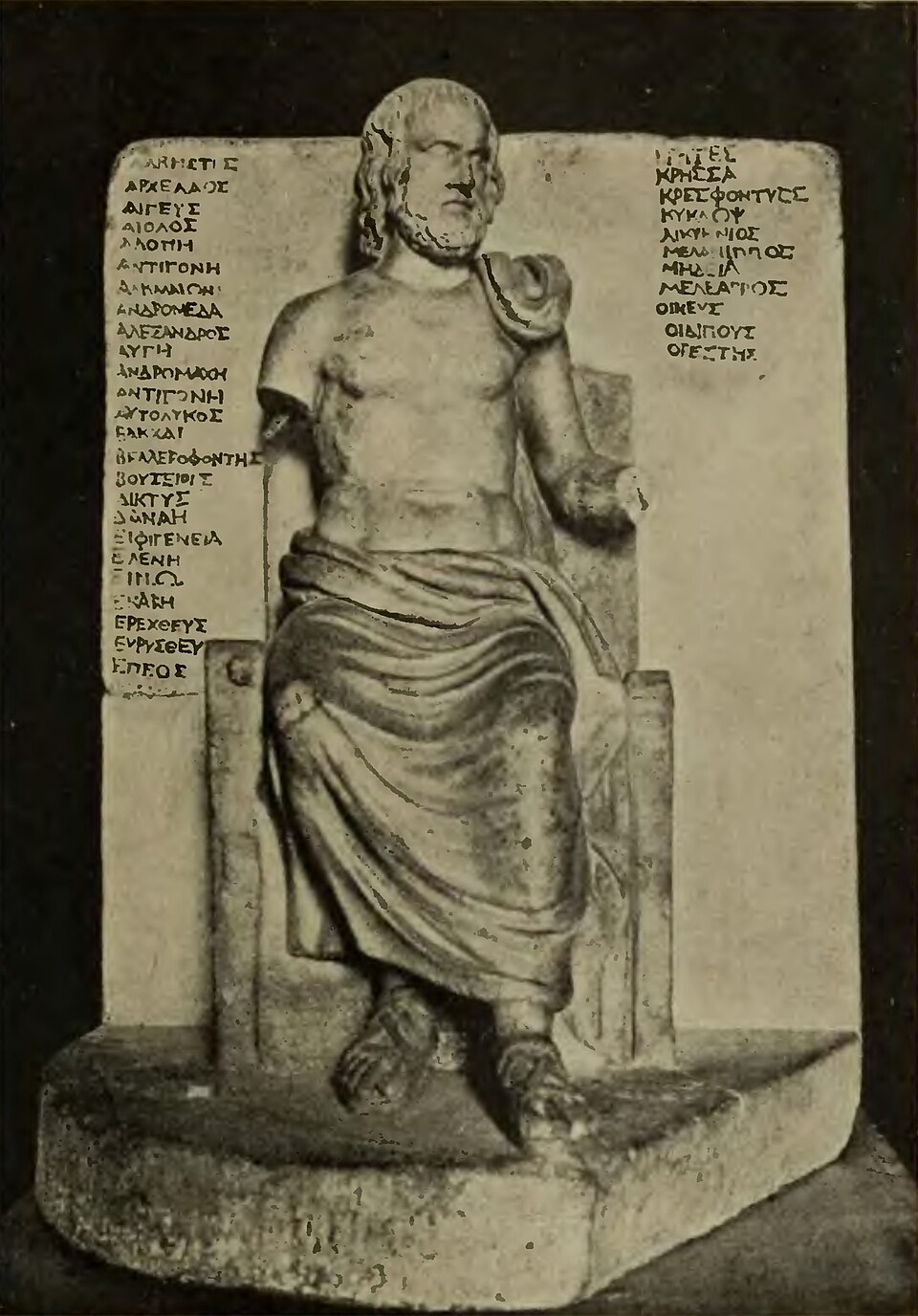
—When you make your heroines reason like philosophers, are you not afraid that you, too, will be reproached for putting too much of yourself into their mouths?
I have been reproached for it, and you can judge whether they are wrong. Phaedra in Hippolytus weighs her passion as one weighs a crime, lucid even in her madness. Medea deliberates before striking, torn between her fury and her motherly love. These are not puppets of fate: they are souls who debate, as we debate in the agora. If I put thought into them, it is because I believe woman is as capable of reasoning as man — an idea my fellow citizens digested poorly. Hippolytus nonetheless earned me one of my rare crowns. Proof that depth, sometimes, finally touches even those who are wary of it.
These are not puppets of fate: they are souls who debate.
—You who left Athens at war, do you regret having so often shown your people misfortune rather than singing their triumphs?
Regret? No, but the weight is heavy, and you are well placed to hear it, you who govern men. I saw Athens pass from the pride of Salamis to the debacle of Sicily, and each disaster confirmed what my verses had sensed. A poet is not there to flatter the city, but to hold up a mirror, even when the image hurts. My Trojan Women did not stop the ships, I know. Yet, years later, they may be remembered when the victory songs are forgotten. The pain of the vanquished tells the truth of war better than the trophies of the victors.
A poet is not there to flatter the city, but to hold up a mirror.
—Before coming to my table in the evening, you always return to your rolls. Tell me, my guest, how is a tragedy born in that silence you cherish so much?
It is born slowly, and alone. In the morning, in the clear light, I reread the old myths on my papyri; I look for the fault through which the human breaks through under the hero. In the afternoon, if need be, I rehearse with the actors, I listen to whether the speech stands upright. But it is in the evening, when the palace calms down and your pack finally falls silent, that the voices truly come to me. On a wax tablet I sketch a dialogue, I erase it, I start again, before entrusting it to papyrus. The Bacchae was born thus, under your roof, by lamplight. Writing is listening to the dead speak until they consent to say what they kept silent.
Writing is listening to the dead speak until they consent to say what they kept silent.
—In The Bacchae that you compose here, King Pentheus perishes for having denied the god. Is this a warning you address to me, who rules?
Take it as you will, friend — I do not write to give lessons to kings. Pentheus scorns Dionysus, refuses intoxication and ecstasy, wants to subject everything to his sovereign reason. And the god tears him apart through the hands of his own mother, possessed. It is not that I condemn reason: I love it, you know, I who have debated so much with the Sophists. But the man who thinks he can tame all the forces of life prepares a punishment for himself. Hubris, that excess, undoes the greatest. I only say that one must leave room for what transcends us, otherwise that part takes everything back.
The man who thinks he can tame all the forces of life prepares a punishment for himself.
—If your plays survived you, Euripides, what would you want to be remembered from them — you whom Athens so harassed during your lifetime?
There is a thought I dare to form only with a trusted friend. I do not know what time will keep of me; the judges crowned me so little that I distrust prophecies of glory. Yet, if something remains, I would like it to be this: that I gave voice to those who were not listened to, the woman, the slave, the vanquished. That I did not paint docile gods or spotless heroes, but men who doubt and suffer. Athens preferred Sophocles to me, so be it. But Medea is performed from one end of the Greek world to the other, and that, no jury can take from me. The rest belongs to the living whom I will not know.
I gave voice to those who were not listened to: the woman, the slave, the vanquished.
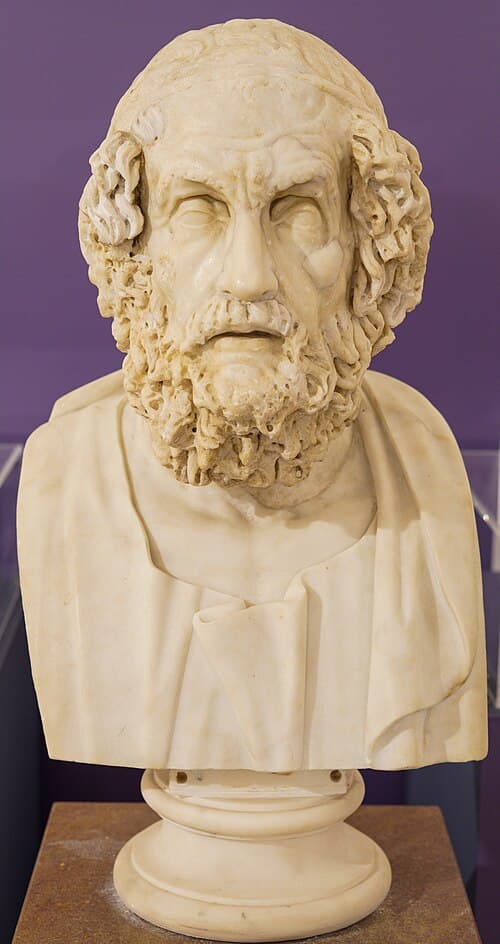
This imaginary interview was generated by artificial intelligence from sources documented in Euripides's profile. It dramatises what the figure might have said based on what we know about them, but does not constitute attested historical testimony. For primary sources and factual documentation, refer to the full profile.