Imaginary interview with Fan Bingbing
by Charactorium · Fan Bingbing (1981 — ?) · Performing Arts · Culture · 5 min read
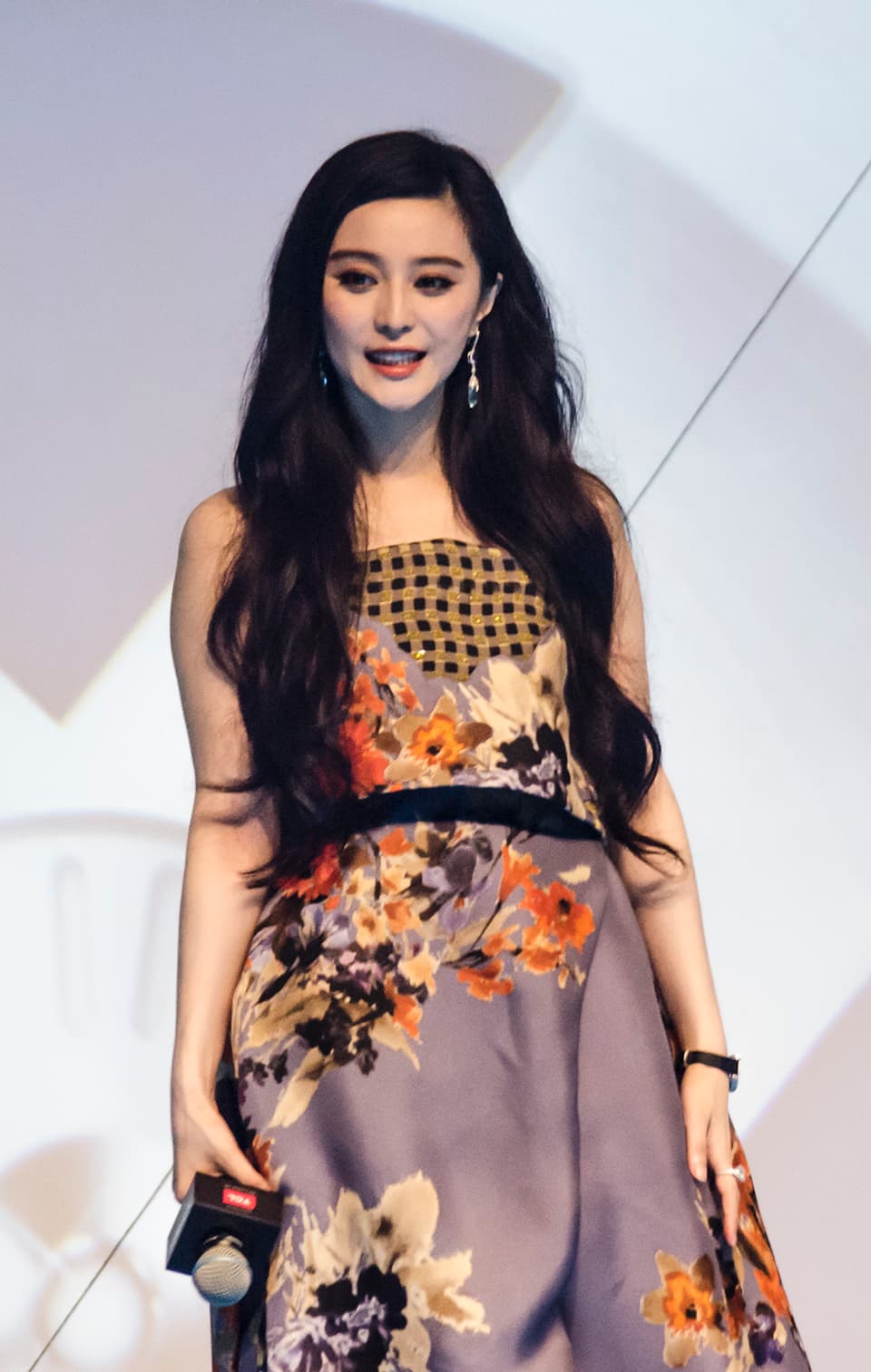
A hushed lounge in a Beijing hotel, nightfall. Far from the spotlights that made her legend and the cameras that once erased her, Fan Bingbing receives without makeup, a steaming pot of goji berry tea on the coffee table. She speaks slowly, like someone unfolding after a long shoot.
—How does a teenager become, almost overnight, a face that hundreds of millions of households recognize?
I was seventeen and all I thought about was not stumbling over my lines. They had given me Jin Suo, the maid — not the princess, not the heroine, the girl who brings tea and lowers her eyes. In My Fair Princess, I was at the edge of the frame, but the frame itself entered four hundred million homes at once. You can't imagine what it's like to walk down a provincial street and see strangers call you by a character's name. I understood very early that the Chinese public doesn't just like an actress: it adopts her, it carries her, and one day it can also drop her. That maid gave me everything, and she taught me to be wary of everything.
The Chinese public doesn't just like an actress: it adopts her, it carries her, and one day it can also drop her.
—Going from that maid to an empress who actually ruled China — what does that change for an actress?
Portraying Wu Zetian in The Imperial Concubine meant touching the only woman who held China's throne not behind a man, but in his place. I spent four hours under wigs and court embroidery before the first shot, and when I finally lifted my head, it was no longer quite me. Then censorship stepped in. The NRTA, our radio and television administration, deemed certain necklines too suggestive; they reframed, tightened the image on faces, and the series returned to air stripped of its flesh. I found it both cruel and instructive: even an empress, in our country, must pass under the state's scissors.
Even an empress, in our country, must pass under the state's scissors.
—In 2014, you entered an American blockbuster. What did that mutant role in X-Men really represent?
Blink, the mutant who opens portals from one place to another — I still smile at the irony of the symbol. In Los Angeles, on that set where we shot X-Men: Days of Future Past, I knew exactly why I was there. It wasn't just my acting they wanted: it was the piàofáng, the Chinese box office, which had become so dizzying that no American studio could ignore it anymore. Hollywood needed a face that my country would recognize, and that face, that month, was mine. I created portals on screen; in reality, my name was the portal. It didn't humiliate me — it made me measure, very concretely, what weight a billion viewers can throw into the balance of the world's largest industry.
I created portals on screen; in reality, my name was the portal.
—Would you say then that Chinese cinema has become a form of power in itself?
People talk a lot about soft power, that gentle strength that needs neither armies nor sanctions. When I sat on the jury of the Cannes Film Festival in 2017, under the presidency of Pedro Almodóvar, I felt that I wasn't just an invited actress: I represented something bigger than myself, the rise of an Asian cinema that no longer asked permission to exist. The globalization of cinema wasn't just a flow of money; it was a battle of stories, faces, languages on world screens. I carried that with pride, without naivety either: a star can be a flag, and a flag can be raised as easily as it can be lowered.
A star can be a flag, and a flag can be raised as easily as it can be lowered.
—There was talk of a "Fan Bingbing effect" on fashion and consumption. What did that power cover?
I only had to wear a jacket, a pair of earrings, and a few hours later the online shelves were empty. They called it "the Fan Bingbing effect," and I admit the phenomenon somewhat exceeded me. I had become what we call a wǎnghóng, an internet celebrity, a KOL — a key opinion leader that brands fought over. On my Weibo, over sixty million people read each of my photos like a recommendation. The line between the actress and the merchant of desire had dissolved without my noticing. It was exhilarating and vaguely unsettling: my body, my outfits, my mere taste had become currency.
My body, my outfits, my mere taste had become currency.
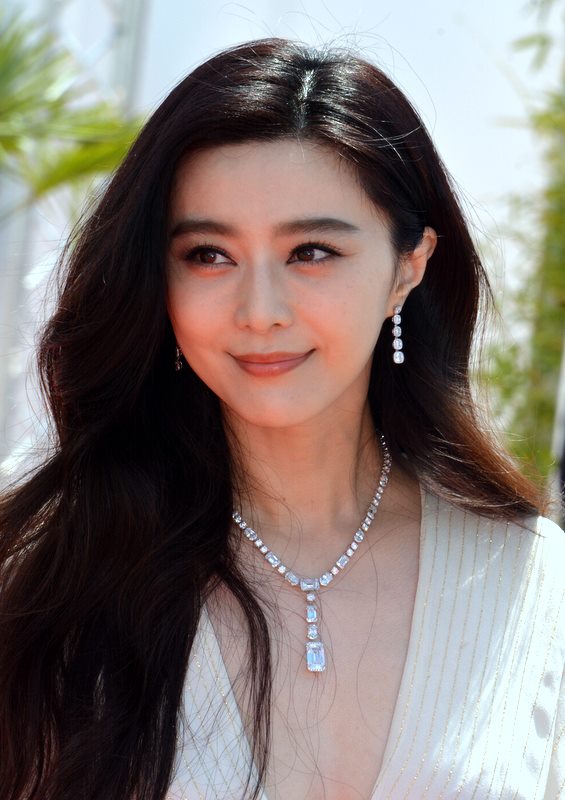
—Your red carpet appearances remained iconic images. How did you craft that part of your legend?
At the Met Gala in New York in 2010, I walked the steps in a dress inspired by Chinese imperial attire, embroidered like an ancient manuscript. That night, I didn't just appear: I brought our sartorial heritage into the West's gaze. Every red carpet outfit was planned weeks in advance by my stylists, every fold calculated to tell a story — the reinvented qipao, silk embroidered with gold, the Empire of yesterday worn by a woman of today. I've sometimes been criticized for over-polishing the image. But in a world where a photograph circles the planet in a night, the image is not an ornament: it is a statement.
In a world where a photograph circles the planet in a night, the image is not an ornament: it is a statement.
—Behind that glamour, what did your days look like at the height of your career?
People imagine a star's life is champagne and rest. The truth is, I got up before the sky paled. Three, sometimes four hours in the makeup chair: wigs adjusted strand by strand, makeup applied layer after layer, a kit open like a painter's box. Then twelve to sixteen hours of shooting, doing scenes out of order, crying at nine in the morning for a sequence that will be edited in the dead of night. In the evening, a premiere, a gala, a dinner with studios — and still my Weibo to feed before sleeping. Glamour, believe me, is the most exhausting job I know.
Glamour, believe me, is the most exhausting job I know.
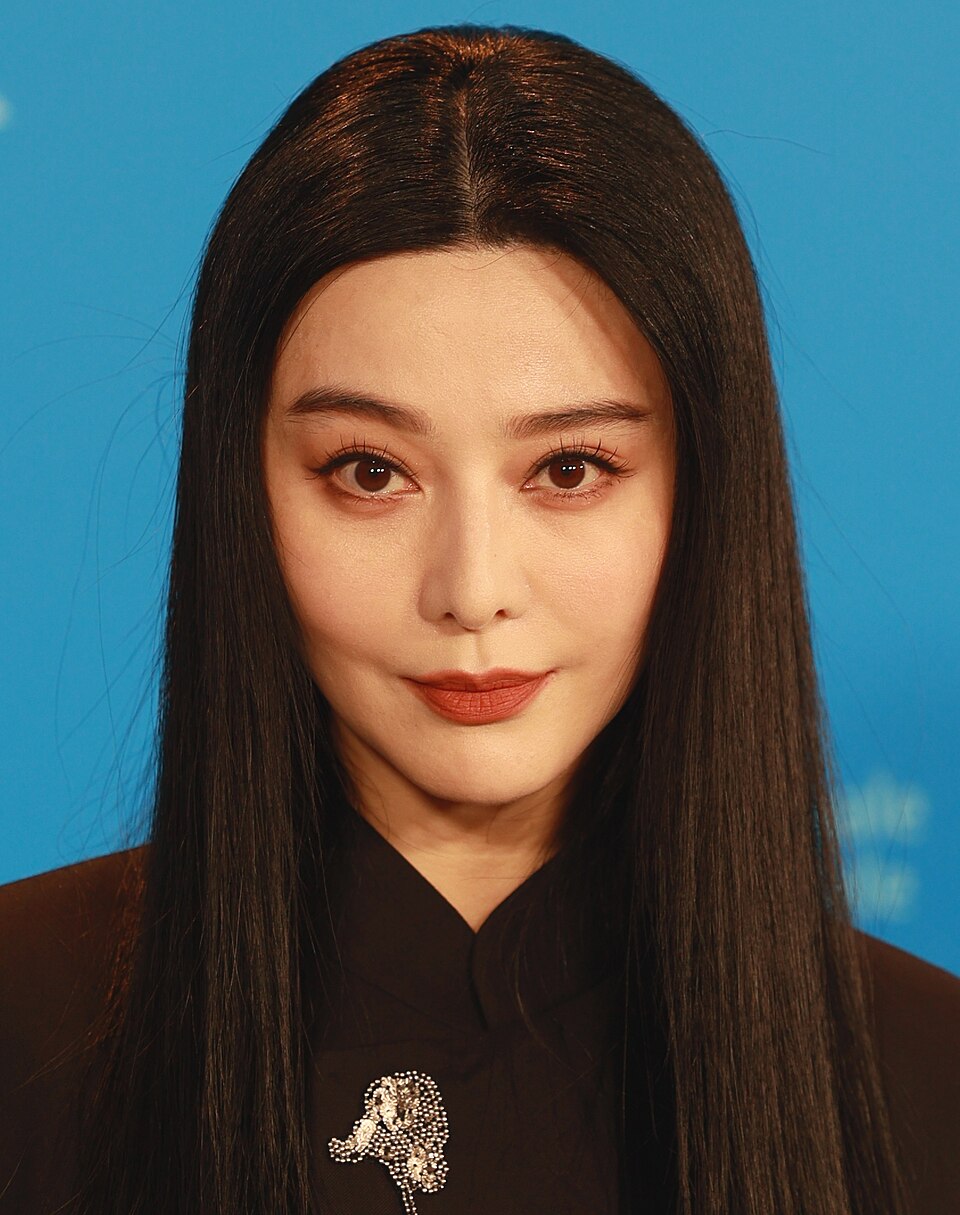
—Did that discipline have a price on your own body, on your private life?
Before every major role, I imposed very strict diets — broths, seasonal vegetables, chicken soup, a little royal jelly, everything that our medicine, zhōngyī, recommends to sustain the body. They call it perfectionism; I saw it mostly as fear, the fear of not being up to the next shot. I would return to my apartment in the upscale district of Beijing, furnished with modern lacquer and ancient references, and sometimes I no longer knew what time I had eaten, or laughed. Asia's highest-paid star owned properties in Shanghai and no longer quite belonged to herself. You pay for luxury in sleep and silence.
You pay for luxury in sleep and silence.
—In 2018, a journalist published documents that shook your entire career. Do you remember that moment?
May 2018. The journalist Cui Yongyuan posted screenshots on Weibo that swept everything away. They talked about yīnyáng hétong, those "yin-yang contracts" — an official document, undervalued, given to the tax authorities, and another, secret, bearing the real sum. It was a practice that the entire industry knew and kept silent about, like a collective lie no one wanted to name. In a few hours, the woman whose jacket emptied stores became the name that a whole country repeated in anger. I looked at my phone like you look at a windowpane cracking without a sound. I knew, in that instant, that the portal I had opened toward the light had just swung in the other direction.
I looked at my phone like you look at a windowpane cracking without a sound.
—After months of total silence, you reappeared to publicly apologize. What remains of that ordeal?
I disappeared from July to October. Three months without an image, I who had lived only through images. When I finally spoke again on Weibo, I wrote these words that I still weigh today: "Without the country, there would be no me. I did not comply with tax laws and betrayed the trust of the public and those who love me." The Wuxi tax authority set the penalty: eight hundred and eighty-three million yuan, nearly one hundred ten million euros, one of the heaviest fines ever imposed on an artist. I have been much judged. I do not ask for absolution — only that one understand that a public fall, in our country, is paid twice: in money, then in silence.
A public fall, in our country, is paid twice: in money, then in silence.
This imaginary interview was generated by artificial intelligence from sources documented in Fan Bingbing's profile. It dramatises what the figure might have said based on what we know about them, but does not constitute attested historical testimony. For primary sources and factual documentation, refer to the full profile.