Imaginary dialogue between Dorothea Viehmann and Brothers Grimm
by Charactorium · Brothers Grimm (1785 — 1863) · Literature · 5 min read
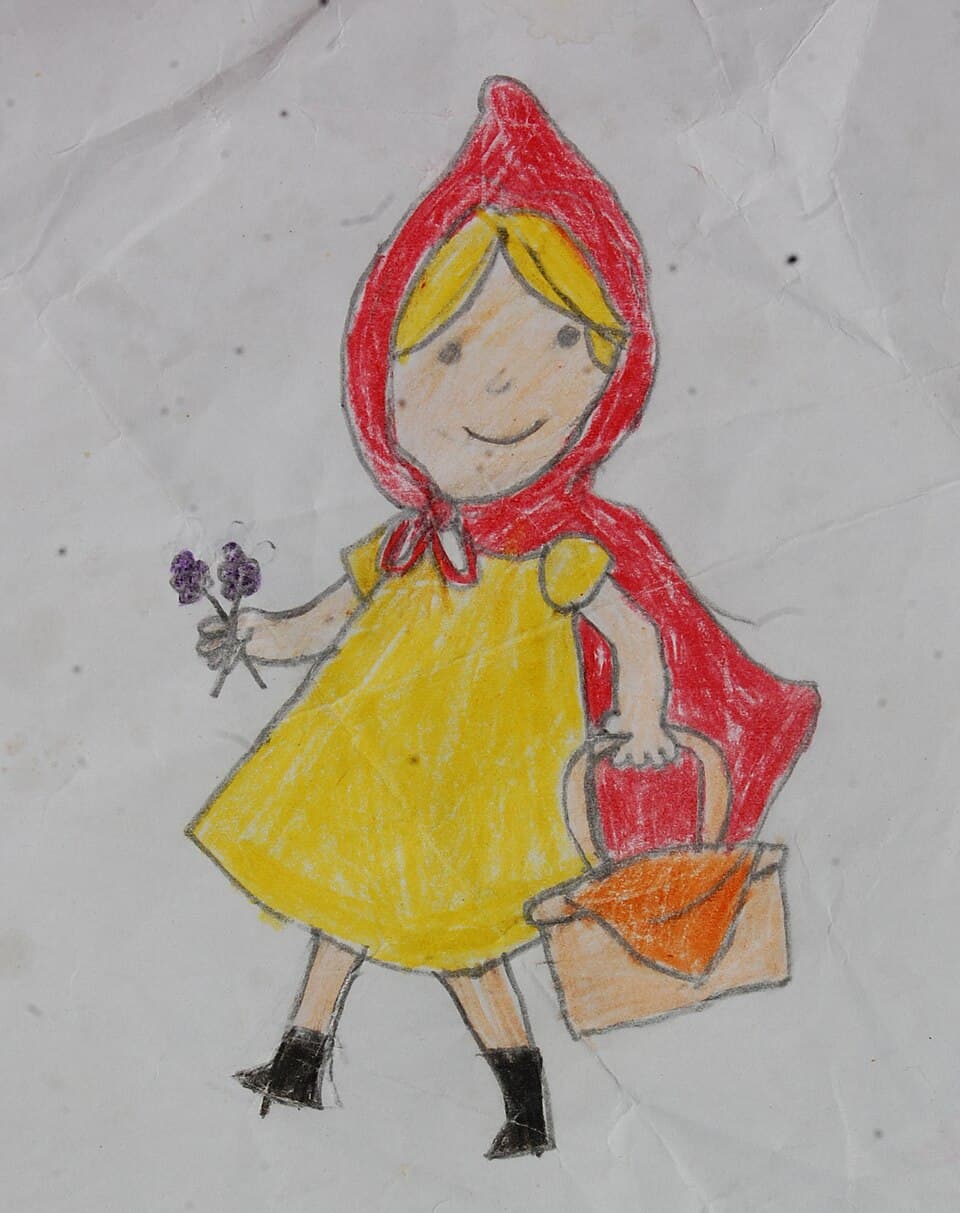
It is in the book-cramped lodgings on Zimmerstrasse, in Kassel, that in the spring of 1814 Dorothea Viehmann pushes open the door of the Brothers Grimm, a basket on her arm and new tales in her head. The oil lamp lights a desk covered in sheets, and the fresh ink is still drying on the pages of the second volume of the fairy tales. She knows the way well: for months, she has come to sit near these two young scholars who listen to her as one listens to a queen. Today, however, it is she who wants to hear them, and to know what they do with her stories.
—My good sirs, every time I tell you a tale, you grab your notebooks and jot it down without looking up. Why such haste?
You see, Dorothea, a tale hangs by a thread: let a word be lost, a turn of phrase fade, and it is dead. That is why we chase after your speech, notebook open on our knees. We want not just the story — we want your way of telling it, your repetitions, your old Hessian words that no one writes anymore. Wilhelm claims my pen is too slow; but I would rather miss my dinner than betray one of your sentences. These sheets you see here are our treasure. An unwritten word is a word already half-forgotten, and we have sworn to let none perish.
An unwritten word is a word already half-forgotten.
—These tales I have from the Spinnstube gatherings, where we spun and told old fears. Does that count in your eyes?
More than you can imagine, Dorothea. The scholars of our time despise these fireside tales; they swear only by Greeks and Romans. We believe the opposite: that Volksdichtung, this poetry born of the people and not of books, is worth all the court poems. In the Spinnstube, to the sound of spinning wheels, your grandmothers kept alive a wisdom older than kingdoms. When you tell us Cinderella, you pass on a voice that reaches further back than any chronicle. That is why we listen to a Hessian spinner with the same seriousness as an ancient manuscript — for both speak to us of the soul of our people.
—In your preface, you swear you added nothing and embellished nothing. Yet Wilhelm touches up my tales from one edition to the next. Is that true?
You have a keen ear, and you are partly right. I, Jacob, would like to keep everything raw, even the rough edges. But Wilhelm has a gentler hand: he polishes the phrasing, smooths what limps, removes what would make a mother blush. We do not change the story, understand — we give it back the form that the voice gives it and that writing takes away. Our preface is true in spirit: we invent nothing. But from one printing to the next, Wilhelm seeks the right tone so that the tale reads as it is heard by the fireside. That is all our art, and all our trouble.
—When I tell tales, I spare not the children: blood flows, stepmothers burn. Are these stories really for the little ones?
That is our torment, Dorothea. Our early pages frightened more than one mother: we are blamed for the blood, the cruelties, certain things a lady does not read aloud. Wilhelm gradually softens the harshest parts, so that the book may enter families. Yet I resist: your tales do not lie about the world, where the wolf devours and the stepmother punishes. The child who trembles beside you learns fear without dying of it. So we seek a narrow path: enough gentleness for the home, enough truth for the tale to remain a tale, and not a bland lesson.
—Jacob, Wilhelm, you work pressed against each other at this same table. How do you know which of you wrote a given page?
Ah, Dorothea, you ask a question that we ourselves cannot answer! We share this table, often the same room, sometimes even the same bed since childhood. What one begins in the evening, the other takes up in the morning, without knowing where his thought ends and mine begins. I gather, compare, delve into old languages; Wilhelm listens, selects, gives grace. But our two hands pull the same thread. Ask us who wrote a given page, and we will answer laughing that we do not know. We are two men for a single work, and that is our strength as much as our happiness.
We are two men for a single work, and that is our strength as much as our happiness.
—You are said to be inseparable since childhood. Does this union never weigh on two men who each think in their own way?
It never weighs, Dorothea — or so little. It is true that I am more austere, more solitary, and that Wilhelm has a tender heart and fragile health. He likes company, evenings, laughter; I like the silence of books. But as children, after our father's death, we promised never to leave each other. We knew poverty together, shared a single plate on lean days. When one weakens, the other carries both burdens. Two heads may differ without the hearts separating: that is what poverty taught us better than any master.
—The first time I came, you doubted that an old woman could remember so many tales word for word. Have you believed me since?
Forgive us that first doubt, Dorothea. When you were recommended to us, I confess I feared faded tales, worn by time. And then you sat down, you spoke — and the same tale, retold the next day, did not vary a single word. It is a marvel. You carry within you a library that no fire can burn. Since then, we hold your memory more reliable than many manuscripts, and it is from your mouth that our finest tales come. Know well that we know what we owe you — and we will not forget it.
—Jacob, I see you poring over old grimoires in forgotten languages. What great dream are you pursuing behind our simple tales?
You see rightly, Dorothea: your tales have kindled in me a larger fire. By listening to your old Hessian words, I understood that language is the mirror of a people — that by tracing its ancient forms, we rediscover the thought of our ancestors. I dream of a great work that would follow our language from its roots, showing how even sounds transform from age to age and people to people. It is an ant's labor, and it may take my whole life. But without the spinners who kept the old speech alive, I would never have guessed what treasure sleeps in the mouths of simple folk.
—You want to stay true to my voice and make the tales more beautiful to read. Do these two desires not conflict?
They conflict constantly, Dorothea, and that is our eternal debate, Wilhelm's and mine. If we keep everything, word for word, some pages repel by their roughness. If we embellish too much, we betray your voice and make false gold. Wilhelm leans toward beauty, I toward fidelity; between us, the tale finds its balance. Our rule is simple: never add invention, but give back to writing the life your mouth gives it. It is a tightrope over the void, and we walk it on every page we correct.
—When I am no longer here to tell tales, my good sirs, will anything of me remain in your books?
Everything will remain, Dorothea — or at least all that our pens could capture. Your tales are already in our pages, and with them something of your voice, your patience, your faith. We have resolved to say where we got our stories, so that no one thinks these tales came solely from our own heads. Scholars remember kings and battles; we want people to remember also the spinners who kept speech alive. As long as a child listens to one of your tales, you will continue to speak. That is the only glory worth having in our eyes.
As long as a child listens to one of your tales, you will continue to speak.
This imaginary interview was generated by artificial intelligence from sources documented in Brothers Grimm's profile. It dramatises what the figure might have said based on what we know about them, but does not constitute attested historical testimony. For primary sources and factual documentation, refer to the full profile.