Imaginary interview with Brothers Grimm
by Charactorium · Brothers Grimm (1785 — 1863) · Literature · 5 min read
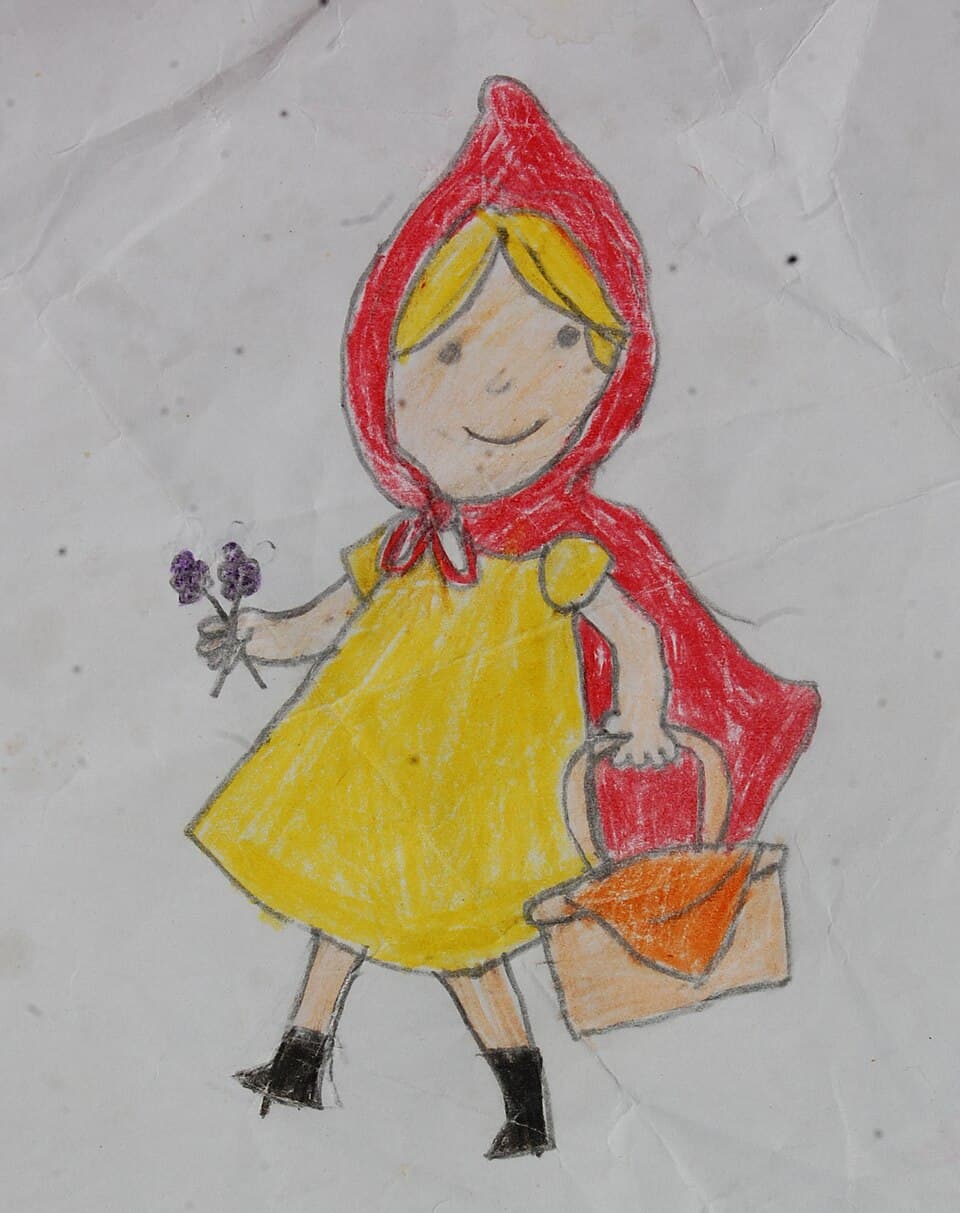
Kassel, a winter evening in the 1840s. In an apartment where books rise from floor to ceiling, two men share the same desk, the same oil lamp, sometimes the same sentence. Jacob looks up from his index cards, Wilhelm closes a corrected proof: the Brothers Grimm agree, for once, to speak with one voice.
—How did you actually collect these stories that everyone thought were written by your own hand?
Let's be direct: we invented nothing. We arrived at people's homes with a notebook in hand, and we listened. Our best source was Dorothea Viehmann, a Hessian peasant woman who possessed dozens of tales, ordered within her like pearls on a string. She told them twice, calmly, and the second time the words came out identical to the first — a miracle of oral fidelity. These stories often came from the Spinnstube, those rooms where women spun wool while passing old tales from mouth to mouth. We noted every turn of phrase, every Märchen, as a philologist copies a manuscript. Our pride was not in writing, but in transcribing without betraying.
Our pride was not in writing, but in transcribing without betraying.
—Why such insistence on adding nothing, when embellishment would have been so tempting?
In the preface to our first collection, in 1812, we wrote it in black and white: “We have sought to capture these tales in all their purity. No detail has been added, embellished, or altered, for we would have feared to inflate stories already so rich by their very nature.” That was our youthful oath. We believed that Volksdichtung, poetry born of the people, was worth more than anything a man of letters could embroider upon it. A tale is like a stone rolled by the torrent of centuries: to polish it further is to erase its true form. We wanted the raw pebble, shaped by a thousand mouths before us.
—Yet they say your early tales frightened children more than they put them to sleep. What happened?
That's true, and I readily admit it. The 1812 edition was by no means a book for the cradle. It contained cruelties, blood, and allusions that no mother would have read aloud. We had conceived it as a scholarly work, a document, not a gift for a child. But families seized upon it, and it was I, Wilhelm, who took up the pen over the seven editions of the Kinder- und Hausmärchen to soften the edges, tone down the horrors, give the sentences a roundness that could be recited in the evening. Jacob sometimes reproached me for embellishing; I replied that a tale that is passed on is worth more than a tale that no one dares to tell.
A tale that is passed on is worth more than a tale that no one dares to tell.
—Didn't this transformation over the years betray your initial oath of fidelity?
The contradiction still haunts me. We had sworn to capture the tales in all their purity, and yet from edition to edition, between 1812 and 1857, the text grew rounder, more moralizing, gaining in gentleness what it lost in harshness. But understand us: a tale is not a mummy sealed under glass. It lives in the mouth that tells it. The Spinnstube itself changed the story according to the hour and the audience. In adapting, we were perhaps only continuing, in ink, what oral tradition had always done. Still, the scholar in me sometimes wept for what the father of a family gained.
—You risked everything in 1837 in Göttingen. What drove you to that public act?
The King of Hanover had just abolished the liberal constitution with a stroke of the pen, as one shooing away a fly. We were seven professors at the University of Göttingen, and we refused to remain silent. We wrote, in conscience: “We cannot, in conscience, recognize the abolition of the fundamental law as legally valid. We still consider ourselves bound by the oath we swore to that constitution.” An oath, you see, is not a garment one changes with the seasons. We were dismissed from our chairs, and Jacob was banished from the kingdom in three days. Three days to pack his bags and leave the city. We left penniless, but with our souls upright.
—How did you experience this sudden exile, you who were not men of the barricades?
We were neither tribunes nor rioters, that's true. Our life was medieval manuscripts, vocabulary cards, the lamp burning late. But there are moments when the philologist must become a citizen again. When one has spent a lifetime searching in old Germanic texts for the thought and soul of our ancestors, one cannot watch a prince trample on a given word. The Göttingen Seven, as we were called, brandished only a written text, not a weapon. And yet that paper made a court tremble. Jacob said that grammar also teaches respect for rules; a king who renounces his law commits a grammatical error in morality.
A king who renounces his law commits a grammatical error in morality.
—One often has the impression that you form a single man. Where does Jacob end and Wilhelm begin?
That is the question everyone asks us, and we ourselves struggle to answer. In a letter to our friend Karl Lachmann, Jacob put it this way: “Wilhelm and I work side by side every day. What one begins, the other continues. We are so united in our research that it is sometimes difficult to distinguish what belongs to each.” We shared the same desk, sometimes the same bed, for decades. Even after my marriage, in 1825, Jacob did not leave our home: he stayed, and the three of us formed a peaceful household. To separate our work would be like asking a river which of its two tributaries carries the water.
—How did two such different temperaments endure, day after day, at the same work table?
Jacob is the morning man, austere, up at six, already bent over his cards when I join him. His frock coat is always impeccable, his rigor almost frightening. I, Wilhelm, am of more fragile health, slower, more inclined to linger on the music of a sentence. He digs into the law of consonant shifts, while I ensure that a tale sounds right to a child's ear. But it is precisely this difference that held us together: he lays the framework, I stretch the canvas. In the evening, by the light of our oil lamp, we read aloud for one another, and our disagreements always died out before the candle.
—You undertook a dictionary that you knew you would never finish. Why embark on such an ambitious project?
We began the Deutsches Wörterbuch in 1838, after our dismissal from Göttingen — we had to live, and feed the spirit. But what an undertaking! To list every word of the German language, with its history, its old meanings, its quotations, from its deepest roots. The index cards covered our entire desk, classified by letter, until they buried it. We knew from the start that our two lives would not suffice. Jacob said that one builds a cathedral without hoping to see its spire. We only carried the work as far as the first letters of the alphabet. Other hands, after us, would continue what we had barely sketched — and that is perfectly fine.
One builds a cathedral without hoping to see its spire.
—Many see you as storytellers. But wasn't philology your true cathedral?
The tales made us famous, but language was our great work. With the Deutsche Grammatik, as early as 1819, Jacob laid the foundations of a new science, and formulated that regularity in the shifting of consonants — the Lautverschiebung — that links the Germanic languages to their cousins. Studying the ancient forms of a speech is like digging up the foundations of a house to understand who built it. Language is the most faithful mirror of a people. Tales and grammar, at bottom, are the same quest: to find, beneath the dust of centuries, the original voice of the men who preceded us. Märchen or dictionary, we have done nothing but listen to the dead speak.
This imaginary interview was generated by artificial intelligence from sources documented in Brothers Grimm's profile. It dramatises what the figure might have said based on what we know about them, but does not constitute attested historical testimony. For primary sources and factual documentation, refer to the full profile.