Kids interview Brothers Grimm
by Charactorium · Brothers Grimm (1785 — 1863) · Literature · 5 min read
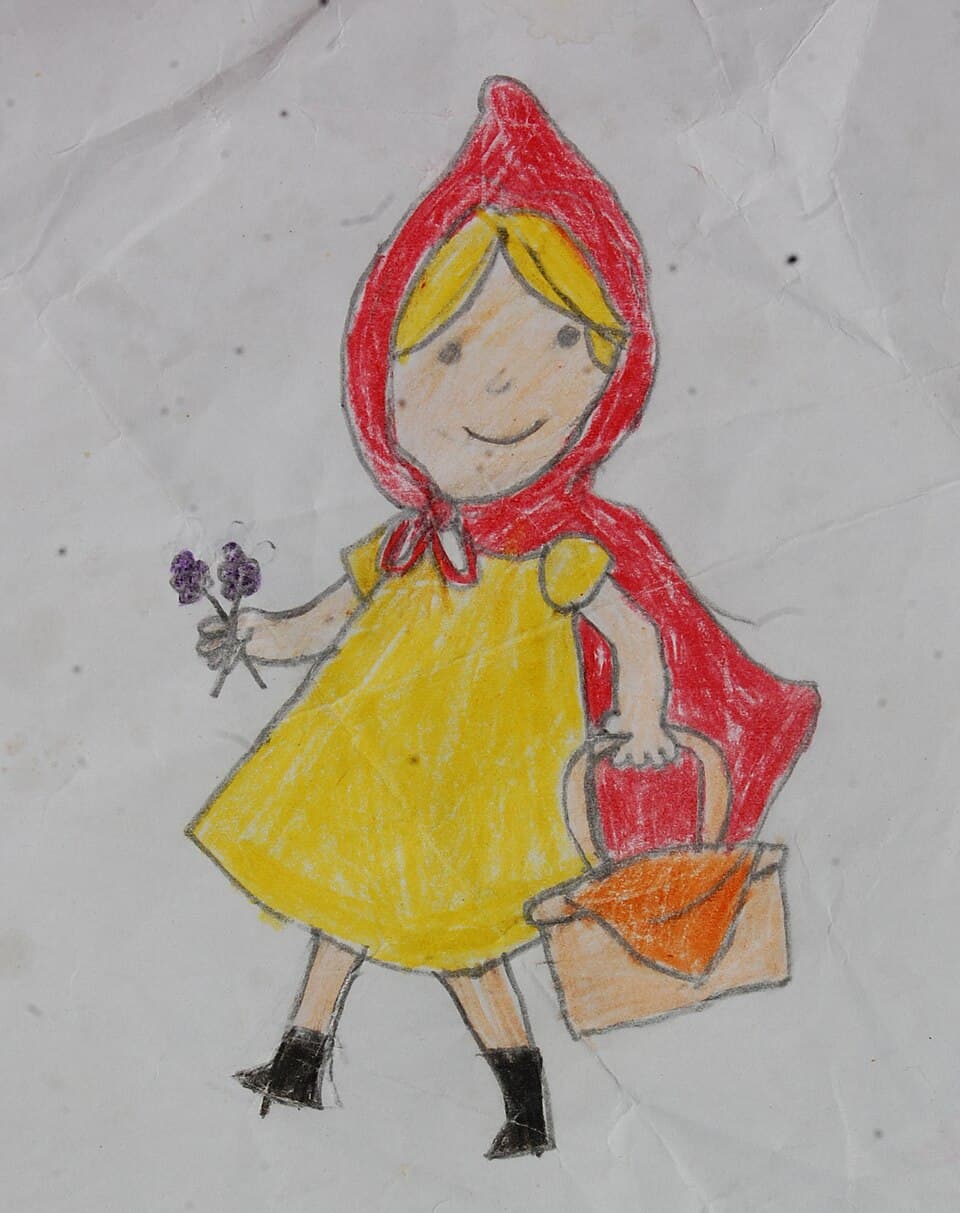
Two young visitors, twelve years old, have entered a study cluttered with books stacked to the ceiling. Near the window, two brothers await them, quill in hand. They have spent their lives listening to stories: today, it is they who are being listened to.
—Is it true that you didn't invent Snow White and Hansel and Gretel?
You've got it, my child. We didn't invent anything at all. These stories already existed, in the mouths of the common people of Hesse. We went to listen to them, notebook in hand, and we wrote down every word. One of our best storytellers was named Dorothea Viehmann. A peasant woman. She recited dozens of tales without ever making a mistake, as if she were reading them from her mind. Imagine a room where women spin wool in the evening, what was called a Spinnstube, and where people tell stories to pass the time. That's where the tales lived. We just caught them before they flew away.
We didn't invent anything: we caught the tales before they flew away.
—What did your collection notebook look like?
Oh, nothing precious, you know. A simple notebook, ink, a goose quill. But for us, it was a treasure. When someone began a story, we had to write quickly, without missing anything. No time to make it pretty! We called these tales Märchen, our German word for fairy tales. In the evening, by the light of an oil lamp, we reread our notes and copied them out neatly. Sometimes the same story came from two different villages, slightly changed. Then we compared them, like two detectives. That notebook was our butterfly net: we kept stories that had never been set down on paper.
—Is it true that your first tales scared even adults?
Ah, you touch on a secret, my child. Our very first edition, in 1812, was not for children at all. The stories were sometimes very harsh, very dark. In the preface, we wrote that we wanted to capture them "in all their purity," without adding or embellishing anything. But parents complained: too violent for the little ones! So my brother Wilhelm, over the editions, softened the tales. He removed an overly cruel detail, added a gentle moral. There were seven editions in all, until 1857. Each time, the tales became a little softer. That is how they entered children's bedrooms.
Our tales were born dark; it is in retelling them that they became gentle.
—Why did you change the stories if you wanted to keep them "pure"?
That's a real tension, you're right to feel it. At first, we wanted to keep everything exactly as it was told to us. Not to exaggerate, not to embellish. But when a book begins to live in children's hands, it changes. Wilhelm thought: what good is a tale that little ones cannot read? So he made a choice of the heart. He kept the soul of the story, the wolf, the forest, the fear, but he polished the too-sharp edges. I, Jacob, was stricter, I preferred the old version. But Wilhelm had that gift of telling stories for children. And it is his version that we still read today.
—Were you really dismissed from the university? What had you done?
Yes, and I am still proud of it, my child. It was in 1837, at the University of Göttingen. The king of Hanover had decided to abolish the constitution, that law that protected the people's liberties. We were seven professors who said no. Together we wrote a protest: we could not, in good conscience, pretend that this law no longer existed. We were called the Göttingen Seven. The king got angry. We were expelled from the university, and I, Jacob, was banished from the kingdom in three days. Three days to pack my bags! But you see, I slept well at night. An oath is not torn up.
You can banish me from a kingdom in three days; you cannot tear up an oath.
—Were you afraid when the king cast you out like that?
Of course we were afraid. We were not fairy-tale heroes, just two men with books and a family to feed. Losing one's post meant losing one's bread. Wilhelm had a wife and children. And I, banished in three days, left a city I loved. But we had chosen together, and that changes everything. When two people carry the same burden, it weighs half as much. We told ourselves: if we stay silent today, who will speak tomorrow? A scholar who closes his eyes to injustice no longer deserves his books. So we held our heads high, even with our bags in hand.
—Is it true that you shared the same desk, and even the same bed?
Ha! Yes, that's absolutely true. Since childhood, we were inseparable. The same desk, the same roof, and yes, sometimes the same bed when we were young and poor. Our father died when we were little, in 1796, and the family experienced poverty. So we huddled together, and we never let go of each other. Even when Wilhelm married, in 1825, I continued to live under the same roof as the couple. His wife accepted us both, and we got along wonderfully. Working side by side was our way of keeping warm.
Working side by side was our way of keeping warm.
—How did you know who had written what, if you always worked together?
Well, you see, we didn't always know! I once wrote to a learned friend, Karl Lachmann, that we worked side by side every day. What one began, the other continued. Our thoughts mingled so much that it was sometimes impossible to say who had come up with a given idea. Imagine two rivers that merge: after that, how do you know which drop comes from where? That's how it was between us. Wilhelm had the gentle pen, the gift for stories. I loved to dig into old words, hidden rules. Two different talents, but one single work. And we were fine with that. Together, you see what one alone would never see.
—What is a "law" that bears your name? Were you judges too?
No, no, not a law of the court! A law of language, my child. It is I, Jacob, who discovered it while writing my Deutsche Grammatik, my German grammar. I noticed that certain sounds always change in the same way when moving from one ancient language to another. For example, a p becomes an f. We call this the Lautverschiebung, the consonant shift. It is so regular that it seems like a secret rule hidden in words. Today it is called "Grimm's law." I was like an explorer: I traced languages back in time like one goes up a river toward its source.
I traced languages back in time like one goes up a river toward its source.
—I've been told that your dictionary was only finished after your death. Is that possible?
Yes indeed, and it makes us smile from up there. We began a huge dictionary of the German language, the Deutsches Wörterbuch, in 1838. We wanted to include all words, their history, their ancient meanings. An ant's work: our index cards covered the entire desk, sorted letter by letter. We thought it would take a few years. What naivety! The task was so enormous that we died without finishing it. And after us, other scholars continued, and then still others. The dictionary was only completed in 1961, more than a century after us! You see, some works are too great for a single lifetime.
Some works are too great for a single lifetime.
—What did you eat in the morning before starting work?
Oh, nothing very luxurious, you know. We got up early, often as early as six o'clock. In the morning, it was bread, a little butter, and hot coffee. I, Jacob, was the earliest riser: I began writing even before Wilhelm joined me. Our table remained simple, that of a modest family: rye bread, soups, potatoes, sometimes a little meat. In the evening, perhaps a beer. We were not rich, but we had our books, piled up in every corner of the house. For us, that was the real wealth. Good coffee, a brother beside me, and a blank page waiting.
This imaginary interview was generated by artificial intelligence from sources documented in Brothers Grimm's profile. It dramatises what the figure might have said based on what we know about them, but does not constitute attested historical testimony. For primary sources and factual documentation, refer to the full profile.