Imaginary interview with Gandhi
by Charactorium · Gandhi (1869 — 1948) · Politics · 6 min read
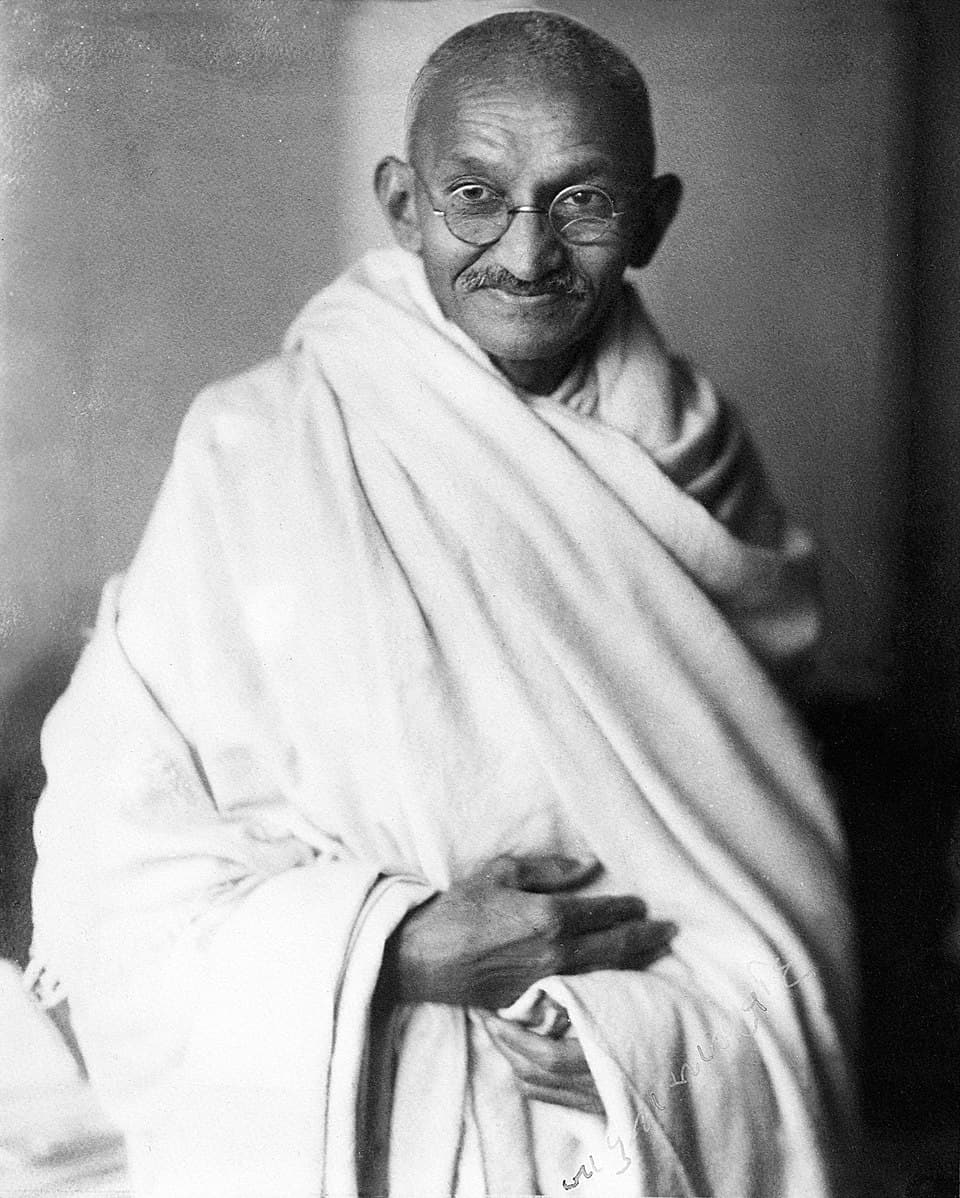
At the edge of the Sabarmati Ashram, in the dusty light of a dry-season morning, a slight man wrapped in a simple dhoti spins cotton without looking up. The spinning wheel creaks, disciples hum a prayer in the distance. He agrees to pause his hands for a moment and respond.
—Do you remember the exact moment when your life turned toward struggle?
It was a night in 1893, at the Pietermaritzburg station in South Africa. I had a valid first-class ticket, paid for. A white traveler objected to sharing the compartment with a man of my color, and the conductor threw me out with my luggage. I sat in the freezing waiting room until dawn, shivering, without a coat because my trunk had been confiscated. That night, I understood that my lawyer's timidity was worthless if I did not have the courage to claim what was mine. The question was not my humiliation — that was trivial — but the sickness that allowed one man to humiliate another for the color of his skin. I did not take the next train to flee. I decided to stay and cure that sickness.
That night, I understood that my timidity was worthless without the courage to claim what was mine.
—How did that personal anger transform into a method of struggle?
Slowly, and by trial and error. In 1906, faced with laws that sought to register Indians like cattle, I searched for a word for what we were doing. "Passive resistance" smacked of weakness, of English calculation. So I forged Satyagraha — the force of truth, the embrace of truth. It is not submission; it is refusing to obey without ever raising a hand. At Phoenix, near Durban, on the farm we had founded in 1904, we lived this idea before preaching it: plowing together, sharing bread, learning that voluntary poverty frees more than it binds. It was there, in the sweat and silence of manual labor, that I learned what I would bring back to my country: that one does not fight an empire with its own weapons, but by withdrawing our consent.
—Why did you make such a humble object as a spinning wheel the heart of your struggle?
Because an empire is nourished not only by cannons, but by the pockets it empties. England sold us cloth made from our own cotton, which it shipped to Manchester only to resell it to us. Spinning oneself on the charkha — that is Swadeshi: taking back with one's fingers what the law took from us. Every morning, before any other work, I sit for an hour before my spinning wheel — it is a prayer as much as an act. During the great non-cooperation campaign, between 1920 and 1922, I asked millions of Indians to burn foreign cloth and spin their own thread. A peasant woman's gesture, you might say? And yet the charkha ended up at the center of our flag. True revolution does not descend from palaces; it rises from cottages, thread by thread.
—It is said that Churchill mocked you by calling you "that half-naked fakir." What does that contempt inspire in you?
He was right about appearances, and wrong about everything else. Since the 1920s, I have worn only a white cotton dhoti, spun by my own hands, without shirt or shoes, even when received by the powerful in London. This is not a pose: how can I demand dignity for the poorest peasant if I dress better than he does? I stripped my wardrobe as one strips a lie. Let the great statesman see me naked and half-starved, very well: my nakedness speaks the truth of millions of my people. They think me weak because I have neither uniform nor sword. But a man who has nothing left to lose, who can neither be bought nor frightened, is the most formidable adversary there is. My loincloth is worth more than a breastplate.
A man who can neither be bought nor frightened is the most formidable adversary there is.
—What made you decide to march to the sea for a simple pinch of salt?
Salt! See the absurdity: the sea offers it freely, and the Crown made it a monopoly, taxing even the sweat of the poorest who cannot do without it. It was the perfect injustice to denounce, because everyone understood it. Before leaving, in March 1930, I wrote to the Viceroy Lord Irwin, not as an enemy but as a man: “It is not without deep sorrow that I contemplate the gulf that separates you from me.” I loyally warned him of what I was about to do. Civil disobedience is not a stab in the back; it is announced, it is done in broad daylight, it accepts prison in advance. That is why it is Satyagraha and not revolt: truth does not hide.
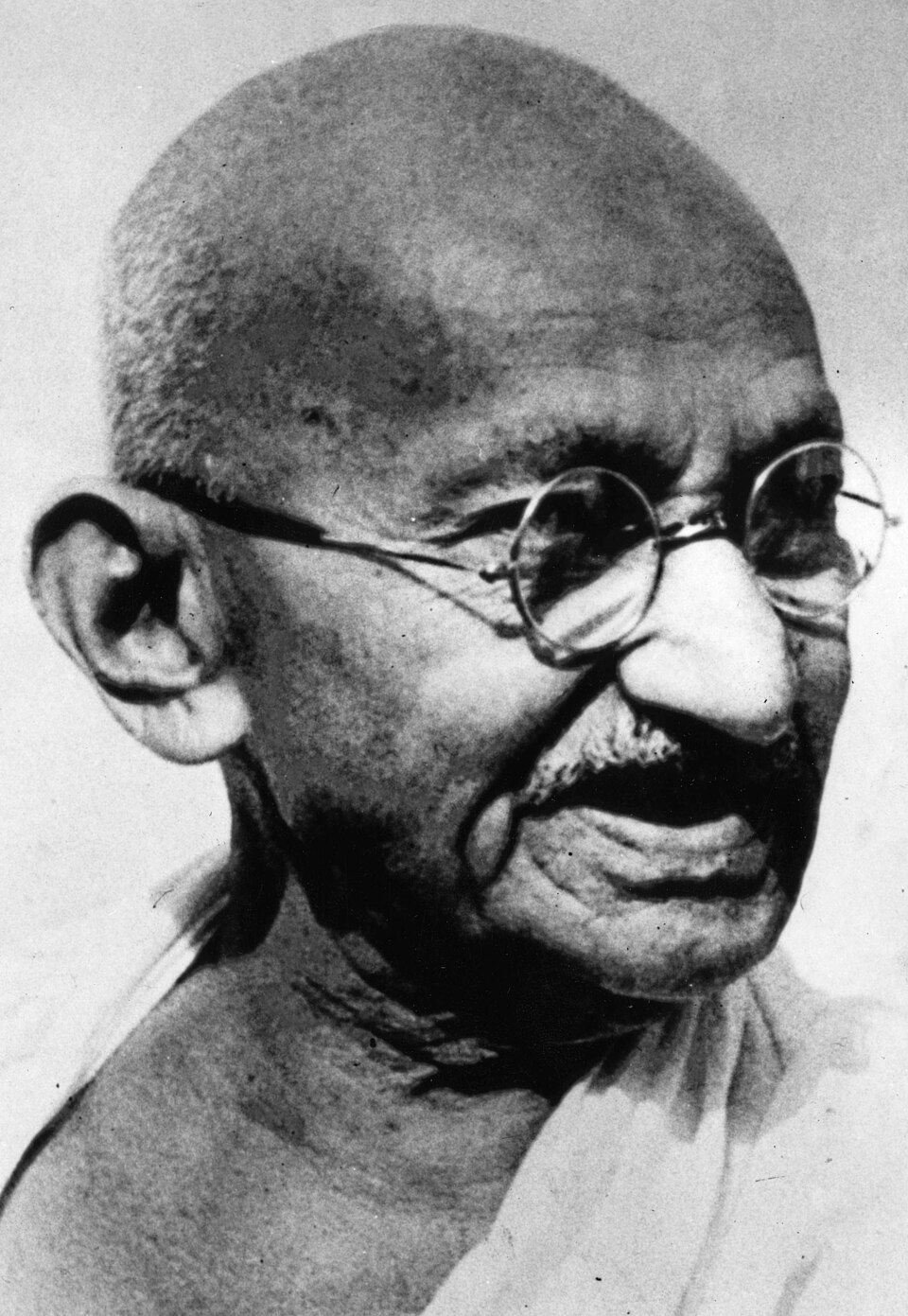
—What remains within you of those twenty-four days of marching to Dandi?
The dust under my bare feet, the bamboo staff, and the crowds that swelled at every village. Three hundred and eighty kilometers from the Sabarmati Ashram to the beach at Dandi. I was sixty years old and they thought me worn out. In Ahmedabad, before leaving, I had told my people: “We will march until the British withdraw the salt tax or imprison us all.” On the morning of April 6, I bent down on the shore and picked up a handful of salty mud — nothing, a child's gesture. But that nothing made an empire tremble, because all of India began to make its own salt, and the prisons overflowed. I learned that day that a tiny act, performed by millions of hands, weighs heavier than an army.
A tiny act, performed by millions of hands, weighs heavier than an army.
—Why did you inflict on your own body fasts that nearly killed you?
Because I have no other weapon than myself. When I cannot touch an opponent's heart through words, I reach him through my offered suffering. In 1932, from the depths of my prison, I fasted for six days to prevent the Harijan — the “children of God,” those called untouchables — from being separated from the rest of the Hindus at the polls. Dividing my people like that was more unbearable to me than hunger. A fast is not blackmail: it is Ahimsa turned inward, nonviolence carried to its limit, where one accepts to die but never to cause death. I drank only a little lemon water. This thin body, vegetarian since childhood, I wanted it to be transparent, so that truth might pass through it without obstacle.
—What does a day look like for a man who wants to make his entire life a prayer?
I rise before dawn, around four o'clock, for prayer and silence, when the world still sleeps and the mind is clear. Then comes the hour of the charkha, followed by barefoot walks within the ashram grounds. In the afternoon, I read the hundreds of letters people send me, and I receive those who wish to understand. In the evening, we pray together, Hindus, Muslims, and Christians mixed, for no God has ever seemed jealous of another. My meal fits in a metal bowl: goat's milk, fruits, a few raw vegetables. No meat, no alcohol, no tobacco — ever. People think this frugality is a deprivation; it is my freedom. He who masters his plate and his desires will be no one's slave. Swaraj begins there, in self-rule.
—In 1939, you wrote to Hitler himself. What did you hope from such a man?
Little, I confess, but my conscience forbade me silence. On July 23, 1939, I wrote to him: “We implore you, in the name of humanity, not to unleash a war that would reduce Europe to barbarism.” People thought me naive to call such a man “friend.” But Ahimsa does not choose its recipients according to their merit: it addresses itself to the humanity that even the worst preserves, however buried. Three years later, in 1942, as that war engulfed the world, I launched Quit India — “Leave India” — for one cannot defend the freedom of others while denying one's own. That earned me my final imprisonment. I never believed that nonviolence guaranteed victory; I only believe that it keeps us worthy, even in defeat.
—Independence approaches, but it threatens to tear your country apart. How do you live with this shadow?
As the bitterest of victories. I dreamed all my life of Swaraj, and now it comes with Partition, a country cut in two, Hindus and Muslims hurling themselves against each other, entire trains of refugees and corpses. What good was it to drive out the foreigner if we slit each other's throats as brothers? I will not go to wave flags in Delhi; I will walk through the burning villages, I will fast again if necessary, until the hands unclench. They tell me I am now hated, that my tenderness toward Muslims is held against me. So be it. If I must die by a bullet, I pray to die without hatred in my heart, God's name on my lips. A life not worth risking for peace would not have been worth living.
What good was it to drive out the foreigner if we slit each other's throats as brothers?
This imaginary interview was generated by artificial intelligence from sources documented in Gandhi's profile. It dramatises what the figure might have said based on what we know about them, but does not constitute attested historical testimony. For primary sources and factual documentation, refer to the full profile.