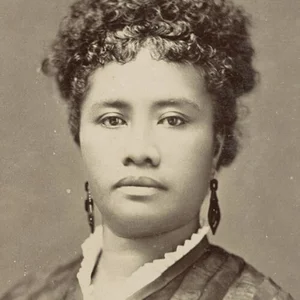

Liliuokalani was the last queen of the Kingdom of Hawaii, overthrown in 1893 by a coup supported by American settlers. A composer and stateswoman, she fought peacefully for Hawaiian sovereignty and remains a symbol of resistance to American imperialism.
Liliuokalani(1838 — 1917)
Liliuokalani
royaume d'Hawaï
8 min read
Frequently asked questions
Famous Quotes
« Ua Mau ke Ea o ka Aina i ka Pono. (The life of the land is perpetuated in righteousness.)»
« I yield to all that is just and fair.»
Key Facts
- Born in 1838 in Honolulu, she received a Western education at the Royal School of Hawaii.
- Ascended to the throne in 1891 following the death of her brother, King Kalakaua.
- Overthrown in January 1893 in a coup organized by American businessmen backed by United States Marines.
- Placed under house arrest in 1895 after a failed royalist uprising, she formally abdicated under duress.
- Hawaii was annexed by the United States in 1898; she spent her final years fruitlessly defending the Hawaiian cause in Washington.
Works & Achievements
Liliuokalani's most famous song, which became the unofficial anthem of Hawaii. This melancholic melody about separation and love is now known worldwide as a symbol of Hawaiian culture.
An autobiographical account in which Liliuokalani tells the history of the Kingdom of Hawaii and denounces the illegal circumstances of her overthrow. This book is a major historical source on the end of the Hawaiian monarchy.
An English translation of the ancient Hawaiian cosmogony, a creation poem of 2,000 verses. Completed largely during her house arrest, this work helped preserve Hawaiian cultural heritage.
A patriotic anthem composed by Liliuokalani even before she ascended to the throne, which became a symbol of Hawaiian identity and pride.
A collection of songs, hymns, and instrumental pieces composed throughout her lifetime. This corpus, preserved in the Hawaii State Archives, illustrates the richness of the Hawaiian musical tradition.
A series of official documents, letters, and petitions addressed to the American government denouncing the illegality of the overthrow. These texts stand as essential legal and political testimonies on Hawaiian sovereignty.
Anecdotes
Liliuokalani is the author of the famous Hawaiian song 'Aloha Oe' (1878), which became a symbol of Hawaiian culture worldwide. She is said to have composed this melody after observing a romantic farewell scene during a horseback ride on the island of Oahu.
In January 1893, a group of wealthy American planters, supported by American Marines who had landed illegally, overthrew Liliuokalani. She abdicated to prevent bloodshed, declaring that she was yielding not to these men, but to the United States, hoping that the American government would restore justice.
After the overthrow of the monarchy, Liliuokalani was placed under house arrest in her own palace, Iolani Palace, for eight months in 1895. During her captivity, she composed religious hymns and worked on translating the Hawaiian cosmogony, the Kumulipo.
In 1897, Liliuokalani traveled to Washington to submit a petition to the United States Congress against the annexation of Hawaii. More than 21,000 native Hawaiians — out of a population of approximately 40,000 — signed this petition, which temporarily helped block the annexation treaty.
Until her death in 1917, Liliuokalani continued to legally assert her rights and those of the Hawaiian people. She bequeathed her assets to a charitable foundation for orphaned or needy Hawaiian children, the Queen Liliuokalani Children's Center, which still exists today.
Primary Sources
I, Liliuokalani, by the grace of God and under the constitution of the Hawaiian Kingdom, Queen, do hereby solemnly protest against any and all acts done against myself and the constitutional government of the Hawaiian Kingdom by certain persons claiming to have established a provisional government of and for this Kingdom.
I yield, under constraint, to the superior force of the United States of America, whose minister plenipotentiary [...] has caused the overthrow of the constitutional government of the Hawaiian Kingdom. [...] I do so under duress, to avoid any armed conflict.
We, the undersigned, native Hawaiian citizens and residents, respectfully request that the Congress of the United States not ratify the proposed treaty of annexation.
The melody came to me naturally, as if carried by the wind from the hills. I wanted to capture that feeling of love and parting that lies at the heart of our people.
Key Places
Royal palace built in 1882, official residence of Liliuokalani and seat of the Hawaiian government. It was here that she was forced to abdicate in 1893, then placed under house arrest in her own apartments two years later.
Private residence of Liliuokalani, where she lived before and after her reign. Following her overthrow, she spent the final years of her life there, which remained a quiet rallying point for supporters of the monarchy.
Lush valley above Honolulu where Liliuokalani owned land and loved to retreat. This rainy, mountainous landscape inspired several of her musical compositions.
Liliuokalani traveled there on several occasions to plead her cause before the American government, notably in 1897 with the petition against annexation. She died there largely met with official indifference despite her efforts.
The largest island where Liliuokalani owned estates and where she stayed during official visits. It was during a journey across these lands that the inspiration for some of her musical works was born.
Typical Objects
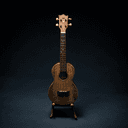
Iconic Hawaiian musical instrument that Liliuokalani mastered completely. She played it during her compositions and helped popularize Hawaiian music among foreign visitors.

Crown or garland of fresh flowers, a symbol of Hawaiian hospitality and royalty. Liliuokalani wore them during official ceremonies, perpetuating the cultural traditions of her people.

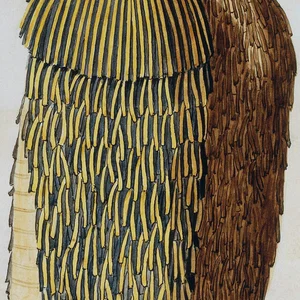
Hawaiian ceremonial scepter made of rare bird feathers mounted on a long staff, an emblem of Polynesian royalty. These objects adorned the throne room of Iolani Palace during royal audiences.

Liliuokalani was deeply Christian and leaned on her faith during her trials. She used her Bible during her captivity and translated spiritual texts into Hawaiian from her cell in the palace.

Liliuokalani composed more than 150 songs and hymns throughout her life. Her handwritten scores, preserved in the Hawaii State Archives, bear witness to her musical mastery and her attachment to Hawaiian culture.

Official seal bearing the arms of the Kingdom of Hawaii, used to authenticate royal documents. Liliuokalani used it until the moment of her forced abdication in 1893.
School Curriculum
Vocabulary & Tags
Key Vocabulary
Tags
Daily Life
Morning
Liliuokalani began her day with Christian prayers, faithful to her education at the Royal School in Honolulu. She would then walk through the gardens of Washington Place or Iolani Palace, inspecting her favorite tropical flowers — plumeria and hibiscus — before receiving the first official delegations of the day.
Afternoon
The afternoon was devoted to royal audiences, drafting diplomatic correspondence, and overseeing the administration of the kingdom. She paid particular attention to Hawaiian land files and to matters concerning the welfare of native Hawaiian families dispossessed by the large sugar landowners.
Evening
In the evenings, Liliuokalani gathered with musicians, poets, and members of the court to practice traditional Hawaiian music. She would compose melodies on the ukulele or piano, jot down her musical inspirations, and foster the cultural exchanges that were deeply close to her heart.
Food
The royal Hawaiian diet of the era blended Polynesian traditions with Western influences. Poi (fermented taro paste), fresh fish, and tropical fruits (papaya, mango, coconut) sat alongside meats and European culinary preparations introduced by missionaries and American merchants.
Clothing
Liliuokalani wore Victorian dresses of silk and satin in dark colors (black, burgundy, purple) for official ceremonies, in keeping with the royal fashion of the time. For Hawaiian cultural events, she donned feather adornments (lei hulu), floral crowns, and traditional printed tapa cloth garments.
Housing
Liliuokalani officially resided at Iolani Palace, a grand residence built in 1882 in the American Renaissance Revival style, equipped with electricity and telephone — even before the White House. Her private residence, Washington Place, was a colonial villa surrounded by a lush tropical garden, where she took refuge after her overthrow.
Historical Timeline
Period Vocabulary
Visual Style
Mélange de la solennité victorienne et de la royauté polynésienne : portraits d'apparat, parures de plumes, drapés de soie sombre et décor tropical luxuriant du palais Iolani.
Sound Ambience
Ambiance du palais royal Iolani à Honolulu : musique hawaïenne traditionnelle, vagues du Pacifique, brise tropicale et chants cérémoniels polynésiens.
Liens externes & ressources
Références
Œuvres
Aloha Oe
1878
Hawaii's Story by Hawaii's Queen (mémoires)
1898
Traduction et annotation du Kumulipo
1895-1897
He Mele Lāhui Hawaiʻi (hymne national)
1866
Corpus de 150 compositions musicales
1860-1915
Protestation officielle contre l'annexion
1893-1897