Kids interview Gandhi
by Charactorium · Gandhi (1869 — 1948) · Politics · 5 min read
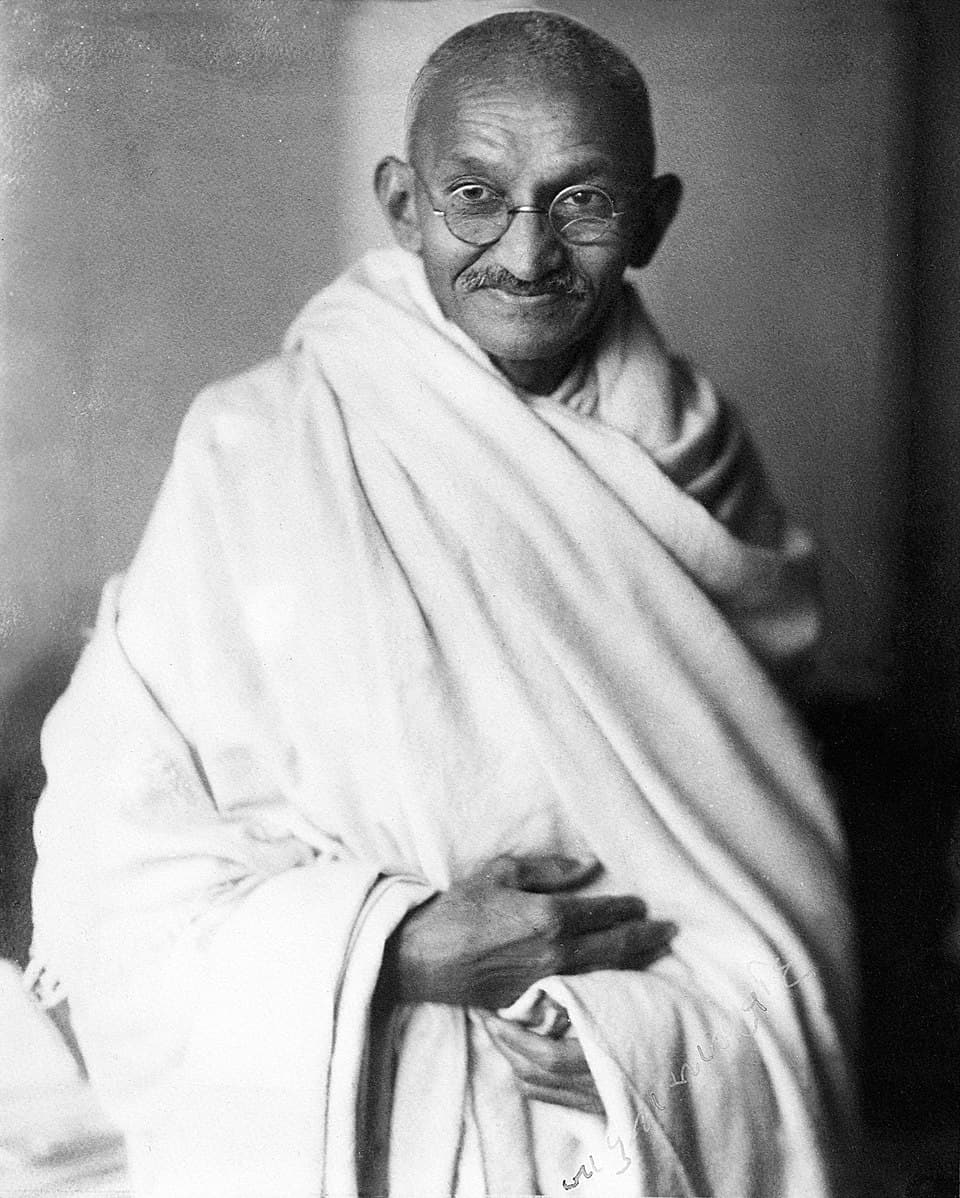
Two twelve-year-old students, on a field trip, can't believe their eyes: sitting before them on a simple mat, an old man dressed all in white smiles and beckons them closer. He sets down his spinning wheel and invites them to come near. Gandhi is ready to answer all their questions.
—How old were you when they threw you off the train?
You know, my child, I was 24 years old. I was a young lawyer, newly arrived in South Africa. I had paid for my first-class ticket, properly. But at Pietermaritzburg station, a white man refused to travel near an Indian. They pushed me off with my luggage, in the middle of the night. Imagine: a deserted, icy platform, and you sitting there, shivering, not understanding what crime you had committed. My only fault was the color of my skin. That night, I didn't sleep a wink. I thought. And I decided I would never again run from injustice.
My only fault was the color of my skin.
—What was your life like right after that night?
That humiliation changed me, you see. I could have gone back to India and forgotten everything. But I stayed to defend the Indians in South Africa, treated as less than nothing. In 1904, near Durban, I founded a small farm, the Phoenix Settlement. We lived simply there: we cultivated the land, shared our bread, learned not to respond to hatred with hatred. Imagine a large family where no one is master or servant. It was there, my child, that I began to invent my method: to stand up to injustice without ever raising a fist. It takes more courage than a blow, believe me.
—Why did you walk so far just for salt?
Ah, salt! It seems so small, doesn't it? But listen carefully. The British forbade Indians from collecting their own salt on their own beaches. They had to buy it and pay a tax on top. Yet salt, my child, everyone needs it, even the poorest peasant. In 1930, I decided to walk to the sea to take a simple pinch of it. A tiny gesture, but it shouted: this land is ours. Before leaving, I wrote to the viceroy, Lord Irwin. I told him that I saluted in him not the Crown of England, but the human being capable of listening to justice.
Salt, everyone needs it, even the poorest peasant.
—Was it hard walking all those days?
Oh yes! I was already 60 years old, and my legs were no longer those of a boy. We left my ashram on the banks of the Sabarmati River and walked nearly 380 kilometers. Almost a month of dust, burning sun, barefoot in the heat, with my bamboo staff as my only support. At every village, people joined us; we started a few dozen, we arrived by the thousands. On April 6, 1930, on the beach at Dandi, I bent down and picked up a handful of salt dried by the sun. Imagine the great silence, then the roar. That tiny white grain was worth all the speeches in the world.
—What is that little spinning wheel you always keep near you?
You mean my charkha? It is my spinning wheel, and I use it every day. In the morning, before anything else, I spin my own cotton, thread by thread. Why? Because the British sold us their cloth and ruined our artisans. So I told my countrymen: spin yourselves, wear what you make with your own hands! They called this swadeshi, the use of only our own products. A simple gesture, repeated by millions of fingers, becomes an immense force. Imagine an army without guns, fighting with cotton threads. That is why this little spinning wheel was my most precious weapon.
My spinning wheel was my true weapon.
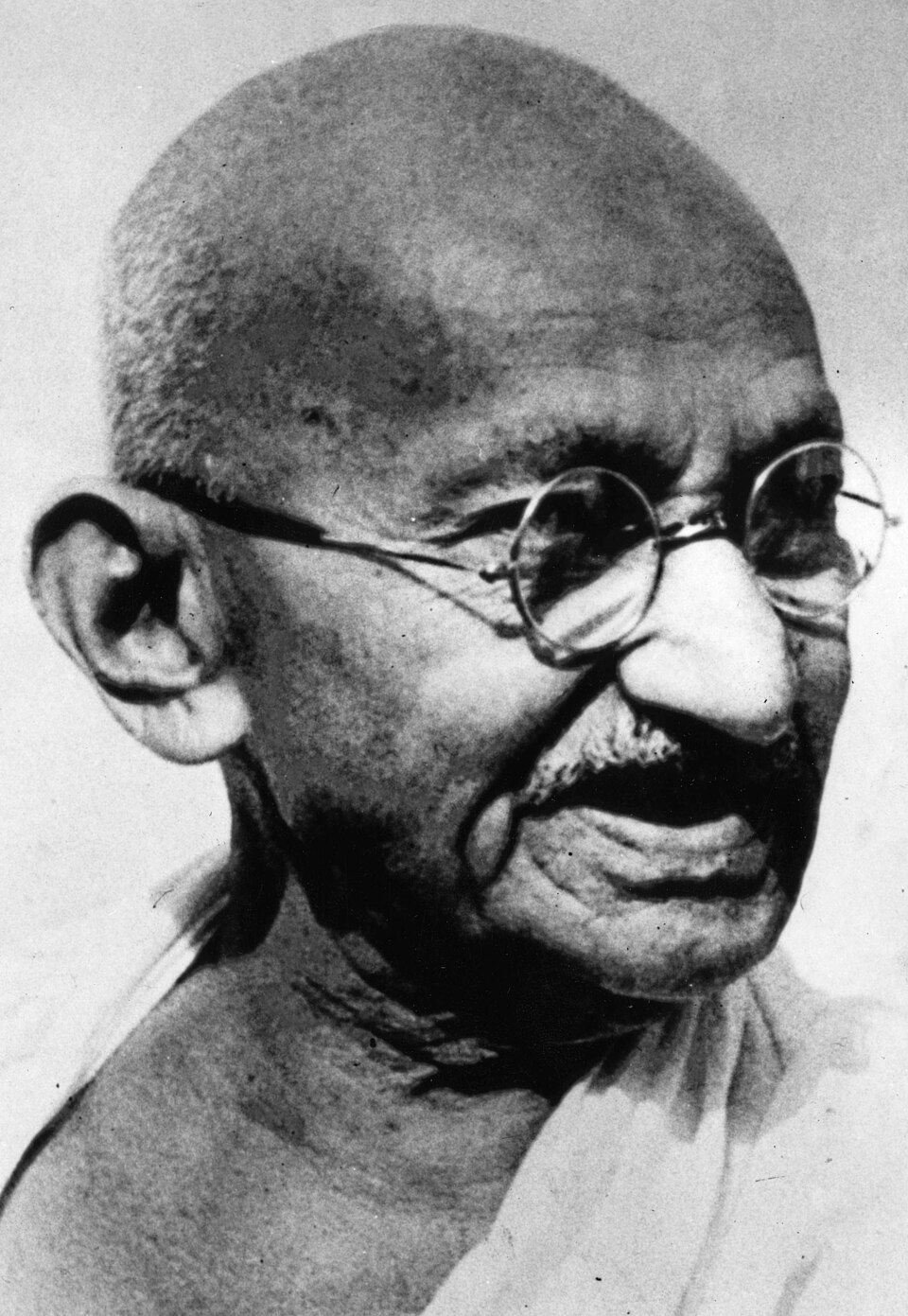
—Why do you wear just a big white cloth, no shirt?
My dhoti! This simple piece of white cotton around the waist, yes. In the 1920s, I decided to wear nothing else. I had been a lawyer, dressed in English style, stiff collar and tie. And then I looked at our peasants, so poor they had almost nothing on their backs. How could I live in comfort while they shivered? So I gave it all up, and I spin the cloth I wear myself. A great English gentleman, Churchill, contemptuously called me “that half-naked fakir.” That made me smile gently. Because this simplicity, you see, was my way of telling my people: I am one of you.
—Is it true that you deliberately stopped eating?
Yes, my child, and I understand that may frighten you. But let me explain. When an injustice seemed too heavy, I stopped eating. I only drank a little water, sometimes with a drop of lemon juice. In 1932, I fasted for six full days. The British wanted to set apart the most despised of my countrymen, as outcasts, during elections. My weakened body was my only protest. It was not to punish myself, nor to frighten anyone. It was to touch hearts, gently, without violence. And believe it or not, after those six days, they finally backed down. An empty stomach had bent an empire.
—Who were the people called untouchables?
Ah, that is an old wound of my country. In our land, some were born at the very bottom, so despised that no one dared even brush against them. They were called the “untouchables.” Temples, wells, almost life itself were closed to them. It revolted me to the core. I wanted to restore their dignity. I named them Harijan, which means “children of God.” For in the eyes of heaven, my child, no person is worth less than another. In the evenings, at my ashram, I prayed together with Hindus, Muslims, Christians. Imagine that circle of such different friends, sitting side by side. One human family, without first or last.
—How did you feel when India was cut in two?
That was the greatest sorrow of my life. In 1947, India finally became free, after so many years of struggle. I should have danced for joy. But then: the country was torn in two, India on one side, Pakistan on the other. Hindus and Muslims who had lived side by side for centuries suddenly began to hate and kill each other. Millions of people had to flee their homes on the roads. This “Partition,” as it is called, I had begged not to happen. I fasted again, old and tired, to stop the massacres. All my life I had repeated that we were brothers. And I saw brothers tearing each other apart.
—Were you afraid to die, at the end of your life?
No, my child, I was not afraid. I had lived as a man who believes in truth and non-violence, what we called ahimsa: never to harm anyone. On January 30, 1948, a man from my own people resented me for also loving Muslims. He came up to me as I was walking to evening prayer. And you know what? I did not hate the one who struck me. You do not change the world with hatred; you change it with love, patiently, like spinning cotton thread by thread. If you remember one thing from my life, my children, remember this.
You do not change the world with hatred; you change it with love.
This imaginary interview was generated by artificial intelligence from sources documented in Gandhi's profile. It dramatises what the figure might have said based on what we know about them, but does not constitute attested historical testimony. For primary sources and factual documentation, refer to the full profile.