Imaginary dialogue between Lord Irwin (Edward Wood, vice-roi des Indes) and Gandhi
by Charactorium · Gandhi (1869 — 1948) · Politics · 6 min read
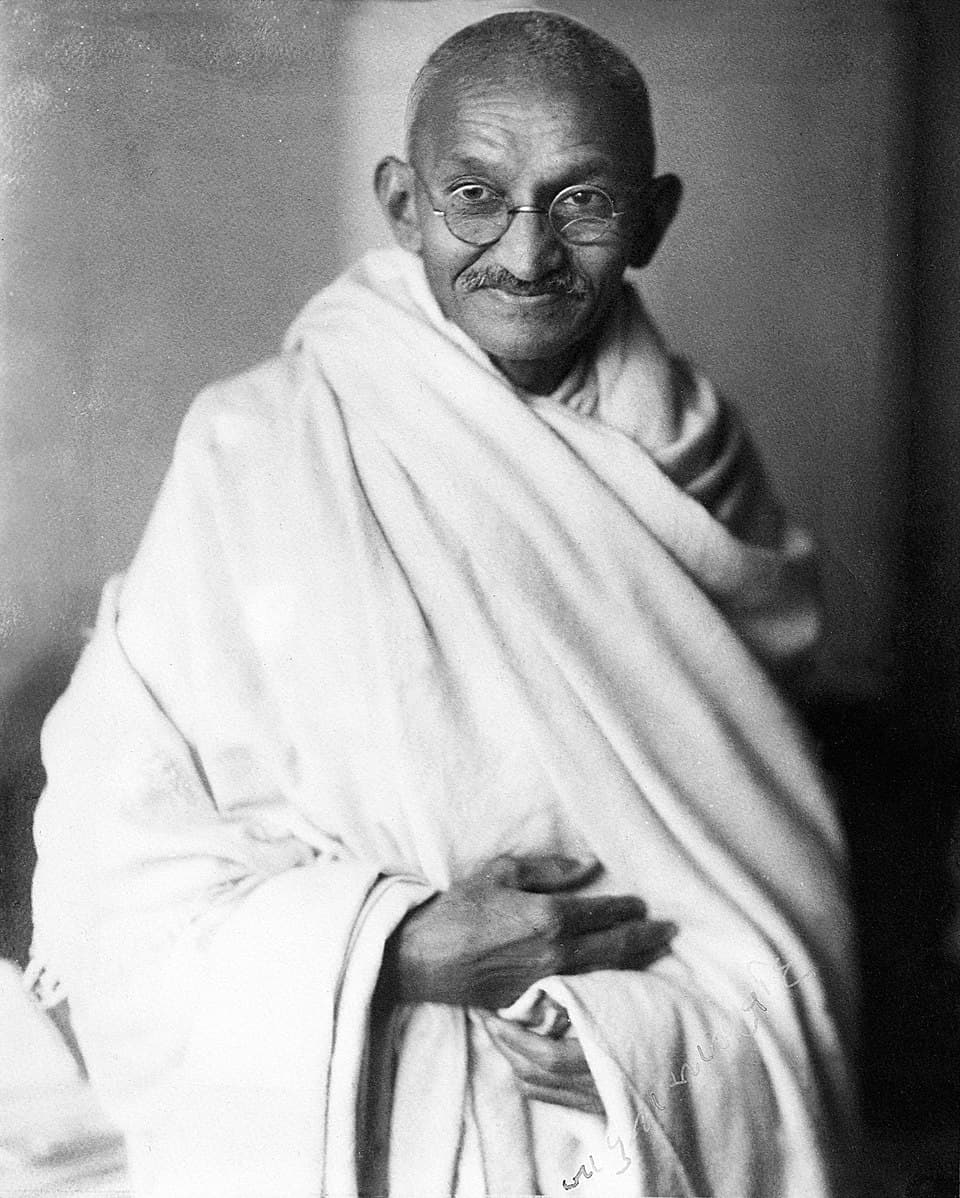
It is in a simple room of Birla House, in New Delhi, at the end of 1947, that Lord Irwin — now Lord Halifax but still for Gandhi the viceroy of old — meets the old fighter sitting cross-legged on his mat, the spinning wheel within reach. The oblique light of a winter afternoon falls on the white dhoti and the round spectacles. Sixteen years have passed since their pact of 1931, and the two men — the adversary of the Crown and the apostle of nonviolence — know what they owe each other. Irwin has come, not as a negotiator, but as a man curious to understand the one he had imprisoned and with whom he shook hands.
—Before India, before our discussions, there was South Africa. I have been told that one night, on a train, it all began. What really happened there?
You touch, Excellency, upon the night that awakened me. In 1893, at Pietermaritzburg station, I was thrown out of a first-class carriage, my valid ticket in hand, for the sole reason that my skin was brown. I spent that night shivering on a bench, not from cold but from anger and shame. I could have returned to India, bowed my head, kept silent. I chose to stay and fight injustice with weapons other than hatred. That was, believe me, the founding moment of my entire life. Later I founded Phoenix Settlement, near Durban, to live simply what I preached. Everything you later faced in me, sir, was born on that deserted platform.
I spent that night shivering not from cold but from anger and shame.
—You, a London-trained lawyer, forged a weapon that my predecessors never knew how to fight. Where did this Satyagraha come from?
The word I sought for a long time, for “passive resistance” said nothing right. Satyagraha is anything but passive: it is the force of truth, insistence on truth, supported by Ahimsa, the refusal to harm anyone, even the adversary. I developed it in South Africa, between 1906 and 1914, against unjust laws. I read much of your Thoreau, that American who refused to pay taxes to an unjust state. In my Hind Swaraj, in 1909, I wrote that true civilization awakens man’s noble instincts, not his fury. Understand well, Excellency: I do not want to defeat you, I want to convert you. That is why you always found me disarming — literally.
I do not want to defeat you, I want to convert you.
—Remember: in March 1930, you wrote to me before marching to the sea. I read your letter as a courteous challenge. Why salt, Mr. Gandhi?
Yes, I wrote to you on 2 March 1930, and I greeted you not as the representative of the Crown but as a human being. Salt, you see, is the humblest thing: no one can live without it, and you had placed a tax on it that weighed on the poorest peasant. Leaving the Sabarmati Ashram, we walked three hundred and eighty kilometers to Dandi. At each village, the crowd grew. On 6 April, I bent down and picked up a handful of salt on the beach — a childlike gesture, and yet the entire Empire trembled. You imprisoned me, then, the following year, you received me to sign our pact. Thus a handful of salt led you to shake my hand.
I bent down and picked up a handful of salt — and the entire Empire trembled.
—At Ahmedabad, before leaving, you spoke to the crowd. What were you really seeking — to break a tax, or something broader?
On 12 March 1930, before my people, I said that I wanted to purify my nation and purify myself through this march. The salt tax was merely the symptom; the evil was the conviction, among you as among us, that India could not govern itself. A slow foot march, where everyone sees the pilgrim covered in dust, says this better than a thousand speeches: a people standing up no longer needs a master. I knew you would throw me in prison, and I said so openly to the crowd. But you cannot imprison an idea that walks. You, Excellency, understood that faster than your ministers in London — and that is why we, you and I, could speak to each other as men.
You cannot imprison an idea that walks.
—I am told in London that my host spins his own thread every day, like a craftsman. Why would a lawyer become a cotton spinner?
Every morning, before dawn, I sit at my charkha and spin. It is not an old man’s pastime, believe me: it is the soul of Swadeshi. As long as India buys cloth from your Manchester mills, she remains a beggar at your door. But let her spin and weave her own cotton, and she becomes free, from thread to spirit. In the 1920s I renounced all Western clothing for this simple dhoti that I spin myself, in solidarity with the peasant who has nothing. Your Mr. Churchill reportedly called me a “semi-naked fakir.” Let him say it. This semi-naked man needs no one to clothe himself — and that, Excellency, is the whole difference between him and me.
As long as India buys cloth from Manchester, she remains a beggar at your door.
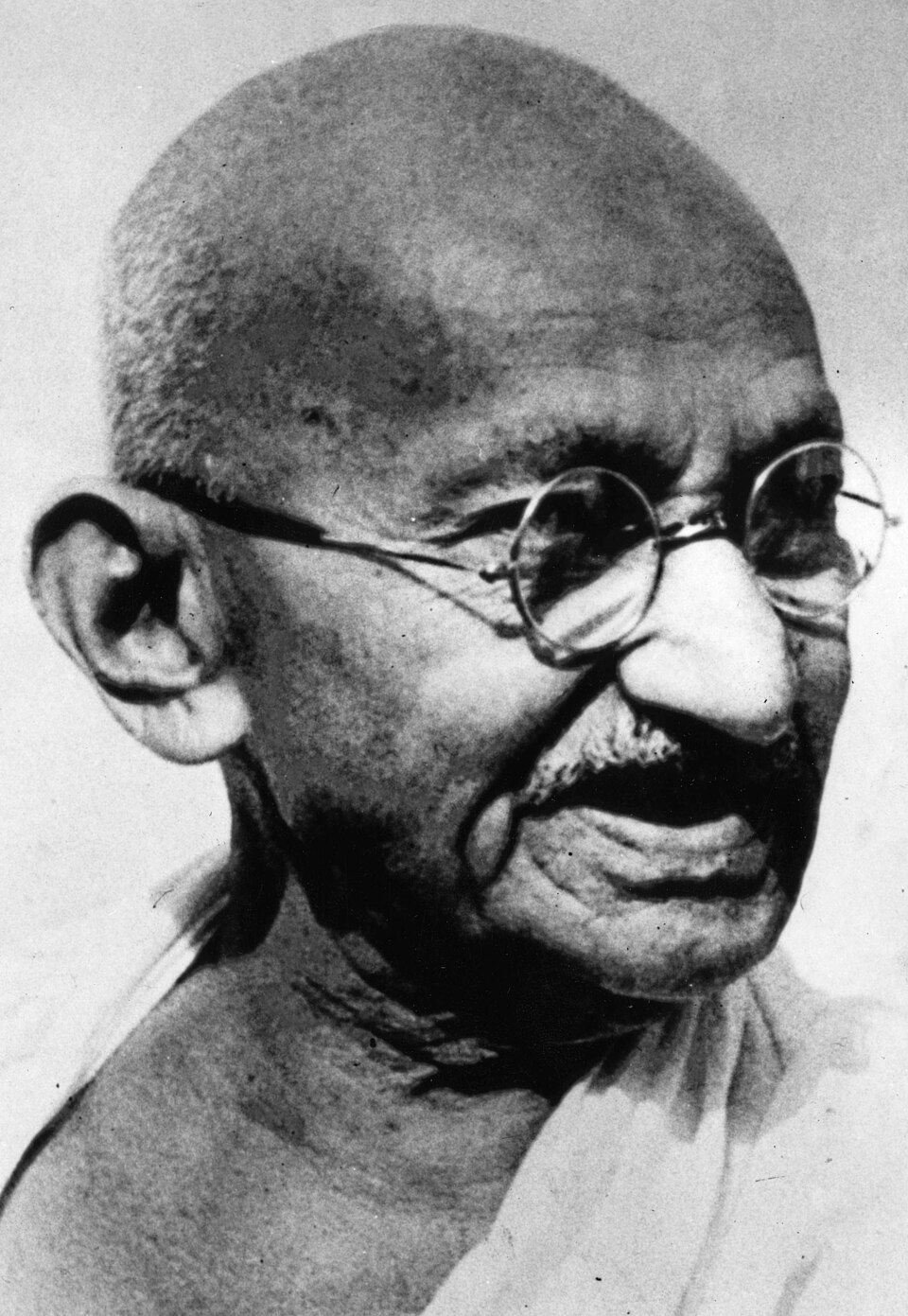
—You received kings and viceroys in that single loincloth, without shoes. Was that not, on your part, a form of calculated provocation?
Call it that if you will, but it is a provocation that hurts no one. When I came to London in 1931 for the Round Table Conference, people worried about my appearing thus before your king. I was not going to betray three hundred million peasants by donning a suit to please the court. My dhoti, my round spectacles, my sandals that I cut myself: that is my entire baggage, and it speaks the truth of my people better than an embroidered uniform. Voluntary simplicity is not poverty, Excellency — it is a wealth that neither tax nor prison can take from me. You, who received me in great pomp, know how much I felt, despite everything, the freer of the two in the room.
Voluntary simplicity is not poverty: it is a wealth that neither tax nor prison can take from me.
—There is one thing I have never understood: in 1932, you stopped eating for men whom your own religion calls “untouchables.” Why risk your life for them?
Because a nation that despises its humblest has no right to claim its freedom. In 1932, they wanted to separate in the voting booths those called untouchables from the rest of the Hindus — to lock them in their exclusion forever. I fasted for six days, drinking only a little lemon water, until they gave up. I called them Harijan, children of God, for no being is impure in the eyes of the Creator. My body, you see, is my last weapon: when words are no longer enough, I offer my hunger. Your doctors were alarmed, your officials counted the days. But I was not fasting against you, this time — I was fasting against a wrong committed by my own people. To fight injustice in the occupier and turn a blind eye at home: that, I could never do.
When words are no longer enough, I offer my hunger.
—You speak of converting the adversary. But do you truly believe that an empire, a government, can be touched by moral force alone?
I am convinced of it, and our shared history bears witness. When I launched non-cooperation, between 1920 and 1922, I invited my compatriots to desert your schools, your courts, your cloth — without raising a fist. An administration holds only by the consent of the governed; withdraw that consent, and the most powerful empire finds itself ruling emptiness. Civil disobedience is not disorder: it is obedience to a law higher than yours. You yourself, Excellency, in 1931, chose to talk to me rather than break me. That day, moral force prevailed over armed force. A disarmed man who is not afraid is stronger than a regiment — because you no longer know what to take from him.
A disarmed man who is not afraid is stronger than a regiment.
—In this ashram where you receive me, you live like the poorest of your disciples. What does a typical day for Gandhi look like?
I wake before four o’clock, in the dark, to pray in silence. Then I spin for an hour at my wheel, for discipline of the body prepares that of the soul. In the afternoon, I read the hundreds of letters that arrive, receive visitors, discuss with Congress leaders. In the evening, we pray together — Hindus, Muslims, Christians mixed, for God has no border. I eat little: goat’s milk, fruits, raw vegetables. My cell has only a mat, a spinning wheel, a few books. You who received me under gilded ceilings will find this quite austere. But I have never slept better than on this mat: one sleeps poorly, Excellency, when one possesses more than one’s needs.
One sleeps poorly when one possesses more than one's needs.
—Today India is free, but torn apart, divided in two. You who preached unity so much, how do you bear this partition?
Like a wound that will not heal in my lifetime. I dreamed of an India where Hindu and Muslim would be brothers under the same roof; today I see trains of refugees, villages in ashes, blood shed in the name of God — which is the worst of blasphemies. The freedom we won through nonviolence, some are defiling with hatred. So I fast again, I walk again where people kill each other, old as I am. All my life I have said that the end does not justify the means: a Swaraj built on hatred will not be the Swaraj I dreamed of. But I keep hope, for without it I would be but an exhausted fakir. As long as one heart can change, nothing is lost.
A Swaraj built on hatred will not be the Swaraj I dreamed of.
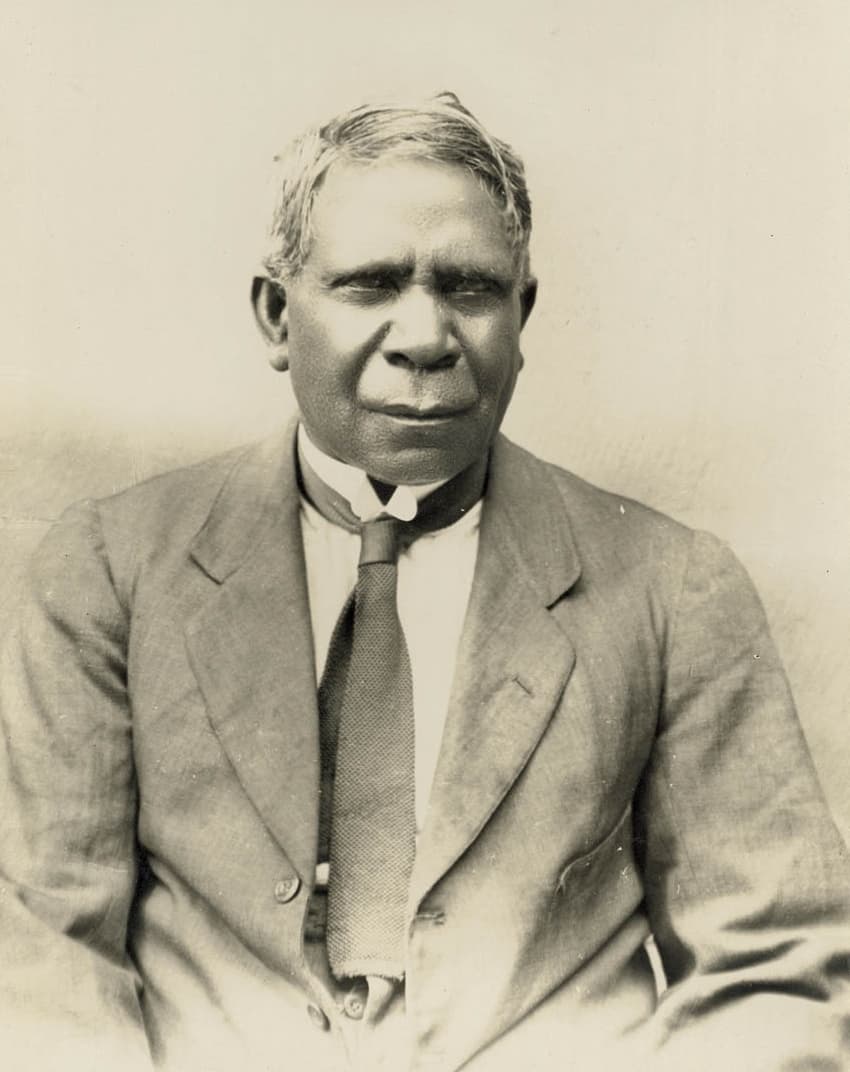
This imaginary interview was generated by artificial intelligence from sources documented in Gandhi's profile. It dramatises what the figure might have said based on what we know about them, but does not constitute attested historical testimony. For primary sources and factual documentation, refer to the full profile.