Imaginary dialogue between Nadia Boulanger and Germaine Tailleferre
by Charactorium · Germaine Tailleferre (1892 — 1983) · Music · 5 min read
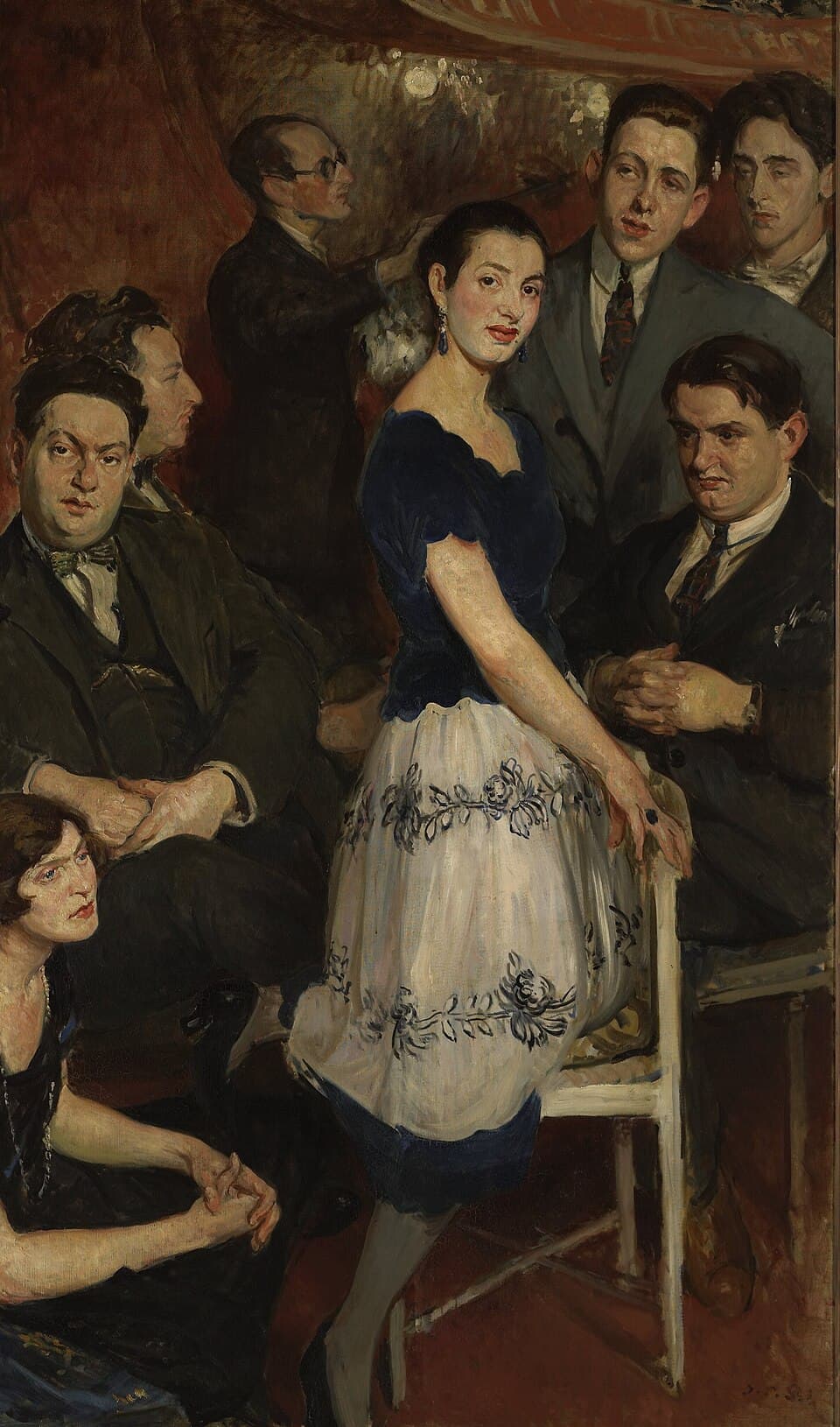
It is in the large studio in Montfort-l'Amaury, one afternoon in 1956, that Nadia Boulanger comes to visit her friend Germaine Tailleferre. On the grand piano lie manuscript scores and a sketchbook with blackened margins. The two women have known each other since their Conservatoire days, when one taught while the other already composed with that ease that set her apart. Nadia has come with the affectionate curiosity of one who once wrote to her to cultivate her own voice.
—Germaine, do you remember those years when you were the only woman among Les Six? How did you hold your own alongside Milhaud and Honegger?
You, who knew the Conservatoire better than anyone, know how rare women were in the composition class. When I was counted among Les Six, I was the only woman in the midst of boys who talked loudly and wrote quickly. I never wanted to apologize for being there: I simply worked. Cocteau said I composed with natural grace, and that flattered me as much as it annoyed me, because behind the grace there was a lot of discipline. People attributed facility to me as they attribute to a woman a gift from heaven rather than hard labor. I learned to let them talk and to continue on my way, never leaving my desk.
People attributed facility to me as they attribute to a woman a gift from heaven rather than hard labor.
—When Diaghilev commissioned a ballet from you for the Ballets Russes, in 1926, did you feel that you were finally recognized as a true composer?
That commission for The Bird Seller touched me deeply, I admit. The Ballets Russes were the most prestigious company, and one did not enter it through favor. Receiving this request meant being treated on the same level as my male colleagues, not as a salon curiosity. I wrote that light, dancing music without trying to prove anything, and that is precisely what pleased. You know me, Nadia: I distrust works that seek to demonstrate. That recognition, coming from a man as demanding as Diaghilev, was worth far more to me than many circumstantial praises. It gave me the confidence to continue without always having to justify myself.
It meant being treated on the same level as my male colleagues, not as a salon curiosity.
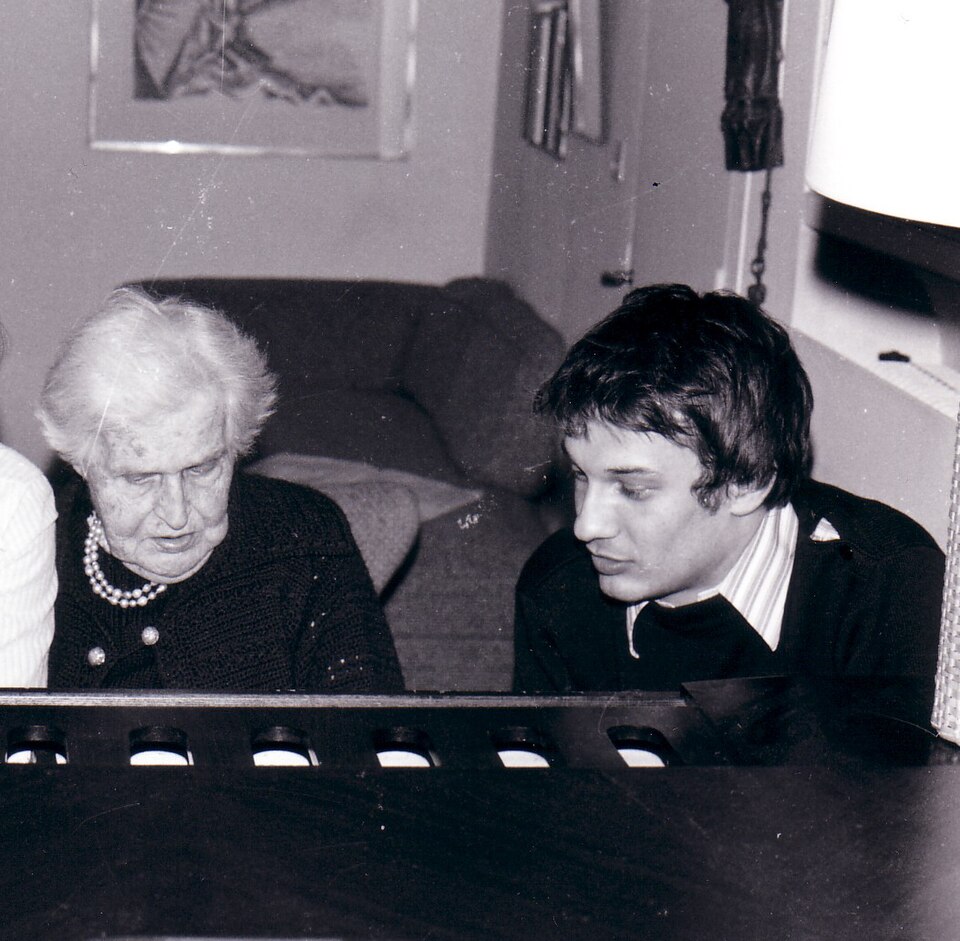
—I once wrote to you to develop your personal voice, away from Parisian fashions. At work, in the morning, how do you seek that voice?
Your advice has never left me, Nadia, and I often return to it. I get up early; the morning belongs to me. I sit at the piano before the day is fully light, with my sketchbook where I jot down ideas that are sometimes worthless. It is there, in that silent discipline, that I find what you called my own voice. I distrust fleeting fashions that agitate the musical world—one day the system, the next experience for its own sake. I seek clarity, the right line, the melody that stands alone. Composing, for me, is not a stroke of brilliance: it is returning each morning to the same desk and crossing out until the phrase sounds true.
I seek clarity, the right line, the melody that stands alone.
—During the Occupation, you had to leave for California. You who loved your work table so much, how did you experience that exile in Hollywood?
It was both a heartbreak and a refuge. Leaving occupied France, in 1942, meant abandoning my habits, my piano, the familiar silence of my studio. In California, I composed for film, like so many European exiles thrown there by the war. The light was beautiful, but it was not mine. I wrote film music to live and to keep from silence, because no longer composing would have been a second occupation, an inner one. I waited for the liberation of my country as one waits for a letter. And when I was able to return, in 1946, I found my desk again with the feeling that I had, despite everything, saved what was essential: my hand had never stopped writing.
No longer composing would have been a second occupation, an inner one.
—Do you think that the profession of composer, for a woman of our time, still requires her to constantly prove what a man obtains from the outset?
Alas, yes, and you know something of it, you who teach and are admired without always being entrusted with the baton. They grant us talent grudgingly, as a concession. I have composed in every genre—symphonies, concertos, ballets, operas, and even pieces for children—and sometimes that breadth was dismissed as dispersion, where in a man it would have been praised as range. I have not become bitter about it, or very little. But I see clearly that the place is never given to us: it is taken, score after score. A woman who composes must compose twice—the work, and the right to sign it.
A woman who composes must compose twice—the work, and the right to sign it.
—You spoke of light music for Diaghilev. That lightness that is sometimes reproached to you, do you claim it as a deliberate choice?
Fully, and I know you will understand me, you who have a fine ear. Lightness, among us Les Six, was not facility: it was a response to the romanticism that weighed tons, to those orchestras that wanted to overwhelm you with emotion. We wanted air, light, wit. Composing clearly is more difficult than composing darkly, because nothing can hide. A wrong note in the fog goes unnoticed; in limpid music, it cries out. I made the choice of that French clarity, inherited from Couperin as much as from Fauré, and I am not ashamed of it. What is taken for lightness is often the modesty of a work that does not want to show off.
Composing clearly is more difficult than composing darkly, because nothing can hide.
—With more than two hundred works, are you not afraid that so many scores will end up in the shadows of libraries, forgotten by concert programs?
That fear visits me, I will not hide it. I have written so much, and so many of my pages sleep in boxes that no one opens. They willingly play Milhaud, Poulenc, Auric; my name appears less often on posters. I believe that posterity, for a woman, is slower, more distracted. But I do not compose for programs or for tributes: I compose because I know nothing else to do, and because silence would be worse than being forgotten. Perhaps one day curious musicians will reopen those boxes and be astonished. I will know nothing of it, and that is fine with me. The work exists, it was written with honesty—the rest no longer belongs to me.
I compose because I know nothing else to do, and silence would be worse than being forgotten.
—In that sketchbook I see there, on your piano, what do you keep from all those drafts that you mercilessly cross out?
This notebook is my confidant, Nadia. I throw ideas into it upon waking, melodic snippets that come to me while walking or pouring coffee. Most are worthless and I strike them out without regret the next day. But sometimes a little three-note cell, lost in the middle of the crossings-out, becomes the seed of an entire work. I work at the piano, I try, I come back, I erase—it is a craft of patience more than inspiration. You taught me to distrust the fever of the moment, to let things rest. So I wait, and I sort. The sketches I keep are not the most brilliant: they are the most solid, those that withstand being read cold.
A little three-note cell, lost in the middle of the crossings-out, becomes the seed of an entire work.
—Upon returning from California, in 1946, did you feel that French music had changed during your absence?
A lot, yes, and I felt a bit like a stranger in my own country. A younger generation was seeking new paths, systems, learned constructions where melody mattered less than procedure. I listened to that with respect, but without recognizing myself in it. I was not going, at my age, to renounce the clarity that had been my language for forty years. I resumed my desk, my habits, and I continued to write as I saw fit, faithful to myself even if it meant seeming outdated. You know, exile had taught me one thing: you can take my country, my piano, my bearings, but not my way of hearing the world. I came back to compose in French, and I no longer wanted to budge from that.
You can take my piano and my bearings, but not my way of hearing the world.
—If, long after us, one of your works were to be rediscovered, which one would you wish to entrust to that uncertain memory?
What a daunting question, Nadia. I could not single out one, because each carries a moment of my life. The Piano Concerto from my early years is dear to my heart, because it speaks of the momentum of that time when everything seemed possible with Les Six. But perhaps I would prefer that they remember my chamber music, those sonatas I worked on all my life without respite, in intimacy rather than in the spotlight. It is there, I believe, that I am most true. If an uncertain memory must keep something of me, let it keep not the most brilliant title, but the most faithful voice. The rest—honors, rankings—I gladly leave to those who care about them. I composed, and that was already my entire happiness.
Let them remember not the most brilliant title, but the most faithful voice.



This imaginary interview was generated by artificial intelligence from sources documented in Germaine Tailleferre's profile. It dramatises what the figure might have said based on what we know about them, but does not constitute attested historical testimony. For primary sources and factual documentation, refer to the full profile.