Kids interview Germaine Tailleferre
by Charactorium · Germaine Tailleferre (1892 — 1983) · Music · 5 min read
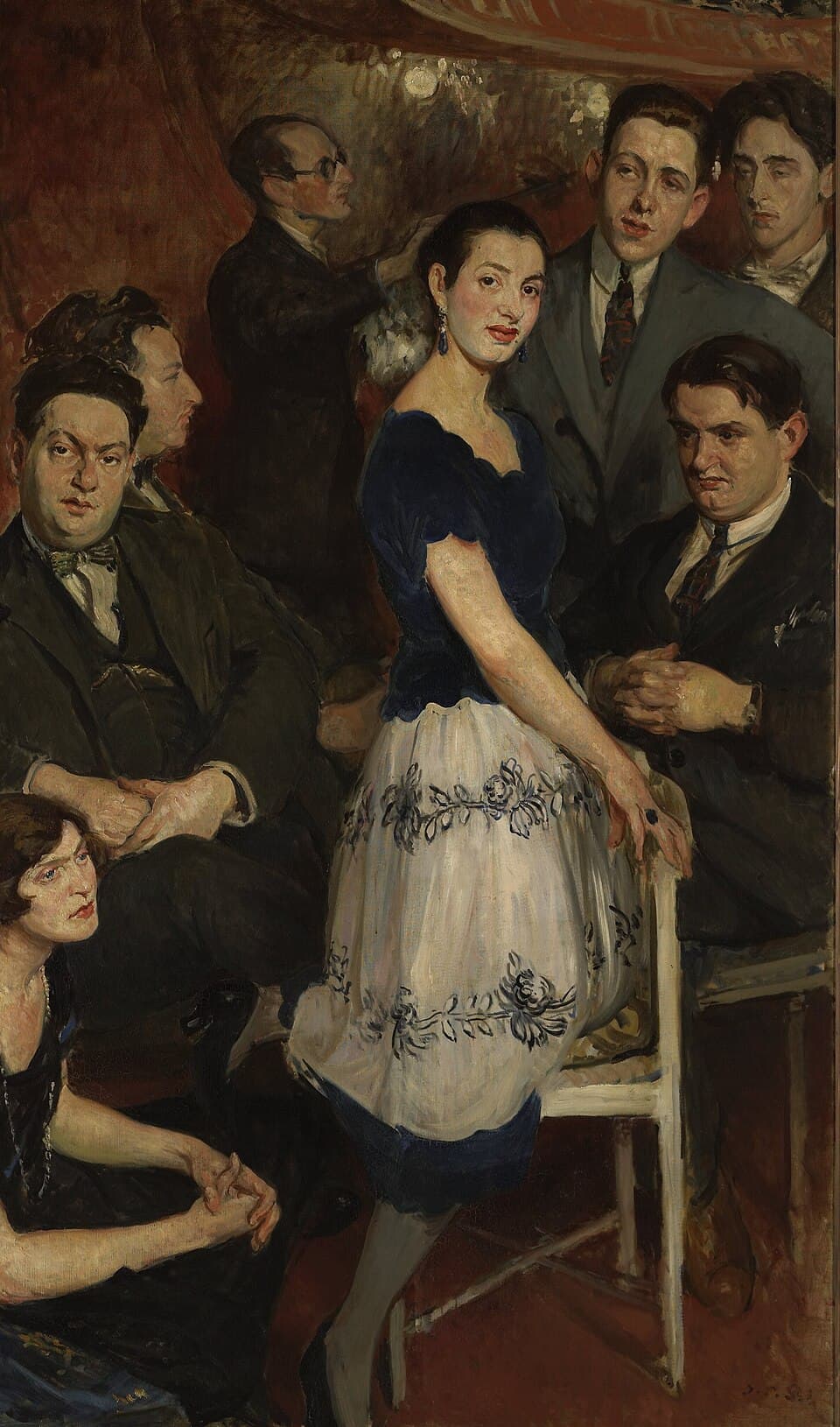
That morning, two twelve-year-old students on a discovery class push open the door of a small living room where a piano stands. An elegant old lady greets them with a smile: it is Germaine Tailleferre, the only woman of the famous group Les Six. Curious, the two young visitors settle in and begin to ask their questions.
—How old were you when you started music?
You know, my child, I was very small when music entered my life. I was born in 1892, and it was my father, an enlightened music lover, who encouraged me. I started composing very young. Later, I entered the Conservatoire de Paris. There I studied harmony — the art of marrying notes so they sound good together. Imagine a large hall full of boys... and me. Women were rare in those classes. But I worked, again and again. And music doesn't care if you are a girl or a boy.
—Did someone help you find your own style?
Oh yes. There was an extraordinary woman, Nadia Boulanger, a very great music teacher. She wrote me letters. One day, she told me that my talent was undeniable, and that I should develop my personal voice. Do you know what that means, a personal voice? It's not singing. It's your own unique way of writing music. She advised me to stay away from fads — those little trends that pass quickly, like leaves in autumn. In Paris, the musical world was very agitated. As for me, I stayed my course. I wrote what was true to myself.
—What was it like being the only girl in Les Six?
Les Six was our little band of young composers in the 1920s. We wanted music that was clear, light, modern. There was Darius Milhaud, Arthur Honegger, Georges Auric, Poulenc, Durey... and me. The only woman. Imagine a café table where everyone talks loudly, laughs, discusses music until night. I was there, in the middle. The poet Jean Cocteau said that I composed with a natural grace. That was kind. But sometimes, they forgot to take me seriously. So I learned one thing: do your work, quietly, and let it speak for you.
Do your work, quietly, and let it speak for you.
—Did you have to fight to be respected?
Yes, my child, often. In my time, people thought composing music was a man's job. A woman who wrote symphonies — that surprised them. They found me talented, but they always added "for a woman." Can you imagine how annoying that is? I had to fight to be recognized at my true worth. Not with my fists, of course! With my scores. I wrote everything: concertos, ballets, chamber music. More than two hundred works in my life. In the end, it was the notes that had the last word, not the prejudices.
It was the notes that had the last word, not the prejudices.
—Is it true you wrote for the famous Ballets Russes?
Ah, that's a wonderful memory! In 1926, I composed a ballet, Le Marchand d'oiseaux. And guess for whom? For Serge Diaghilev's Ballets Russes. It was the most famous dance company in the world. Imagine a theater full of people, magnificent dancers, sets like a dream... and it's my music that makes them move. Receiving a commission from Diaghilev, for a female composer, was like receiving a medal. It meant: you are respected, you are treated like the greatest. I was proud, but above all, I was happy to make people dance.
—Were you nervous on opening night?
Oh, my heart was pounding! On the night of a premiere, they put up concert posters in the streets of Paris with your name on them. Then the curtain rises. You sit in the dark, and you listen to your work come to life. It's terrifying and wonderful at the same time. You wonder: what if the audience doesn't like it? For a ballet like Le Marchand d'oiseaux, I had rehearsed for weeks with the dancers. When the first applause bursts out, all those sleepless nights were worth it. Believe me, that silence just before the applause — you never forget it.
—They say you had to leave France during the war?
Yes, and it was a very hard time. During the Second World War, France was occupied. Life became dangerous, stifling. So in 1942, I packed my bags and left very far away, to California, in the United States. Imagine crossing an entire ocean, leaving your home, your friends, your language behind. There, the sun was shining, but my heart remained in France. I was waiting for one thing only: for my country to be liberated. I stayed until 1946. And you know, even far away, I kept composing. Music was my piece of France that I carried everywhere.
—Did you really write music for the cinema in Hollywood?
Yes indeed! In America, in Hollywood, they made many films, and films need music. It tells you whether a scene is sad, happy, or frightening. Close your eyes during a movie: without music, everything becomes flat. I composed for film, and later also operettas — those are light, cheerful little operas with songs. Surprising, isn't it? The same person who writes for the Ballets Russes can also write to make the general public laugh and sing. I liked that: serious music and music that entertains — for me, they were the same family.
—Why are you less known than the boys of Les Six?
Ah, that's a rather sad question, my child. For a long time, my friends from Les Six remained famous, and I was somewhat forgotten. Yet I had written over two hundred works! But in my time, people more easily remembered a man's name. My music slept in drawers, like a hidden treasure. Then, starting in the 1970s, musicians and scholars rediscovered it. They opened my scores again, played my melodies again. What joy, at the end of my life, to finally hear: "But this music is beautiful!" It's never too late to be heard.
It's never too late to be heard.
—What would you like people to remember about you?
You want to know what I'd like to leave you? I wrote my memoirs near the end of my life, to tell everything I had seen. I composed for almost seventy years, never stopping, from the grand piano in my living room until my last days. What I want you to remember is simple. Never let anyone tell you that you can't do something because you are a girl, or a boy, or too young. Work, work with love. The beauty you create always finds its way to others. Even if it takes time.
Work with love: the beauty you create always finds its way.


This imaginary interview was generated by artificial intelligence from sources documented in Germaine Tailleferre's profile. It dramatises what the figure might have said based on what we know about them, but does not constitute attested historical testimony. For primary sources and factual documentation, refer to the full profile.