Imaginary interview with Germaine Tailleferre
by Charactorium · Germaine Tailleferre (1892 — 1983) · Music · 5 min read
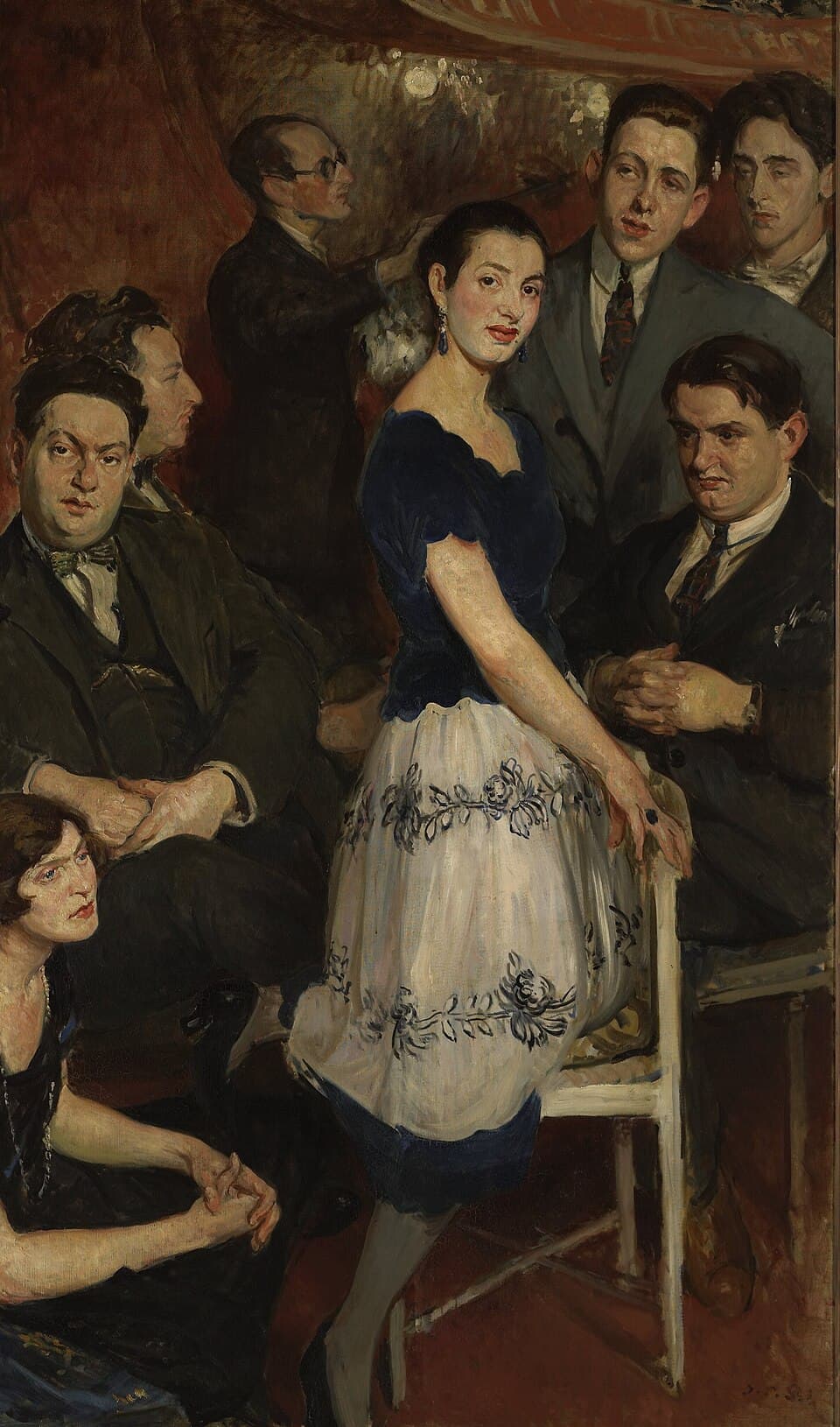
Montfort-l'Amaury, an autumn morning. In a house in the Yvelines where the grand piano takes up almost all the space, a slight ninety-year-old lady receives us, handwritten scores piled on the stool. Germaine Tailleferre, the last surviving member of Les Six, agrees to trace the thread of a career spanning nearly seventy years.
—How did you come to composition, you who were born in Saint-Maur in 1892?
It was my father, an enlightened amateur, who placed my fingers on the keyboard before I could even read. At the Paris Conservatoire, I pushed open the doors of harmony and composition classes, those rooms where women could be counted on the fingers of one hand. There you could hear Gabriel Fauré correcting a modulation like straightening a stem that was too straight. I worked like a starving person, because you had to be twice as precise to be taken seriously. Even today, my best hours are in the morning: a light coffee, and I sit down at the piano before the world wakes up. Discipline, you see, is not the enemy of inspiration—it is its faithful servant.
You had to be twice as precise to be taken seriously.
—What did it mean to you to be the only woman among Les Six?
We were six hotheads around Satie and Cocteau: Auric, Durey, Honegger, Milhaud, Poulenc—and me. They wanted us to be clear, light, rid of the mists of Romanticism and the vapors of Impressionism. I loved that boisterous brotherhood, those evenings when we remade French music between bursts of laughter. But do not think my place there was assured. Cocteau praised my “facility” and my “natural grace”—charming words that carry their weight of condescension when repeated about a woman. Grace was readily granted to me; rigor, never without having to prove it. I composed between these two misunderstandings my whole life.
Grace was readily granted to me; rigor, never without having to prove it.
—Why did you have, in your words, to fight to be recognized for your true worth?
Because I was expected to be a pleasant exception, not a composer pure and simple. In the vocabulary of the time, they said “female composer” as if it were a curiosity—a separate genre, alongside the real profession. Nadia Boulanger, she never spoke to me like that: she urged me to develop my own voice, far from the fashions that agitated Paris every season. That’s the soundest advice I ever received. Les Six dispersed, each to his own glory, and I was still cited last, after a comma. I learned to shrug it off and write more—that was my only possible response, and the most tenacious.
I was expected to be a pleasant exception, not a composer pure and simple.
—Do you remember the commission from Diaghilev’s Ballets Russes?
You don’t receive such a letter without your hands trembling a little. Diaghilev, in 1926, asked me for a ballet—The Bird Seller—for his company, the most prestigious there was. Imagine: the same house that had caused a scandal with Stravinsky a few years earlier was knocking at my door. That meant I was judged on the same scale as my male colleagues, not on my gender. I wrote music made to leap, to follow the dancers’ bodies; you had to think rhythm with your feet as much as with your ear. I carried my sketches in a notebook I covered with variations, hunting for the phrase that would make an arm rise at the right moment.
You had to think rhythm with your feet as much as with your ear.
—What attracted you so much to composing for dance and theater?
The stage always called me. From La Nouvelle Cythère in 1923 to The Little Mermaid after Andersen in 1927, I sought music that is not content to be heard but is seen, is danced. Working with a choreographer or librettist means accepting not to be the sole master on board—and that’s precisely what I liked. We would sit down in the afternoon, try, scratch out, start over. A theme I thought perfect would collapse as soon as a dancer put it on his feet, and we had to redo everything. This open-air music, light and melodic, was sometimes judged minor; but I know the clockmaker’s work it requires.
I sought music that is not content to be heard but is seen.
—How did you experience your departure for California during the Occupation?
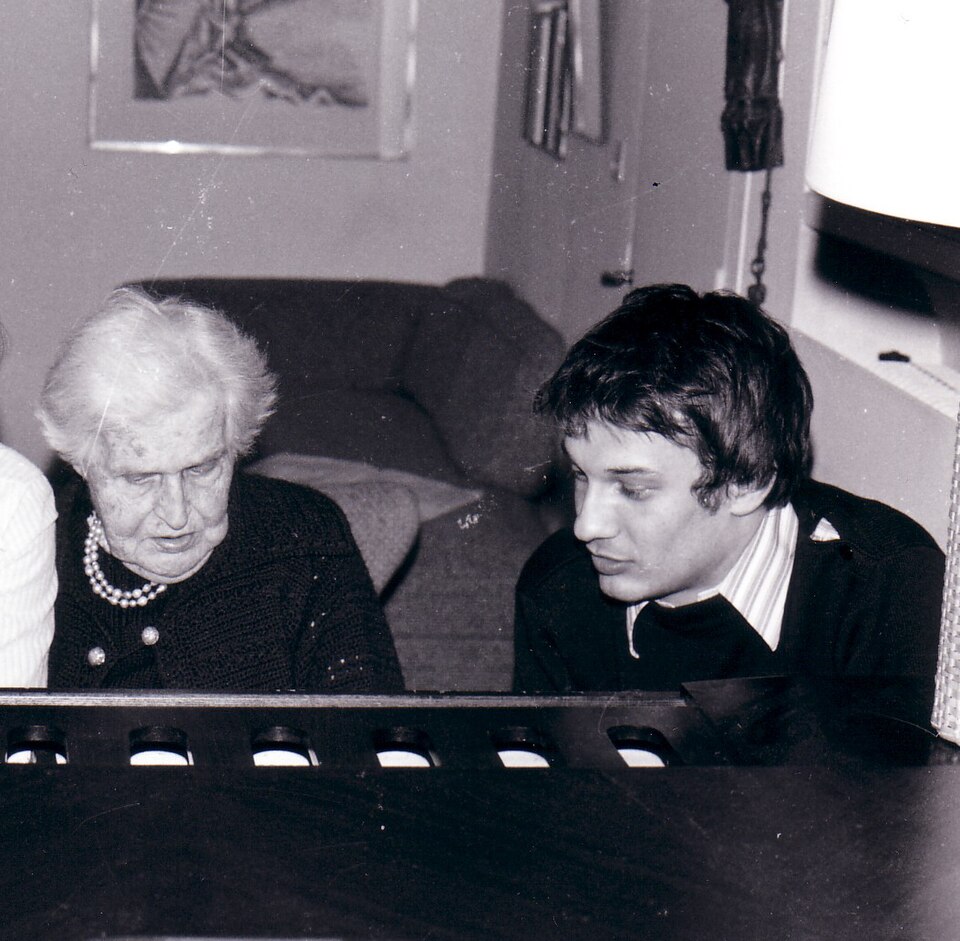
Leaving occupied France in 1942 is not a journey, it’s a tearing away. I crossed the ocean to find myself under the sun of California, in a country that knew of me only a foreign name on a score. There, I composed for cinema—Hollywood demanded music by the yard, fast, plenty. You learn humility when your work must bend to another’s image, disappear behind it. I waited, like so many exiles, for my country to rise again. I returned in 1946, relieved, but those four years taught me one thing: you can compose anywhere, as long as you have a keyboard and patience. Nostalgia, though, fits in no suitcase.
Leaving occupied France is not a journey, it’s a tearing away.
—What did this work for film and the so-called light genres teach you?
That there is no unworthy music, only badly made music. For decades, from the 1930s to the 1960s, I wrote operettas and film scores—works that pleased the public and funded my more ambitious scores. My colleagues sometimes looked down on this bread-and-butter labor. But a film melody has formidable constraints: sustain an emotion in thirty seconds, support an image without overwhelming it. I put the same care into it as into a concerto. Records and valve radios then carried my music into homes that would never have set foot in a concert hall. That too is serving one’s art: not despising those who listen to you.
There is no unworthy music, only badly made music.
—You have signed over two hundred works; how do you explain such abundance?
By daily fidelity, nothing else. People think I possess that “facility” Cocteau spoke of; in truth, I worked relentlessly, from the Piano Concerto of 1923 to the scores of my later years. I tried everything: symphonies, concertos, ballets, operas, chamber music, and even pieces for children—because composing for small hands requires a clarity that adults often forget. This versatility was taken for dispersion; I see it rather as the curiosity of a whole life. The craft is not begged; it is worn down at the worktable, page after page, on staff paper that you blacken until the last measure.
The craft is not begged; it is worn down at the worktable, page after page.
—How do you feel seeing musicologists rediscover your work since the 1970s?
A mixture of gratitude and irony, I admit. For half a century, I was filed away among the sidekicks of Les Six, a footnote between Milhaud and Poulenc. And now young researchers unearth my forgotten scores, play again what was thought lost. It’s strange to witness, in one’s lifetime, one’s own resurrection. I never composed for posterity—you write for the piece under your fingers, not for the centuries. But if I must imagine that I might still be read in a hundred years, I hope they hear less a rare woman than a musician who did his job honestly, without ever putting down the pen.
It’s strange to witness, in one’s lifetime, one’s own resurrection.
—What does a day of composition actually look like at your home?
It begins before dawn. I get up early, silence is my best ally, and I go to the piano where the sketches from the day before await. In the morning, I compose; the afternoon belongs to others—a performer coming to rehearse, a collaborator, sometimes a former member of Les Six passing through. I write everything by hand, on those staff sheets that I scratch with a pen until the phrase stands on its own. In the evening, in Montfort-l'Amaury, the village falls asleep and I reread what I did, or I receive a few friends to talk music. A life without glamour, they’ll say. But it is in this monastic regularity that everything lasting is born—inspiration is only a visitor; work, it remains.
Inspiration is only a visitor; work, it remains.



This imaginary interview was generated by artificial intelligence from sources documented in Germaine Tailleferre's profile. It dramatises what the figure might have said based on what we know about them, but does not constitute attested historical testimony. For primary sources and factual documentation, refer to the full profile.