Imaginary interview with Gloria Steinem
by Charactorium · Gloria Steinem (1934 — ?) · Society · Politics · Literature · 6 min read

An apartment on the Upper East Side, in Manhattan, cluttered with books and files stacked up like a campaign office. An Olivetti typewriter sleeps near the window; on the table, piles of reader letters await a reply. Gloria Steinem takes off her round glasses, pours two coffees, and settles in to talk.
—Before magazines and marches, there was a little girl in Toledo. What do you keep from that childhood?
I was born in Toledo, Ohio, in 1934, to a father who sold antiques by the roadside and loved nothing more than the open door to the unknown. We had no money, no fixed address for long, and I learned early that security, for a woman, doesn't fall from the sky: you have to earn it. That instability gave me two contradictory things I never reconciled — the fear of tomorrow and the love of the road. Later, when I spent my life on planes and cars crossing the country to meet activists, I think I was simply continuing, in my own way, that journey of my childhood.
I learned early that security, for a woman, doesn't fall from the sky: you have to earn it.
—How did those two years in India, in the late 1950s, shift your perspective?
Graduating from Smith College, I got a Chester Bowles fellowship that took me to India, to Bombay, between 1957 and 1959. I arrived as a young American convinced I understood poverty; I left knowing I understood nothing at all. There, I saw that the injustice done to women was not a matter of individual bad manners, but a system — patient, ancient, global. I walked with groups of village women who, lacking power, simply sat together to tell each other their lives — and discovered that their private sorrows had a common root. Years later, when they invented the word consciousness-raising in the United States, I thought: but that's exactly what I saw under another sky.
I arrived convinced I understood poverty; I left knowing I understood nothing at all.
—Let's talk about 1963. Why did you get hired as a 'Bunny' waitress at a Playboy Club in New York?
Because you only truly believe what you've touched with your own hands. For A Bunny's Tale, published in Show Magazine in 1963, I put on the costume, the ears, the obligatory smile, and every night I noted in my notebook the meager wages, the humiliating medical exams, the hands that thought they could do anything. The club presented itself as a dream of luxury; it was a factory where girls were asked to appear desirable without ever being allowed to feel desirable themselves. The investigation earned me national fame — and a label I spent years shedding, that of 'the girl who dressed up as a rabbit.' I was blamed for seeing too closely what would have been more comfortable to ignore.
The club presented itself as a dream of luxury; it was a factory.
—That label of 'the journalist who undressed for an article' haunted you for a long time. How did you experience it?
With the slow anger of those who are not taken seriously. I had written an undercover investigation on labor exploitation, and what people remembered most was that I had worn a tight costume. That's when I understood something lasting: when a woman denounces a system, people prefer to comment on her body rather than her arguments. All my life, the male press scrutinized my hair, my round glasses, my figure, as if my appearance had anything to do with the validity of my ideas. I ended up turning this trap into a springboard: since they were looking at me, might as well make that look serve something other than me. The Bunny costume taught me, paradoxically, never again to let myself be reduced to an image.
When a woman denounces a system, people prefer to comment on her body rather than her arguments.
—In 1972, no one bet on a mainstream feminist magazine. What were you hoping for, exactly?
We were simply hoping to prove that an audience existed. When I co-founded Ms. with Dorothy Pitman Hughes, in 1972, the men at the big publishing houses politely explained to us that there were no advertisers, no readers, no market — in short, not enough women who wanted to read about themselves. The first issue, released in January, sold out in eight days: three hundred thousand copies. Within weeks, we received tens of thousands of letters, written sometimes at night, in secret. Those letters all said the same thing: 'I thought I was alone.' That's what Ms. demonstrated — not that we were brilliant, but that an ocean of women was waiting for a mirror to be held up to them.
Those letters all said the same thing: 'I thought I was alone.'
—Why did you choose that title, 'Ms.', for your magazine?
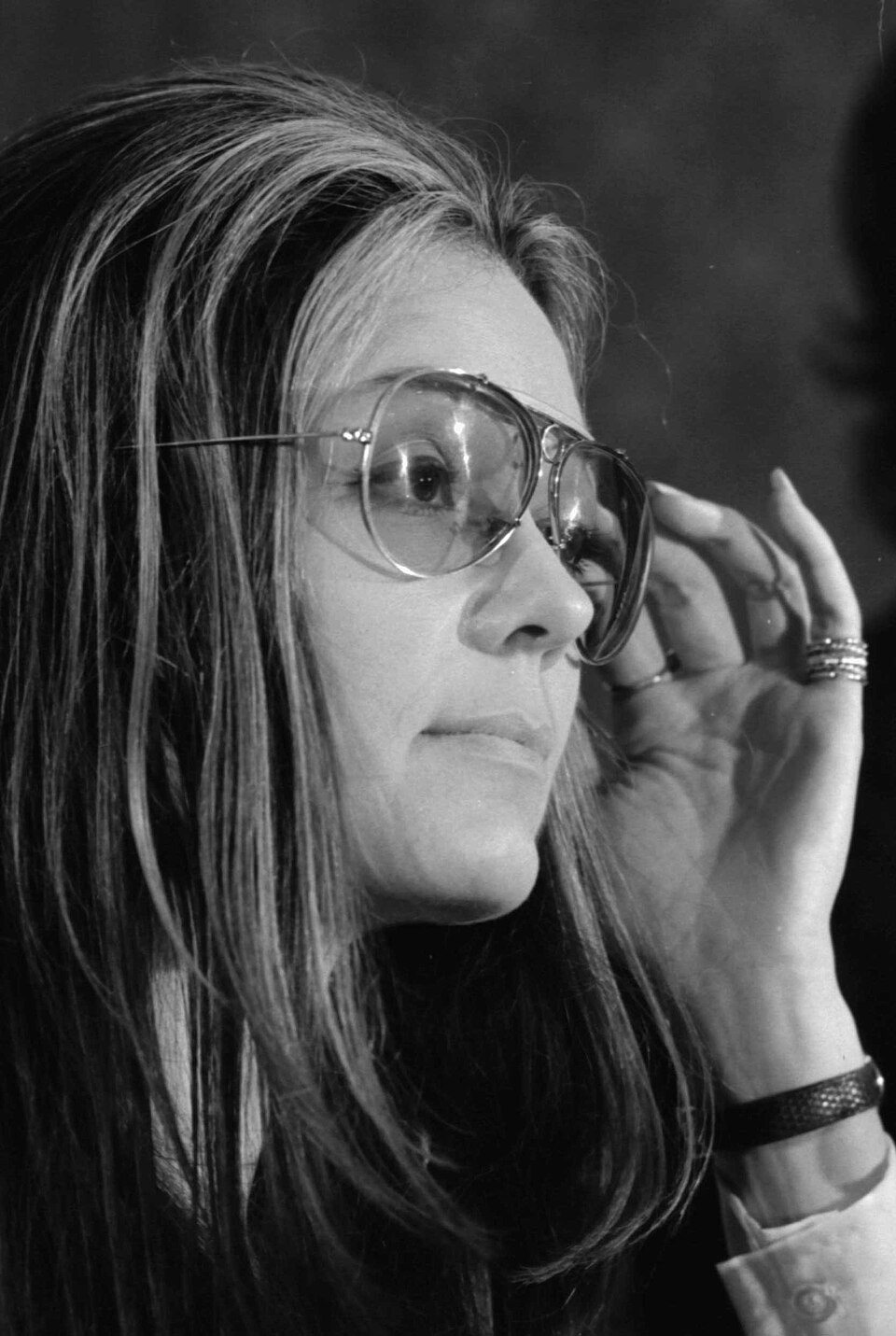
Because a word can be a pocket revolution. In English, a woman was forced to declare herself upfront: Miss if she wasn't married, Mrs. if she was — as if her marital status was the first thing to know about her, before even her name. Men, on the other hand, remained Mr., whole, without instructions. Ms. refused that classification: neither available nor taken, simply a person. Naming our magazine that was to display an entire program in two letters. I have always thought: language is not decorative; it installs in our minds what we believe is natural. Changing the vocabulary is already moving the furniture of the mind — and sometimes knocking down a wall.
Language is not decorative: changing the vocabulary is already moving the furniture of the mind.
—Do you remember August 26, 1970, the day of the Women's Strike for Equality?
As one of those rare days when you feel the ground shift under your feet. It was the fiftieth anniversary of women's suffrage, and we had come down to New York by the tens of thousands, the Women's Strike for Equality, alongside Betty Friedan and so many others. What I won't forget is the joyful noise, the hand-painted signs held above heads, and the astonishment of passersby discovering that we were so many. I was asked to speak; the words escaped me a little because the emotion was so great. That day, the movement ceased to be a rumor in living rooms and became a street force — visible, countable, impossible to send back to the kitchen.
That day, the movement ceased to be a rumor in living rooms and became a street force.
—Your feminism has often been described as linked to the fight for civil rights. Why did you insist so much on that alliance?
Because separating these struggles would betray both. I grew up with Rosa Parks refusing to give up her seat, Martin Luther King's march in 1963, the Civil Rights Act of 1964: the same energy was lifting an entire country. Yet people repeated that feminism was just a fad of white, well-off women, and that caricature revolted me because it made invisible those who suffered the most — Black women, poor women, working women. I already said it in 1969: women's liberation speaks to the lives of all women, of every class and every color. Sex and race are the two most visible differences; that's precisely why they have been used, forever, to rank human beings into superiors and inferiors.
Separating these struggles would betray both.
—A journalist reportedly said you 'didn't look like a feminist.' What did you reply?
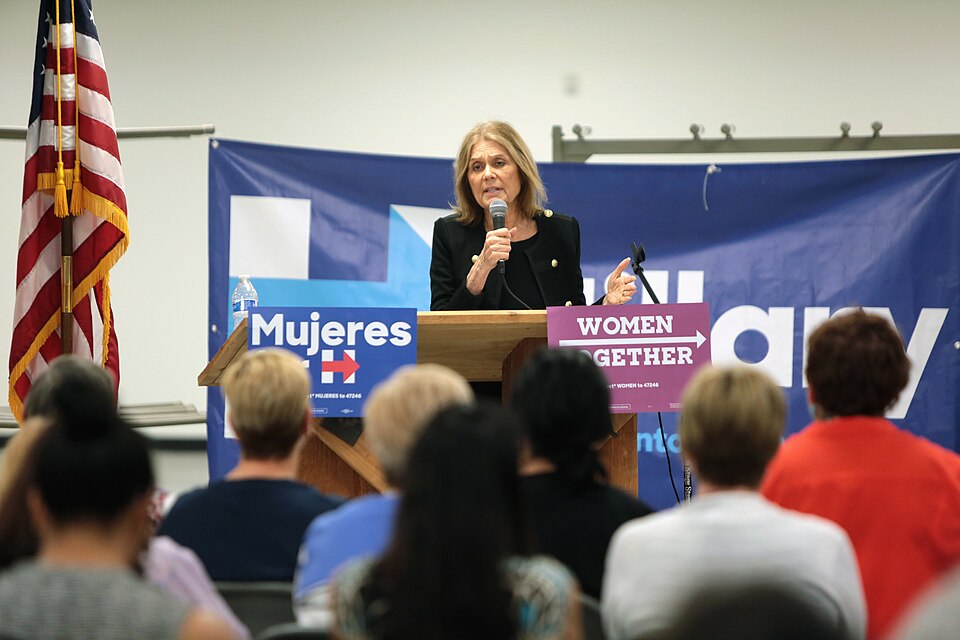
I replied, in essence: 'This is what a feminist looks like.' Behind the quip, there was real fatigue. People imagined the activist as a furious creature, necessarily ugly, necessarily bitter — a convenient way to scare young women tempted to join us. By telling me I was 'not feminist enough to be credible' because of my round glasses and my figure, that journalist thought he was flattering me; he was only revealing the prejudice. So I turned the phrase inside out. A feminist looks like everyone, because a feminist is simply someone who thinks women are fully human beings. The line was picked up, brandished, sewn onto signs by girls I will never know.
A feminist is simply someone who thinks women are fully human beings.
—You deliberately rejected the 'seductive' dress codes expected of you. Was that a political choice?
Everything is political when your body is a public battlefield. I dressed for the road, not to please: jeans, a sturdy jacket, my glasses — enough to write an editorial at dawn in pajamas and take a plane in the afternoon for a meeting. The press saw it as neglect or provocation; I saw it as freedom. Refusing to costume myself as a desirable object was refusing to let my worth be measured by men's gaze. I condemned no woman who liked to adorn herself — the issue wasn't beauty, but constraint. A woman should be able to choose her appearance as she chooses her ideas: freely, and without being presented with the bill.
I dressed for the road, not to please.
—If you imagined being read a century from now, what would you want to remain of all this?
If I allow myself that improbable dream, I would like there to remain less a name than a habit: that of sitting in a circle and listening to one another. I spent my life traveling, distributing copies of my speeches so that others could take them up in their own way, because I never believed in solitary prophets. True courage, I have often observed, is often just stubbornness in disguise. I would like people to remember that Ms. was not founded by heroines, but by obstinate women to whom people said no. And if, in a century, a young girl finds normal what cost us so many marches and so many letters, then we will have won — to the point that she won't even know that a fight was necessary.
True courage is often just stubbornness in disguise.
This imaginary interview was generated by artificial intelligence from sources documented in Gloria Steinem's profile. It dramatises what the figure might have said based on what we know about them, but does not constitute attested historical testimony. For primary sources and factual documentation, refer to the full profile.