Kids interview William the Conqueror
by Charactorium · William the Conqueror (1028 — 1087) · Politics · 5 min read
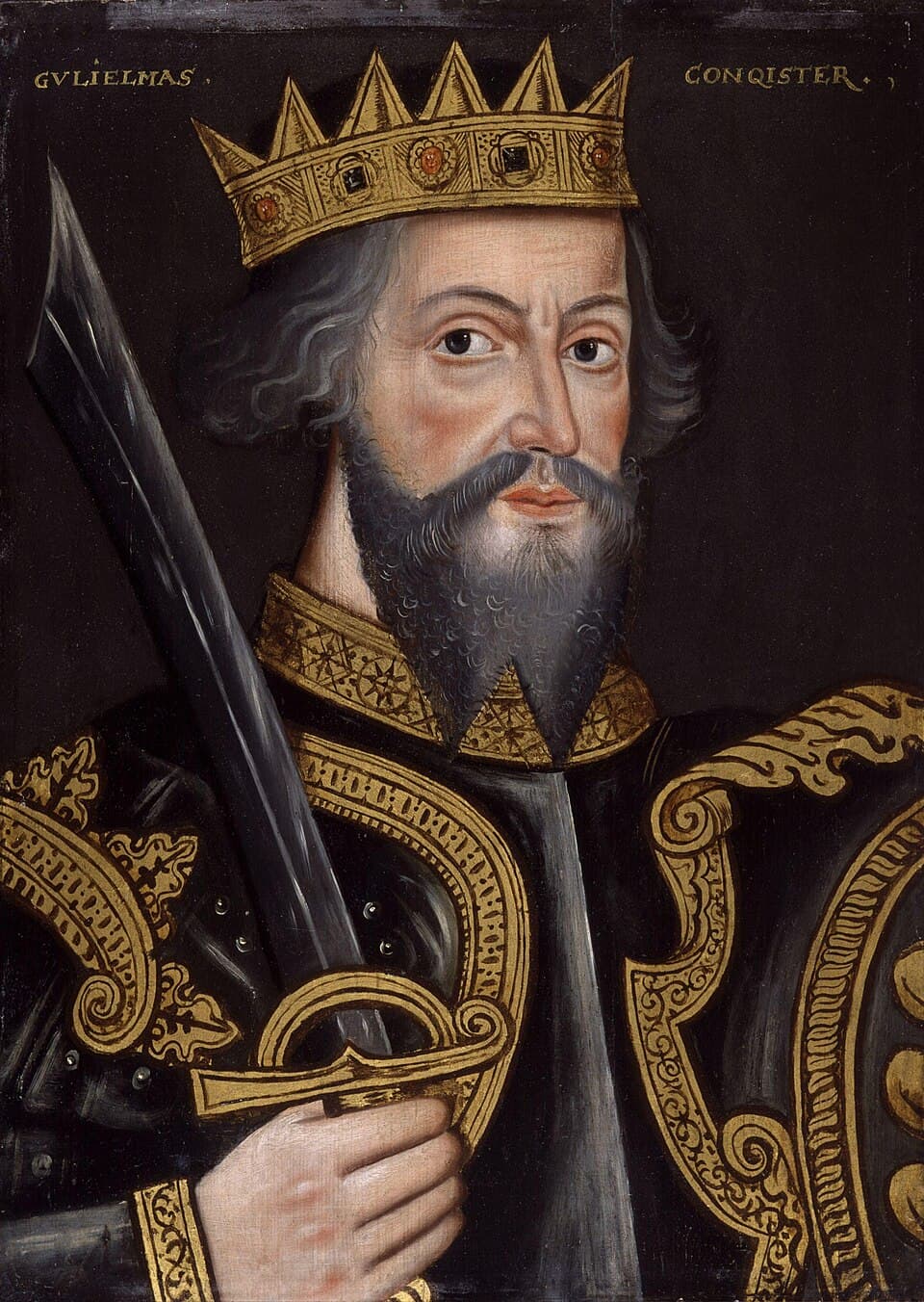
Two young visitors, aged twelve, on a school trip, push open the heavy door of a castle hall. Before them, a stout man in a wool tunic waits, his eyes sharp. The duke who became king agrees to answer all their questions.
—Is it true they made fun of you when you were little?
Yes, my child, and it hurt. I was born in Falaise around 1028. My father was duke, but my mother Arlette was the daughter of a tanner. Do you know what they called me? "The Bastard." They shouted it in my face. Imagine a child hearing that every day, unable to answer. Worse: they tried to kill me several times in my sleep. My tutor was even murdered in my own room. All that forged a character as hard as stone. When they want your skin so early, my child, you learn quickly never to lower your guard.
They shouted “Bastard” in my face, and it forged a character of stone.
—How old were you when you became duke?
Seven years old, my child. Imagine: you’ve barely begun your age, and suddenly you’re told you rule an entire country. My father Robert died in 1035 returning from a long pilgrimage to the East. There I was, duke of Normandy, a child surrounded by great barons who fought among themselves like wolves. I had to wait until 1047 to win my first great battle, at Val-ès-Dunes. The king of France had helped me. That day, the rebellious barons understood that the little bastard had grown up. It was like a storm breaking: at last, they respected me.
At seven years old, you’re told you rule an entire country.
—Before the big battle, is it true you fell on the beach?
Ha! You already know that story? Yes, when landing in England, my foot slipped and I fell, hands in the sand. My soldiers went pale. For them, falling like that was a very bad omen from the gods. But I clenched a handful of earth in my fist and shouted that I already held England in my hand! You see the trick? A leader never shows his fear. I also carried a banner blessed by the Pope, to tell everyone that my cause was just. Sometimes, my child, you must turn a fall into victory with a few words.
I clenched the earth in my fist: I already held England!
—During the Battle of Hastings, were you afraid of dying?
Fear is always there, my child, but you hide it. On 14 October 1066, at Hastings, it was terrible. Three horses were killed under me during the fight! Three times I got up from the mud. Then word spread that I was dead. My men began to flee. So I lifted my helmet — a nasal helmet, that iron bar that protects the nose and hides the face. I showed my features and shouted that I was alive. My soldiers took heart again. King Harold fell that evening. Without that gesture, England would never have become mine.
Three horses were killed under me, but I got up each time.
—What is that big book where you wrote everything about England?
Ah, my great book! In 1085, I wanted to know one simple thing: who owns what in my kingdom? So I sent men everywhere. They counted every field, every cow, every pig, every peasant. Can you imagine the work? No king in Europe had ever done that. The result, completed in 1086, was called the Domesday Book, the “Book of Last Judgment.” Why that terrible name? Because you could not argue with what was written in it, like on Judgment Day. Thanks to it, I knew exactly what taxes to demand. A king who knows how to count, my child, is a king who holds his country.
A king who knows how to count is a king who holds his country.
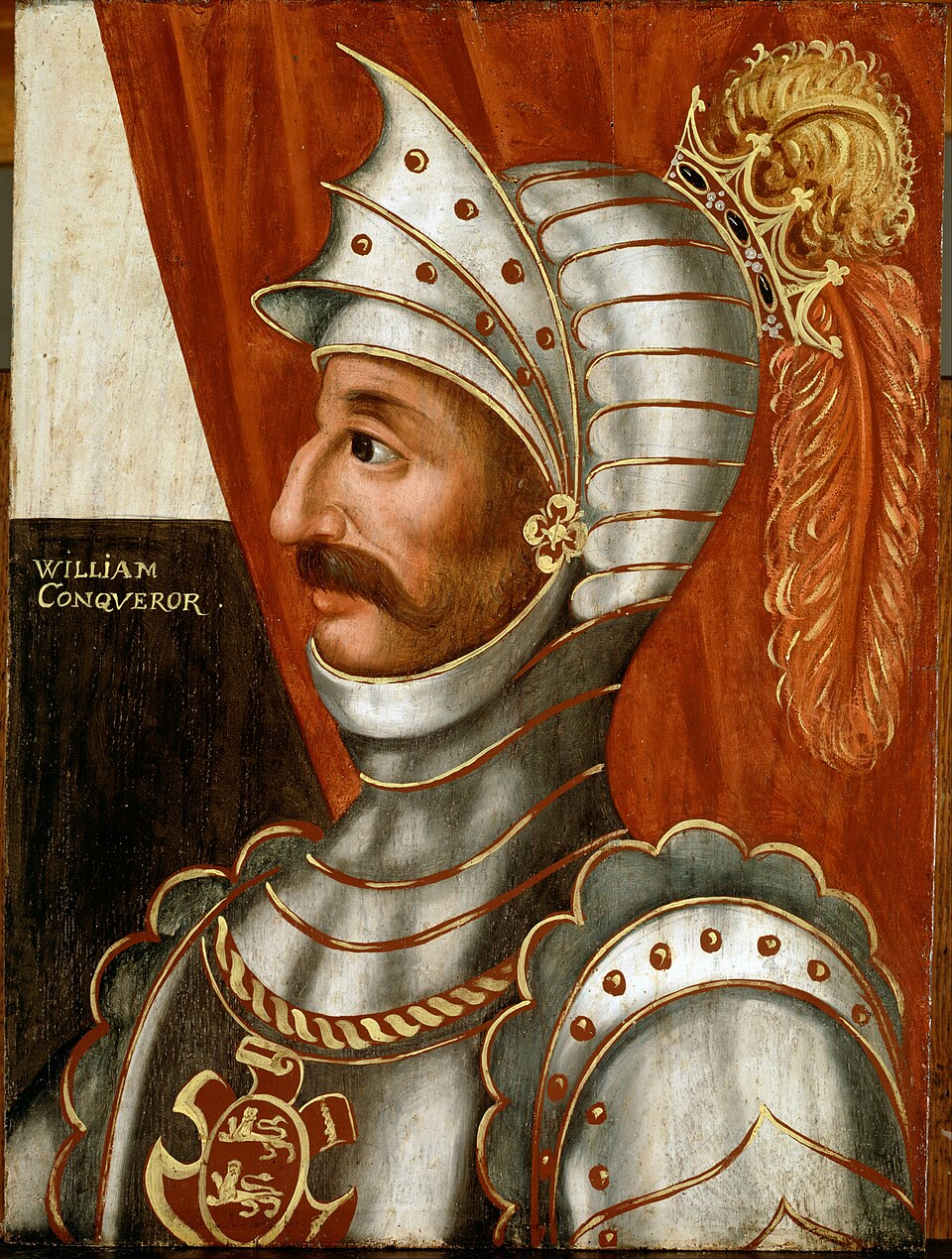
—Did you give everything to the knights who came with you?
Almost everything, yes. After my victory, I took the lands of the great English lords and shared them among my Norman companions. You see, I gave them a fief — land — and they, in return, swore loyalty to me and lent me their soldiers when I needed them. That is what we call the feudal system. In England, I made it stricter than elsewhere: everyone, from the lowest to the highest, had to obey me alone. I even replaced their old council, the Witan, with my own advisors. Imagine a great staircase where each step obeys the one above, and at the top, me.
A great staircase where each step obeys the one above, and at the top, me.
—How did you make the English truly obey you?
By stone, my child, and sometimes by fear. From 1066, I had fortresses raised everywhere. In London, I began the Tower of London, that great white keep that dominates the city and says to everyone: “The Norman master watches.” Elsewhere, we quickly built motte-and-bailey castles — an earthen mound topped with a wooden tower. We raised hundreds of them! From the top of those towers, my men watched over the whole country. You understand? When a people sees a fortress above their heads every day, they hesitate to rebel. Stone speaks louder than words.
Stone speaks louder than words.
—And when people still rebelled, what did you do?
There, my child, I won’t lie to you, I was terrible. In 1070, the north of England rose against me. Too often. So I gave a harsh order: they burned the crops, killed the animals, ravaged villages for whole leagues. It is called the “Harrying of the North.” For years, nothing grew there anymore, and many died of hunger. I tell you frankly because you deserve the truth, not a pretty picture. A king who wants to hold a conquered land sometimes does things a man never forgets. Power has a price, and that price was blood.
I tell you frankly, because you deserve the truth, not a pretty picture.
—Why did you build an abbey in Caen?
To make peace with the Church, my child. I had married Matilda, whom I loved dearly. But the Pope said we were too closely related to marry. What a scandal! To obtain his pardon, we promised to build two monasteries in Caen. I built the Abbaye-aux-Hommes, around 1063; she built the Abbaye-aux-Dames. Imagine two great churches of pale stone rising toward heaven, like a prayer carved in rock. That was my way of saying to God: “Forgive me.” A warrior like me had many things to be forgiven for. And it is there, in my abbey, that I wished to rest forever.
Two churches of pale stone, like a prayer carved in rock.
—Is it true your funeral went badly?
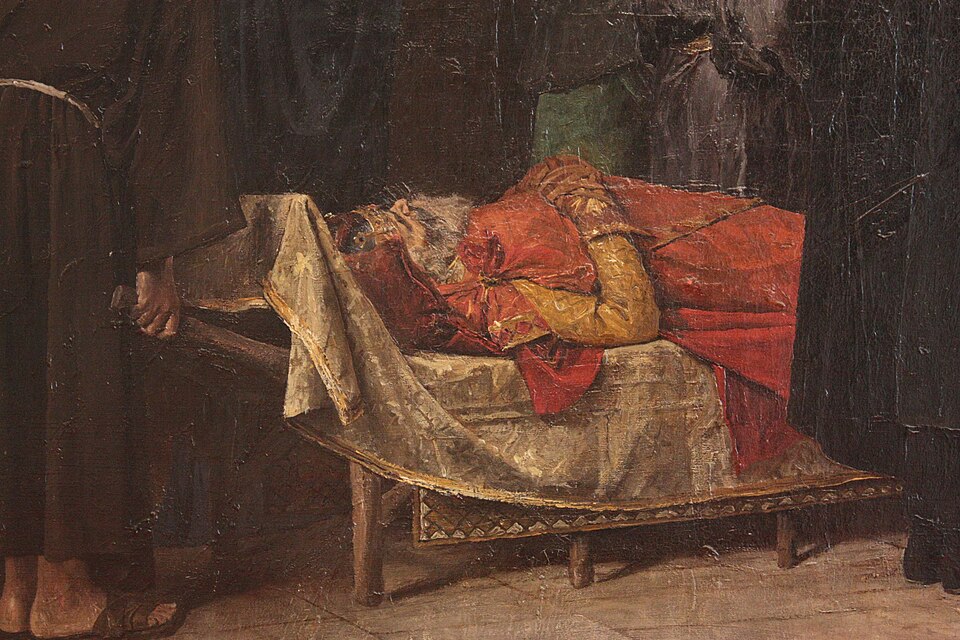
Ah, you heard that awful story… Yes. I died in 1087, in Rouen, wounded during a siege. With age, I had grown very fat — the king of France mocked my belly! When they tried to lay me in my stone tomb, at the Abbaye-aux-Hommes, my body was too wide for the sarcophagus. The monks forced it… and my body burst, spreading a dreadful stench. Everyone fled, holding their noses! The ceremony was hurried through. You see, my child: I conquered an entire kingdom, but before death, the greatest king is just a man like any other.
I conquered a kingdom, but before death, the greatest king is just a man.
This imaginary interview was generated by artificial intelligence from sources documented in William the Conqueror's profile. It dramatises what the figure might have said based on what we know about them, but does not constitute attested historical testimony. For primary sources and factual documentation, refer to the full profile.