Imaginary interview with William the Conqueror
by Charactorium · William the Conqueror (1028 — 1087) · Politics · 6 min read
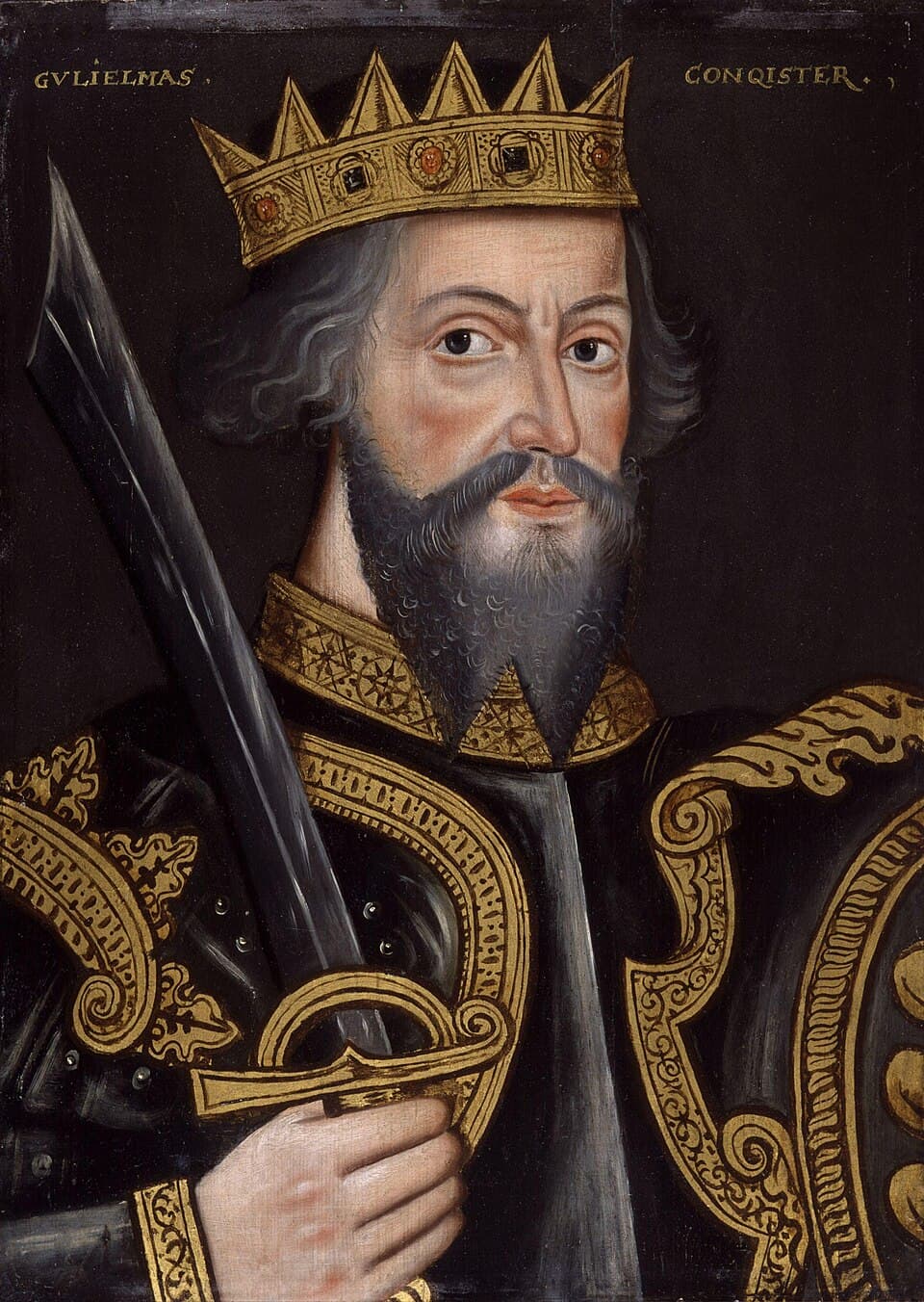
Caen, in the half-light of the still-unfinished Abbaye-aux-Hommes, the old king receives visitors between councils. His hands resting on the pommel of his sword, he speaks in a slow voice, where the pride of the conqueror vies with the fear of God.
—The circumstances of your birth have been much mocked. How did you come into the world?
I was born at the foot of the Château de Falaise, around the year 1028, of the blood of Duke Robert the Magnificent and Arlette, a tanner's daughter from the lower town. The great men of Normandy never let me forget it: bastard, they would spit at me, son of a commoner. As a child, I saw more than one of my guardians fall with a dagger in his back, for they wanted my head before I could hold a lance. God ordained otherwise. At seven, when my father died on the road to Jerusalem, near Nicaea, I was made duke of a duchy that hated me. One does not forge soft iron in such a furnace.
“Bastard, they would spit at me”—one does not forge soft iron in such a furnace.
—Do you remember the day you ceased to be a child to be protected and became a duke to be feared?
That day had a name: Val-ès-Dunes, in the year 1047. The barons of the West had leagued together to throw me down, believing a bastard could not command an army. I rode alongside my liege lord, King Henry of France, and we broke their revolt in the plain near Caen. I was barely nineteen, and already the warhorse beneath me smelled the dust of fleeing men. That morning, I understood that fear changes sides for him who dares strike first. My treacherous vassals learned that the service of a lord is not something one renounces at will.
—Let us speak of the great crossing. What happened when your ships touched the English coast?
We landed at Pevensey, at the end of September 1066, several hundred ships gliding onto the sand. As I set foot on land, I stumbled and fell face-first onto the ground. A murmur ran through my men: bad omen. But I rose, both fists full of that English soil, and I showed it to them, crying that I already held the kingdom in my hands. Above my head flew the banner blessed by Pope Alexander, which he had sent me, for this war was not brigandage: it was the redress of a broken oath. God and the blessed Peter marched with me.
“I rose, both fists full of English soil, and I showed it to them.”
—How did you experience the most perilous hour, in the thick of the fray at Hastings?
On the fourteenth of October, on the slope of Senlac, three warhorses were killed under me, and each time I fell back into the mud mixed with blood. A rumor then spread faster than arrows: the duke is dead. I saw my lines waver, ready to flee. Then I tore off my nasal helmet, that helm which hides a man's face, and raised my head so that they might recognize me alive. My chaplain William of Poitiers recorded it since: I rode that day with a bravery I dare not call my own, for it came from above. A leader who hides under his iron loses his men before losing the battle.
—And the fall of Harold, that rival who had broken his oath—how did you learn of it?
Harold had perjured himself: he had sworn on relics, in Normandy, to support my cause, then crowned himself upon Edward's death. Heaven does not long suffer the traitor. At evening of the battle, I was told he had been struck in the eye—so the Carmen de Hastingae Proelio sings—and cut down amid his guard. At Christmas that same year, I was consecrated king at Westminster Abbey. While they acclaimed me, my guards outside, thinking it a revolt, set fire to the houses: I received the crown amid smoke and cries. An omen, perhaps, of the price still to be paid.
“Heaven does not long suffer the traitor.”
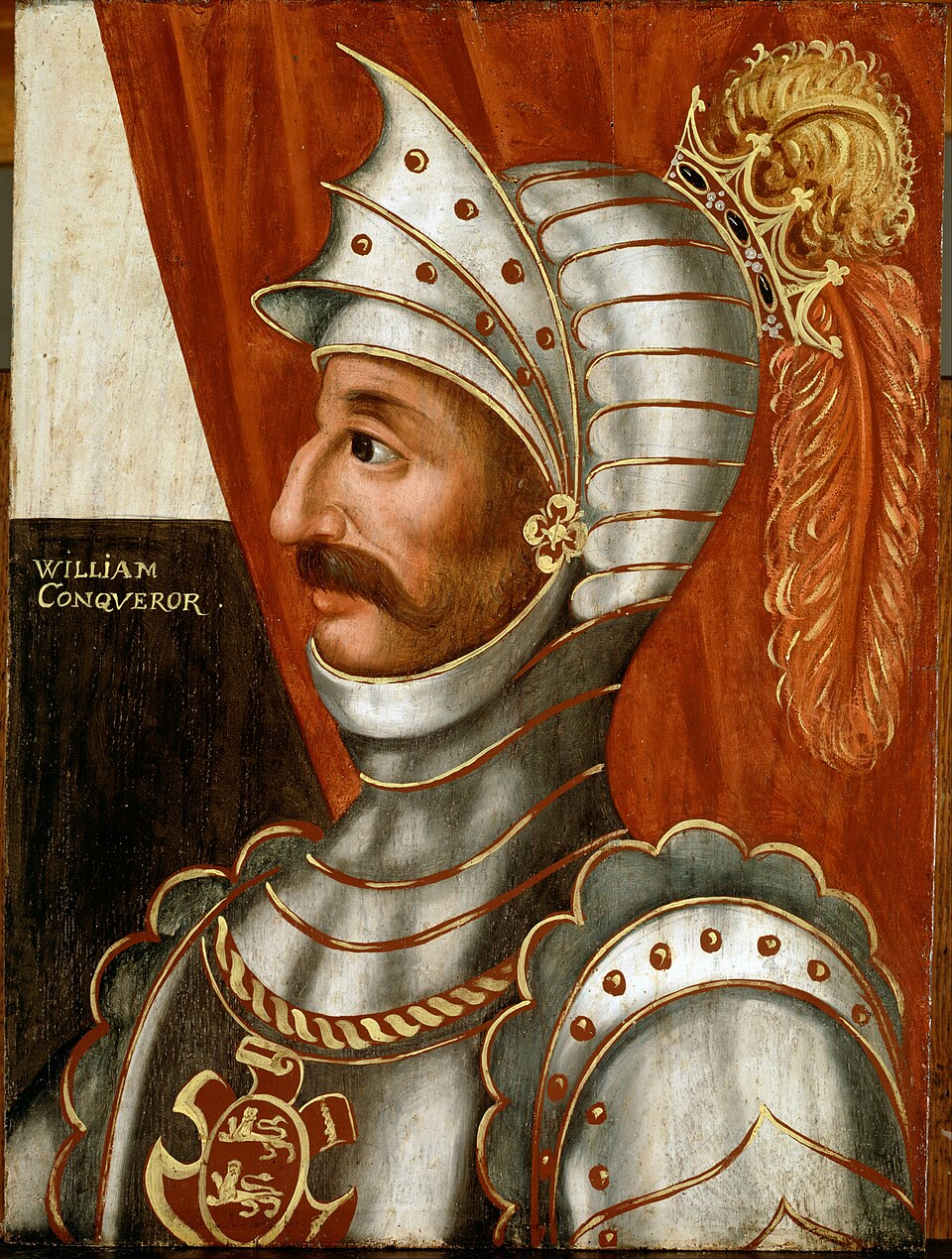
—You wanted to know every acre of your kingdom. Where did the idea for the great survey come from?
When one takes a kingdom, it is not enough to hold it by the sword: one must hold it by the count. At my Christmas court, in the year 1085, I decided to send my men throughout England, county by county, to record every estate, every plow, every beast, every soul and what it owed me. It was called the Domesday Book, the Book of Judgment, for no one escaped it, any more than the Last Judgment. No prince of Christendom possessed such a register. It told me, and me alone, the exact wealth of what God had entrusted to me—and no baron could any longer lie to me about what he held from my hand.
“The Book of Judgment, for no one escaped it, any more than the Last Judgment.”
—How did you reshape the old Saxon England to make it your own?
I took the lands of the defeated lords and redistributed them to my companions as fiefs, on condition of military service and sworn fealty. Each held them from me, and I alone was the liege lord of all, higher than any English king had ever been. The old council of wise men, the Witan, which elected kings at its pleasure, I let it die out in favor of my curia regis, my own court. And on the hills, my men raised hundreds of motte-and-bailey castles, those mounds topped with a wooden tower, so that a Norman might watch over every conquered valley. Thus order holds better than by words: by land, oath, and stone.
—Your marriage to Matilda displeased the Church. How did you make amends for this fault?
I married Matilda of Flanders around the year 1051, against the pope's interdict, which judged us too closely related by blood. I loved her and needed this alliance: I went ahead. But one does not long defy the Church without having to appease it. In penance, we founded in Caen two houses of God: the Abbaye-aux-Hommes for me, the Abbaye-aux-Dames for her. By my charters, I endowed them with lands and revenues, so that monks might pray endlessly for the salvation of our souls. The stone I raised there is worth more than a wrested absolution: it will speak of my fault and my repentance long after my voice has fallen silent.
—What place did Queen Matilda hold in this work of piety?
Matilda was not only the wife who gave me my heirs: she was my right hand when I waged war across the Channel, keeping Normandy in my absence. In Caen, her Abbaye-aux-Dames rose facing mine, like two hands joined in prayer above the city. She founded and endowed her monastery by her own charters, and it is there that she was laid to rest, some years ago now, in 1083. I have known no true peace since. A woman who can hold a duchy while a man conquers a kingdom deserves more than a tomb: she deserves that one pray for her until the end of time.
“Two abbeys like two hands joined in prayer above the city.”
—You still bear the marks of war. How did you come by your last wound?
King Philip of France, that mocker who ridiculed my corpulence, saying I was recovering from childbirth like a pregnant woman, had pushed me to the limit. I went to burn Mantes in retaliation, and while my mount trampled the embers of the town, the pommel of my saddle cruelly bruised my belly. The wound would not heal. I was carried to Rouen, where I passed away in September. A conqueror dreams of falling under an enemy lance, in the thick of battle; God, to teach me humility, willed that a horse and saddle should be my undoing.
—It is said that your funeral was not worthy of the king you were. What do you fear will be said of it?
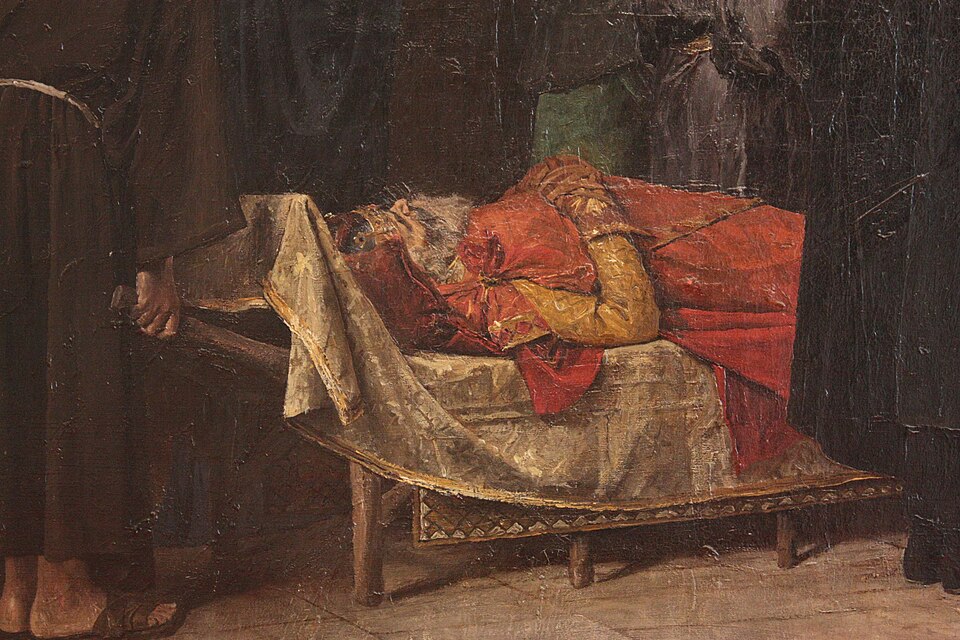
I know it, and it teaches me the worth of human glory. I will be carried to the Abbaye-aux-Hommes, into the choir I had built. But my body, grown too heavy from the feasts of game and wines of a king's whole life, will not fit into the stone coffin carved for me. They will force it, and the flesh will burst, spreading such a stench that the monks will cut short the prayers and flee the altar. Behold the conqueror of England, the master of the Domesday Book: a corpse overflowing its tomb. Let him who takes pride in his power come and smell, in Caen, what becomes of the pomp of kings.
“Behold the conqueror of England: a corpse overflowing its tomb.”
This imaginary interview was generated by artificial intelligence from sources documented in William the Conqueror's profile. It dramatises what the figure might have said based on what we know about them, but does not constitute attested historical testimony. For primary sources and factual documentation, refer to the full profile.